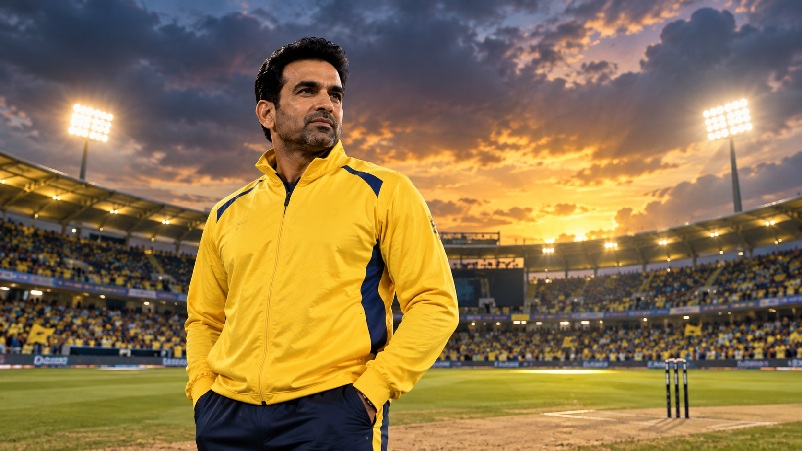

The Chennai Super Kings are embarking on a new era in anticipation of IPL 2027, marking one of the most notable shifts in coaching within the franchise for years. Former Indian fast bowler Zaheer Khan has been designated as the club’s new head coach, introducing a seasoned cricket strategist to a position that Stephen Fleming held for 18 years.
The official confirmation arrived on September 21, 2026, with CSK announcing the decision through its formal channels. Zaheer will assume his role at the start of the 2027 season, succeeding Fleming, who has been part of the franchise since the initial IPL seasons. This transition concludes one of the longest coaching collaborations in the league and provides the five-time champions with a fresh perspective in their coaching staff.
For fans, this development prompts various pertinent inquiries. What skills does Zaheer bring to the table for Chennai? How might the dynamics of CSK transform under his leadership? Will there be alterations in the team’s strategies regarding bowling, talent development, and player recruitment? Additionally, how will he collaborate with captain Ruturaj Gaikwad and other senior members of the organization?
At this point, concrete answers remain elusive as the 2027 season is yet to commence. Nonetheless, Zaheer’s background as a player, coupled with his administrative and management experience in cricket, offers meaningful insights into what his appointment may imply.
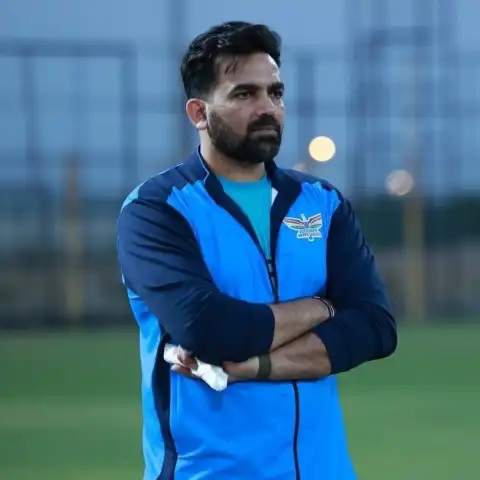
Zaheer Khan CSK Head Coach Appointment Confirmed
The selection has transitioned from speculation to certainty. The Chennai Super Kings have formally appointed Zaheer Khan as their head coach for the IPL 2027 season.
Zaheer succeeds Stephen Fleming, who has been a pivotal part of CSK‘s coaching framework since 2009. Fleming’s relationship with Chennai dates back even further, initially joining as a player. His role as a coach became synonymous with the essence of CSK, leading to five IPL championships and two Champions League T20 titles.
Consequently, Zaheer’s appointment signifies more than just a normal coaching shift. It marks a shift from a well-established foreign coach to an Indian former national player, who brings a wealth of knowledge from various cricket administration roles.
The timing of this change is also crucial. CSK is gearing up for a new IPL cycle following a challenging period where the franchise did not qualify for the playoffs for three consecutive seasons. Fleming’s exit came after the conclusion of the 2026 season, creating an opportunity for fresh direction.
In welcoming Zaheer to the franchise, CSK described the occasion with the phrase “Left Arm Taking Over,” emphasizing his standing as one of India’s most distinguished left-arm fast bowlers.
This appointment indicates that the IPL 2027 season will kick off with a rejuvenated coaching framework at one of the league’s most prominent teams.
Why Zaheer Khan Was a Natural Candidate
Zaheer is coming into the CSK organization with significant franchise-cricket experience.
Upon concluding his playing days, he transitioned into roles within cricket administration and development. His most notable early position was with the Mumbai Indians, where he served as Director of Cricket Operations before expanding his role to focus on broader cricket-development initiatives. He subsequently joined the Lucknow Super Giants organization as a mentor.
That experience is crucial as serving as an IPL head coach encompasses significantly more than merely strategies for match days.
A contemporary franchise coach must collaborate with players, support staff, scouts, analysts, and higher management. The position may include engaging in recruitment talks, strategizing for preparations, communicating with veteran players, and nurturing the growth of younger squad members.
Zaheer has already been part of such environments.
His tenure with the Mumbai Indians familiarized him with one of the IPL’s most well-established talent development frameworks. His involvement with LSG provided him with additional insights into franchise management and mentorship.
Thus, transitioning to Chennai appears to be a sensible advancement in terms of responsibility. Nonetheless, it also presents a unique challenge since the head coach holds direct accountability for the team’s cricketing strategy.
From International Star to Franchise Leader
Zaheer’s playing history provides him with another benefit: he comprehends the intense pressure of high-stakes situations from within the locker room.
He played for India in 92 Tests, 200 ODIs, and 17 T20 internationals. Throughout his international career, he positioned himself as one of the premier fast bowlers of his era. Additionally, he was India’s leading wicket-taker during the 2011 World Cup, claiming 21 wickets while India secured victory in the tournament.
His IPL journey included participation in 100 matches where he took 102 wickets, granting him extensive experience in the competition itself.
These figures are significant as Zaheer has navigated various stages of a professional cricket journey. He understands what it entails to gear up for an extended tournament, handle workloads, and deliver performances under significant scrutiny.
This experience may enable him to connect with players who are at various points in their careers.
What Zaheer Khan Brings to CSK
The most compelling aspect of this appointment is not solely Zaheer’s reputation. It lies in the kind of cricketing insight he contributes to the coaching staff.
As a former fast bowler, his deepest technical knowledge primarily stems from the bowling aspect of the game. He grasps the concepts of swing, seam movement, variations in pace, match-ups, and the physical challenges faced by fast bowlers.
Such expertise can be advantageous for a franchise competing in various locations and conditions.
A Stronger Focus on Bowling
One aspect to observe in IPL 2027 will be CSK‘s bowling approach.
Zaheer was recognized throughout his career for his capacity to adjust. He was not merely a bowler reliant on sheer speed. He utilized movement, angle changes, and variations to create issues for batters.
This experience could shape how CSK cultivates and utilizes its bowling unit.
It does not imply that all bowlers will suddenly adopt the same technique. Instead, Zaheer may promote a heightened focus on specific roles, match-ups, and tactical implementation.
Young fast bowlers might particularly gain advantages from having an ex-international pace bowler in the role of head coach.
Player Development Could Become Important
Zaheer’s experience in cricket enhancement positions player growth as a significant focus.
Franchises in the IPL are more inclined to spot talent ahead of their rise to fame. Elements like domestic competitions, scouting systems, analytical data, and player development initiatives have become critical components of franchise strategies.
Zaheer has previously been in an environment where recognizing and nurturing talent was a fundamental task.
Within CSK, this aspect may hold particular significance as the team balances seasoned players alongside emerging talent.
Successfully transitioning does not necessarily mean losing the classic team identity. Instead, it can involve strengthening the development pipeline that supports it.
The End of the Stephen Fleming Era
Any talk surrounding the new coach must consider the magnitude of Fleming‘s input.
Fleming took on the role of head coach for CSK in 2009 and held that position until the 2026 season. Throughout his tenure, the franchise secured five IPL championships and two Champions League T20 titles. Under his guidance, CSK also advanced to multiple playoffs and finals.
Such sustained tenure is rare in competitive sports.
The coaching dynamic between Fleming and CSK has become intertwined with the franchise’s essence. His composed demeanor, long-term strategy, and collaborative relationship with the team’s senior figures have been consistently linked to Chennai’s achievements.
His exit thus signifies a significant transition.
Zaheer is not required to emulate Fleming. In fact, attempting to replicate the previous coaching phase would likely be ineffective. A new coach inherently brings diverse concepts, communication styles, and tactical preferences.
The crucial consideration for CSK is how the franchise can maintain its established culture while granting the new head coach the freedom to carve out his unique strategy.
What Could Change Under Zaheer?
The precise coaching setup for IPL 2027 will become more defined as the season draws closer, yet several aspects merit attention.
1. Bowling Roles
The initial evident area is the allocation of fast bowlers.
Zaheer’s expertise may facilitate more strategic planning regarding powerplay bowling, death-over duties, and specific match-up strategies against batters.
Contemporary T20 cricket is increasingly reliant on specialized roles for bowlers. A bowler who excels with the new ball might not be the ideal choice for the final overs.
Zaheer’s experience could aid CSK in establishing clearer roles for each bowler.
2. Young Fast Bowlers
CSK fans will be keenly observing the progress of younger pace options.
An ex-international fast bowler can offer practical insights that extend beyond mere statistics. Minor technical refinements, modifications to run-up rhythm, workload considerations, and adapting to conditions can all impact a bowler’s growth.
Zaheer’s involvement might thus prove especially beneficial for the team’s younger members.
3. Tactical Match-Ups
The analytical nature of T20 cricket has grown significantly.
Batters are chosen based on match-ups, bowlers come in based on particular scenarios, and captains frequently utilize data for field arrangements.
Having spent years in professional franchise cricket, Zaheer’s coaching style will likely merge traditional cricket knowledge with contemporary analytical practices.
4. Recruitment and Squad Planning
Recruitment is another key area to keep an eye on.
Although the head coach does not work independently, coaching staff typically engage in conversations regarding the types of players needed for a team.
Zaheer’s insights into various player types may shape CSK‘s approach to player acquisition.
The team might prioritize players that align with particular strategic roles instead of merely chasing well-known names.
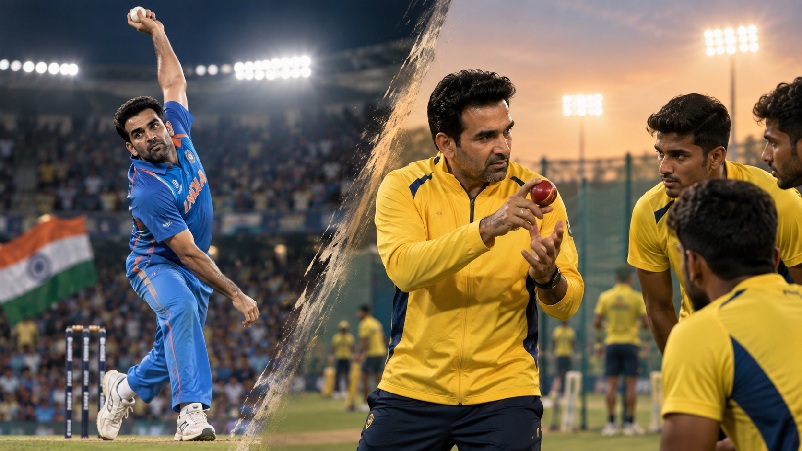
Zaheer and Ruturaj Gaikwad: A Fresh Alliance
A crucial relationship within CSK will be the one between Zaheer and captain Ruturaj Gaikwad.
The synergy between the captain and head coach affects nearly every aspect of a team’s preparation. Their dialogue plays a pivotal role in converting strategies developed during practice into game situations.
Gaikwad’s position as captain ensures he continues to be a vital decision-maker during games, while Zaheer will oversee the broader coaching structure.
Thus, effective communication between them will be essential.
Zaheer’s background as an international player might enable him to grasp the challenges that a captain faces. Conversely, Gaikwad’s insight into the current roster will prove valuable when it comes to making tactical choices.
The two may not share identical cricket philosophies. What counts is their ability to forge a coherent working relationship.
The MS Dhoni Influence
Another significant consideration is MS Dhoni‘s role within CSK.
Dhoni has been integral to the team’s identity since its inception and remains a key presence around the squad. Zaheer and Dhoni share a lengthy history from their time playing for India.
This established rapport could facilitate smoother communication.
Nonetheless, the head coach must maintain his own duties and authority. The actual framework of CSK’s leadership will become more defined as the 2027 season nears.
What is already evident is that Zaheer joins a franchise with a well-established culture and numerous seasoned individuals within the team.
Zaheer Khan’s Coaching Background Prior to CSK
It would be misleading to portray Zaheer as inexperienced in coaching settings.
His career after cricket has involved significant positions with the Mumbai Indians. He served as Director of Cricket Operations and later took on a role focused on global cricket development. Following this, he acted as a mentor for the Lucknow Super Giants.
These roles have provided him with insights into various facets of franchise cricket.
However, there remains a difference between being a mentor or working in cricket development and taking on the top coaching position.
As the head coach, Zaheer will be accountable for match preparation, coordinating the coaching staff, tactical strategy, and daily cricket-related decisions.
For this reason, IPL 2027 will serve as a pivotal milestone in his professional journey.
His Initial IPL Head-Coaching Role
This will mark Zaheer’s inaugural position as a head coach for an IPL team.
This makes the appointment to CSK especially important.
While he has been involved with various franchise teams, overseeing an entire IPL coaching framework presents a unique set of challenges. This position demands a consistent approach throughout a lengthy tournament and the capability to oversee players from various nationalities and cricketing experiences.
The CSK setting further complicates matters due to the exceptionally high expectations surrounding the franchise.
This role offers Zaheer the chance to apply his background as a player and cricket administrator to develop a comprehensive coaching philosophy.
Why IPL 2027 Will Garner Attention
The upcoming IPL season will serve as the first true indicator of the effectiveness of the new coaching organization.
A coach’s influence cannot be determined solely from the announcement of their hiring.
Aspects such as training approaches, player selections, bowling partnerships, substitute usage, strategic choices, and athlete progression will provide a much clearer picture.
Supporters of CSK will be curious to see if the team adopts a noticeably different strategy.
Will the team adopt a more aggressive bowling style? Will younger athletes assume more significant roles? Will recruitment strategies place greater emphasis on specialized skills? Will the team’s tactics shift depending on different venues?
These inquiries will only have answers once the season commences.
At this stage, Zaheer’s appointment sets the course for the future direction.
Implications for CSK’s Pace Bowling Unit
The introduction of a renowned Indian fast bowler inevitably brings heightened focus to CSK‘s pace bowling unit.
Zaheer’s career was founded on his ability to comprehend conditions and utilize variations wisely. He succeeded across various formats by adapting his bowling style to the context at hand.
This expertise can prove advantageous in the IPL, where bowlers consistently contend with aggressive batsmen.
Additionally, fast bowlers need to carefully manage their physical exertion throughout a tournament.
A season often includes consecutive matches, travel, and minimal recovery time. It becomes especially crucial for younger fast bowlers who have not faced the rigors of an entire IPL season yet to manage their workloads.
Zaheer’s playing experience may assist CSK in navigating these challenges.
A New Phase, Yet Not Necessarily a Total Overhaul
This appointment shouldn’t be construed as a complete departure from CSK‘s history.
Successful franchises typically do not discard everything when there’s a coaching change.
CSK already possesses a well-established identity rooted in thorough preparation, seasoned leadership, and a strong team ethos. Zaheer’s role will involve working within this framework while introducing his own concepts.
Thus, the most intriguing possibility lies in a blend of continuity and transformation.
The franchise can maintain the successful principles it has while enhancing areas that need refinement.
Striking this balance will emerge as a significant theme for IPL 2027.
Seven Developments to Anticipate in IPL 2027
The new appointment might impact various facets of CSK‘s cricketing framework.
- Bowling strategy: Zaheer’s expertise may lead to a greater focus on bowling match-ups and clarity in roles.
- Development of fast bowlers: Younger pace bowlers might receive increased technical support and a more structured development plan.
- Recruitment: CSK could prioritize players who align with specific tactical roles.
- Training methods: The upcoming coaching framework may bring forth various preparation strategies and tactical exercises.
- Captain-coach communication: The collaboration between Ruturaj Gaikwad and Zaheer is set to play a crucial role all season long.
- Data and match-ups: Contemporary statistics might become more intertwined with traditional cricket insights.
- Long-term planning: Zaheer’s background in player development could assist CSK in strategizing for upcoming seasons instead of concentrating solely on the current one.
These aspects are to be monitored rather than being confirmed modifications. The real strategy will become apparent through the franchise’s roster choices, coaching personnel, and performances throughout IPL 2027.

What Fans Can Anticipate From the New Coach
For CSK fans, the main draw is the potential of having a renowned Indian cricket figure lead the team.
Zaheer has faced off against CSK, participated in major IPL organizations, and been involved with elite Indian cricket for years.
His presence also introduces a new dynamic in the coaching environment.
Fleming’s time was marked by remarkable stability. Zaheer’s tenure opens up a new possibility to create a distinct coaching persona.
The initial months will probably concentrate significantly on preparing the roster, defining player roles, and nurturing team relations.
The true challenge will arise once official matches commence.
Zaheer Khan CSK Head Coach: What Lies Ahead?
The immediate focus will transition to preparations for IPL 2027.
CSK will need to develop its roster, finalize its support system, and figure out how Zaheer’s coaching philosophy aligns with the current leadership of the team.
The franchise must also reconcile short-term competitiveness with ongoing squad growth.
Zaheer’s hiring provides CSK with a seasoned cricket expert, but his ability to translate that expertise into a productive team setting will ultimately gauge his success.
His earlier experiences with Mumbai Indians and Lucknow Super Giants offer beneficial context, while his international career lends him respect among players.
However, achieving coaching success is not automatically assured through past playing accomplishments.
The IPL represents a distinct landscape compared to international cricket, and every coaching role presents unique obstacles.
This makes IPL 2027 particularly captivating.
A Major New Chapter for Chennai Super Kings
The introduction of Zaheer Khan represents one of the most significant shifts in CSK‘s coaching framework in the franchise’s recent history.
Fleming‘s 18-year connection fostered an unusually stable coaching period. Zaheer now steps into that legacy while striving to craft his own approach and identity.
For CSK, the timing is crucial. The team is entering a transitional phase where roster evolution, player growth, and tactical adaptability will become increasingly essential.
Zaheer’s experience encompasses all these dimensions.
He has served as an international player, an IPL athlete, a cricket administrator, a development expert, and a mentor for franchises. He now undertakes the most prominent coaching role of his career after retiring from playing.
The appointment does not yield immediate clarity regarding CSK‘s future trajectories. Those insights will emerge from the team’s training, selections, and performances.
What it does offer is a definitive starting point for an exciting new era.
The upcoming IPL season in 2027 will be observed not just for the outcomes of CSK but also for the influence of Zaheer’s cricketing concepts on the team.
For a franchise with such an extensive and triumphant background, this transition will be among the most anticipated narratives of the subsequent IPL season.
The appointment of Zaheer Khan as the Head Coach of CSK is now a confirmed fact, marking the start of a new chapter in the tale of Chennai Super Kings.