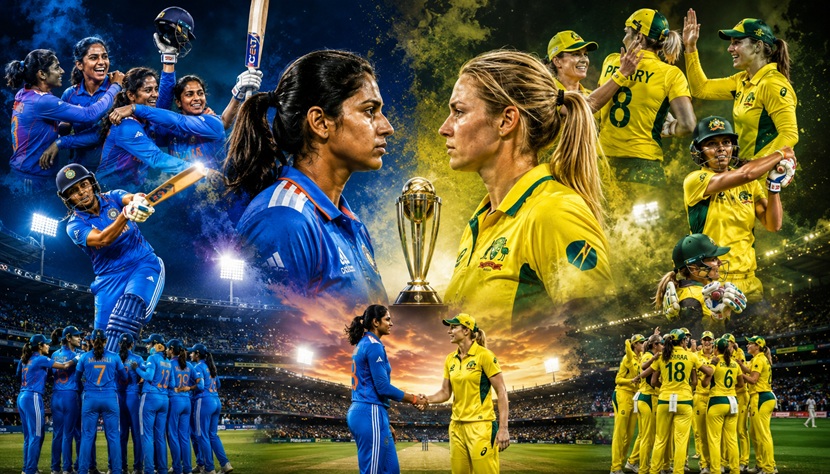

In contemporary women’s cricket, few competitions embody the blend of legacy, intensity, and unpredictability seen in India Women versus Australia Women. Australia has long established itself as a leader in women’s cricket, while India has evolved from being a notable adversary to a squad capable of toppling the Australians during crucial matches.
This evolution is what makes their rivalry intriguing. It extends beyond mere statistics of victories and defeats. Several of India’s pivotal achievements in women’s cricket have occurred against Australia, such as Harmanpreet Kaur’s memorable 171 not out achieved in 2017, the landmark Test win in Mumbai, the thrilling chase in the 2025 World Cup semi-final, and another significant chapter to unfold in 2026.
Australia continues to possess immense strength, particularly with their batting lineup and versatile players. Nevertheless, India has consistently demonstrated that a formidable reputation holds little weight once a high-stakes match commences.
Below is a detailed exploration of how this captivating rivalry in women’s cricket has unfolded.
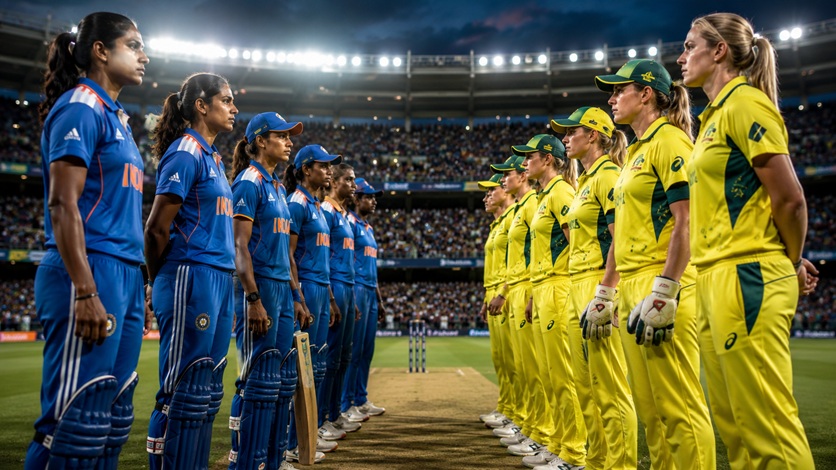
Development of the India-Australia Women’s Rivalry
The initial narrative of the India Women versus Australia Women rivalry was significantly shaped by the dominance of the Australian team. Australia enjoyed superior domestic frameworks, more depth in its player pool, and several generations of elite athletes. India could occasionally hold its own, but achieving consistent victories against Australia proved to be quite challenging.
However, the disparity began to decrease over time.
Key players like Mithali Raj and Jhulan Goswami brought experience and global recognition to India. The subsequent generation introduced a more aggressive style of play. Talents such as Harmanpreet Kaur, Smriti Mandhana, Jemimah Rodrigues, and Deepti Sharma contributed to building an Indian team that increasingly opted to take the offensive against Australia rather than simply defend.
This shift became particularly evident in international tournaments.
Though Australia often entered as the favorite, India began developing a knack for executing performances that could upset those assumptions.
2017 World Cup Semi-Final Transformed Everything
Any account of this rivalry’s evolution must reference the match at Derby on July 20, 2017.
India went head-to-head with the reigning champions, Australia, in the Women’s World Cup semi-final. Due to rain, the match was shortened to 42 overs per team, and India desperately required someone to deliver an extraordinary performance.
Harmanpreet Kaur rose to the occasion.
She scored an incredible unbeaten 171 runs off just 115 balls, hitting 20 fours and seven sixes. India amassed a total of 281 for 4 before bowling Australia out for 245, securing victory by 36 runs and earning a place in the World Cup final.
This win was significant not just as a semi-final triumph. Harmanpreet’s innings transformed many fans’ perceptions of India’s attacking capabilities. Instead of being daunted by Australia’s legacy, India showcased their strength by eliminating them from the World Cup with bold batting.
This innings remains one of the pivotal highlights in the rivalry between India Women and Australia Women.
2020: Australia Responds on the Grandest Stage
Three years later, the rivalry entered another major global arena.
India kicked off the 2020 Women’s T20 World Cup with a stunning victory over Australia in the opening match. Poonam Yadav’s leg-spin was instrumental as India managed to defend a modest score successfully.
However, Australia seized their chance for retribution.
The Melbourne World Cup Final
On March 8, 2020, in front of a large audience at the Melbourne Cricket Ground, India and Australia faced off in the T20 World Cup final.
On this occasion, Australia dominated the scenario.
Alyssa Healy launched an early assault, while Beth Mooney offered poise and skill. Australia concluded with a score of 184 for 4. India’s attempt to chase fell short of the necessary pace, leading to them being all out for 99 runs.
Australia emerged victorious by 85 runs, claiming another world championship title.
It was a troubling moment for India, but reaching the final highlighted the team’s swift progress. The two nations were not just clashing in routine bilateral matches anymore; they were competing in encounters with the potential to determine world titles.
2021 Pink-Ball Test Adds Another Dimension
The competition intensified further when the two sides contested a day-night Test at Carrara in 2021.
Smriti Mandhana delivered one of her most outstanding performances on the international stage, making 127 runs in India’s initial innings. Rain disrupted the game, limiting the chances for a definitive outcome, and the Test ultimately concluded in a draw.
Nonetheless, the match held significance.
India demonstrated that their batting lineup could hold its ground against Australia under unconventional conditions and with the pink ball. Mandhana’s century bolstered her status as one of the players most capable of challenging Australia in all formats.
Thus, Tests transitioned into a meaningful chapter of the India Women versus Australia Women narrative rather than just a sporadic event.
2022 Commonwealth Games Final Brings More Drama
Women’s cricket made its debut at the Commonwealth Games in Birmingham 2022, and, as expected, India and Australia found themselves in another high-stakes matchup.
Initially, they faced off in the group phase, where Australia rallied from a tough position to secure victory over India.
This was followed by the gold medal match.
India seemed poised to chase Australia’s total of 161 for 8, particularly while Harmanpreet Kaur was at the wicket. However, her dismissal shifted the game’s dynamics, leading to India being bowled out for 152 runs.
Australia triumphed by a narrow margin of nine runs, earning the gold medal, while India took home the silver.
This outcome emphasized a consistent trend: India was capable of pushing Australia to the limit in crucial matches, but Australia’s composure in critical moments often made the difference between the teams.
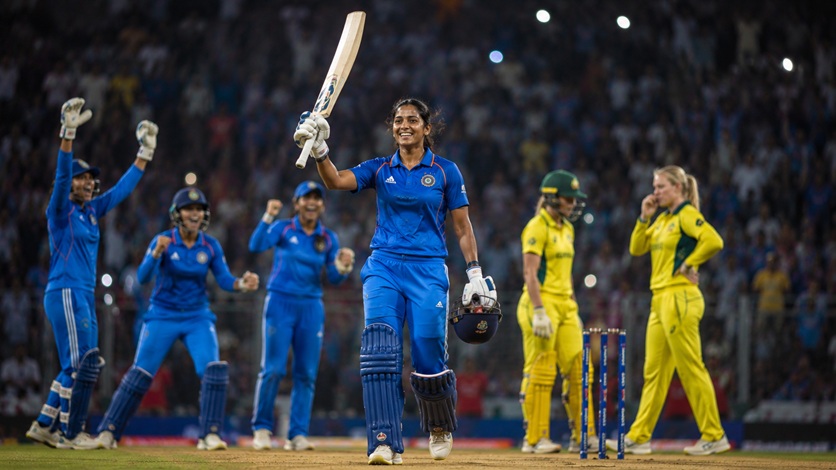
2022 Super Over: India End Australia’s Winning Run
On December 11, 2022, a very different conclusion was reached.
In the second T20I held at DY Patil Stadium in Navi Mumbai, Australia posted a score of 187 for 1. India countered with an exact total of 187 for 5, resulting in a Super Over.
Smriti Mandhana had already made an impressive 79 runs off 49 deliveries in the main chase. During the Super Over, India managed to score 20 runs while limiting Australia to 16 runs.
India triumphed in the shooting contest by four runs.
This win was particularly noteworthy as it marked Australia’s first international loss of 2022. A full stadium and a thrilling final ball contributed to the match becoming an instant contemporary classic.
It also highlighted why the contests between India Women and Australia Women have become so captivating: even periods of Australian supremacy can vanish in the blink of an eye during a thrilling moment of cricket.
2023 Historic Test Victory in Mumbai
In December 2023, India achieved a significant milestone that they had long anticipated.
At the Wankhede Stadium in Mumbai, India triumphed over Australia by a margin of eight wickets, marking their inaugural Women’s Test win against this opponent.
Australia ended their first innings at 219, with Pooja Vastrakar securing four wickets and Sneh Rana taking three. India replied with an impressive 406, establishing a substantial lead of 187 runs.
In their second innings, Australia scored 261, leaving India with a target of just 75 runs to claim victory. The home team reached 75/2 and sealed a historic win.
This outcome was significant as it demonstrated India’s capability to triumph over Australia through consistent performance in a four-day match rather than depending solely on a single explosive display in limited-overs formats.
2025 World Cup Semi-Final: A Rivalry-Defining Chase
If the year 2017 was marked by Harmanpreet Kaur, then the 2025 World Cup semi-final was defined by Jemimah Rodrigues’ brilliance.
Australia posted an impressive total of 338, driven by Phoebe Litchfield’s 119 runs, accompanied by Ellyse Perry with 77 and Ashleigh Gardner contributing a quickfire 63.
Typically, chasing 339 in a World Cup knockout stage would seem daunting.
Nevertheless, India approached it without trepidation.
Jemimah Rodrigues achieved an outstanding 127 not out, while Harmanpreet Kaur added 89 to the score. India successfully chased down the target, achieving a five-wicket victory and setting a new standard for successful chases in the Women’s ODI World Cup.
This moment became a remarkable entry in the history of India Women facing Australia Women.
Additionally, there was a notable historical parallel. Eight years after Harmanpreet’s groundbreaking 171 that led to Australia’s exit in the 2017 semi-final, another Indian middle-order innings eliminated Australia from the World Cup once again.
2026 Tour of Australia: Both Teams Make Statements
The intense rivalry continued shortly after as India embarked on a tour of Australia in 2026 for T20Is, ODIs, and a Test match.
India began strong by winning the T20I series with a score of 2-1.
In the pivotal third match in Adelaide, India set a score of 176/6 and restricted Australia to 159/9. Smriti Mandhana scored an impressive 82 runs, Jemimah Rodrigues added 59, and both Shreyanka Patil and Shree Charani each took three wickets.
Australia responded decisively in the ODI matches.
They dominated the three-match series, winning all three games 3-0. The final ODI held in Hobart was particularly lopsided, with Australia accumulating 409/7 and dismissing India for 224, securing a victory by 185 runs.
The multi-format competition continued with a pink-ball Test in Perth.
Australia claimed victory by ten wickets after India was all out for 198 and 149. Annabel Sutherland played a pivotal role, scoring 129 runs in Australia’s first innings of 323.
The tour illustrated the rivalry’s dynamic nature: India could take home a T20I series in Australia; however, Australia showcased their ability to deliver commanding performances in the longer formats.
2026 T20 World Cup Adds a Fresh Chapter
Another significant chapter unfolded in the India Women vs Australia Women rivalry on June 28, 2026, during the Women’s T20 World Cup in England.
India managed to score 170/4 during their 20 overs, with Harmanpreet Kaur being aggressive with a score of 56 off 27 balls, and Smriti Mandhana adding 38 runs.
In response, Australia achieved 172/4 in just 19 overs.
Ellyse Perry scored 56 runs from 38 balls, while Ashleigh Gardner contributed an aggressive 53 off 29 balls, helping Australia stay ahead of the target. They completed their chase with six balls to spare, securing victory by six wickets.
Once more, the game highlighted the batting prowess on both teams and added another significant chapter to their growing history of encounters on a global scale.
Key Players in the Rivalry
The competition between India Women and Australia Women has been characterized by top-tier players exhibiting their finest performances when under pressure.
India
For India, Harmanpreet Kaur is a key figure in this rivalry, thanks to her spectacular innings in the 2017 World Cup and her consistent performances in critical games. Smriti Mandhana has consistently posed challenges to Australia across Test matches, ODIs, and T20Is, while Jemimah Rodrigues made an everlasting mark in rivalry history with her unbeaten 127 in the 2025 World Cup semi-final.
Australia
Australia’s side of the contest tells a remarkable story too.
Ellyse Perry’s enduring career has allowed her to impact the rivalry through several generations. Alyssa Healy’s aggressive batting has frequently troubled India, and players like Beth Mooney, Ashleigh Gardner, Annabel Sutherland, and Phoebe Litchfield have further solidified Australia’s remarkable depth in talent.
This depth remains one of the greatest advantages for Australia.
Reasons This Rivalry Is A Must-Watch
What differentiates this matchup from a typical bilateral rivalry is the series of key matches that both teams have contested.
Their recent history encompasses:
- World Cup semi-finals featuring extraordinary individual performances
- A T20 World Cup final held at the MCG
- The pressure of Commonwealth Games gold-medal contests
- An intense Super Over in front of an enthusiastic Indian audience
- Significant Test cricket played in Mumbai
- A record chase in the World Cup in 2025
- Exciting multi-format contests and another T20 World Cup showdown in 2026
Australia’s rich history cannot be overlooked, but India has increasingly shown they are capable of posing a serious challenge when it matters most.
Conclusion
By the year 2026, the face-off between India Women and Australia Women has evolved into far more than simply a clash between a long-established powerhouse and an ambitious contender.
Australia continues to showcase exceptional depth, versatility, and a winning mindset. On the other hand, India has developed a generation that seems more and more at ease taking on Australia in critical scenarios.
The strongest evidence lies within the games themselves. Harmanpreet’s 171 in 2017, the final held in Melbourne in 2020, India’s triumph in a Super Over in 2022, the historic Test win in Mumbai, Jemimah’s memorable innings in the 2025 World Cup semi-final, and the varying outcomes of 2026 have all contributed their own unique narratives.
Most significantly, the rivalry has lost its predictability.
While Australia may often approach many matches with a strong historical record, India has consistently shown they can defy expectations. This unpredictability, along with star players and regular encounters on significant platforms, elevates the rivalry between India Women and Australia Women to one of the most defining rivalries in modern women’s cricket.