

Pakistan England 2nd ODI 2026: The contest between Pakistan and England has added yet another thrilling segment to the ongoing ODI tri-nation series in Pakistan. Held at Rawalpindi Cricket Stadium on October 20, 2026, this second encounter featured two determined teams aiming to gain momentum as they prepare for the 2027 ICC Men’s Cricket World Cup.
Pakistan showcased a resilient batting display despite losing wickets consistently throughout the initial phase of their innings. England initially applied pressure on the home team, but a pivotal innings from Hasan Nawaz, along with significant contributions from the middle and lower order, enabled Pakistan to achieve a formidable score of 302 for 9 in their allotted 50 overs.
Discover the playing styles and strengths of players associated with Pakistan and England. This section focuses on cricket profiles, not live match updates or score-dependent statistics.
Known for his timing, balanced technique and ability to build an innings. His shot selection and composure are notable aspects of his batting style.
A left-arm fast bowler known for pace, swing and his ability to challenge batters with the new ball. His bowling approach can make for an interesting tactical matchup.
Known for his attacking approach and wide range of shots. His ability to change the tempo of an innings is a key feature of his batting style.
Known for his pace and bounce, Archer can challenge batters with aggressive fast bowling. His style offers an interesting contrast to technically focused batting.
For spectators keeping track of the Pakistan England 2nd ODI 2026, the innings contained numerous highlights, such as Babar Azam‘s input, Hasan Nawaz’s aggressive batting style, Arafat Minhas’s fifty, and England’s attempts to regulate the scoring pace.
This match is part of the ODI Tri-Series 2026/27 involving Pakistan, England, and Sri Lanka, taking place from October 18 to October 31. The tournament allows all three nations to evaluate their strategies and enhance their readiness for the upcoming ODI World Cup.
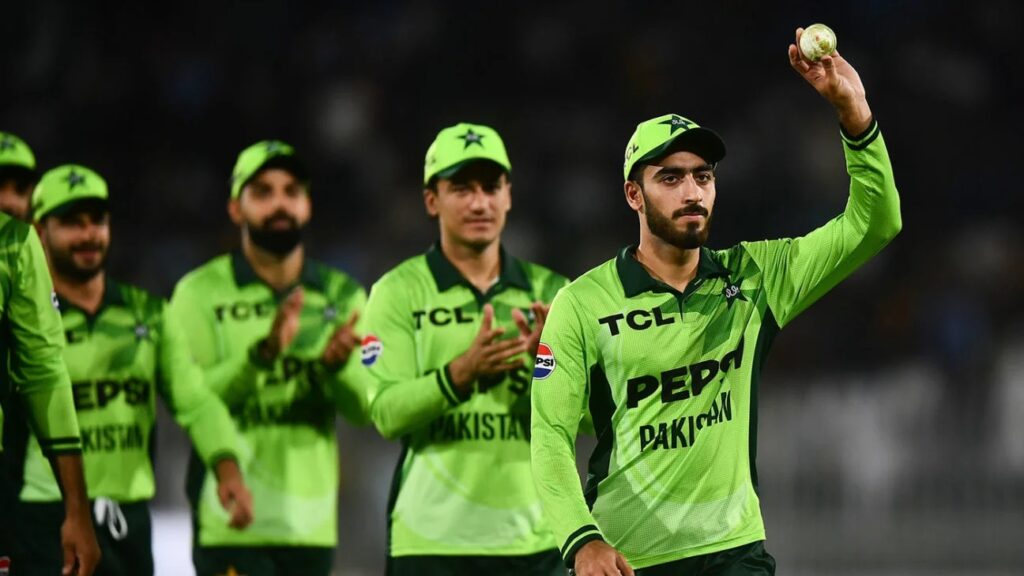
Pakistan vs England 2nd ODI 2026: Match Information
Below are the important specifics regarding the match held at Rawalpindi Cricket Stadium.
Match information Details
- Match Pakistan versus England, second match
- Date October 20, 2026
- Tournament Pakistan, England and Sri Lanka ODI Tri-Series 2026/27
- Venue Rawalpindi Cricket Stadium, Rawalpindi
- Format One Day International
- Pakistan’s score 302/9 in 50 overs
- England’s toss decision Chose to field
- Top scorer for Pakistan Hasan Nawaz, 79 runs
- Another significant contribution Arafat Minhas, 59 runs
The official scorecard from the Pakistan Cricket Board verifies the match specifics and Pakistan’s first-inning total.
Pakistan’s Batting Display: A Slow Start Followed by a Strong Finish
Pakistan’s innings adhered to a typical ODI format: early loss of wickets heightened pressure, the middle order endeavored to stabilize, while the concluding overs generated the necessary impetus to set up a competitive score.
England won the toss and opted to field, granting their bowlers the advantage to take advantage of the conditions. This decision seemed effective at first as Pakistan lost Fakhar Zaman on the first ball. Saim Ayub also fell early, necessitating a partnership to stabilize the innings for the home team.
Babar Azam Offers Stability
Babar Azam managed to score 34 runs off 52 balls, including four boundaries. While his score didn’t evolve into a significant innings, he played a key role in helping Pakistan navigate through a tough phase following those early wickets.
Babar maintained a cautious approach, focusing on staying at the crease and establishing a solid foundation. Ultimately, Will Jacks got him out, which hindered Pakistan from forming a strong partnership at the top.
For Pakistan, the task was not solely to accelerate scoring. They also had to avoid another flurry of wickets that could expose the lower batting order prematurely. Babar’s exit indicated that the rest of the batsmen would need to shoulder more responsibility for the recovery effort.
Saad Baig Contributes Crucial Runs
Saad Baig added a total of 35 runs off 54 deliveries, including five boundaries. His performance assisted Pakistan in achieving stability following their initial challenges.
The phase dedicated to building partnerships was vital, as Pakistan had already lost four wickets for 81 runs. At that juncture, England held the upper hand, necessitating a significant effort from the middle-order batsmen of the home side.
Baig’s exit left Pakistan in search of a player who could shift the momentum of the game. This role soon fell to Hasan Nawaz, whose dynamic play altered the dynamics of the match.
Hasan Nawaz Guides Pakistan’s Recovery With 79 Runs
Hasan Nawaz emerged as one of the key players in the innings, scoring 79 runs off 74 balls, which included five fours and four sixes.
His performance mixed patience with a strategic attacking style. Instead of trying to hit every ball for four, he accumulated runs steadily before ramping up the pressure on England’s bowling unit.
The significance of his innings is highlighted by the match context. Pakistan had found themselves at 81/4, and a quick subsequent wicket could have severely hindered the team’s chances of achieving even a modest score. Hasan played a integral role in stabilizing the innings and helped push Pakistan past the 200-run milestone before being dismissed by Jamie Overton.
Reasons Why Hasan’s Innings Were Significant
Hasan’s innings held substantial importance for three main reasons.
Initially, he stopped England from exerting total dominance after the early wickets fell. Secondly, his boundary scoring alleviated the pressure on the incoming batsmen. Lastly, he established a foundation that allowed the lower-order players to be aggressive in the final overs.
Although his 79 runs didn’t result in a century, it was arguably one of the most impactful innings during Pakistan’s batting performance. In a 50-over match, a player able to shift the trajectory following a tough start can be as crucial as one who scores a century when the team is in a comfortable position.
For those following Pakistan England’s 2nd ODI in 2026, Hasan’s performance is a significant highlight for match summaries and scorecard reviews.
Arafat Minhas Adds a Key Half-Century
Arafat Minhas made another important contribution, scoring 59 runs off 58 balls. His effort included nine boundaries and aided Pakistan in sustaining their scoring pace after the departure of Hasan Nawaz.
Arafat’s half-century was essential as Pakistan required runs in the closing overs. Rather than allowing England to control the end of the innings, he kept locating gaps and maintained the strike while capitalizing on scoring chances.
He was dismissed at 283/7 after significantly strengthening Pakistan’s position. Sonny Baker took the wicket, but from England’s standpoint, the harm was already done: Pakistan had recovered from their initial setbacks and was inching closer to a total exceeding 300.

Faheem Ashraf Provides Late Surge
Faheem Ashraf contributed 39 runs off just 26 balls, hitting five fours and one six. His rapid scoring delivered a late surge, enabling Pakistan to capitalize better on the last overs.
When a cricket team loses multiple wickets during the mid-phase of an ODI innings, the significance of the last ten overs increases notably. The batters need to strike a balance between being aggressive and avoiding the loss of more wickets. Faheem’s swift contribution enabled Pakistan to accumulate runs without depending on any single player to see the innings through to completion.
Shaheen Shah Afridi recorded an unbeaten 10 runs off five balls, while Haris Rauf added a score of four not out from two balls. Pakistan concluded their innings at a total of 302/9, achieving a rate of 6.04 runs per over.
Rawalpindi Pitch Overview and Playing Conditions
The Rawalpindi Cricket Stadium serves as a key location for Pakistan’s international cricket matches. The playing conditions can greatly affect the equilibrium between batting and bowling, particularly as the match transitions from the powerplay to the middle overs and then into the closing ten overs.
In this specific match, the performance during the innings offers the best insight into how the pitch behaved. Pakistan encountered early dismissals but managed to recover through partnerships, totaling 302 runs in 50 overs. This figure indicates that their batsmen exploited scoring opportunities once they settled in, although it does not definitively prove that the pitch was consistently favorable for batting.
What Batters Had to Accomplish
Batters confronting the new ball were required to handle the early movement while steering clear of unwarranted risks outside the off stump. After the initial phase, forming partnerships and choosing the right deliveries to target grew in significance.
Hasan Nawaz exemplified the effectiveness of this strategy. He did not rush to score rapidly from the first ball; rather, he fused a solid foundation with aggressive strokes when the chances arose.
Arafat Minhas and Faheem Ashraf subsequently illustrated how batters could take advantage of the base established by a middle-order alliance. Their inputs enabled Pakistan to transform what could have been a lackluster innings into a score exceeding 300.
How Conditions Might Affect England
England’s pursuit necessitated a mix of preserving their wickets and keeping a steady run rate. Chasing a target of 303 can be feasible in ODI cricket, but the necessary tactic depends on the pace at which the opening partnership scores and if the team loses wickets in clusters.
England also had to assess the pitch’s behavior during Pakistan’s innings. If the batting conditions remained advantageous, a disciplined approach to chasing could allow the visitors to remain in contention. Conversely, if Pakistan’s bowlers were able to generate movement or extract beneficial variations, the target might become more challenging.
England’s Run Chase: The Critical Conflict
Pakistan’s score of 302/9 set England a target of 303 to secure victory. The visitors were required to achieve a scoring average just over six runs per over throughout the innings, which is an ambitious yet realistic target for a proficient ODI batting lineup.
England’s innings commenced with openers Tom Banton and Ben Duckett. Initial reports indicated the two starting cautiously, as England aimed to build a platform prior to increasing their scoring rate.
The Importance of the Opening Partnership
A successful chase typically begins with a clear strategy. England needed to refrain from allowing Pakistan to claim early wickets while also ensuring the required run rate didn’t rise too sharply.
The opening batsmen could contribute by rotating the strike, capitalizing on wayward deliveries, and avoiding risky shots against well-executed bowling. Once the initial phase was navigated, the middle order would have to determine the opportune moment to accelerate the scoring.
On the other hand, Pakistan had the edge of defending a considerable total. Their bowlers could exert pressure by maintaining steady lines and lengths, utilizing the field wisely, and making every boundary hard to achieve.
Pakistan’s Bowling Choices
Leading Pakistan’s bowling unit is Shaheen Shah Afridi, complemented by Naseem Shah and Haris Rauf, who offer pace options. Their capacity to take crucial wickets at pivotal times could be vital, especially if England’s batters try to pick up the pace before settling in.
Pakistan also needed to deploy their bowling strengths wisely. The early overs provide opportunities for breakthroughs, while the middle overs can focus on restricting easy runs and building pressure. As the innings draws to a close, precise execution becomes essential since even a few poorly delivered balls can dramatically alter the course of a chase.
The central issue revolved around whether Pakistan could convert their score of 302 into scoreboard pressure or if England could keep enough wickets in reserve to produce a vigorous finish.
Players Who Could Determine the Outcome of the Match
The outcome of a tightly contested ODI frequently relies on a few key individual performances. During this match, multiple players had already made considerable contributions, while the latter half allowed the top batsmen from England a chance to respond.
Babar Azam: Expertise in High-pressure Situations
Babar Azam is a crucial member of Pakistan’s batting lineup due to his skills in constructing an innings and handling high-pressure situations. Although his score of 34 did not prove pivotal in determining the match, his experience is invaluable when Pakistan is looking to recover from a challenging start.
For Pakistan, the larger goal is to translate individual efforts into consistent team successes. The middle and lower orders demonstrated how effective this strategy can be, especially when the top order encounters difficulties.
Hasan Nawaz: A Player Worth Noticing
Hasan Nawaz‘s score of 79 showcased his capability to provide input when the team is in need of momentum. His innings also emphasized the significance of aggressive batting options beyond the usual senior players.
A performance like this can enhance a player’s chances for future selections; however, sustained consistency over multiple matches is a more crucial indicator of long-term advancement.
Joe Root and Harry Brook: England’s Batting Prowess
The batting options for England include seasoned players such as Joe Root and captain Harry Brook. Root’s skill in rotating the strike and forming partnerships is especially beneficial during a chase, whereas Brook’s attacking style presents England with additional ways to gain momentum.
Their task was to respond to Pakistan’s score without letting the required run rate dictate their batting approach. A collaboration between experienced players could position England favorably, but the bowlers from Pakistan would aim to disrupt this strategy.
The confirmed team line-ups and match specifics can be found on the official scorecard of the Pakistan Cricket Board.
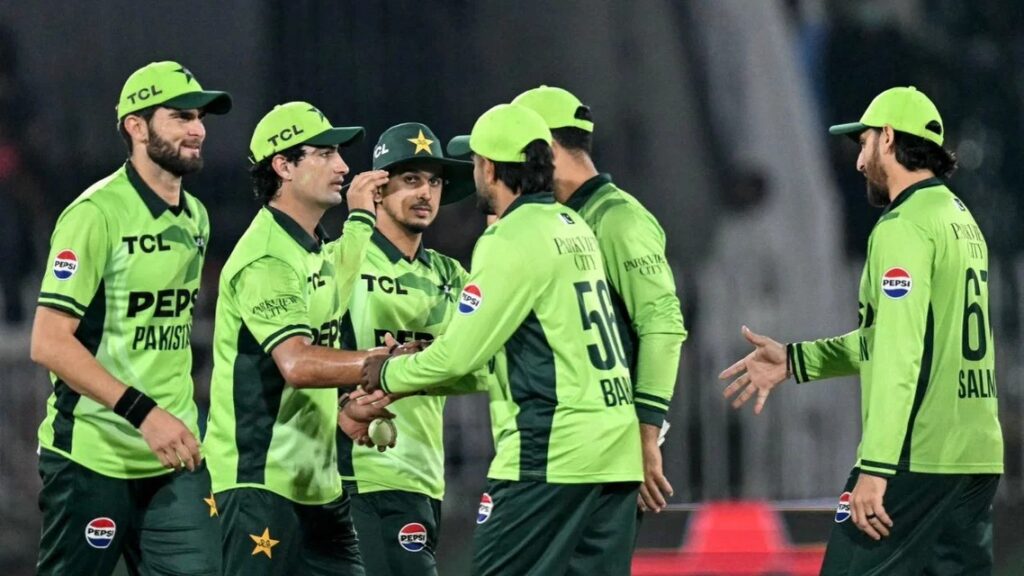
What This Match Signifies for the ODI Tri-Series
The tournament taking place in October involves Pakistan, England, and Sri Lanka, structured as a double-round-robin of seven matches, culminating in a final in Lahore on October 31. This format offers every team repeated chances to experiment with various combinations against differing opponents ahead of the next major international cycle.
Official Pakistan Cricket (PCB)
For Pakistan, playing on home soil presents the chance to build confidence, assess rising players, and enhance the balance between batting depth and bowling capabilities.
For England, this tournament serves as an opportunity to try out their strategies in subcontinental settings. Success in Pakistan requires more than just aggressive batting; teams must also adapt to fluctuating conditions, handle pressure effectively, and maintain discipline throughout 50 overs.
The tri-series also acts as valuable preparation for the 2027 ODI World Cup. Teams can evaluate their strongest line-ups, pinpoint weaknesses, and provide players with experience relevant to potential scenarios in a major tournament.
For fans tuning into Pakistan vs England 2nd ODI 2026, a crucial takeaway is how Pakistan rebounded from a challenging position of 81/4 to finish at 302/9. This turnaround highlighted the importance of partnerships and late-inning acceleration, even when the top order does not achieve a substantial score.
Where to Find the Latest Score and Result
Match conditions can shift rapidly during an ODI, so it is advisable for readers to consult a live scorecard to confirm the most recent status before presenting a final outcome.
The resources below offer valuable updates:
- Official scorecard: The Pakistan Cricket Board provides statistics on batting performance, wickets taken, and overall match information.
- Live commentary: The Guardian covers the game with updates on significant developments and key moments.
- Further score updates: India Today offers live reporting for commentary and updates from Rawalpindi.
Editorial note: The verified score for the first innings stands at 302/9. Please refer to the final official scorecard to find details on England’s completed chase, the match winner, and the Player of the Match before including this information in the article.
Conclusion
The notable aspect of this encounter in Rawalpindi was Pakistan’s resurgence in batting. Following the loss of early wickets, the home side faced pressure, but contributions from Hasan Nawaz with 79, Arafat Minhas with 59, and a quick 39 from Faheem Ashraf enabled Pakistan to total a competitive score of 302/9.
England’s bowlers had chances to limit the scoring further, but Pakistan’s late innings boost meant that the visitors were set a significant target. The second innings would test both England’s batting strength and Pakistan’s defensive capabilities.
The broader importance of the Pakistan versus England second ODI in 2026 pertains to both teams’ preparation for the upcoming World Cup cycle. Pakistan aims to fortify its middle-order strength, while England intends to show that its batting style can thrive against a diverse bowling lineup in tough away conditions.