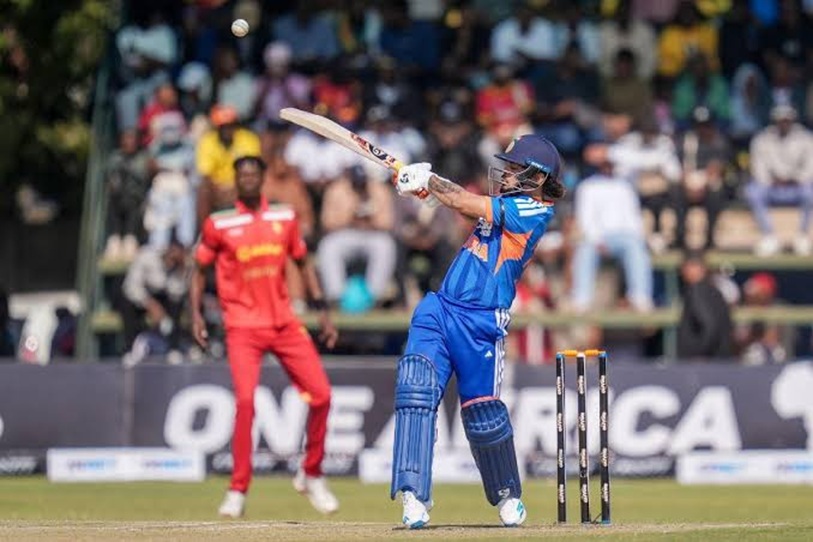

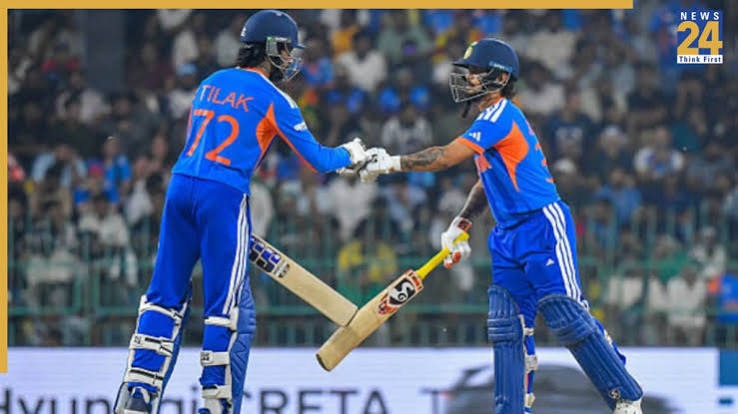
India clinched the T20 series against Zimbabwe through a performance that delivered far more than just a favorable scoreboard. Ishan Kishan made an impressive 81 off 44 balls, while Tilak Varma ended not out on 60 from merely 29 deliveries. Following their batting display, India showcased a solid bowling effort to secure a 90-run victory over Zimbabwe in the second T20I at Harare Sports Club.
The win on July 25 awarded Shreyas Iyer’s team an unassailable 2-0 advantage in the three-match series. India amassed a total of 219/5 after being called to bat and subsequently bowled Zimbabwe out for 129 in just 17.5 overs. Abhishek Sharma also made a remarkable all-round impact, taking three wickets after struggling with the bat earlier.
While the final score reflects a one-sided match, India’s innings was not entirely smooth. Zimbabwe managed to take two early wickets, creating an opportunity. What unfolded next highlighted why Kishan and Tilak are formidable T20 players: one stabilized the innings without diminishing the scoring rate, while the other transformed the final overs into a barrage of boundaries.
India Clinches Zimbabwe T20 Series After Initial Batting Setbacks
Zimbabwe’s captain, Sikandar Raza, opted to bowl first, likely hoping his team’s bowling unit could capitalize on the early conditions and put the aggressive Indian top order under pressure.
This strategy worked momentarily.
Abhishek Sharma managed two boundaries but fell for eight off eight balls, caught by Ryan Burl off Blessing Muzarabani’s bowling. Young opener Vaibhav Sooryavanshi, however, refused to play defensively. He smashed 20 runs off just nine deliveries, including three fours and a six, before being dismissed by Richard Ngarava.
With India at 29/2, Zimbabwe suddenly had the opportunity to control the middle overs.
This moment marked a shift in the innings’ dynamics. Instead of opting for a cautious approach to recover, India actively sought scoring chances. Kishan and captain Shreyas Iyer recognized that achieving a competitive T20 score at Harare required aggressiveness rather than mere survival.
Kishan Alters the Course of the Innings
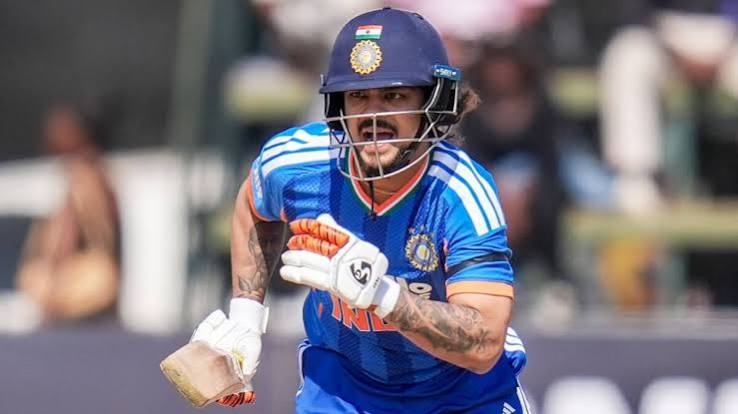
Ishan Kishan’s 81 was the backbone of India’s batting.
He faced 44 balls, hitting nine fours and two sixes, recording a strike rate of 184.09. Those figures capture part of the narrative. What mattered more was the timing of his runs. After the fall of both openers, India required someone to take charge, and Kishan successfully rebuilt the innings while putting Zimbabwe’s bowlers on the defensive.
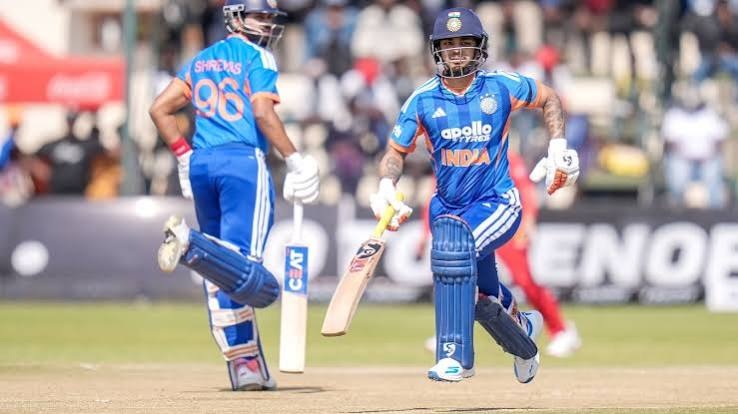
Shreyas provided support, scoring 25 off 20 balls with four boundaries. The duo contributed 66 runs and ensured Zimbabwe could not fully capitalize on India’s early struggles.
India Clinches Zimbabwe T20 Series mainly due to their batting depth, which enabled them to weather the initial wickets without forsaking their aggressive strategy.
Kishan ultimately fell short of a century, which had briefly seemed within reach. Newman Nyamhuri claimed his wicket for 81, but by that time, the wicketkeeper-batter had laid the groundwork necessary for Tilak.
Tilak Varma Adds Finishing Touch to a Strong Total of 219
While Kishan stabilized the innings, Tilak Varma provided the finishing touch.
Tilak entered a scenario where India had made some gains but still required a significant boost. He provided exactly what was needed, scoring an unbeaten 60 off 29 balls with a strike rate exceeding 200. His performance featured five boundaries and three sixes.
What was remarkable was his knack for finding boundaries without making the innings feel frantic. After the dismissal of Kishan, Zimbabwe required calmer overs. Instead, Tilak consistently pushed the score further away.
Rinku Singh managed to contribute 12 runs from eight deliveries before being dismissed by Brad Evans, while Shivam Dube ended up not out with six from three balls. India concluded their innings at 219/5, achieving a scoring rate of 10.95 runs per over.
Kishan and Tilak exhibited differing styles of aggression.
The two significant innings were impactful for various reasons.
Kishan had to navigate risks due to India’s early wickets. Tilak entered later in the game and had more liberty to play aggressively. Their differing responsibilities led to an innings that maintained a sense of unpredictability.
The essential batting statistics were:
- Ishan Kishan – 81 runs off 44 deliveries, with 9 boundaries and 2 sixes
- Tilak Varma – 60 runs not out off 29 deliveries, with 5 boundaries and 3 sixes
- Vaibhav Sooryavanshi – 20 runs off 9 deliveries
- Shreyas Iyer – 25 runs off 20 deliveries
- India – 219/5 in 20 overs
India Secured Zimbabwe T20 Series was not merely a tale of reckless batting. It showcased how contemporary T20 teams can bounce back from early setbacks while maintaining a steady scoring rate.
Zimbabwe’s Chase Begins With Optimism
To chase down a target of 220, Zimbabwe had to start aggressively. There was no practical chance to take several overs assessing the conditions.
Brian Bennett embraced that challenge.
He scored 32 off 19 balls, including three fours and three sixes, delivering the hosts their most menacing phase of the innings. Tadiwanashe Marumani contributed 24 runs from 19 balls.
However, Zimbabwe needed one of those promising starts to evolve into a significant innings.
That did not materialize.
Once India eliminated the batters who could keep up with the necessary run rate, the chase turned into a task of minimizing damage. Zimbabwe lost wickets too frequently to create a partnership potent enough to seriously challenge India’s total.
The disparity between the teams was evident. India bounced back from 29/2 as Kishan batted long enough to stabilize the innings, and Tilak accelerated later. Zimbabwe had encouraging starts but lacked a batter capable of playing an innings that could shape the match.
Abhishek Sharma Delivers With the Ball
India Secured Zimbabwe T20 Series highlighted the emphasis on Kishan and Tilak, yet the bowling performance was equally crucial in transforming a strong position into a 90-run triumph.
Abhishek Sharma had managed only eight runs earlier in the day. However, with the ball, he emerged as India’s top wicket-taker.
In his 2.5 overs, he achieved figures of 3/17. Yash Thakur recorded 2/30 over four overs, while Prince Yadav impressively took 2/10. Zimbabwe was eventually bowled out for 129 in 17.5 overs.
For India, this was notably uplifting since the trip to Zimbabwe was partly intended to offer chances to players who are not part of the established main group. The initial team featured new T20I additions like Yash Thakur, Ashok Sharma, and Prabhsimran Singh, while Mayank Yadav made his return to the national team.
India’s bowlers consistently kept Zimbabwe on the back foot
Defending a score of 219 can sometimes lead a bowling team to adopt a more passive approach. India steered clear of that trap.
Rather than just securing the boundaries, the bowling unit persistently aimed to take wickets. This strategy ensured that Zimbabwe could not gain momentum later in the match after falling behind the target.
India clinches the Zimbabwe T20 Series by blending scoreboard pressure with a focus on taking wickets, a crucial aspect that differentiates decisive T20 wins from games that unnecessarily extend into the closing overs.
Shreyas Iyer Achieves His First T20I Series Win as Captain
This outcome also held meaning for Shreyas Iyer.
The victory by 90 runs marked his inaugural T20I series win as captain of India. It came at a pivotal time, following India’s challenging performances against Ireland and England.
Leading a comparatively inexperienced squad poses distinct challenges compared to guiding a well-established international lineup. It requires swift role definitions, testing new partnerships, and allowing players the liberty to showcase their talents.
In the first two encounters in Harare, India met the primary goal: securing the series before the concluding match.
The first T20I had already resulted in a seven-wicket win for India after restricting Zimbabwe to a score of 125/7. India successfully chased down 126 runs in just 13.2 overs, with Sooryavanshi’s explosive fifty being a key highlight.
The second game demonstrated another facet of the batting lineup. This time, they faced early difficulties, mounted a recovery, finished strongly, and defended a substantial total effectively.
Why Ishan Kishan’s 81 Holds Significance Beyond Harare
India has clinched the T20 series against Zimbabwe, with Kishan delivering the standout personal batting achievement. Nonetheless, his performance may have implications that extend beyond just this one bilateral matchup.
The rivalry for batting spots within India’s T20 lineup is quite fierce. Thus, a player must present more than sporadic performances to boost their candidacy. Kishan’s innings in Harare showcased two essential traits: the skill to launch a counteroffensive following early dismissals and the ability to contribute sufficiently deep into the innings to impact the game’s outcome.
His score of 81 was not merely a flash of brilliance over 20 balls after others laid the groundwork. He played a pivotal role in establishing that groundwork.
For selectors and coaching staff, performances of this nature serve as valuable insights while planning future rosters. They reveal whether a dynamic batter can adapt when faced with a challenging match circumstance.
Tilak Varma Enhances Middle-Order Choices for India
Tilak’s not-out score of 60 carried a distinct implication.
India is already aware of his capacity to construct an innings, but finishing effectively is another critical competency in contemporary T20 cricket. In the match against Zimbabwe, he stepped in after the team had begun to recover and ensured the last five overs generated the necessary momentum to elevate a decent score to a formidable one.
He struck five fours and three sixes in just 29 balls. His ability to attack both pace and spin provides India with options for determining Tilak’s batting position based on the match context.
India has clinched the T20 series against Zimbabwe, with Kishan and Tilak getting attention, yet the broader takeaway was the number of players stepping up in well-defined roles.
A Series Win with Greater Significance
India’s tour in Zimbabwe was always about more than just the final score of the series.
The squad comprised seasoned internationals alongside emerging talents and new selections. This provided India a chance to evaluate its depth, test combinations, and assign responsibility to players who may vie for larger roles in future T20 challenges.
The first two games have yielded valuable insights. Sooryavanshi contributed explosive runs at the top of the order in the initial match. Kishan followed up with a composed attacking innings in the second. Tilak demonstrated finishing prowess, while newer bowlers received their international exposure.
Abhishek’s three wickets presented another tactical choice. An aggressive top-order batsman capable of delivering valuable overs adds versatility when forming a T20 lineup.
What Lies Ahead for India and Zimbabwe?
India has wrapped up the T20 series against Zimbabwe prior to the last match, but the concluding T20I is still meaningful for both squads.
India approached the match on Sunday, July 26, at Harare Sports Club with the chance to achieve a 3-0 sweep. On the other hand, Zimbabwe had the opportunity to conclude the series positively and avoid a home-series whitewash.
For India, the upcoming game also serves as another chance to evaluate combinations instead of merely treating it as a procedural match. With the series won, team management has more liberty to observe players in high-pressure international scenarios.
Zimbabwe will require a significantly enhanced performance with the bat. Bennett demonstrated that it is feasible to attack the bowlers from India, but brief surges are probably inadequate against a team capable of scoring more than 200 runs.
Final Thoughts
India secured the T20 series against Zimbabwe convincingly, yet the enduring memory from the second T20I will be the composure exhibited by Ishan Kishan along with the late surge by Tilak Varma.
Kishan’s score of 81 from 44 deliveries saved India from a potentially tricky situation. Tilak’s unbeaten 60 off 29 balls turned that turnaround into a total of 219 for five. Abhishek Sharma then took 3 wickets for 17 runs as Zimbabwe was bowled out for 129, resulting in a decisive 90-run triumph.
For Shreyas Iyer, this marked his first T20I series win as India’s captain. For Kishan and Tilak, it served as yet another indication of the competition and talent present in India’s batting lineup.
Most importantly, India’s victory was not achieved through a single moment of brilliance. They bounced back from early losses, managed the middle overs effectively, sped up at the end, and consistently took wickets while bowling. That all-around performance is what transformed a hopeful afternoon in Harare into a series-securing triumph.