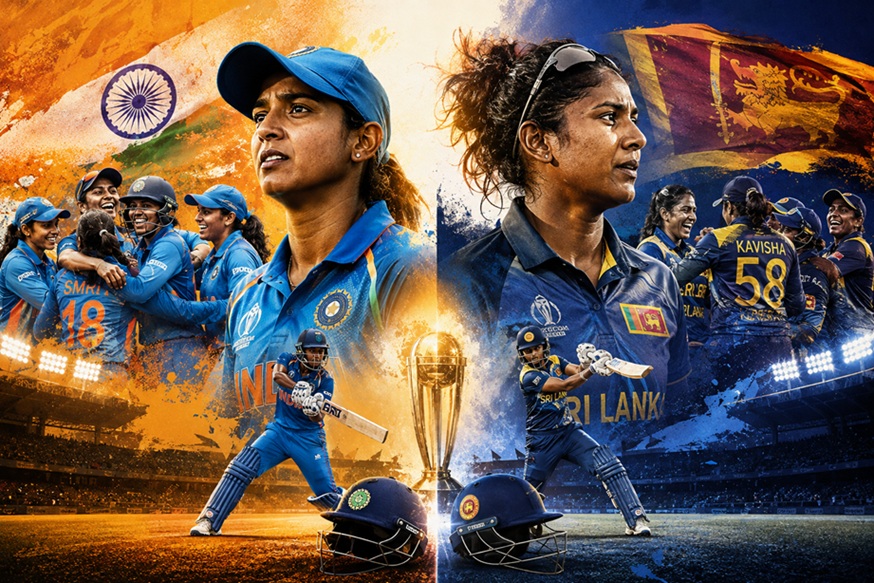

In recent decades, women’s cricket in Asia has experienced significant advancement, and a prominent rivalry that exemplifies this development is that between India and Sri Lanka. India quickly established itself as a strong competitor in global cricket, while Sri Lanka gradually emerged as a formidable side capable of challenging top teams.
The India Women versus Sri Lanka Women Timeline is more than just match outcomes. It narrates the tale of two neighboring cricketing nations that have significantly elevated the level of women’s cricket throughout Asia. Starting with lopsided matches in the late 90s to exhilarating Asia Cup finals and fiercely contested bilateral series, every segment has added to the thrilling nature of this rivalry.
This article delves into the comprehensive history of their encounters, key milestones, memorable performances, and how this competition has matured into one of the most captivating contests in international women’s cricket.
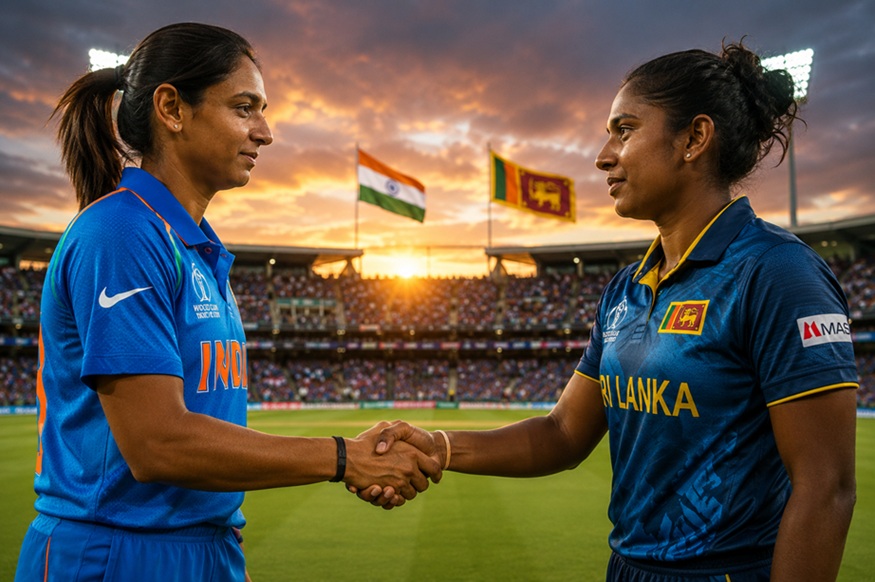
The Onset of the Rivalry
The rivalry began in 1997, just a few months after the Sri Lanka Women entered the international cricket arena. India had a significant advantage with better international exposure, a more developed domestic framework, and a deeper pool of players. As anticipated, the initial matches were predominantly in favor of India.
India’s steadfast bowling unit routinely limited Sri Lanka’s scoring opportunities, while seasoned batswomen effectively chased down targets or set impressive scores. The early stages firmly positioned India as the dominant force in this competition.
Despite facing substantial losses, Sri Lanka made continuous investments in women’s cricket. Those formative matches against India were advantageous for the squad’s growth in the long term.
Timeline of Notable Events
1997 – The Initial International Encounter
The inaugural official contest occurred during the Women’s ODI World Cup hosted in India.
India triumphed over Sri Lanka with a decisive victory, showcasing the considerable disparity between the two squads. Players such as Chanderkanta Kaul and Purnima Rau were instrumental in achieving India’s first win against their neighboring country.
This match initiated what would evolve into one of the longest-standing rivalries in women’s cricket across Asia.
1998 – Landmark Test Match
A year later, the teams clashed in Colombo for their only Women’s Test match.
India achieved a dominant ten-wicket win after steering the match from start to finish. Batswomen from both sides gave notable performances, highlighted by centuries, which rendered it one of the most crucial matches in the history of their rivalry.
Although women’s Test cricket remained a rarity, this encounter highlighted the increasing competitiveness within Asian women’s cricket.
2000–2008 – India’s Period of Total Supremacy
During the early 2000s, India continued to assert control over nearly all encounters.
Numerous legendary Indian cricketers emerged as consistent match-winners:
- Mithali Raj
- Jhulan Goswami
- Anjum Chopra
- Rumeli Dhar
- Neetu David
India frequently recorded victories by substantial margins in bilateral ODI series and the Women’s Asia Cup. Sri Lanka often found it challenging to confront India’s seasoned bowling attack and superior batting techniques.
The rivalry during this time seemed predictable; nevertheless, Sri Lanka persistently gained essential international experience.
Asia Cup Clashes Evolve into the Premier Platform
One significant tournament that influenced the rivalry greatly was the Women’s Asia Cup.
India was a dominant force in the early tournaments, consistently defeating Sri Lanka in both league games and finals. Their remarkable performance solidified India’s reputation as the most successful team in the history of the tournament.
For Sri Lanka, each encounter in the Asia Cup served as a chance to evaluate their development against the top team in the region.
As time went on, the disparity gradually began to decrease.
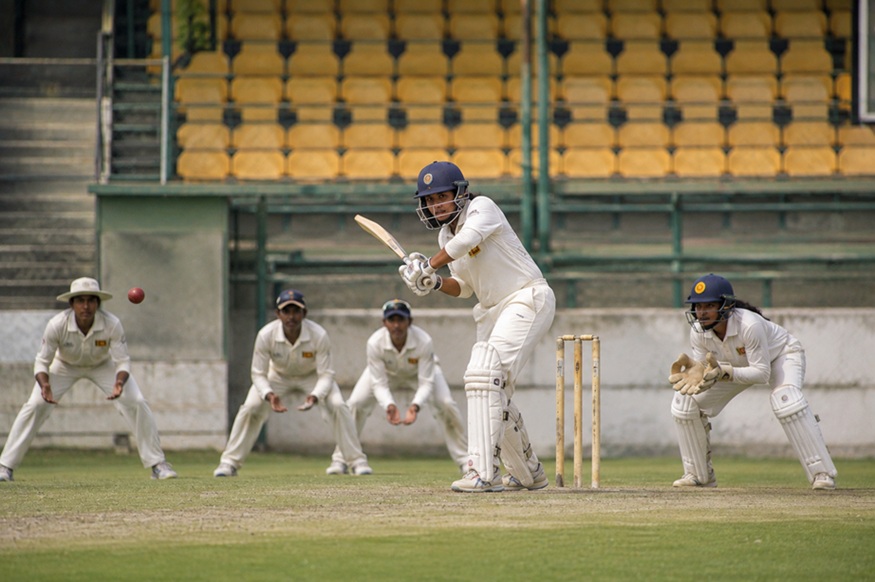
Rise of Sri Lankan Women’s Cricket
By the middle of the 2010s, Sri Lanka established a more robust domestic framework and produced numerous exceptional players.
The introduction of Chamari Athapaththu significantly boosted the team’s morale.
Her aggressive batting approach enabled Sri Lanka to challenge stronger bowling lineups while motivating younger players to adopt a more fearless style of play.
During this same time, India was also welcoming a new crop of players, including:
- Smriti Mandhana
- Harmanpreet Kaur
- Deepti Sharma
- Jemimah Rodrigues
- Shafali Verma
The rivalry evolved from predictable outcomes to thrilling, high-caliber matches that captivated fans throughout Asia.
2016 – Sri Lanka Announces Its Arrival
A pivotal moment occurred during a Women’s T20 International match in Colombo.
Sri Lanka successfully chased down India’s score without losing a wicket, achieving a remarkable ten-wicket triumph.
Chamari Athapaththu’s unbeaten performance highlighted the growing confidence among Sri Lankan cricketers. India recognized for the first time that their neighboring team could be a consistent competitor in the fast-paced game.
This win altered the landscape of opinions in Asian cricket.
Bilateral Series Become More Competitive
The rivalry entered a more equitable phase in the early 2020s.
Rather than lopsided results, matches frequently extended into the final overs.
Many contests exhibited:
- Intense run chases
- Enhanced bowling from Sri Lanka
- Elevated fielding standards
- Increased scoring totals
- Decisive all-round performances
While India still emerged victorious in most bilateral ODI matches, Sri Lanka began to put up a tough fight, especially on home soil.
2022 – Sri Lanka Creates History
A significant achievement occurred during the bilateral T20I series held in Sri Lanka.
The hosts triumphed over India to claim their first-ever bilateral Women’s T20I series victory against the opponents.
Chamari Athapaththu again played a crucial role with an outstanding unbeaten performance in the final match.
This success was a culmination of years of progress in Sri Lankan women’s cricket, demonstrating that they were no longer the underdogs when facing India.
The Evolution of Playing Styles
One of the most intriguing elements of this rivalry is the evolution of playing styles for both teams.
Traditionally, India has relied on technically proficient batting, precise spin bowling, and committed fielding.
Initially, Sri Lanka focused on a more defensive strategy, but they gradually adopted a bolder approach, especially in T20 internationals.
Current matchups now showcase:
- Faster scoring rates
- Higher powerplay totals
- Dynamic opening partnerships
- Enhanced athletic fielding
- Greater tactical adaptability
This shift has rendered each new matchup significantly more unpredictable than the clashes from twenty years prior.
Modern Rivalry Enters a New Era
In recent years, the dynamics of the India Women versus Sri Lanka Women rivalry have significantly changed. India continues to be a dominant force in women’s cricket globally, while Sri Lanka has emerged as a formidable opponent, capable of overcoming top teams during crucial matches.
Enhanced domestic leagues, better coaching frameworks, and the emergence of bold young players have allowed Sri Lanka to lessen the competitive gap. Currently, every bilateral series garners considerable interest from cricket enthusiasts throughout Asia, with games often being decided by narrow margins instead of overwhelming victories.
2024 Women’s Asia Cup Final – A Historic Moment
The pivotal point in this rivalry occurred during the 2024 Women’s Asia Cup Final held in Dambulla.
India set a challenging total of 165 runs for six wickets, aided by a splendid half-century from Smriti Mandhana and crucial late contributions from Richa Ghosh.
Nevertheless, Sri Lanka executed one of the most remarkable run chases in the history of the Women’s Asia Cup.
Captain Chamari Athapaththu delivered an assertive innings of 61 runs, while Harshitha Samarawickrama finished not out with 69, leading the host nation to secure an eight-wicket win with eight balls to spare. This victory marked Sri Lanka’s first Women’s Asia Cup title, breaking India’s long-standing reign in the tournament.
That final is often seen as the most significant triumph in the history of Sri Lankan women’s cricket and a pivotal moment in their rivalry.
Head-to-Head Record Across Formats
Despite Sri Lanka’s notable wins in recent times, India maintains a superior overall record in international matches.
India’s achievements are grounded in their consistency throughout bilateral ODI series, Women’s World Cups, and Asia Cup competitions. In contrast, Sri Lanka’s victories have gained importance as many occurred in high-stress situations and final rounds of tournaments.
Key observations include:
- India leads in the overall head-to-head statistics.
- India has the upper hand in most ODI encounters.
- T20 Internationals have become increasingly competitive.
- Sri Lanka has found more success since 2022.
- Recent matches tend to be determined by closer scores than in the past.
Greatest Players in the Rivalry
Numerous iconic cricketers have influenced this matchup over the last thirty years.
India
Prominent players from India have consistently excelled against Sri Lanka.
- Mithali Raj
- Jhulan Goswami
- Harmanpreet Kaur
- Smriti Mandhana
- Deepti Sharma
- Shafali Verma
- Jemimah Rodrigues
Their contributions enabled India to maintain a stronghold in the rivalry for an extended period and have inspired the upcoming generation of female cricketers.
Sri Lanka
Sri Lanka’s advancement has been propelled by extraordinary individual talents.
- Chamari Athapaththu
- Harshitha Samarawickrama
- Kavisha Dilhari
- Nilakshi de Silva
- Inoka Ranaweera
- Udeshika Prabodhani
Among these players, Chamari Athapaththu is particularly noteworthy for transforming Sri Lanka into a squad capable of competing with the world’s elite. Her fearless approach to batting and leadership has shifted the dynamics of this rivalry.
Why This Rivalry Matters
This rivalry signifies far more than just a competition between neighboring countries.
It epitomizes the impressive advancement of women’s cricket within South Asia.
India’s structured domestic system has consistently produced top-tier players annually, while Sri Lanka’s ongoing investment has fostered a competitive national team capable of challenging established powers.
Every gathering now presents chances for emerging players to showcase their skills under stress, with the growing viewership on television highlighting the rising popularity of women’s cricket across the region.
The competition has spurred increased funding for grassroots cricket, motivating thousands of young girls to take the sport seriously.
What Distinguishes These Games?
Several elements contribute to the appeal of the India versus Sri Lanka rivalry in women’s cricket today.
- Formidable spin bowling from both sides.
- Dynamic opening batswomen who can rapidly alter the course of matches.
- Nail-biting finishes in the latest T20 International matches.
- Fierce contests in the Asia Cup.
- Enthusiastic fan support from both nations.
Unlike the earlier days, contemporary matchups are unpredictable, which adds to the excitement for neutral fans as well.
Gazing into the Future
As both sides keep nurturing gifted young talent, the rivalry is expected to strengthen further.
India is consistently considered a top contender in all ICC tournaments due to their comprehensive roster, seasoned leadership, and well-rounded team.
On the other hand, Sri Lanka has demonstrated their capability to overcome top-tier teams at crucial moments. Their remarkable victory in the Asia Cup highlighted that they are no longer deemed underdogs and possess the skill needed to vie for significant global trophies.
With the rise of professionalism, the expansion of local leagues, and increasing support from fans, upcoming iterations of this rivalry are likely to offer even more unforgettable experiences.
Conclusion
The history of India Women versus Sri Lanka Women showcases one of the most motivating narratives in Asian cricket. What started in 1997 as an uneven rivalry has transitioned into a highly competitive series marked by thrilling finishes, remarkable individual achievements, and significant milestones.
India’s years of supremacy laid the groundwork for this rivalry, while Sri Lanka’s impressive advancements have introduced new excitement and unpredictability. Key events like Sri Lanka’s first bilateral T20I series victory against India and the iconic 2024 Women’s Asia Cup championship have reshaped views on women’s cricket within the region.
As both countries persist in developing top-notch cricketers and supporting the women’s sport, this rivalry is poised to remain a central feature of international cricket. Fans can anticipate numerous more exhilarating matches, remarkable performances, and new achievements that will further enhance the legacy between these two esteemed cricketing nations.