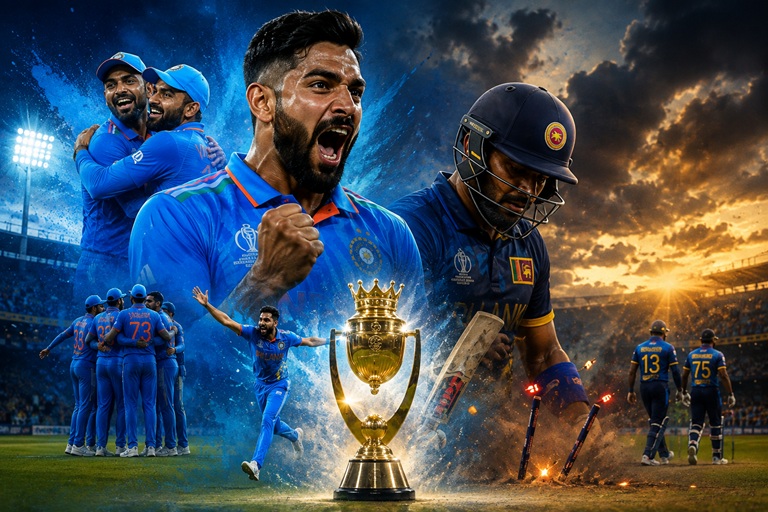

The conclusion of the Asia Cup 2023 will be remembered as an exceptionally lopsided championship event in one-day international cricket. Anticipation was high for an exciting showdown between two of the premier cricketing nations in Asia, but the events at the R. Premadasa Stadium in Colombo turned into an unforgettable exhibition of excellent fast bowling.
The scorecard from the final between India and Sri Lanka narrates a tale of total control. India bowled Sri Lanka out for a mere 50 runs before easily reaching their target without losing a single wicket in just 6.1 overs. This win marked India’s eighth title in the Asia Cup and highlighted one of the most extraordinary bowling exhibitions ever seen in an ODI final.
Match Overview
| Match | Asia Cup 2023 Final |
|---|---|
| Date | 17 September 2023 |
| Venue | R. Premadasa Stadium, Colombo |
| Toss | Sri Lanka won and chose to bat |
| Sri Lanka | 50 all out (15.2 overs) |
| India | 51/0 (6.1 overs) |
| Result | India won by 10 wickets |
| Player of the Match | Mohammed Siraj |
India secured a stunning victory with an incredible 263 balls remaining, ranking it among the most commanding victories in ODI tournament final history.
A Final That Ended Before It Truly Began
The anticipation leading up to the final indicated a closely contested game. India had reached the final after defeating Pakistan decisively during the Super Four stage and overcoming Sri Lanka in a tightly contested match. On the other hand, Sri Lanka had shown remarkable persistence throughout the tournament and aspired to win the trophy in front of their home fans.
Several matches in the tournament had been disrupted by rain, raising concerns about the weather once again. However, once the game commenced, attention quickly turned from the potential rain to India’s ferocious bowling attack.
The choice made by Sri Lankan captain Dasun Shanaka to bat first seemed justifiable on a pitch expected to become more favorable for batting later on. However, the pitch provided movement in the overcast conditions, allowing India’s fast bowlers to capitalize effectively.
Mohammed Siraj Produced a Spell for the Ages
If anyone stood out in the final, it was Mohammed Siraj.
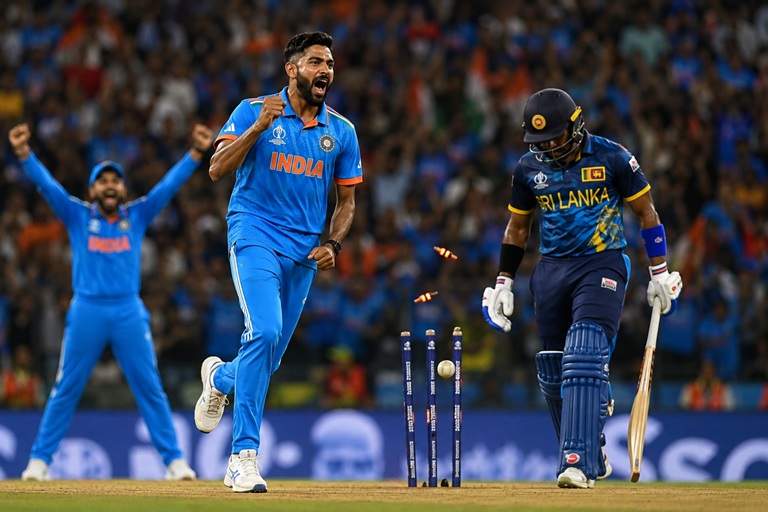
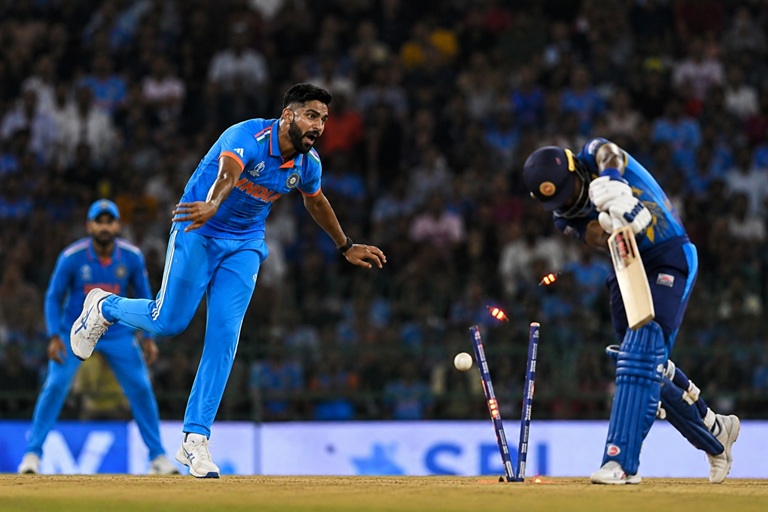
Following Jasprit Bumrah’s early dismissal of Kusal Perera, Siraj delivered an incredible spell that left cricket enthusiasts in awe globally. His combination of swing, seam movement, precision, and relentless pressure produced one of the most remarkable bowling displays in ODI history.
In the blink of an eye, Sri Lanka plunged from 8/1 to 12/6.
Siraj achieved remarkable bowling figures of 6 wickets for just 21 runs, claiming the scalps of:
- Pathum Nissanka
- Sadeera Samarawickrama
- Charith Asalanka
- Dhananjaya de Silva
- Dasun Shanaka
- Kusal Mendis
His performance turned the tide of the match before Sri Lanka had time to mount a recovery.
The India vs Sri Lanka Final Scorecard showcases how every delivery bowled by Siraj posed a real threat for a wicket. His precision in line and length compelled batsmen to make errors, while the conditions aided his effectiveness through swing.
Siraj’s Incredible Bowling Figures
| Bowler | Overs | Runs | Wickets |
|---|---|---|---|
| Mohammed Siraj | 7 | 21 | 6 |
| Hardik Pandya | 2.2 | 3 | 3 |
| Jasprit Bumrah | 5 | 23 | 1 |
| Kuldeep Yadav | 1 | 1 | 0 |
These bowling statistics are still regarded as some of the finest ever documented in a One Day International championship match.
Sri Lanka’s Batting Downfall
A handful of teams have encountered a collapse as severe as that of Sri Lanka during a significant ICC or ACC championship match.
The top order was unable to effectively respond to India’s consistent bowling effort.
Among the specialist batsmen, only Kusal Mendis was able to score in double digits, while numerous seasoned players were dismissed without accumulating any runs.
The batting performance never recovered after the initial wickets fell.
Sri Lanka Batting Scorecard
| Batter | Runs | Balls |
|---|---|---|
| Pathum Nissanka | 2 | 4 |
| Kusal Perera | 0 | 2 |
| Kusal Mendis | 17 | 34 |
| Sadeera Samarawickrama | 0 | 2 |
| Charith Asalanka | 0 | 1 |
| Dhananjaya de Silva | 4 | 2 |
| Dasun Shanaka | 0 | 4 |
| Dunith Wellalage | 8 | 21 |
| Dushan Hemantha | 13 | 15 |
| Pramod Madushan | 1 | 6 |
| Matheesha Pathirana | 0 | 1 |
- Extras: 5
- Total: 50 all out in 15.2 overs
India’s Chase Completed in Record Time
Having bowled out Sri Lanka for a mere 50 runs, India only needed to score 51 runs to secure the championship.
The Indian opening duo showed no signs of doubt.
Shubman Gill and Ishan Kishan launched an aggressive attack right from the start, not allowing Sri Lanka the chance to exert any pressure.
Gill executed stylish drives through the covers, while Kishan employed his characteristic assertive shots square of the wicket.
The chase concluded in just 37 balls.
India Batting Scorecard
| Batter | Runs | Balls |
|---|---|---|
| Shubman Gill | 27 | 19 |
| Ishan Kishan | 23 | 18 |
| Extras | 1 | — |
- Total: 51/0 (6.1 overs)
India completed the pursuit without the loss of a wicket, achieving one of the swiftest victories ever recorded in an ODI final.
Records Established During the Match
The final featured numerous extraordinary achievements that cricket enthusiasts still recall fondly.
Some of the standout records included:
- Mohammed Siraj took six wickets in an impressive bowling performance.
- Sri Lanka was dismissed for a mere 50 runs, marking their lowest ODI total against India.
- India triumphed in the final by 10 wickets.
- The chase was completed in just 6.1 overs.
- India claimed their eighth Asia Cup title.
- The victory margin is considered one of the most commanding in the history of ODI finals.
India’s Bowling Strategy Was Nearly Flawless
The primary focus after the match was not merely on Mohammed Siraj’s six wickets, but rather on how India’s entire bowling team effectively executed their strategies with great accuracy.
Captain Rohit Sharma quickly noticed that the new ball was moving well in the humid conditions of Colombo. Rather than holding back his bowlers, he opted for an aggressive field setup, which featured multiple slip catchers and a close cover.
Jasprit Bumrah put early pressure on the opposition with precise seam bowling before taking out Kusal Perera. This breakthrough allowed Siraj to bowl freely thereafter.
Hardik Pandya provided perfect support to the seamers. Following Siraj’s destructive spell against Sri Lanka’s batting order, Pandya wrapped up the lower order by claiming three wickets, ensuring there was no chance for a revival.
The scorecard from the India vs Sri Lanka match illustrates how the bowlers from India collaborated rather than depending solely on one individual. Each bowler applied pressure, induced errors, and hindered any potential partnerships.
Why Siraj Was Almost Unplayable
Mohammed Siraj’s spell was defined by more than just his pace.
Several reasons made his bowling exceedingly difficult to face:
- Consistent swing away from batters who use their right hand.
- Seam movement after the ball pitched.
- An aggressive full length rather than a conservative approach.
- Impeccable control of line outside off stump.
- Unyielding pressure produced by attacking field configurations.
His six-wicket haul was achieved in a remarkably brief spell, leaving Sri Lanka with practically no opportunity to recover.
Cricket analysts later referred to it as one of the greatest fast-bowling displays ever seen in an ODI final.
Rohit Sharma’s Leadership Deserves Recognition
Even though Siraj rightfully received the Player of the Match accolade, Rohit Sharma’s captaincy was also pivotal.
He resisted the urge to spread the field after securing early wickets. Instead, he persisted with an attacking strategy that included slips and close catchers, motivating his bowlers to pursue wickets instead of merely limiting runs.
This proactive approach ensured that Sri Lanka struggled to settle into their innings.
Moreover, the Indian fielders supported their bowlers effectively with excellent catching and sharp fielding, eliminating any opportunities for easy runs.
How the Chase Became a Formality
With just 51 runs needed, India had a straightforward goal—finish the match swiftly without taking unnecessary risks.
Shubman Gill appeared confident from the initial over, skillfully timing the ball through the off side.
Ishan Kishan matched his intensity, aggressively targeting anything short or wide.
Neither batsman permitted Sri Lanka’s bowlers to gain any momentum.
Within a little over six overs, India surpassed the target, marking one of the quickest successful chases in ODI final history.
The scorecard from the India vs Sri Lanka match reflects a chase that was efficient, fearless, and entirely professional.
Complete Match Timeline
Toss
- Sri Lanka won the toss and decided to bat first.
Early Overs
- Jasprit Bumrah took the wicket of Kusal Perera, giving India a perfect beginning.
Siraj’s Magic
- Mohammed Siraj then delivered a stunning spell, dismissing six Sri Lankan batsmen and putting the hosts in a dire situation.
Lower Order Resistance
- Dushan Hemantha and Dunith Wellalage made attempts to contribute a few crucial runs, but Hardik Pandya swiftly concluded the innings.
- Sri Lanka was bowled out for a mere 50 runs.
India’s Response
- Gill and Kishan started their offense right away.
- No wickets were lost.
- India finished the chase in just 6.1 overs.
Celebration
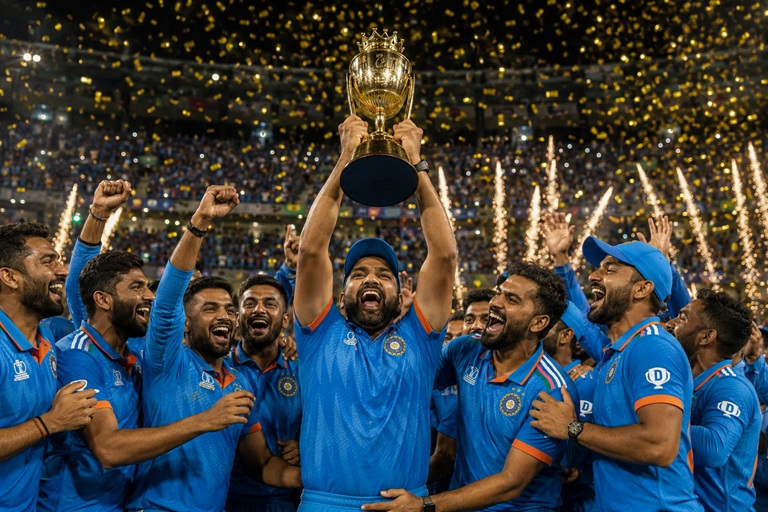
- The festivities commenced as India secured another Asia Cup championship.
Match Statistics
| Statistic | Value |
|---|---|
| Sri Lanka Total | 50 |
| India Total | 51/0 |
| Overs Used by India | 6.1 |
| Balls Remaining | 263 |
| Highest Sri Lankan Score | Kusal Mendis (17) |
| Highest Indian Score | Shubman Gill (27) |
| Best Bowling | Mohammed Siraj (6/21) |
| Winning Margin | 10 wickets |
Tournament Importance
Securing the Asia Cup held significance for multiple factors.
- To begin with, it marked the end of India’s drought for an additional Asia Cup trophy in the ODI format.
- Additionally, it showcased that India’s pace bowling unit had emerged as one of the most formidable in global cricket.
- Moreover, the tournament instilled essential confidence ahead of the 2023 ICC Cricket World Cup, which was set to commence in just a few weeks.
Players like Mohammed Siraj, Jasprit Bumrah, Kuldeep Yadav, Shubman Gill, and Hardik Pandya approached the World Cup with strong momentum after consistently impressive displays during the Asia Cup.
Memorable Moments for Fans
Even years later, fans still reminisce about several remarkable instances from the final.
The most notable moments consist of:
- Siraj capturing four wickets within a single over.
- Rohit Sharma cheering for Siraj from the slips.
- Sri Lanka’s continual loss of wickets nearly every over.
- Gill’s graceful cover drives throughout the chase.
- Ishan Kishan confidently concluding the match.
- The Indian squad celebrating with the Asia Cup trophy.
- Siraj earning the Player of the Match accolade after his remarkable bowling display.
These instances have become iconic reminders whenever discussions of the 2023 Asia Cup arise.
Why This Final Holds Historical Significance
Cricket has witnessed numerous dominant victories, but so few finals have concluded in such a decisive manner.
Several factors contribute to the historical importance of this match:
- One of the tiniest scores recorded in an ODI tournament final.
- One of the swiftest successful run chases in an ODI final.
- A six-wicket haul by a pace bowler in the championship game.
- India’s largest victory margin by wickets in an Asia Cup final.
- An unforgettable showcase of disciplined fast bowling under pressure.
Due to these accomplishments, the match frequently comes up when experts analyze the greatest bowling performances in ODIs.
Conclusion
The scorecard from the India vs Sri Lanka Final represents significantly more than just statistics; it encapsulates one of the most dominant displays ever seen in an ODI final.
India approached the match with assurance, flawlessly executed their strategy, and did not provide Sri Lanka any chance to compete. Mohammed Siraj’s remarkable performance of 6 for 21 turned the game into a lopsided contest, while Jasprit Bumrah and Hardik Pandya ensured that recovery was impossible.
With their batting, Shubman Gill and Ishan Kishan wrapped up the modest chase in merely 6.1 overs, completing a memorable 10-wicket victory and claiming India’s eighth Asia Cup title.
Years later, cricket enthusiasts continue to look back at the final scorecard of India versus Sri Lanka, as it represents accuracy, collaboration, and a remarkable exhibition of speedy bowling in contemporary ODI cricket. From Siraj’s outstanding performance to India’s unprecedented pursuit, the 2023 Asia Cup Final stands as a standard for excellence on the grandest platform.