
Australia’s quest to retain the ICC Men’s Cricket World Cup begins with a seemingly straightforward yet potentially significant challenge: adapting to early morning cricket.
For a squad that triumphed in the 2023 World Cup by capitalizing on matches played under artificial lighting, the forthcoming ODI series in Zimbabwe and South Africa introduces a contrasting scenario. Early start times, newly prepared pitches, the likelihood of swing for fast bowlers, and tougher batting conditions may compel Australia to rethink some of the strategies that contributed to their success as world champions.
The impending six-match series is therefore about much more than merely the outcomes of bilateral ODIs. Early Starts Aussie ODI Plans could emerge as a crucial strategic focus as Australia enters in-depth preparation for the 2027 World Cup, which is set to take place in South Africa, Zimbabwe, and Namibia.
Australia will engage in three ODIs against Zimbabwe prior to heading to South Africa for an additional three contests. Five of these six games are planned as daytime matches, presenting Australians with a significant chance to acclimate to the conditions they may encounter during the World Cup return to the region.

Why Morning Cricket Could Change Everything
A 50-over contest in the evening is distinct from one that kicks off at 9:30 or 10 A.M.
In evening matches, teams often face evolving conditions as the day unfolds. Dew can play a pivotal role, especially in the second innings, while batting conditions can fluctuate based on the venue and pitch characteristics.
Morning matches bring forth a different array of challenges.
- Newly prepared pitches can provide seam movement.
- Cooler temperatures can aid in creating swing.
- Batsmen may require additional time to acclimate before launching their attacks.
- Bowlers who excel with a new ball could find their skills more valuable.
This is why Early Starts Aussie ODI Plans will likely encompass more than mere changes to training routines or waking up earlier.
Andrew McDonald, Australia’s head coach, has already recognized that early starts can pose unique challenges for batsmen and potentially impact the types of bowling options needed during a match. The upcoming matches allow the team to collect vital insights ahead of the 2027 World Cup.
The question is simple: should Australia persist with the same aggressive ODI cricket that proved so effective in India in 2023, or should they modify their tactics to adapt to conditions that may favor a more patient approach?
The answer may shift depending on each venue.
Australia’s 2023 Formula Was Built for Different Conditions
Australia’s World Cup victory in India was fueled by confidence, adaptability, and an increasingly assertive strategy at the top of the batting order.
David Warner, Travis Head, and Mitchell Marsh helped forge a mindset that applied pressure on opposing bowlers right from the start. The Powerplay was not solely about survival; Australia came to see the initial overs as a chance to seize control of the match.
That philosophy continues to stand as one of Australia’s primary advantages.
However, the tactics in cricket cannot be dissociated from the prevailing circumstances.
A Forceful Powerplay Might Not Always Be the Solution
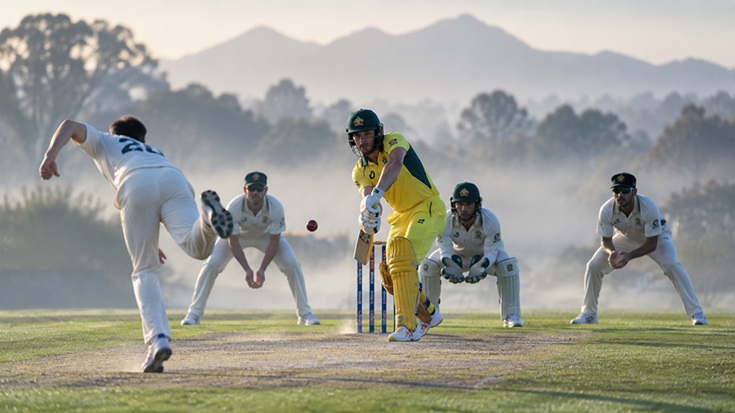
When a team bats first at 9:30 AM on a pitch that promotes swing and seam movement, an unrestrained offensive strategy could lead to unnecessary hazards.
An assertive opener might encounter a ball that moves in the air and off the surface. Edges that could safely evade fielders on a dry afternoon might instead reach the slips. A forceful shot directed through the off side can prove more challenging when the ball is in motion.
This does not imply that Australia will abruptly shift away from assertive cricket strategies.
Rather, Australia’s plans for Early Starts in ODIs may necessitate a more discerning approach regarding when to be aggressive.
A successful team in the World Cup often has various tactical approaches.
- On one type of pitch, Australia may aim for rapid scoring during the Powerplay.
- Conversely, on another surface, focusing on maintaining wickets and weathering the initial overs could be the more prudent choice.
The capability to quickly assess conditions could become one of Australia’s most significant advantages.
McDonald has pointed out the necessity of being adaptable and employing multiple strategies during a tournament, especially since World Cup conditions can differ greatly from one venue to another.
Zimbabwe Presents a Key Initial Challenge
Australia’s ODI series against Zimbabwe is set to kick off on September 15, with all three games taking place at Harare Sports Club and commencing at 9:30 AM local time.
These matches mark Australia’s first One Day Internationals in Zimbabwe in over ten years, making the series important both from a historical perspective and a strategic standpoint.
For Australia, Harare is much more than just another international destination.
It serves as a chance to examine morning conditions in one of the host nations for the 2027 World Cup.
Understanding Before the World Cup is Crucial
Teams often approach significant tournaments with theoretical strategies. Coaches evaluate past performance data, assess pitches, and prepare athletes in practice sessions.
However, nothing can replace the experience of playing international cricket in the specific host environment.
Australia will have the chance to analyze:
- The behavior of the new ball.
- The rate at which pitches become flat.
- If the initial hour of play presents distinctly different conditions compared to later in the day.
These observations may impact future team selection and tactical decisions.
Should the ball show consistent movement during the initial 10 overs, Australia’s batting lineup might take the opportunity to initiate a more measured start. If conditions remain favorable for batting, the established aggressive strategy could be encouraged.
This illustrates the true importance of testing Early Starts Aussie ODI Plans now rather than waiting for the World Cup.

The Bowling Lineup May Hold Greater Significance Than Before
Morning conditions might also influence how Australia formulates its bowling attack.
Australia boasts remarkable pace options, especially when Pat Cummins, Mitchell Starc, and Josh Hazlewood are available. However, early movement might elevate the effectiveness of bowlers who focus on seam, swing, and precision instead of merely speed.
Specialists with the New Ball Might Acquire Extra Importance
The opening hour of a morning ODI could emerge as a vital period.
If the ball is in motion, Australia has the chance to secure wickets before the opposing batters form any partnerships. This scenario could elevate the significance of bowlers who are adept at consistently testing the outside edge.
Australia has alternatives that go beyond its recognized stars.
Nathan Ellis has shown his ability to adapt in recent one-day international matches, stepping into new-ball roles when senior fast bowlers were not available. Other fast bowlers like Xavier Bartlett, Spencer Johnson, and Billy Stanlake also have chances to demonstrate their capacity to take on varied roles.
This adaptability is crucial because Australia’s early ODI strategies cannot solely rely on one specific group of players being present.
Cummins, Starc, and Hazlewood are likely to experience heavy workloads, especially since Test cricket remains a top priority. Consequently, Australia must cultivate depth ahead of the World Cup.
A bowler capable of:
- Handling the new ball.
- Coming back during the middle overs.
- Still making contributions in the closing stages.
becomes incredibly essential.
Squad Flexibility Could Decide Australia’s World Cup Balance
Australia’s preparation is further influenced by the need to incorporate sufficient variety within a constrained World Cup team.
McDonald has openly advocated for the notion of expanding World Cup squads, contending that larger teams could enhance flexibility. Nevertheless, there is no current sign that the tournament regulations will shift away from the standard 15-player squad format.
This implies that adaptability may rise to become one of the key factors in the selection process.
Multi-Skilled Players Have a Major Opportunity
Australia is undergoing a transitional phase due to the retirements of several seasoned white-ball players such as Steve Smith, Glenn Maxwell, and Marcus Stoinis.
These exits create voids not just in skills but also in adaptability.
Consequently, Australia is focusing on athletes who can engage in multiple roles effectively.
Cooper Connolly and Joel Davies bring left-arm spin and batting capabilities, while Ollie Peake is also enhancing his off-spin skills. Cameron Green stands out as one of the most essential multi-faceted players in Australian cricket, whereas Alex Carey and Josh Inglis add versatility with their dual ability to serve as wicketkeepers and specialized batters.
The significance of these athletes may rise if early matches lead to significantly varying conditions throughout the tournament.
Australia’s ODI Plans could necessitate a particular setup for pitches favoring seam and another for dry surfaces as the competition progresses.
A versatile team makes such adaptations simpler.
South Africa Will Offer Another Level of Preparation
Following their series against Zimbabwe, Australia will encounter South Africa in a trio of ODIs.
The initial two games are planned as daytime matches at Kingsmead in Durban and the Wanderers in Johannesburg, both of which have been confirmed as host sites for the upcoming 2027 World Cup. The third ODI, set to take place in Potchefstroom, will be a day-night event.
This sets up an optimal situation for assessment.
Australia can analyze the variance between conditions in the morning and afternoon while competing against one of the top sides in international cricket.
Venue-Specific Strategy Will Be Essential
Durban and Johannesburg represent distinctly different cricketing conditions.
Factors such as:
- Altitude
- Climate
- Pitch attributes
- Field measurements
can shape the dynamics of an ODI.
Australia must not presume that a universal tactic will succeed universally.
Thus, Australia’s ODI Plans should be considered part of a broader strategy instead of a mere tactical modification.
The team needs to pinpoint which players excel under varying circumstances.
Questions that Australia might investigate include:
- Should the opening batsmen consistently adopt an aggressive approach from the very first ball?
- Which fast bowlers pose the greatest threat with a new ball that moves?
- Can all-rounders offer strategic adaptability on diverse surfaces?
- How should Australia organize its middle overs following a cautious beginning?
- Which individuals are capable of undertaking multiple responsibilities in a fifteen-member World Cup squad?
While the forthcoming tour may not resolve every query, it promises to yield valuable insights.
Australia’s Biggest Advantage Is Adaptability
Australia’s primary advantage as it approaches 2027 may not be any single player.
It might lie in their capacity to adjust.
The 2023 World Cup campaign highlighted the importance of being adaptable. Australia navigated initial hurdles in the tournament and progressively established a clear vision for their playing style.
This assurance became increasingly significant as the tournament advanced.
Australia now has roughly a year to perfect another World Cup approach.
McDonald has stated that the team has a solid understanding of the possible player pool, identifying over 20 individuals who could potentially contribute significantly at the tournament. However, factors such as player availability, commitments to Test matches, and evolving conditions may still alter the final selection.
This unpredictability underscores the necessity for trial and error.
What Australia Needs to Take Away from These Six Games
The forthcoming ODI series should not be evaluated solely by the outcomes on the scoreboard.
Australia might lose a game yet still extract essential insights.
For instance, an aggressive batting approach could falter on a challenging morning pitch but may underscore the need for more caution. A bowler might have difficulty with the new ball but could emerge as a key player later in the innings.
Such insights are crucial as they help diminish unpredictability.
One of the worst moments to realize a strategy is ineffective is during a World Cup.
Consequently, the Early Starts Aussie ODI Plans could turn out to be a pivotal aspect of Australia’s preparation.
The Journey to 2027 Begins Before Dawn
Australia’s ODI tour to Zimbabwe and South Africa might look like a standard bilateral series on the schedule.
In truth, it serves as a significant practice opportunity.
The locations, competition, and especially the early match times give Australia a chance to acclimate to conditions that may influence their World Cup defense.
The Australian squad that triumphed in the 2023 tournament thrived in night matches and structured its achievements around:
- Assertive batting
- Effective fast bowlers
- Strategic assurance
The team gearing up for 2027 might require some adjustments.
It could need to be more composed with the bat in the initial hour. It might have to focus on bowlers who excel in swing and seam. A broader roster of all-rounders and versatile players able to change roles based on the situation may also be essential.
Above all, it must remain flexible.
The Early Starts Aussie ODI Plans do not signify a departure from Australia’s successful approach. They aim to ensure that this approach can adapt to varying circumstances.
If Australia masters how to negotiate a fresh morning pitch, determining when to be aggressive and when to withstand pressure, as well as forming a squad that can adjust across different venues, these games might prove to be much more than mere bilateral contests.
The pathway to protecting the World Cup title is already in motion.
And for Australia’s ODI squad, the next significant tactical evolution might commence with an earlier than usual wake-up call.
Conclusion
The forthcoming One Day International matches for Australia in Zimbabwe and South Africa are much more than just a standard bilateral series. The early morning start times, newly prepared pitches, the likelihood of swing and seam movement, and varying playing conditions will serve as essential practice for the ICC Men’s Cricket World Cup in 2027.
The Importance of Adaptability
The primary takeaway for Australia will be the critical need for adaptability. Their assertive style of play was highly effective during the 2023 World Cup, yet the conditions in southern Africa may demand increased patience in the initial overs and a more flexible approach to team composition.
Testing Squad Strength and Versatility
These six matches will also provide Australia the chance to evaluate their pace-bowling strength, all-rounders, and versatile players in diverse environments. Achievements will not be judged solely on wins, but also on the strategic insights acquired throughout the matches.
More Than Just Match Results
- Achievements will not be judged solely on wins.
- Strategic insights acquired throughout the matches will also be important.
- Australia will have the opportunity to test players in diverse environments.
Australia’s Road to 2027
In the end, Australia’s planning for early start times in ODI matches could significantly influence their efforts to defend the World Cup title. If the squad can discern when to be aggressive, when to withstand pressure, and how to adjust across different locations, these early contests could prove to be a vital part of their journey toward 2027.