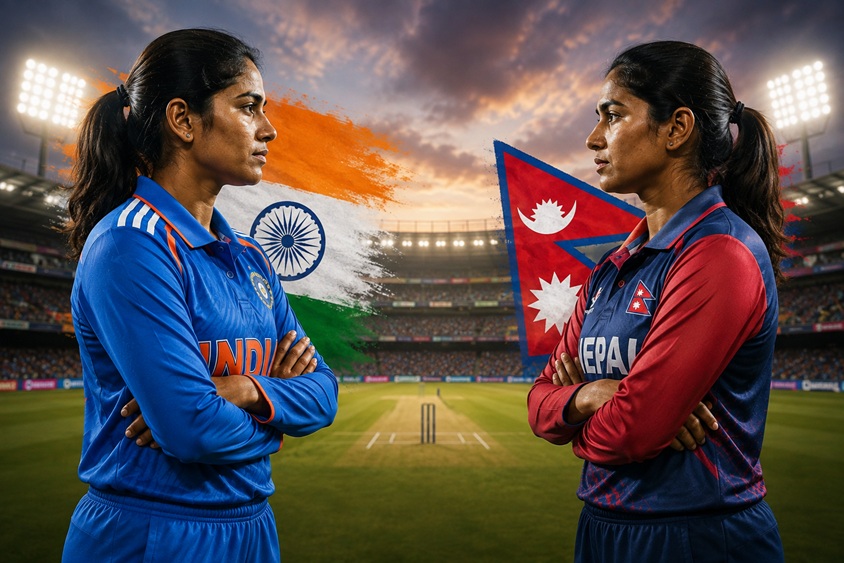

The narrative surrounding India Women versus Nepal Women is more captivating than the basic statistics of wins and losses indicate. Although these teams have clashed in senior women’s T20I cricket, their rivalry doesn’t constitute a frequent bilateral matchup. Rather, their prominent encounters have occurred in Asian tournaments, where India stands as a well-established power while Nepal utilizes these opportunities to evaluate their development.
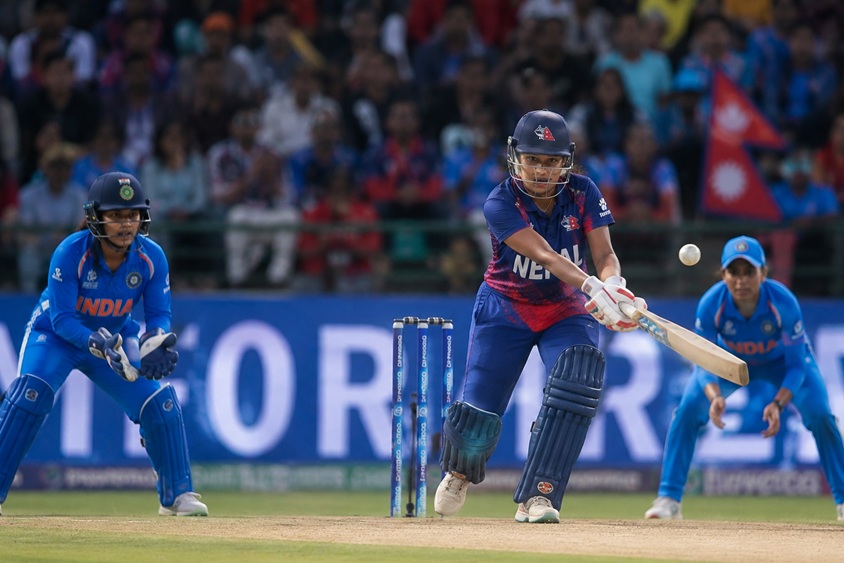
For those looking into the historical context of India Women versus Nepal Women in 2026, it is essential to clarify from the outset that the last extensively recorded senior encounter prior to 2026 took place during the 2024 Women’s Asia Cup. In that event in Dambulla, India achieved a score of 178 runs for 3 wickets, while Nepal managed to score 96 runs for 9 wickets, resulting in an 82-run triumph for India. The standout performance featured Shafali Verma, who scored 81 runs off 48 balls, along with Deepti Sharma, who captured three wickets.
The narrative for 2026 also encompasses a noteworthy related match featuring India A Women against Nepal Women. On February 17, 2026, India A triumphed over Nepal by seven wickets in the ACC Women’s Asia Cup Rising Stars hosted in Bangkok. This match is distinct from a senior-level India Women international fixture and should therefore be viewed as a separate entity rather than simply appended to the senior matchup statistics.
The evolution of the rivalry
India and Nepal occupy vastly different positions within the women’s cricket framework. India boasts a robust domestic setup, a long-standing international track record, and regular participation in major ICC events. Conversely, Nepal has been developing their women’s cricket program through local tournaments and competitive pathways.
This disparity introduces a compelling aspect to their contests. Nepal is not solely aiming for a result; matches against India serve as a standard for comparison. Meanwhile, India faces the task of sustaining their performance intensity against an opponent that approaches the game with freedom and enthusiasm.
Thus, the term India Women versus Nepal Women History encompasses more than mere scoreline records. It mirrors the advancement of women’s cricket in South Asia, highlights the significance of ACC tournaments, and underscores the growing opportunities for players from Nepal to challenge themselves against more formidable rivals.
The 2024 Asia Cup encounter
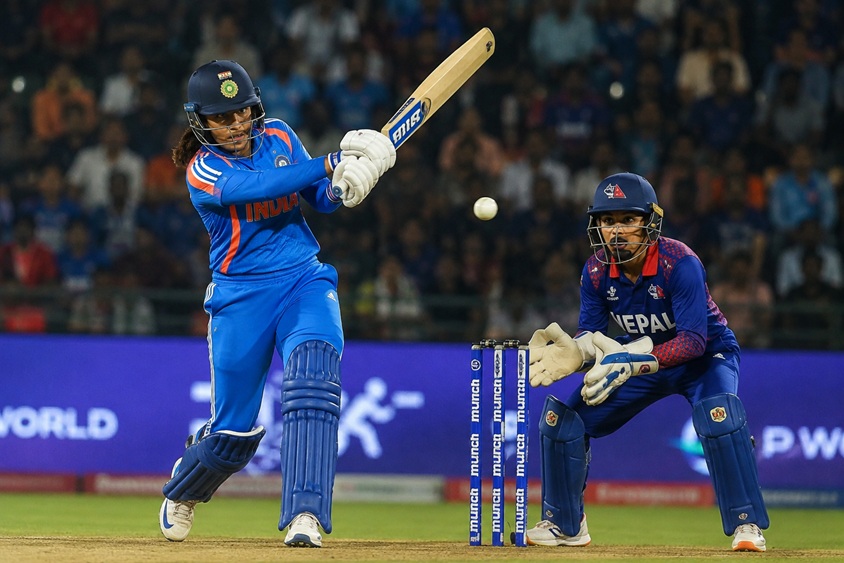
The most definitive senior encounter took place on July 23, 2024, at the Rangiri Dambulla International Stadium. India won the coin toss and opted to bat. This choice quickly proved advantageous as the opening partnership applied pressure on Nepal.
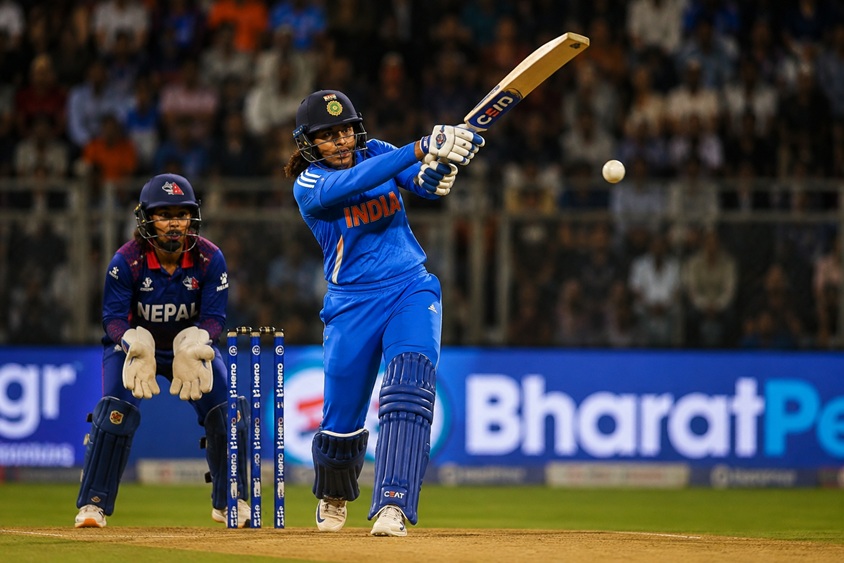
Shafali Verma delivered a striking performance with 81 runs off 48 balls, hitting 12 boundaries and a six. Dayalan Hemalatha contributed with 47 runs from 42 balls, while Jemimah Rodrigues ended her innings not out with 28 runs off just 15 balls. India concluded their innings at 178 runs for 3 wickets after 20 overs.
In response, Nepal’s batting did not achieve the same flow and ended their innings at 96 runs for 9 wickets after 20 overs. Consequently, India secured an 82-run victory. Among the key bowlers for India was Deepti Sharma, with figures of 3 wickets for 13 runs, while Radha Yadav made significant contributions with two wickets as well.
The outcome was notable not only for the final score. India advanced to the semi-finals, while Nepal gained invaluable experience facing a team accustomed to the pressures of international competition.
India Women vs Nepal Women History: the context of 2026
The 2026 calendar brings new significance to the narrative since Nepal started the year by achieving a significant goal. The ICC confirmed that Nepal qualified for the Women’s T20 World Cup Global Qualifier for the first time and selected a squad of fifteen players under the captaincy of Indu Barma. Additionally, Nepal took the initiative to host the global qualifier, providing the women’s team with a pivotal chance to develop in the presence of their local fans.
This advancement is essential when analyzing the historical context between India Women and Nepal Women. A record of their direct encounters reveals match outcomes; however, it doesn’t necessarily indicate the progress made by the team that did not win in subsequent encounters.
The 2026 roster for Nepal featured prominent players including Rubina Chhetri, Sita Rana Magar, Puja Mahato, Bindu Rawal, Samjhana Khadka, and Kabita Joshi. Many of these athletes also competed against India A during the Rising Stars tournament.
Encounter between India A and Nepal in 2026
On February 17, 2026, at the Terdthai Cricket Ground in Bangkok, Nepal was dismissed for 78 runs in 18 overs. India A successfully chased down the target in only 7.5 overs, finishing with 82 for the loss of three wickets, thereby winning by seven wickets.
- Tanuja Kanwer stood out as the key bowler, taking 4 wickets for 12 runs in four overs
- Minnu Mani achieved figures of 3/8
- Radha Yadav recorded 2/17
- Nepal’s highest individual score came from Samjhana Khadka, who managed 22 runs
- Bindu Rawal, Puja Mahato, and Rubi Poddar also contributed with scores in the double digits
Vrinda Dinesh propelled India A’s scoring spree, hitting 39 off just 18 balls. Tejal Hasabnis contributed 18 runs from 13 balls, and the target was accomplished with plenty of overs still to play.
This match is particularly beneficial for those looking into the historical clashes between India Women and Nepal Women, as it illustrates how the broader pool of players in India can assert dominance in such competitions. However, labeling it as a match between the senior teams of India Women and Nepal Women would not be correct. India A and the senior national side are distinct teams, even when they include players with international experience.
Analysis of the 2024 scorecard
A close examination of the Dambulla match reveals why the results typically favor India.
India’s batting lineup presented significant depth, which enabled them to attack from the outset without relying exclusively on one athlete to lead the innings. Shafali initiated the quick scoring, Hemalatha was supportive, and Rodrigues concluded with a strong performance. The total of 178 runs also imposed pressure on the scoreboard before Nepal began its batting effort.
For Nepal, the greatest challenge lay in maintaining effective partnerships. Although they reached 96 for 9, losing wickets hindered their ability to make a final push. India’s bowling unit combined speed, spin, and precision, making it challenging for Nepal to establish consistent scoring areas.
This context regarding India Women and Nepal Women history is valuable for tactical evaluations. India’s superiority has stemmed not only from individual skill but also from the capacity to apply relentless pressure throughout the entire duration of the match.
Players who influenced the narrative
India’s aggressive batting
Shafali Verma’s score of 81 stands out as the key highlight from the encounter in 2024. With a strike rate of 168.75, she altered the dynamic of the innings significantly, enabling India to pile up a total that posed a considerable challenge for the opposition to overcome.
Jemimah Rodrigues also demonstrated why India can effectively conclude innings. Her unblemished 28 runs off 15 balls injected momentum precisely when it was most needed.
Nepal’s developing core
Nepal’s team tells a different tale. Indu Barma, Rubina Chhetri, Sita Rana Magar, Puja Mahato, Samjhana Khadka, and Bindu Rawal signify a group that has been increasingly emerging in critical regional and qualifying tournaments.
The ICC’s announcement regarding the 2026 squad underscored Nepal’s aspiration to qualify for their inaugural Women’s T20 World Cup. This objective encompasses every significant Asian encounter within a broader developmental framework.
Why the 2026 timeline is significant
The primary error when examining the history between India Women and Nepal Women is presuming that every India-Nepal result pertains to the same tournament or competitive level.
A helpful timeline for 2026 delineates the principal milestones:
- July 23, 2024: India Women triumphed over Nepal Women by 82 runs during the Women’s Asia Cup in Dambulla.
- February 17, 2026: India A Women secured a victory against Nepal Women by seven wickets in the ACC Women’s Asia Cup Rising Stars event in Bangkok.
- 2026: Nepal embarked on the qualification pathway for the Women’s T20 World Cup, led by Indu Barma.
This differentiation maintains the article’s accuracy while highlighting the frequency with which the women’s teams of India and Nepal intersect through ACC cricket.
India’s edge and Nepal’s chance
India’s foremost strength is its depth. When one batter underperforms, another can step up. If a bowler has a costly over, there is typically another option available. This depth arises from a robust domestic framework and consistent international play.
Nepal’s potential resides in exposure. Competing against India A, and possibly the senior Indian team in upcoming ACC tournaments, offers Nepal a tangible reference point for batting rhythm, bowling consistency, fielding quality, and match strategy.
For India, such matches are beneficial as they allow for the evaluation of emerging talents. The 2026 Rising Stars match illustrated this: India A’s bowlers limited Nepal to just 78 runs before finishing the chase in under eight overs.
What lies ahead?
The future of the rivalry between India Women and Nepal Women will largely hinge on tournament draws and regional scheduling. The visibility of Nepal’s women’s cricket program is on the rise, while India continues to be one of the dominant teams in the area.
A future matchup would be especially intriguing if Nepal can showcase its advancing T20 abilities in a senior international battle against India. While the gulf remains significant, the worth of these encounters extends beyond merely whether Nepal secures a win.
For the supporters, the most thrilling aspect is the prospect of witnessing a burgeoning regional rivalry becoming increasingly common. More clashes would generate a more comprehensive statistical pool, more unforgettable individual contributions, and a clearer understanding of Nepal’s advancements.
Historical context of India Women vs Nepal Women
The evidence now strongly indicates India as a dominant force, but the broader narrative revolves around progress and potential. The Asia Cup in 2024 demonstrated India’s capacity to command a T20 match right from the initial over. The 2026 India A encounter highlighted the fact that India’s bench strength can be equally formidable. Concurrently, Nepal’s ongoing involvement in ACC and ICC pathways is gradually presenting its athletes with more challenging tests.
For those tracking this 2026 progression, it is crucial to distinguish between senior international matches and those involving India A and youth teams. This minor clarification significantly enhances the reliability of the timeline.
While the rivalry may not yet match the intensity of competitions like India-Australia or India-England, it holds its own significance. It bridges the established strength of Indian women’s cricket with a Nepalese team that is cultivating confidence, knowledge, and ambition. Should Nepal’s current growth persist, future encounters between India and Nepal could evolve into much more competitive affairs, becoming increasingly important for women’s cricket in South Asia.
Conclusion
The clash between the women’s teams of India and Nepal underscored the significant disparity between the two, while also illustrating Nepal’s increasing footprint in the realm of international women’s cricket. India’s robust batting lineup and methodical bowling strategy proved decisive, with Shafali Verma’s aggressive innings laying the groundwork for a dominant display.
For Nepal, the focus of this match was not solely the scoreline but rather the opportunity to gain valuable experience competing against one of the premier teams in Asia. Their ongoing involvement in important ACC and ICC tournaments is aiding in the establishment of a more solid basis for future growth.
In general, India maintains a substantial advantage in this rivalry; however, the progress being made by Nepal makes upcoming encounters intriguing. As the players from Nepal receive additional opportunities to showcase their skills and build confidence, the margin may gradually lessen, introducing a new layer to this developing rivalry in South Asian cricket.