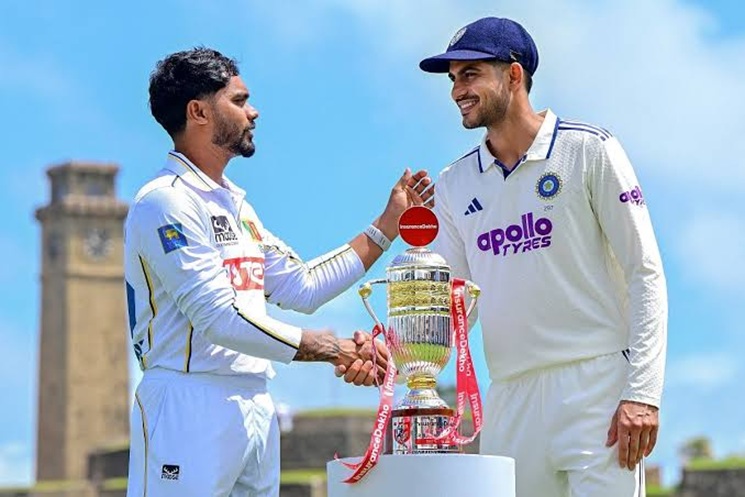

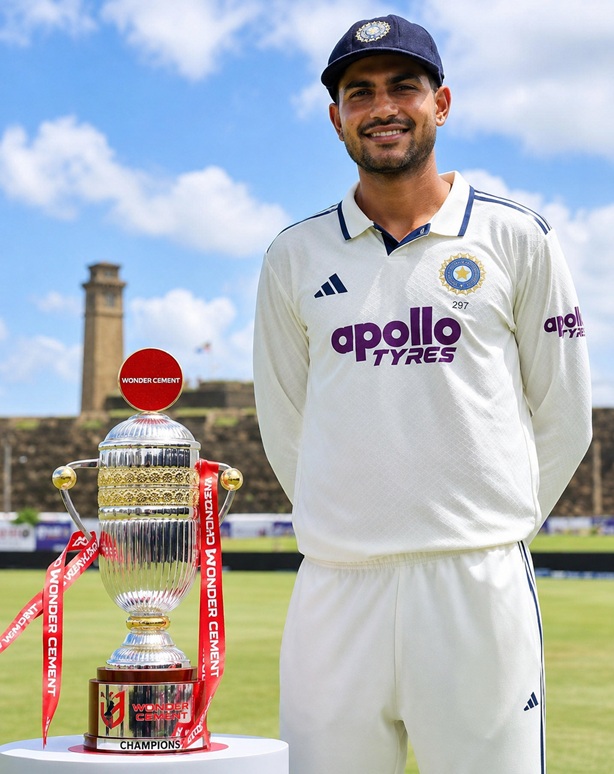
India’s Test cricket narrative has reached a remarkable milestone that very few generations in the sport have the privilege to witness. On August 15, 2026, India took to the field at Galle International Stadium for its 600th Test match, led by Shubman Gill. For a young leader who is still in the process of establishing his legacy, this moment has a significance that extends far beyond the mere statistics.
Previously, Gill has expressed how special it is to captain India, yet overseeing a milestone Test brings with it an additional layer of accountability. The encounter against Sri Lanka is part of the ongoing World Test Championship series, while also coinciding with India’s 80th Independence Day, blending a significant sporting event with national pride.
Thus, the importance of Shubman Gill’s 600th Test transcends just a numerical milestone. It symbolizes a captain who stands for a cricket-loving nation at a time when its Test history spans 94 years, from C.K. Nayudu’s team at Lord’s in 1932 to the newer generation now leading in Galle.
Why the 600th Test holds importance for India
India launched its inaugural Test match against England at Lord’s in June 1932. It took many years for the nation to cement its reputation as a significant contender in this format, but the long journey ultimately produced legendary teams, iconic captains, and memorable victories.
- The 100th Test for India was played against England in Birmingham in 1967.
- The 200th occurred against Pakistan in Lahore in 1982.
- The 300th match was held against South Africa in Ahmedabad in 1996.
- The 400th Test was competed against the West Indies in Jamaica in 2006.
- The 500th Test took place against New Zealand at Green Park, Kanpur.
The chapter of Shubman Gill’s 600th Test unfolds in a markedly different time. While test cricket remains strenuous, India now approaches landmark matches as one of the strongest teams in the red-ball format, backed by an extensive domestic system and a growing depth of talent.
Gill’s path to becoming Test captain
Gill’s rise to the position of Test captain was not a sudden occurrence. He had already carved out a reputation as an essential batter and garnered experience alongside veteran international players prior to assuming the leadership position.
Upon his appointment as India’s Test captain in 2025, Gill regarded the role as a tremendous privilege and reflected on his childhood dream of leading the national side. His first significant challenge was the five-Test series in England, where he guided a relatively inexperienced team through a tough overseas assignment.
That tour quickly demonstrated why the selectors had faith in him. Gill emerged as India’s top run-scorer in the series, amassing 754 runs across 10 innings at an average of 75.40, including four centuries and a highest score of 269.
Thus, the narrative around Shubman Gill’s 600th Test is intricately linked to a larger transformation. He has transitioned from being viewed mainly as one of India’s talented batters to becoming a key element in the team’s long-term leadership strategy.
Galle offers a unique backdrop for this milestone.
The location contributes an additional significance to the event. Galle International Stadium stands out as one of Sri Lanka’s most well-known Test venues, recognized for creating conditions where spin can play a more significant role as the game advances.
India’s milestone of their 600th Test aligns with Galle staging its 50th Test match. This indicates that the stadium itself is marking a notable anniversary while India reaches a remarkable numerical achievement in their Test match history.
The occasion of Shubman Gill’s 600th Test thus represents the convergence of two cricket timelines: India’s century-long journey in Test cricket and Galle’s evolution into a prominent venue for this format.
Weather conditions present another variable. Reports leading up to the match indicated diverse weather changes in Galle, featuring sunshine, light rain, and overcast skies. Interruptions due to rain could disrupt the game’s flow, while the pitch condition and the outcome of the toss may affect the captains’ strategies for the opening day.
On August 15, India secured the toss, with Gill opting to bat first. This choice provided India the initial chance to exploit the pitch before the game potentially shifts towards a more spin-dominated scenario.
India’s composition under Gill
The tour in Sri Lanka is particularly significant as India is without a few key players. Jasprit Bumrah and Sai Sudharsan were unable to partake in the series due to injuries, yet the squad maintains a combination of seasoned veterans and emerging talents.
The ICC squad announcement named Gill as captain and KL Rahul as vice-captain, including players such as Yashasvi Jaiswal, Rishabh Pant, Ravindra Jadeja, Kuldeep Yadav, and Mohammed Siraj. Additionally, the selection introduced new spin alternatives, with Saransh Jain receiving his first Test call-up.
This composition is critical in Galle. India can utilize multiple spin options while also having pace choices available, allowing Gill the adaptability needed based on the pitch and weather conditions.
For Shubman Gill’s 600th Test role, effectively managing these resources may be just as vital as scoring runs himself. A captain participating in a milestone match can easily become bogged down by its significance, but Test cricket favors patience and clear decision-making.

The importance of Gill’s own batting
Taking on a leadership role does not lessen the expectations on Gill as a batsman. In fact, being captain amplifies the scrutiny on him.
His performance against England showcased how impactful he can be when he combines technical precision with the confidence to score significantly. India will look for that form of Gill in Sri Lanka, especially because the runs from a captain can influence the strategic choices available to the entire team.
The milestone of Shubman Gill’s 600th Test could become memorable if he plays a substantial innings, but his contributions should not be solely viewed through the lens of individual statistics. The primary goal is to position India in favorable situations from which they can dominate in five-day matches.
A significant event coinciding with Independence Day
The schedule of the match has heightened the emotional impact of the moment. India marks its 80th Independence Day on August 15, the identical day when the landmark Test commences in Galle.
Prior to the match, Gill and head coach Gautam Gambhir participated in a flag-raising ceremony alongside the Indian team. This served as a visual indication that the importance of the day reached beyond the realm of cricket.
For Gill, guiding India on such a significant day introduces an additional personal element. The Shubman Gill 600th Test achievement is not merely a professional milestone but part of a national sporting event observed by millions of fans both domestically and internationally.
Cricket has long held a unique position within India’s sporting culture, with milestone Tests frequently becoming important markers in its history. Gill now has the opportunity to connect his leadership era to one of these important milestones.
What this match implies for Gill’s leadership
Each new captain is evaluated over time rather than based solely on a single match. The initial year of Gill’s leadership has already revealed insights into his approach; however, the Sri Lanka series can further define the next chapter of his leadership journey.
India is in the process of reshaping its Test identity around a younger group while still depending on veteran players for guidance. Gill occupies a central role in this transformation. He is sufficiently young to embody the future, yet possesses enough experience to comprehend the challenges of competing at the international level.
Thus, the Shubman Gill 600th Test milestone might be remembered as the moment when a new generation was given a platform that reflects its aspirations.
The broader context for Indian Test cricket
The 600th Test is ultimately more than just a single captain. It symbolizes years of evolution within Indian cricket.
From the initial challenges faced in the 1930s to India’s rise as a dominant force in global cricket, the journey of Test cricket has included legendary victories, tough overseas trips, groundbreaking players, and evolving strategies.
Gill inherits this legacy instead of starting anew. His responsibility entails maintaining what has been successful while also adapting to the current needs of Test cricket.
A crucial chance for a young captain
Gill’s remarks regarding the privilege of leading India highlight the personal significance of this milestone. Captaining a nation that has a rich Test history is already a significant accomplishment. Achieving this in the 600th match makes the occasion exceptionally unique.
Ultimately, he will be evaluated based on series victories, performances, and the quality of the team he leaves for the future. Nevertheless, milestone matches hold their own special value in sporting history. They capture a specific point in time before careers progress and records evolve.
For Gill, this represents that pivotal moment.
Final thoughts
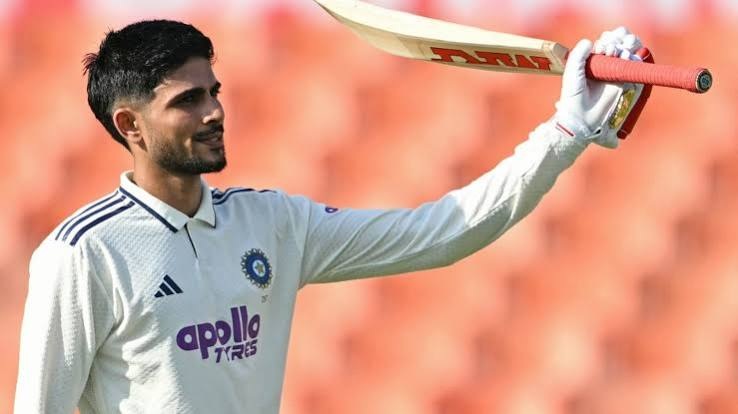
India’s 600th Test against Sri Lanka is a significant milestone that links the nation’s first Test played in 1932 with its current aspirations in red-ball cricket. It also offers Shubman Gill a remarkable platform early in his captaincy journey.
The tale of Shubman Gill’s 600th Test intricately weaves together legacy, guidance, national honor, and a challenging cricket test in Galle. India approaches this game with the weight of a significant achievement, yet the athletes must still engage in the rigorous tasks that characterize Test cricket: batting for extended durations, bowling with precision, adjusting to the conditions, and maintaining calm during shifts in momentum.
Gill has already proved his ability to manage a substantial batting load. He is now tasked with leading a team through a transitional period. It remains to be determined whether this match will become well-known for an outstanding innings, a strategic triumph, or a notable outcome.
What is indisputable is that captaining India in its 600th Test is a unique milestone in any player’s journey. For Gill, this presents a chance to transform a momentous figure into the foundation of something even more significant.