
The scorecard for England against New Zealand in 2026 highlights one of the most captivating Test match rivalries of that year’s international cricket calendar. A three-match Test series unfolded, featuring contrasts ranging from a contest with minimal scoring at Lord’s to overwhelming victories for New Zealand later on in the series.
This series took place during England’s packed home summer in 2026 and held significant weight within the ICC World Test Championship framework. Both squads entered the series equipped with skilled batting line-ups, formidable fast bowlers, and numerous players aiming to solidify their status as enduring Test players.
What stood out in this series was the fluctuating dynamics of each match. England opened with a hard-earned win, but New Zealand bounced back robustly and ultimately reversed the tide. The scorecards illustrate a narrative of shifting momentum, challenging pitches, remarkable bowling displays, and vital contributions from several individuals.
The trio of matches occurred at Lord’s, The Oval, and Trent Bridge. Each location posed its own unique challenges, making the overall competition far more engaging rather than just a straightforward series with predictable conditions.
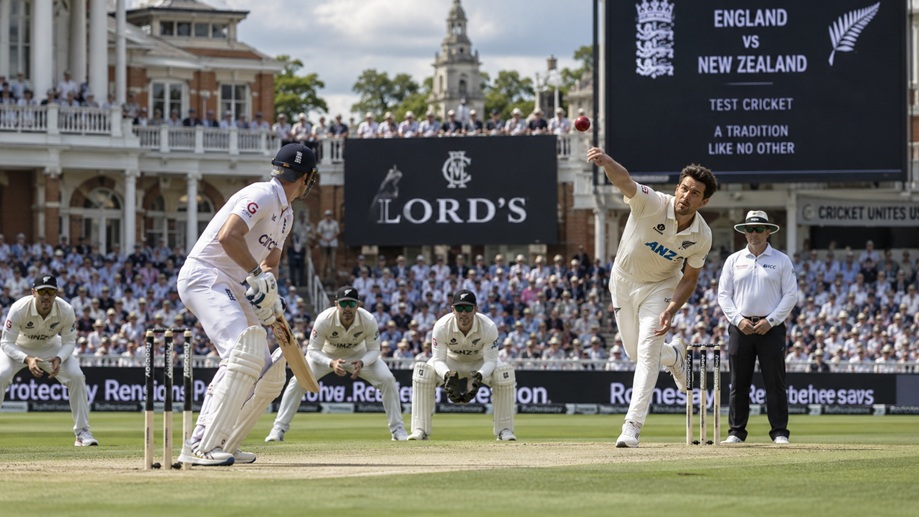
England vs New Zealand 2026 Series Overview
The 2026 Test series included a total of three matches:
- 1st Test: Lord’s, London
- 2nd Test: The Oval, London
- 3rd Test: Trent Bridge, Nottingham
The initial encounter was characterized by low runs where bowlers excelled throughout. England clinched a victory in the first Test by 115 runs, even after being bowled out for a mere 140 in their first innings.
New Zealand then mounted an impressive resurgence at The Oval. The visitors triumphed in the second Test by 253 runs, leveling the series thanks to their batting and bowling units presenting a far more rounded display.
The deciding match at Trent Bridge proved to be the final Test of the series. New Zealand maintained their momentum and secured another striking win, achieving a victory by 160 runs.
The concluding outcomes demonstrated how swiftly outcomes can shift in Test cricket. England started strong, but New Zealand adapted well and achieved two successive wins, thus asserting their dominance in the series.
1st Test Scorecard: England vs New Zealand at Lord’s
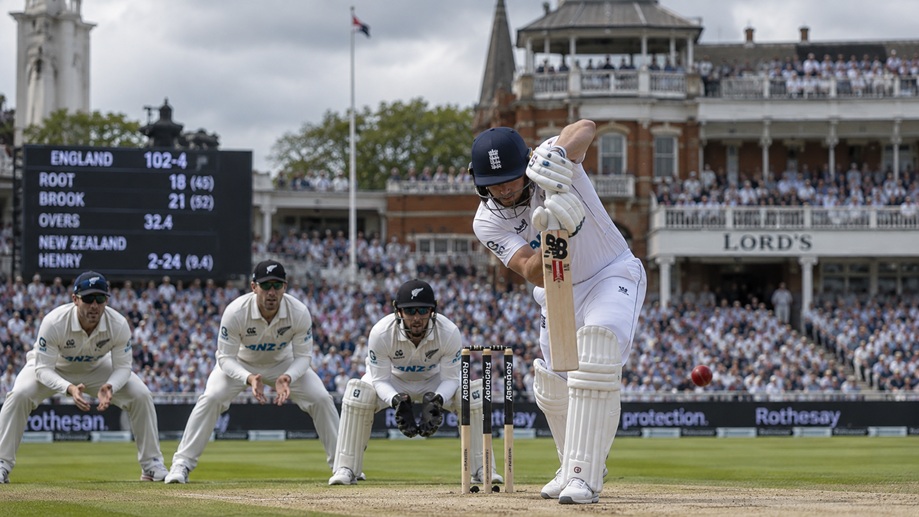
The opening match of the series occurred at the iconic Lord’s Cricket Ground from June 4 to June 8, 2026.
Right from the start, the match posed a significant challenge for batsmen. The seam movement, variable bounce, and demanding conditions made it hard to form solid partnerships.
England First Innings: 140 All Out
In their first innings, England was bowled out for 140, with Harry Brook being the key performer, scoring 56 runs.
The contributions from the England batting lineup included:
- Ben Duckett – 19
- Emilio Gay – 8
- Jacob Bethell – 6
- Joe Root – 1
- Harry Brook – 56
- Jamie Smith – 1
- Ben Stokes – 12
- Gus Atkinson – 4
- Ollie Robinson – 1
- Josh Tongue – 10 not out
- Shoaib Bashir – 14
New Zealand’s bowlers capitalized on the conditions, effectively preventing England from forming any significant partnerships.
New Zealand First Innings: 113 All Out
New Zealand failed to capitalize on England’s modest score. England’s bowlers retaliated with intensity, getting the visitors out for a mere 113 runs.
The gap between both teams during the first innings was just 27 runs, indicating that the match remained completely open after this initial phase.
This match highlighted that on a challenging Test pitch, a score that might seem inadequate can still become competitive when bowlers consistently receive help from the conditions.
England’s Second Innings: 226 All Out
In their second innings, England made substantial improvements and managed to score 226.
Emilio Gay made a significant contribution with a skilled 57, which aided England in creating a more substantial lead. The second innings was key as England accumulated enough runs to exert real pressure on New Zealand.
Despite the tough conditions, the hosts headed into the concluding segment of the match with a target that could be defended.
New Zealand’s Second Innings: 138 All Out
New Zealand aimed for a successful run chase to claim the first Test, but once again England’s bowlers were dominant.
The visitors could only muster 138 runs, resulting in a defeat by 115 runs for England.
Glenn Phillips showed resilience with an unbeaten 44, yet New Zealand struggled to provide sufficient support around him. England’s bowlers continued to apply pressure and secured a significant victory at home.
The scorecard from the 2026 Lord’s Test between England and New Zealand draws attention for its unique nature. Each innings was below 230 runs, and the match underscored the significance of disciplined bowling and the need for patience.
Reasons for the Low Scoring at Lord’s Test
The match at Lord’s sparked considerable discussion due to the challenging characteristics of the pitch.
The ball exhibited notable movement, seam bowlers remained a threat throughout, and irregular bounce added to the batting difficulties. A high number of wickets fell during the initial days of the Test.
For England, being able to bounce back after their 140 all out was crucial. Instead of letting New Zealand seize control, their bowling attack quickly reentered the match.
Harry Brook’s score of 56 in the first innings and Emilio Gay’s 57 in the second innings were among the most significant batting performances in the game.
This contest also demonstrated that not every Test match requires high scores to generate excitement. In this case, each run was of great significance.
2nd Test Scorecard: New Zealand Respond at The Oval
The second Test took place at The Oval from June 17 to June 21, 2026.
Following their loss in the first match, New Zealand required a decisive reaction. They accomplished this by delivering one of the most comprehensive displays of the series.
New Zealand First Innings: 391 All Out
In their initial innings, New Zealand amassed 391 runs.
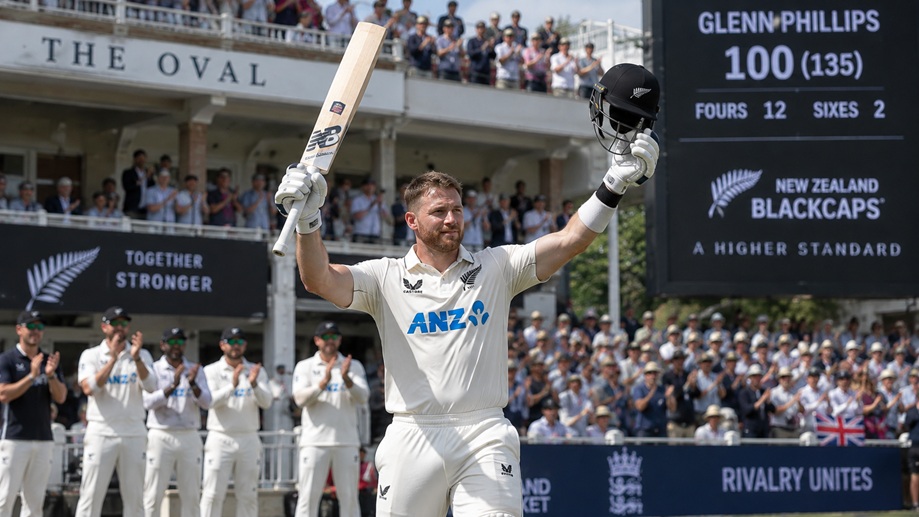
Several players made significant contributions, but Glenn Phillips emerged as the highlight. He achieved an exceptional century, scoring 100 runs off 135 deliveries.
Other notable contributions included:
- Tom Blundell – 51
- Daryl Mitchell – 44
- Kyle Jamieson – 41
- Rachin Ravindra – 33
The New Zealand innings showcased a considerable upgrade from the Test at Lord’s. Rather than losing wickets in groups without any recovery, the visitors forged partnerships and continually found ways to reconstruct their innings.
Glenn Phillips’ century was particularly crucial as it provided New Zealand with a dominant first-innings total.
England First Innings: 291 All Out
England replied with a total of 291.
While the hosts were competitive, they still ended up with a significant deficit in the first innings. New Zealand’s bowlers maintained consistent pressure and kept England from surpassing the 350-run mark, which could have altered the match’s dynamics.
Entering the second phase of the Test, England needed a robust performance from their bowlers.
Nonetheless, New Zealand’s batsmen were once again ready to compete.
New Zealand Second Innings: 362 All Out
New Zealand scored 362 in their second innings, setting an enormous target.
This innings confirmed that the visitors had completely altered their strategy after the earlier defeat. Their batting lineup demonstrated patience, depth, and the capability to score heavily.
By the time New Zealand’s innings concluded, England faced an exceedingly challenging task.
England Second Innings: 209 All Out
England could not successfully chase the target and were all out for 209.
New Zealand secured victory by a margin of 253 runs, staging a thorough comeback and equalizing the series.
The outcome shifted the entire tone of the competition. England had begun the series with confidence, but New Zealand now had gained momentum and proved they could excel under English conditions.
The scorecard for England and New Zealand’s Test in 2026 from The Oval illustrates a significant turnaround. New Zealand amassed impressive totals in both innings and complemented their batting efforts with a strong bowling display.
Glenn Phillips’ Significant Contribution
Glenn Phillips played a crucial role throughout the series, with his performances proving particularly impactful in the second Test.
At Lord’s, he ended unbeaten with 44 in New Zealand’s challenging second innings. At The Oval, he built upon that resilient effort with a remarkable century.
His versatility in adapting to varying match situations provided New Zealand with enhanced stability.
Test cricket frequently rewards players who can adjust their gameplay according to prevailing conditions. Phillips exhibited this trait by first striving for survival and subsequently delivering a more assertive innings when the conditions permitted.
His century at The Oval was one of the most impressive individual achievements of the series.
3rd Test Scorecard: Trent Bridge Series Decider
The final Test took place at Trent Bridge between June 25 and June 29, 2026.
With both teams having won one match each, the concluding game was of significant consequence.
Building on their success from The Oval, New Zealand maintained their strong performance.
New Zealand First Innings: 438 All Out
New Zealand achieved a remarkable total of 438 runs in their initial innings.
This score quickly put England in a challenging position and marked the highest total for any innings in the series.
Given the tough batting conditions experienced at Lord’s, New Zealand’s ability to reach 438 underscored their increasing confidence and adaptability.
England First Innings: 354 All Out
England made a robust reply, scoring 354 runs.
This total kept the home team competitive and prevented New Zealand from establishing an insurmountable lead after the first innings.
Nonetheless, the visitors retained the upper hand and continued to exert pressure as the Test unfolded.
England Second Innings: 212 All Out
England’s performance in the second innings was pivotal.
The home side was all out for just 212 runs and failed to reach a substantial score that would pressure New Zealand significantly.
New Zealand’s bowlers maintained the disciplined approach that had proved effective in the last two Tests.
New Zealand Second Innings: 288/9 Declared
New Zealand opted to declare at 288 for 9 in their second innings.
This declaration imposed a challenging target on England and afforded New Zealand’s bowlers sufficient time to pursue victory.
The choice reflected New Zealand’s self-assurance and attacking mindset.
England could not accomplish the chase, leading to New Zealand’s victory in the final Test by 160 runs.
This win marked an impressive recovery following their initial defeat.
Key Moments That Defined the Series
Numerous performances and critical moments influenced the eventual outcome.
England’s Opening Victory
With a win by 115 runs at Lord’s, England gained an early edge. Their bowlers adapted effectively to tough conditions, and significant contributions from Harry Brook and Emilio Gay enabled them to establish a winning scenario.
New Zealand’s Oval Response
The second Test was arguably the most crucial turning point in the series.
New Zealand posted scores of 391 and 362, exhibiting far superior batting control compared to the first Test. Glenn Phillips’ century became a key highlight.
The Trent Bridge Finish
The final Test showcased New Zealand’s confidence at its peak.
Their first innings total of 438 established dominance, while the declaration in their second innings illustrated a strong intention to secure a result.
Winning the last Test by 160 runs provided New Zealand with a memorable conclusion to the series.
Complete Match Results
The series concluded with the following outcomes:
- 1st Test – Lord’s: England won by 115 runs
- 2nd Test – The Oval: New Zealand won by 253 runs
- 3rd Test – Trent Bridge: New Zealand won by 160 runs
These results highlight an intriguing progression throughout the series. England dominated the first Test, but New Zealand responded with increasingly powerful performances.
What the Scorecards Tell Us About Both Teams
The full scorecard from the England New Zealand series of 2026 reveals more than mere runs and wickets.
For England, the series underscored the necessity of transforming strong positions into consistent victory. The home team demonstrated their capacity to overcome challenging games, especially at Lord’s, yet they found it hard to sustain that lead in the last two Tests.
Conversely, New Zealand displayed considerable fortitude. Despite losing the initial Test, which could have undermined their morale, they countered by enhancing their batting reliability and showcasing improved collective efforts.
The visitors proved particularly proficient at amassing substantial totals in their first innings. Their scores of 391 and 438 in the concluding two Tests exerted continuous pressure on England.
The disparity among the three matches further illustrated the unpredictable nature of Test cricket. Factors such as playing conditions, the flow of the game, player confidence, and strategic choices all influenced the series’ direction.
Final Thoughts
The England New Zealand Scorecard 2026 narrates the tale of a thrilling three-Test series marked by significant shifts in momentum.
England kicked off with a notable win of 115 runs at Lord’s, successfully navigating a challenging pitch and a match characterized by low scores. New Zealand then mounted a remarkable recovery at The Oval, achieving victory by 253 runs backed by strong batting displays and a century from Glenn Phillips.
The concluding Test at Trent Bridge crowned New Zealand’s resurgence. Their triumph by 160 runs concluded the series on a high note after both teams enjoyed stretches of dominance.
For cricket enthusiasts seeking comprehensive outcomes, the scorecards illustrate the series’ evolution effectively: a challenging bowling encounter at Lord’s, a dominant reply from New Zealand at The Oval, and a conclusive final showing at Trent Bridge.
The England New Zealand Scorecard 2026 will continue to be a valuable resource for fans reminiscing about one of the more erratic Test series of the 2026 season, with each match presenting a distinct narrative and both teams delivering remarkable individual displays.