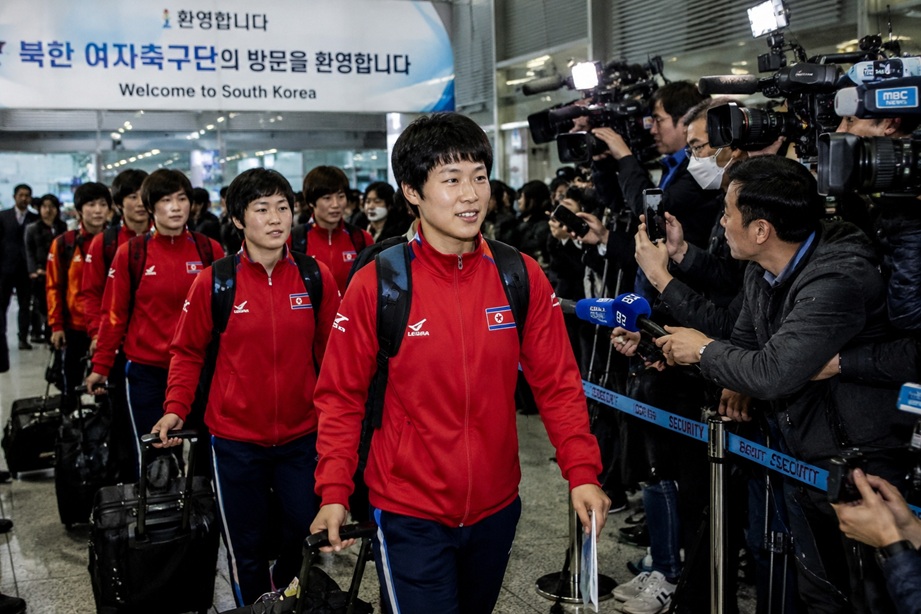

The recent visit by a North Korean women’s football team to South Korea has emerged as one of the most talked-about sports events in Asia. Following years of political divide and strained ties, athletes participating in competitions across the border signify more than just a game. This unusual occurrence rapidly gained the interest of sports enthusiasts, political analysts, and global news outlets.
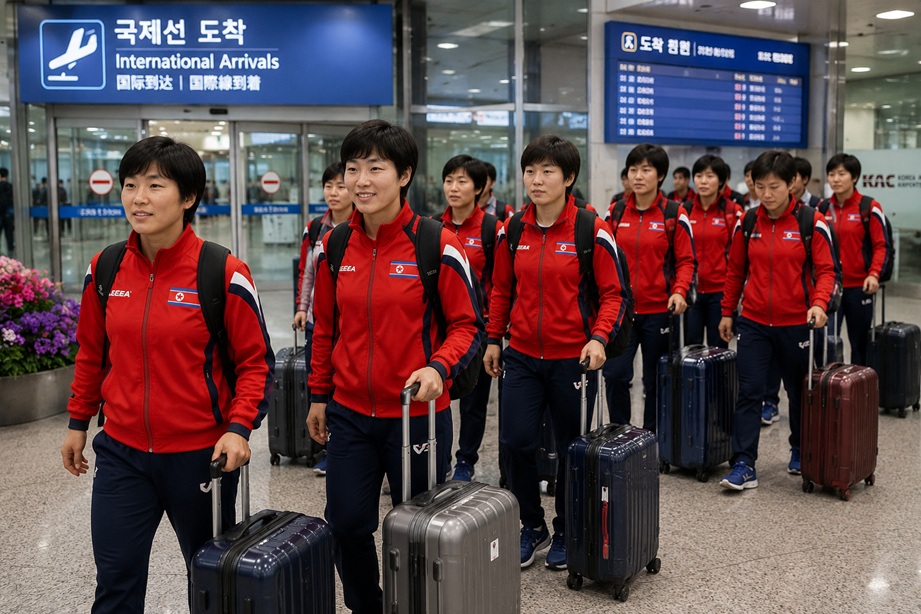
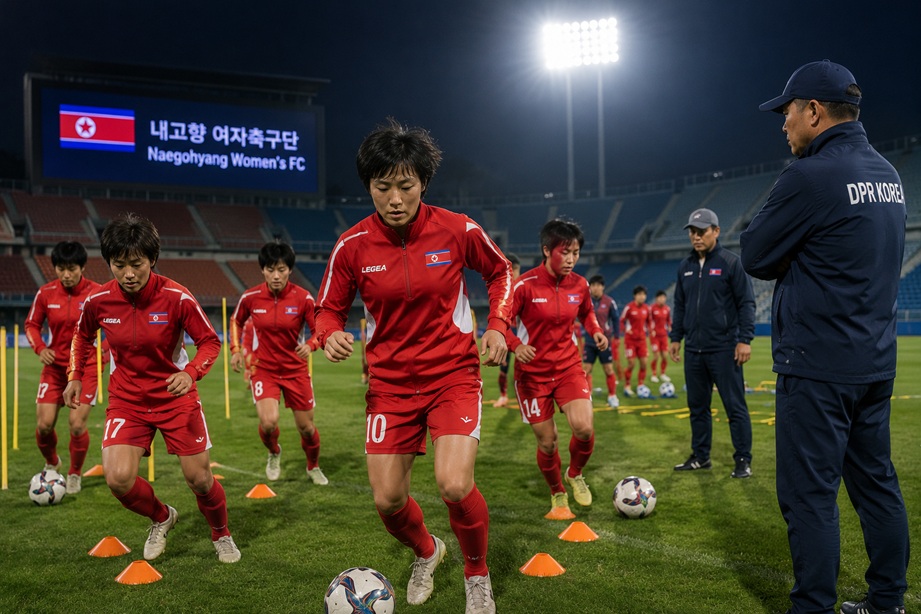
For a number of individuals, this situation goes beyond merely a game. It serves as a reminder of the potential for sports to foster connections, even amidst complex diplomatic issues. The event featured players from Naegohyang Women’s FC participating in a regional tournament, marking the first time in eight years that a North Korean sports group has crossed into South Korea. Reports suggest that the delegation consisted of 39 individuals, including both players and staff members, who traveled for this competition.
The phrase regarding North Korean women footballers visiting has become a significant headline due to the event’s symbolic importance. While the contest is meaningful, the implications of the visit are likely to resonate more widely than just the final score.
Why This Visit Matters Beyond Football
The Korean Peninsula stands as one of the globe’s most politically delicate areas. North Korea and South Korea are still fundamentally divided by unresolved conflicts that date back many years.
Given this backdrop, even sporting interactions draw immense public fascination.
Historically, sports events have occasionally opened channels for contact, including:
- Joint participation at global competitions
- Unified teams in specific tournaments
- Cultural and athletic exchanges
- Delegation visits amid diplomatic openings
Previous instances often sparked optimism that sports could facilitate communication avenues.
This latest event with North Korean women footballers took place amidst ongoing tensions between the two nations. Analysts warn that the match should not be hastily interpreted as a political breakthrough.
Nonetheless, events of this nature are seldom overlooked.
The Team at the Center of Attention
The team participating in this visit is Naegohyang Women’s FC, recognized as one of North Korea’s prominent women’s football squads.
Current reports indicate:
- Delegation members: 39
- Players: 27
- Staff: 12
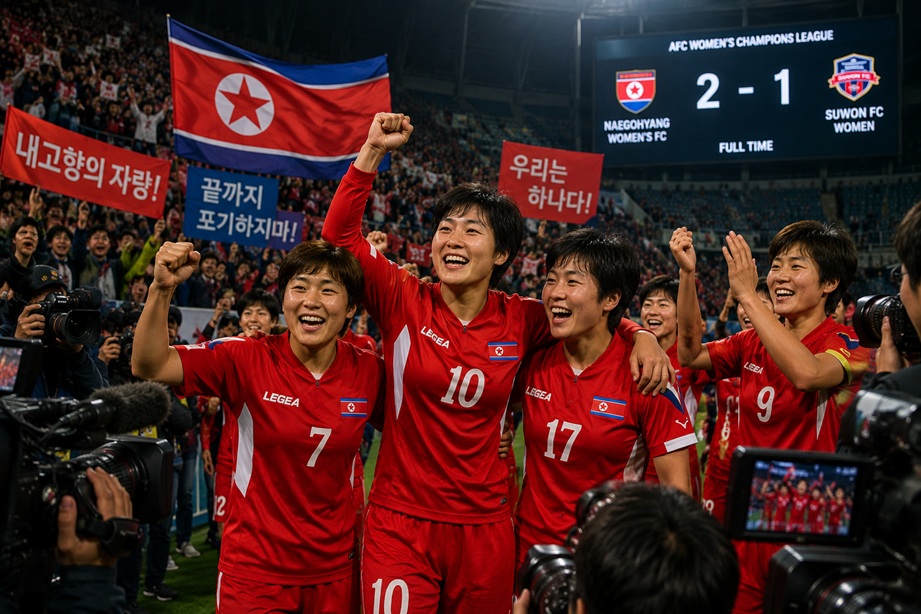
The team has traveled to take part in the AFC Women’s Champions League semifinal.
Their opponent is the South Korean team Suwon FC Women.
Public interest quickly surged. Reports note that tickets sold out swiftly, reflecting the strong response from local audiences regarding the event.
The story of the North Korean women footballers’ visit evolved from a sports news item into a broader cultural phenomenon.
The Long Eight-Year Gap
While eight years may not seem particularly significant within football, it represents a substantial hiatus in the context of exchanges between North and South Korea.
The last notable involvement of North Korean athletes in South Korea occurred in 2018, during a period marked by improved relations and Olympic collaboration.
This era included:
- Participation in the Olympics
- Delegations moving across borders
- Cheerleading teams
- Combined activities
After this time, relations became increasingly strained.
Political disputes, security concerns, and setbacks in diplomacy led to a decline in exchanges.
Consequently, the recent visit by North Korean women footballers has garnered international attention.
It symbolized the return of a sporting presence many believed would not materialize for quite a while.
Football Has Often Been a Bridge
The sport of football has a remarkable capacity to transcend borders.
Throughout history, football has occasionally united individuals who typically experienced challenges in conveying political messages.
Instances from various regions include:
- Games between countries with strained connections
- Global tournaments facilitating cultural exchanges
- Athletes symbolizing solidarity
The Korean Peninsula has also encountered such instances.
In previous times, sports have sometimes acted as a gentler means of fostering interaction.
This background makes the arrival of the North Korean women footballers particularly significant.
Although the political implications may be unclear, the mere act of sporting engagement holds its own symbolism.
South Korean Public Reaction
The response of the audience was among the most fascinating elements of the occasion.
Individuals assembled to witness the arrivals and document the experience on their smartphones. Coverage also highlighted greeting messages aimed at the visiting athletes.
Numerous South Koreans perceived the visit through various perspectives:
Some interpreted it as:
- A sporting occasion
- A sign of diplomatic goodwill
- A cultural interaction
- A reflection of shared historical ties
Conversely, some remained wary.
Multiple analysts cautioned against overinterpreting a singular sporting occurrence.
Nonetheless, the public’s intrigue was unmistakable.
The headline surrounding the visit of the North Korean women footballers generated enthusiasm, given the rarity of such events.
The Strength of North Korean Women’s Football
Aside from political matters, North Korea has developed a commendable standing in women’s football.
Over the years, both its junior and senior teams have achieved noteworthy success in Asia and beyond.
Up-and-coming talent as well as seasoned athletes have consistently garnered attention.
Some examples include:
- Ri Kum-suk — regarded as one of the country’s top goal scorers.
- Choe Il-son — a younger prospect gaining recognition.
- Kim Kyong-yong — known for her impactful offensive capabilities.
North Korea’s women’s football framework has yielded exceptional youth achievements and has regularly participated in significant competitions.
The story surrounding the visit of the North Korean women footballers also served as a reminder that North Korea remains a strong contender in women’s football.
A Match Under Unique Conditions
Notably, this event contrasted with conventional international rivalry encounters.
Reports suggested:
- National anthems were not anticipated
- Political emblems were omitted
- Rules of competition emphasized club-level participation instead of national representation
This differentiation is important.
Since it was formally a club-level competition, organizers aimed to maintain the emphasis on the sport itself.
However, completely dissociating sports from symbolic meanings proved to be a challenge.
The occurrence of the North Korean women’s footballers visit inherently brought forth political and emotional resonance.
The Human Element of the Narrative
Behind the news and diplomatic efforts are athletes.
Players prepare for their games in ways that are well-known:
- Training exercises
- Travel arrangements
- Strategic discussions
- Pressure to succeed
For the football players themselves, this journey likely involved distinct experiences.
Traveling across borders under global scrutiny brings additional stress beyond regular competition.
Consider arriving with the knowledge that:
- The global press is monitoring
- Cameras track every move
- Public dialogue goes beyond just football
Such an atmosphere can alter the experiences, even for veteran athletes.
The story of the North Korean women’s football team visit grew to be about more than just the game itself.
Is Sports Diplomacy Making a Comeback?
An important question arising now is whether this event serves as an isolated instance or the initiation of renewed exchanges.
Experts express caution.
Some analysts argue that limited sports interaction does not necessarily indicate larger political transformations.
Others propose that minor engagements can be more significant than anticipated.
History sometimes illustrates that progress can stem from straightforward cultural or athletic exchanges.
Possible opportunities might include:
- Increased club competitions
- Youth initiatives
- Academic sports collaborations
- Local tournaments
There are no certainties.
Yet conversations have certainly gained momentum following the event involving the North Korean women’s football team.
Why Women’s Football Should Be Highlighted
An aspect of the narrative that has not received enough attention is the significance of women’s football itself.
Globally, women’s football continues to grow at a swift pace.
International events now draw:
- Larger crowds
- Enhanced sponsorship
- More media focus
- Increased youth involvement
North Korea has invested significantly in women’s football, establishing systems that consistently develop competitive teams.
The recent occurrence showcased how women’s sports can provide a platform for worldwide interest.
Rather than political gatherings or formal discussions, football players surprisingly found themselves at the heart of an international dialogue.
This aspect alone makes the story of the North Korean women’s football team visit distinctive.
Global Media Coverage
International news outlets quickly picked up the story due to its position at the crossroads of:
- Politics
- Diplomacy
- Sports
- Regional stability
- Cultural exchange
Worldwide audiences might not regularly follow Korean football, but many became intrigued due to the wider backdrop.
The interplay of football and global politics often results in captivating stories.
The coverage highlighted both the sporting event and the unusual nature of the border crossing.
Thus, the event involving the North Korean women’s football team evolved into a significant global headline.
What Comes Next?
Focus now turns to future opportunities.
Questions linger:
- Will we see further exchanges?
- Could youth teams be the next to travel?
- Will broader collaboration in sports become feasible?
There are no immediate answers.
Nevertheless, sporting moments can sometimes leave an impact that persists beyond final results.
For players, coaches, fans, and onlookers, the event has already become unforgettable.
And perhaps that’s the broader takeaway.
Football can sometimes create scenarios that are unexpected.
The story of the North Korean women’s football team visit was not just about players entering a stadium. It served as a reminder that even during challenging political times, sports can produce moments of unity that attract global attention.
For the time being, the football community awaits with interest to see if this episode will remain an isolated case or signal the dawn of something greater.
Conclusion
In the end, the match delivered more than excitement on the football field; it became a moment filled with emotion, symbolism, and international attention. Players displayed determination, teamwork, and competitive spirit throughout the contest, while fans created an electric atmosphere that reflected the significance of the occasion. Beyond tactics and performances, the event stood out because it marked the return of North Korean women footballers to South Korea after an eight-year gap. The match demonstrated how football can sometimes create connections that go beyond sport itself. Supporters, media, and global audiences followed the occasion closely, recognizing that it represented more than a semifinal fixture. Regardless of the final result, the event will be remembered as a unique chapter in football history—one where sport, culture, and global attention unexpectedly came together on a single stage.