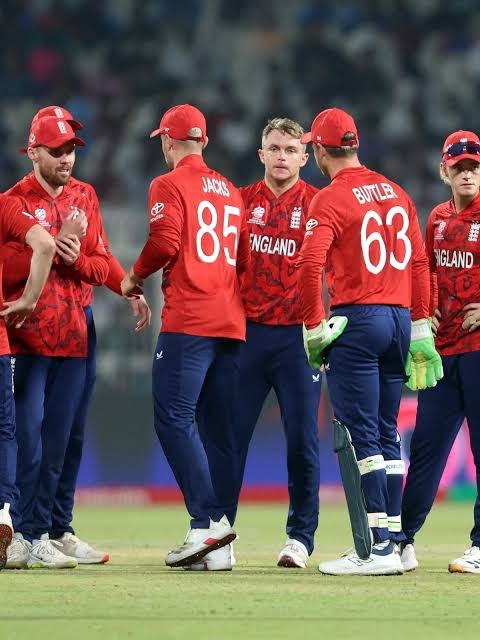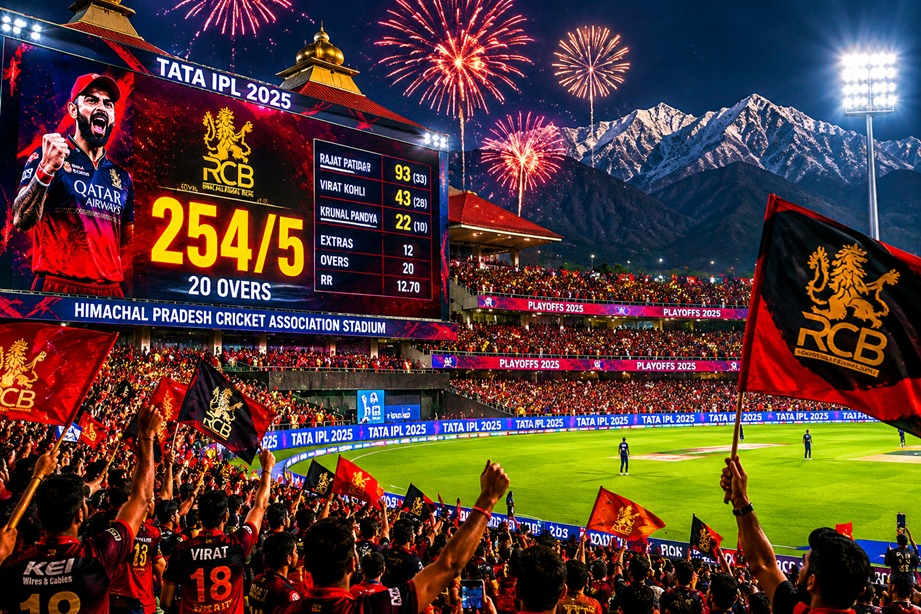


The Indian Premier League has emerged as the most significant T20 competition globally. Concepts introduced within the IPL frequently expand to franchise tournaments and, at times, even influence international cricket. Consequently, whenever cricket legends discuss potential modifications to the sport, the cricket community takes notice.
Recently, cricket legend Sachin Tendulkar proposed a range of recommendations that have ignited conversations among players, coaches, analysts, and supporters. These recommendations are not trivial tweaks. Rather, they aim at some of the most contested elements of contemporary T20 cricket and strive to restore equilibrium between batting and bowling.
This discourse arises at a moment when exceedingly high scores have become standard. Totals that were once deemed match-winning are now regularly pursued. Bowlers often face continuous pressure, while batting orders increasingly grow deeper and more assertive. Tendulkar feels the game may have swung too far in favor of one side.
The potential changes to IPL regulations would impact more than just a single tournament. Should these suggestions be enacted, they could transform team composition, match tactics, player progression, and perhaps the future framework of T20 cricket worldwide.
The Challenges of Balance in Modern T20 Cricket
T20 cricket was initially conceived as a dynamic variant of the sport, offering opportunities for both batting and bowling to considerably affect the game’s outcome. However, various developments over time have shifted this balance.
Key factors contributing to higher scoring rates:
- Larger bats
- More level pitches
- Shorter boundaries
- Enhanced fitness levels
- Improved statistics analysis
- Daring batting styles
Teams no longer see 180 as a formidable total. Frequently, scores exceeding 220 have become achievable targets.
Numerous cricket analysts have voiced worries that bowlers are increasingly losing their capacity to consistently affect game results. With audiences anticipating boundaries nearly every over, the strategic richness of cricket may be compromised.
Tendulkar’s suggestions arise from this mounting apprehension. His intention is not to decelerate the game but to ensure that bowlers maintain their essential role in determining match outcomes.
The Focus on the Impact Player Regulation
One of Tendulkar’s most prominent views pertains to the Impact Player regulation.
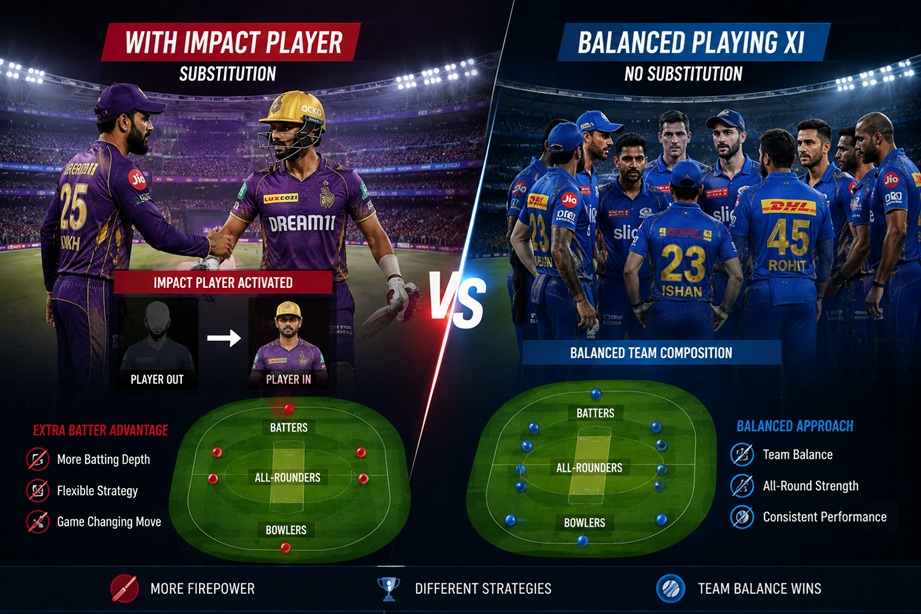
Designed to enhance tactical versatility, this regulation permits teams to switch a player during a game from a roster of specified substitutes. While this innovation has opened new strategic avenues, detractors argue that it has unduly favored batting teams.
Tendulkar’s Argument for Its Elimination
As per Tendulkar, T20 cricket inherently leans towards batters. Allowing teams to effectively incorporate another specialist batter grants an additional edge that bowlers find difficult to counter.
In many cases, franchises can operate with increased batting depth without compromising their bowling resources. This adaptability diminishes risks associated with aggressive batting techniques and promotes a more offensive approach throughout the innings.
If this regulation were to be eliminated, the possible effects on IPL regulations could be substantial.
Teams would once again have to emphasize balance rather than specialization.
Influence on Team Composition
With the removal of the Impact Player regulation:
- All-rounders could experience a resurgence in value.
- Team combinations would become more complex.
- Captains would need enhanced strategic adaptability.
- Strategies for squad construction could undergo significant transformation.
Many experts contend that abolishing the existing regulation will benefit teams that can successfully construct well-rounded playing XIs, instead of those that solely capitalize on the advantages of substitutions.
A Revolutionary Powerplay Proposal
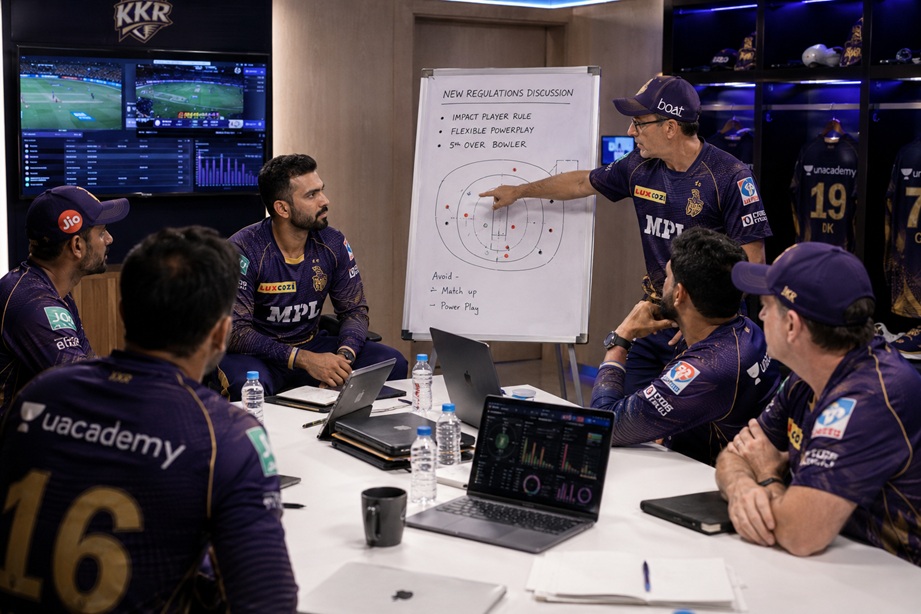
One of the most groundbreaking recommendations from Tendulkar includes redefining the conventional powerplay format.
At present, the opening stages of an innings consist of six consecutive overs that are subjected to powerplay regulations. During this timeframe, only two fielders are allowed to be positioned outside the inner circle by the fielding side.
Tendulkar suggests dividing these overs into two distinct phases.
How the New System Would Work
According to this proposal:
- The first four overs will remain as they currently are.
- The last two overs will be made adaptable.
- The captain in the field decides when to utilize them later.
- Teams acquire a strategic tool against established batters.
This idea adds a new dimension of strategy that is infrequently observed in current T20 cricket.
Tactical Possibilities
Consider a situation where a batter reaches 70 runs off 35 balls, significantly influencing the game.
Under the existing regulations, the fielding team faces restricted choices. However, with Tendulkar’s suggestion, captains could implement the deferred powerplay at a pivotal moment to disrupt the batter’s rhythm and apply pressure.
Such a modification would greatly enhance the impact of captaincy.
Instead of merely responding to unfolding events, captains would have the opportunity to proactively guide the direction of the innings.
The potential ramifications of changes to IPL rules extend well beyond fielding arrangements. They could transform game management and strategic planning entirely.
The Five-Over Bowler Concept
Another notable proposal involves extending the bowling quota for one individual bowler.
Currently, each bowler’s limit is four overs throughout a T20 game.
Tendulkar asserts that top batters can affect an innings for the full twenty overs, whereas top bowlers are confined to just four. He argues that permitting a single bowler to bowl five overs would create a more equitable matchup.
Why This Proposal Matters
The most skilled bowlers often play a crucial role in determining the outcomes of matches with their proficiency and precision.
Giving an outstanding bowler an additional over could:
- Enhance strategic versatility.
- Incentivize bowling prowess.
- Improve the quality of competition.
- Lead to more captivating matchups.
Fans would gain extra chances to see elite bowlers challenge top batters in critical situations.
Influence on Team Strategy
Franchises would likely reconsider their approach to assembling bowling lineups.
Rather than distributing their resources among several bowlers, teams may focus on acquiring one standout performer who can handle the extra responsibility.
The influence of changes to IPL rules could subsequently affect player auctions, retention policies, and talent nurturing initiatives.
How Captains Would Adapt
Cricket has historically favored astute leadership.
Numerous contemporary T20 games are heavily shaped by pre-arranged analytics and matchups. Tendulkar’s concepts could restore a stronger focus on the instinctual aspects of captaincy.
Increased Decision-Making Pressure
Captains would encounter fresh challenges:
- Identifying the best time for using delayed powerplay overs.
- Choosing which bowler gets the fifth over.
- Altering bowling rotations in a new manner.
- Modifying strategies based on match circumstances.
These choices might increasingly determine the results of games compared to current scenarios.
Consequently, tactical acumen could emerge as an even more vital leadership attribute.
Impact on All-Rounders
One of the most captivating outcomes pertains to all-rounders.
The Impact Player regulation has unintentionally diminished the significance of certain all-rounders since teams can replace specialists based on the demands of the game.
If that guideline is lifted, well-rounded cricketers might reclaim their top-tier ranking.
The Advantage for All-Rounders
All-rounders present:
- Enhanced batting capabilities.
- Versatile bowling options.
- Strategic equilibrium.
- Coverage for injuries.
Historically, high-performing T20 squads have depended largely on players who possess multiple skills.
The suggested modifications may revive this phenomenon and incentivize franchises to put more resources into nurturing adaptable cricketers.
Potential Gains for Bowlers
Bowlers have frequently been referred to as the least favored players in contemporary T20 cricket.
Even surfaces, moisture, reduced boundary sizes, and strong bats have resulted in challenging conditions for them.
Tendulkar’s recommendations seem to be aimed specifically at resolving these issues.
Advantages for Fast Bowlers
Fast bowlers could benefit from:
- Increased impact via the five-over rule.
- Enhanced tactical backup from adaptable powerplays.
- More chances to attack established batsmen.
Advantages for Spinners
Spinners might also experience significant advantages.
Captains could strategically use powerplay overs against aggressive batsmen who aim to conquer spin during the middle overs.
The potential alterations to the IPL rules could lead to more diverse bowling tactics and a wider variety of team makeups.
Will International Cricket Adopt IPL Innovations?
The IPL has frequently acted as a platform for cricket advancements.
Numerous concepts first utilized in franchise leagues later sparked wider debates in the sport.
That is why Tendulkar’s proposals are significant beyond the IPL context.
The IPL’s Historical Impact
The league has influenced:
- Batting techniques.
- Fielding practices.
- Auction mechanics.
- Data-centric approaches.
- Routes for player improvement.
If these initiatives prove successful in enhancing competition, other leagues may consider analogous ideas.
International governing bodies might also evaluate their success before exploring broader applications.
Reactions Across the Cricketing World
The suggestions have sparked considerable discussion among enthusiasts and analysts.
Proponents contend that contemporary T20 cricket urgently requires methods to restore balance between bat and ball. Detractors warn that ongoing alterations to the rules could complicate a format that is already popular with millions.
Arguments Supporting the Changes
Advocates highlight multiple benefits:
- Enhanced competitiveness in matches.
- Increased strategic complexity.
- Improved prospects for bowlers.
- Greater appreciation for all-round players.
- Heightened significance of captains’ roles.
Arguments Against the Changes
Opponents express worries about:
- Difficulties for spectators.
- Repeated experimental rule changes.
- Possible interruption of current tactics.
- Implementation difficulties.
Both groups concur on a single point: these proposals have ignited one of the most compelling discussions in the recent history of T20.
The Business Side of Cricket Innovation
Contemporary cricket operates as an entertainment sector.
League organizers are persistently on the lookout for strategies to maintain excitement in matches while upholding competitive fairness.
The proposed changes to the IPL rules could affect not only the outcomes of cricket matches but also commercial aspects.
Television networks, sponsors, and teams benefit when competitions stay unpredictable and captivating.
A more balanced relationship between bat and ball often leads to tighter finishes, significant shifts in momentum, and unforgettable experiences that draw in viewers.

What Happens Next?
It is unclear whether the IPL will implement any of these proposals.
Changes to the rules usually necessitate thorough discussions involving administrators, team owners, players, coaches, media personnel, and governing entities.
Nonetheless, the engagement of a highly respected figure in cricket to initiate this discussion guarantees that these proposals will garner genuine consideration.
The dialogue is likely to persist throughout upcoming IPL seasons as stakeholders analyze performance trends in scoring, bowling, and overall competitive fairness.
Conclusion
The discourse surrounding Tendulkar’s suggested reforms raises a larger question for modern cricket: how can T20 retain its entertainment value without becoming excessively centered on batting?
By proposing the abolition of the Impact Player rule, introducing a flexible powerplay system, and permitting one bowler to bowl a fifth over, Tendulkar has articulated a vision aimed at reinstating competitive parity. These suggestions represent more than mere surface-level changes; they target the strategic foundation of T20 cricket.
If put into practice, the impact of the IPL rule changes could transform team selections, increase the importance of captains, enhance the role of all-rounders, and give bowlers better chances to affect match results. Though perspectives remain split, it is evident that the conversation has commenced, and the future development of T20 cricket could potentially be influenced by the insights of one of the sport’s most iconic figures.