

The inaugural game of the FIFA World Cup 2026 showcased everything that fans of football crave: scoring moments, excitement, debated calls, fierce challenges, and instances that triggered conversations online. Mexico’s 2-0 triumph against South Africa was not merely the opening contest of a newly expanded 48-team event; it also stood out as one of the most talked-about kickoffs in the history of the tournament. Various reports underscored three red cards, numerous controversial moments, and a VAR announcement that quickly gained viral traction.
After the final whistle blew, many viewers were left with a straightforward query: how did the officials and VAR arrive at their conclusions?
This thorough analysis explores the significant officiating events, clarifies the technology utilized throughout the tournament, and assists fans in comprehending the rationale behind specific decisions made during one of the most intense World Cup opening games ever witnessed.
Context of the Match
Mexico stepped into the opening match as co-hosts, drawing remarkable backing from the passionate crowd at the renowned Estadio Azteca. Over 80,000 fans experienced a thrilling game where the home team clinched a 2-0 win, thanks to goals by Julián Quiñones and Raúl Jiménez.
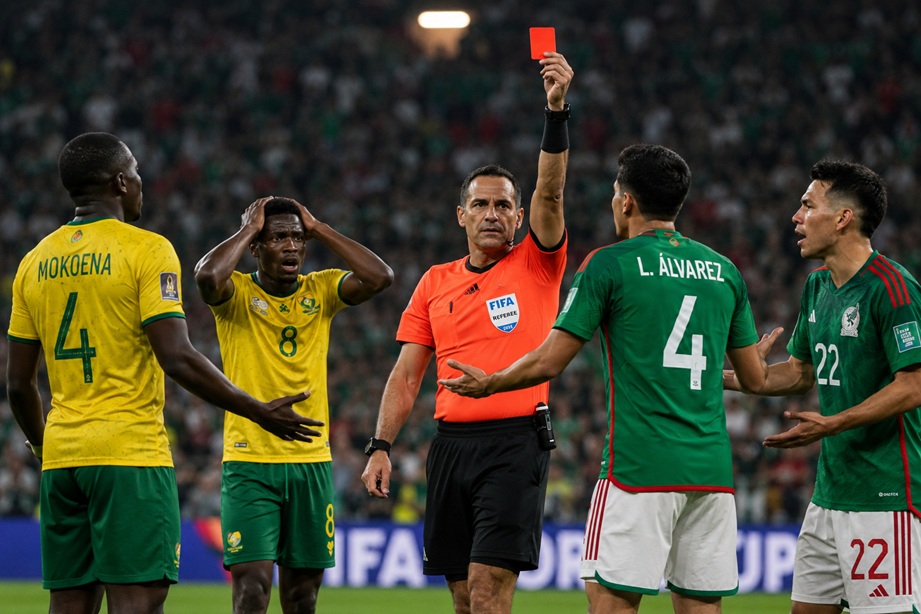
Yet, the quality of the football was just one aspect of the narrative. The match grew more aggressive as feelings flared over the course of both halves. By the conclusion of the game, three athletes had received red cards, establishing a disciplinary benchmark for an opening match in the history of World Cups.
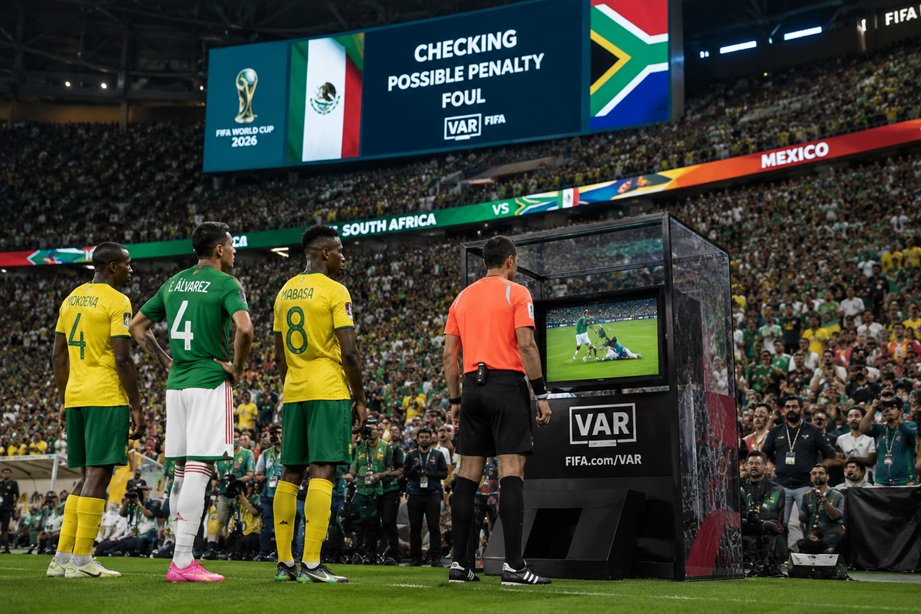
This is where the topic of VAR in the Mexico-South Africa match gains significance, as many pivotal decisions involved video reviews and referee involvement.
VAR’s Prominence in the Match
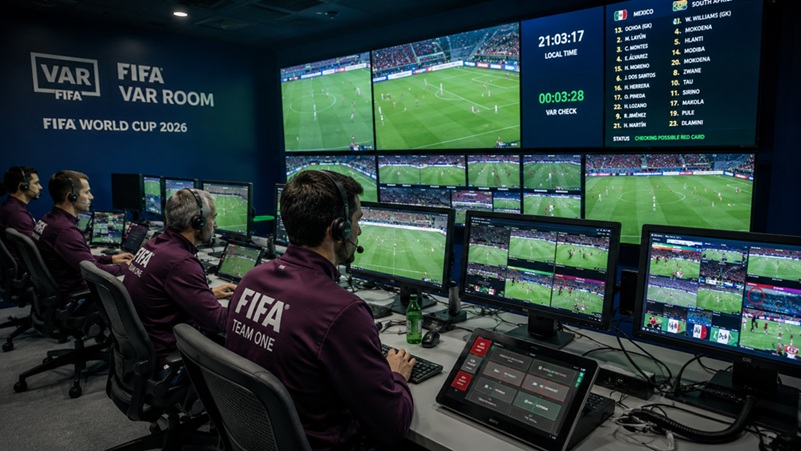
The implementation of Video Assistant Referee (VAR) technology was designed to minimize blatant and obvious mistakes during football games. For the FIFA World Cup, VAR is managed from a specialized video operations area where officials keep an eye on every critical moment.
VAR can get involved in four types of scenarios:
- Goals and any possible rule violations occurring before goals
- Penalty calls
- Incidents leading to direct red cards
- Situations of mistaken player identification
The encounter between Mexico and South Africa included several instances that fit neatly into these categories. Due to the match’s aggressive tone, referees frequently had to assess challenges and the behavior of players.
The Referee Crew and the Structure of VAR
The organizing body FIFA chose an enlarged roster of match officials for the 2026 tournament because of the increased number of teams participating. The competition features a variety of referees, assistant referees, and VAR operators from numerous confederations globally.
The opening game was officiated by Brazilian referee Wilton Sampaio, who became a focal point in discussions after the match due to a number of crucial calls and a notable public VAR announcement.
In contrast to past World Cups, officials now relay certain reviewed calls directly to fans in the stadium via microphone announcements, enhancing transparency for the audience.
The Initial Major Event
South Africa’s Defensive Efforts
As the match unfolded, South Africa aimed to stifle Mexico’s offensive advances through forceful pressing and calculated fouls. Multiple yellow cards were given prior to the emergence of more severe incidents.
The referee’s initial style of officiating was quite steady. Allowing physical interactions was acceptable as long as they adhered to the game’s regulations; however, reckless tackles were swiftly penalized.
Maintaining this equilibrium is crucial since officials aim to keep control without frequently halting the match.
Red Card Incident One: Sphephelo Sithole
A pivotal moment arose when South African midfielder Sphephelo Sithole received a red card.
Match reports indicated that the expulsion took place following a tackle that halted a potentially advantageous offensive play. The referee determined the foul warranted a send-off, leaving South Africa with only ten players.
Reasons for the Red Card Issuance
When assessing such situations, officials typically take multiple elements into account:
- Proximity to the goal
- Trajectory of the play
- Possibility of seizing the ball
- Number of remaining defenders
If these factors suggest a clear scoring chance has been obstructed, a direct red card may be issued.
The referee concluded that these conditions were met in this case, aligning the expulsion with FIFA’s interpretation of the game’s regulations.
Red Card Incident Two: Themba Zwane
The second major incident revolved around Themba Zwane.
In contrast to the first ejection, this event necessitated a more thorough review using the video system. Reports suggested VAR found footage of contact that required further scrutiny. After the assessment, the referee opted to show a red card.
Impact of VAR on the Decision
This scenario is vital to understanding how VAR works in the Mexico South Africa match as it exemplifies the technology’s intended purpose.
The procedure typically unfolds in these stages:
- An incident takes place on the field.
- VAR officials review from various camera angles.
- The referee receives the findings.
- The referee either follows the suggestion or performs an on-field evaluation.
- The final ruling is shared.
Upon reviewing the footage, officials determined that the actions exhibited violent conduct, leading to ejection. This choice sparked controversy, with South Africa’s coaching team voicing their dissent afterwards.
Reasons for South Africa’s Discontent
South Africa’s coach, Hugo Broos, openly criticized the severity of the second red card.
While he accepted the first expulsion, he felt the second was excessively severe. Disagreements like this are prevalent in football, as subjective interpretation persists even with the introduction of technology.
While VAR introduces evidence, it does not entirely eliminate the need for judgment in officiating.
Referees still need to assess:
- Intent
- Intensity
- Context
prior to reaching a conclusion.
Red Card for Mexico
The match did not only spark controversy for South Africa.
In the final moments of added time, Mexico’s captain, César Montes, also saw a red card due to a violent tackle. As a result, both teams finished the match with players dismissed.
Was VAR Engaged in This Incident?
Although the primary focus was on the red cards given to South African players, officials thoroughly examined all severe foul play incidents during the game.
This decision underscored FIFA’s dedication to safeguarding players and upholding disciplinary policies throughout the tournament.
The occurrence of three red cards in a single opening match instantly rendered it historically significant.
The Viral Announcement Related to VAR
An unforeseen narrative unfolded following the match.
Referee Wilton Sampaio provided a public clarification using the stadium’s microphone after a decision related to VAR. Nonetheless, numerous viewers found it difficult to comprehend the message, resulting in significant online discussion. The video soon became one of the earliest viral sensations of the tournament.
Reasons for FIFA’s Use of Public Announcements
The rationale behind the announcements made by referees is quite straightforward:
- Enhance openness
- Aid supporters in grasping the choices made
- Minimize misunderstandings
- Boost faith in officiating
Other sports like cricket, American football, and rugby have historically implemented similar systems.
Although the idea receives general backing, the match between Mexico and South Africa illustrated the importance of clear communication.
Semi-Automated Offside Technology
An additional crucial aspect of Mexico South Africa VAR Explained involves the detection of offside.
The 2026 World Cup incorporates state-of-the-art semi-automated offside technology aimed at expediting the decision process and enhancing precision.
Operation of the System
The technology integrates various components:
- Numerous tracking cameras positioned throughout the stadium
- Artificial intelligence analysis
- Instantaneous player location data
- Sensors for tracking the ball
When combined, these instruments produce incredibly detailed representations of player actions and ball positions. The gathered data is then sent to VAR officials for validation.
The goal is to eradicate prolonged pauses and decrease human mistakes during offside evaluations.
The Intelligent Match Ball Technology
One of the most intriguing advancements presented at the tournament is the smart match ball.
The official ball of the World Cup is equipped with a built-in motion sensor that can relay information hundreds of times per second. This technology aids in identifying the precise moment a player makes contact with the ball.
Why It Is Important
In the past, conventional offside reviews often had difficulty pinpointing the exact moment a pass occurred.
Current sensor technology now offers:
- Improved timing precision
- Quicker review processes
- More dependable offside rulings
- Enhanced coordination with camera systems
The outcome is a more accurate officiating framework than has ever existed.
The Importance of Human Judgment
Even with advancements in technology, referees continue to play a crucial role in making decisions.
Many fans incorrectly assume that VAR autonomously makes judgments.
In actuality, VAR serves as a support tool rather than a substitute. Officials still assess:
- Intent
- Force
- Player actions
- Context
- Game management
While technology supplies proof, referees implement the rules.
The match between Mexico and South Africa demonstrated this clearly, as discussions persisted regarding the appropriateness of certain penalties even after reviews.
Did VAR Enhance the Game?
Perspectives vary.
Supporters contend that VAR successfully detected incidents that could have been overlooked in real-time. They argue that the intervention benefited player safety and fairness.
Opponents argue that football sometimes loses its spontaneity when decisions are paused for review.
Nevertheless, most analysts agree that the technology assisted officials in overseeing a notably intense match featuring multiple potentially pivotal incidents.
Outstanding Statistics From the Game
Several notable figures surfaced from the opening match:
- Mexico achieved a 2-0 victory
- Three players received red cards
- South Africa ended with nine players
- Attendance exceeded 80,000 fans
- This match marked the first World Cup opener with three red cards
These statistics highlight why officiating became almost as crucial as the match itself.
Insights for Fans Regarding VAR
For fans seeking to understand contemporary officiating, the Mexico-South Africa match serves as an excellent example.
Essential takeaways are:
- VAR only becomes involved in critical scenarios.
- Referees maintain ultimate decision-making power.
- Technology enhances rather than supersedes officials.
- Public notifications aim to boost transparency.
- Semi-automated systems elevate accuracy.
As football progresses, fans are likely to witness an even deeper integration of technology with officiating.
The Future of Refereeing at FIFA World Cups
FIFA’s dedication to cutting-edge officiating tools mirrors a broader movement within global sports.
The organization continues to improve:
- Video review technologies
- Ball-tracking methods
- Offside automation
- Referee communication strategies
- Data-driven decision-making support
Upcoming tournaments may feature even more advanced systems intended to facilitate quicker and clearer decisions for fans.
The challenge will lie in striking a balance between technology and the human touch that has always characterized football.
Conclusion
The opening game between Mexico and South Africa provided more than just a simple football outcome. It became an early demonstration of contemporary officiating, innovative technology, and the expanding role of video review in high-level competition.
When considering Mexico South Africa VAR Explained, it becomes evident that the debate extended beyond just red cards. It revolved around how football’s latest tools interact with conventional refereeing practices. Three send-offs, various reviews, and a well-publicized referee announcement ensured the match would remain a prominent topic of discussion long after the conclusion of play.
Regardless of whether supporters concurred with each choice made, the game showcased that VAR and sophisticated officiating technology have become integral to the World Cup experience. As the event continues, referees and video match officials will persist in significantly influencing some of the most pivotal moments in football.