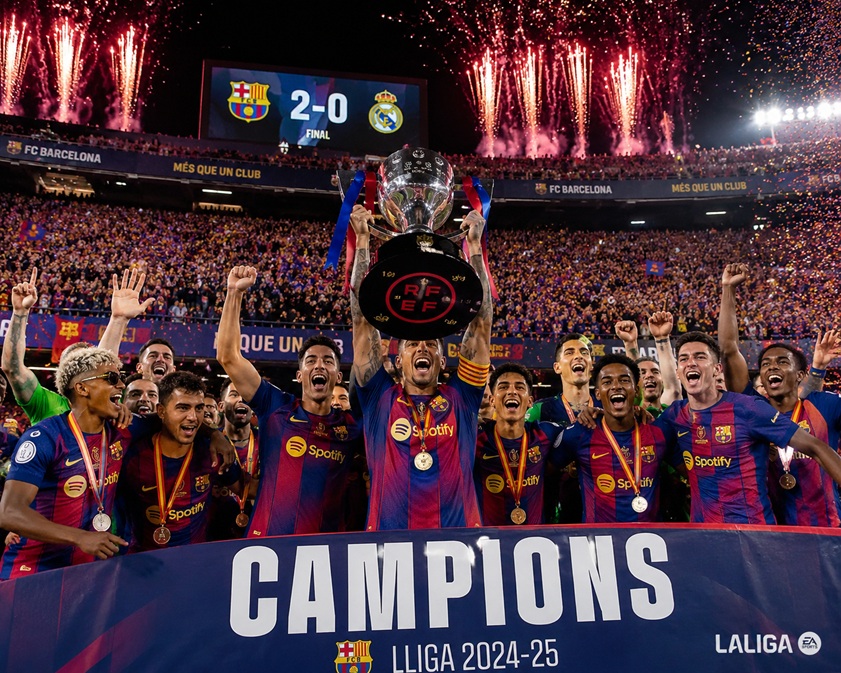

The 2025-26 Spanish football season unfolded with intense drama, emotional highs, strategic prowess, and remarkable instances, yet nothing captivated the interest of football enthusiasts quite like Barcelona’s triumph in the LaLiga title. The iconic Catalan team reaffirmed their status as one of the premier clubs globally with an extraordinary victory against their greatest rivals, Real Madrid, claiming the league title.
The achievement was made even more significant by the context in which it occurred. Barcelona clinched the championship with a commanding performance during El Clasico, played before an enthusiastic Camp Nou audience. The energy was electrifying right from the beginning, and by the end of the match, celebrations were already commencing throughout the city.
Under the guidance of Hansi Flick, Barcelona evolved into a bold and well-balanced team adept at managing games through ball possession, applying intense pressure when out of possession, and crafting exquisite attacking plays. The season encompassed more than just the aim to lift a trophy; it was about re-establishing dominance in Spanish football.
Post-match reports detailed how Barcelona triumphed over Real Madrid with a 2-0 scoreline, mathematically confirming the title with several matches left in the season. Key goals were scored by Marcus Rashford and Ferran Torres, while Barcelona’s midfield orchestrated the game’s rhythm throughout.
The jubilation extended beyond the confines of the stadium. Streets in Barcelona were filled with supporters, players engaged in celebrations with fans during the victory parade, and club legends expressed their emotions online. This moment in football became one that fans would cherish for years to come.
A Season Based on Tactical Rigor
A primary factor contributing to Barcelona’s triumph this season was the tactical framework established by Hansi Flick. The German coach came in with a distinct plan, emphasizing high intensity, direct offensive play, and solid defensive organization.
Although Barcelona had skilled players before Flick took over, the team often struggled to achieve consistency in challenging matches. Flick addressed this issue by establishing a system where every individual knew their responsibilities.
The midfield evolved to be more dynamic, pressing saw marked improvement, and the transitions from defense to offense were sharper than they had been in recent years.
Numerous tactical enhancements were evident throughout the season:
- Quicker ball movement through the midfield
- More vigorous pressing upon losing possession
- Enhanced defensive arrangement during counterattacking situations
- Increased adaptability in offensive maneuvers
- Better management of squad rotation during congested schedules
The coaching staff also took great care in managing player fitness. While injuries did not completely vanish, Barcelona dealt with absences more effectively than anticipated.
During critical phases of the season, the team showcased greater mental fortitude compared to their opponents. Even in high-pressure situations, Barcelona seldom appeared flustered.
This mental toughness was crucial in securing the Barcelona LaLiga title and distinguished them from Real Madrid in the latter part of the season.
El Clasico Emerged as the Defining Evening
Each championship campaign typically features a standout moment. For Barcelona, that moment materialized in their clash against Real Madrid.
The Clasico was laden with immense pressure, as a draw would nearly assure the title, while a win would affirm it outright. Rather than adopting a cautious approach, Barcelona played with assuredness and aggression.
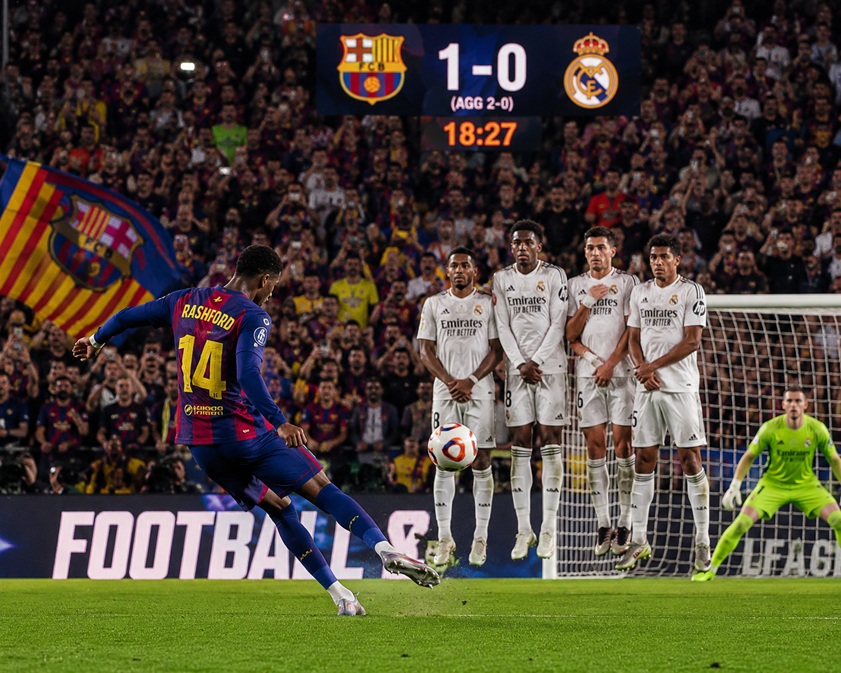
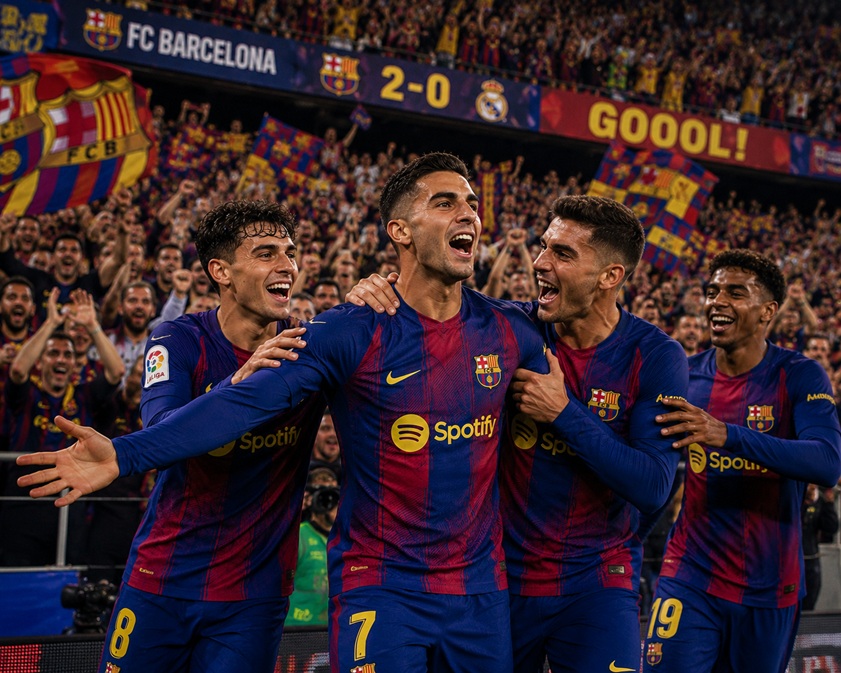
Marcus Rashford initiated the scoring with an incredible free kick early in the game, which sent the Camp Nou audience into a frenzy. Shortly afterward, Ferran Torres increased the lead with a composed strike following a clever team play.
As per match analyses, Barcelona dominated the encounter from beginning to end while limiting Real Madrid’s chances to attack.
The performance displayed the vision Flick had for his squad. Barcelona applied pressure vigorously, quickly regained possession, and advanced the ball at a rapid pace.
Throughout the match, Real Madrid seemed uneasy. Their midfield found it difficult to exert control, and the loss of essential players diminished their offensive threat.
By the second half, the mood within Camp Nou resembled more of a festivity than a typical football game.
The confirmation of Barcelona’s LaLiga title came after the final whistle, prompting players to embrace each other on the field as fans waved flags and sang club songs.
Marcus Rashford’s Significant Impact
One of the most surprising aspects of the season was the influence Marcus Rashford had in Spain.
The English forward came with uncertainties about his reliability, yet he produced some of the finest performances of his career wearing a Barcelona jersey.
Rashford injected speed, directness, and an element of surprise into Barcelona’s offense. Defenders struggled to cope with his movements, especially when he shifted to the flanks before cutting inside.
His goal in the Clasico quickly became one of the standout moments of the season.
In addition to scoring goals, Rashford enhanced Barcelona’s ability to launch counterattacks. His pace made the team significantly more threatening during transitions.
Several elements contributed to his successful season:
Heightened Confidence
Rashford appeared more at ease compared to past seasons. The coaching staff showed faith in him during crucial matches, which was evident in how he performed.
Tactical Flexibility
Barcelona permitted him the freedom to switch roles during attacks. At times, he operated centrally, while at other times, he moved to the flank to outmaneuver defenders.
Strong Relationship
His connection with Dani Olmo, Ferran Torres, and Pedri flourished as the season progressed.
By the concluding weeks of the season, Rashford had emerged as one of the pivotal players instrumental to Barcelona’s LaLiga triumph.
Emerging Talents Remained Influential
Barcelona’s achievements were not solely dependent on veteran players. Young talents again played a crucial role.
Lamine Yamal continued his ascent as one of the brightest prospects in global football. Despite his youth, he faced high-pressure situations with impressive composure.
The teenager consistently showcased brilliance in challenging matches. His dribbling, confidence, and creativity added an extra layer of threat to Barcelona’s offense.
Simultaneously, defenders like Pau Cubarsi were progressing into dependable starters.
Barcelona’s academy system deserves substantial praise for preserving the club’s identity. Even during challenging financial times, the club continued to cultivate top-notch young talent.
This blend of youth and experience proved to be a crucial factor in the team’s success.
Hansi Flick Shifted the Mindset
Achieving a league championship involves more than just skill. Teams must also possess the right mindset.
This is where Hansi Flick had the most significant impact.
Players frequently mentioned the confidence and discipline he instilled within the locker room. Training sessions intensified, tactical strategies became more refined, and the team appeared more cohesive.
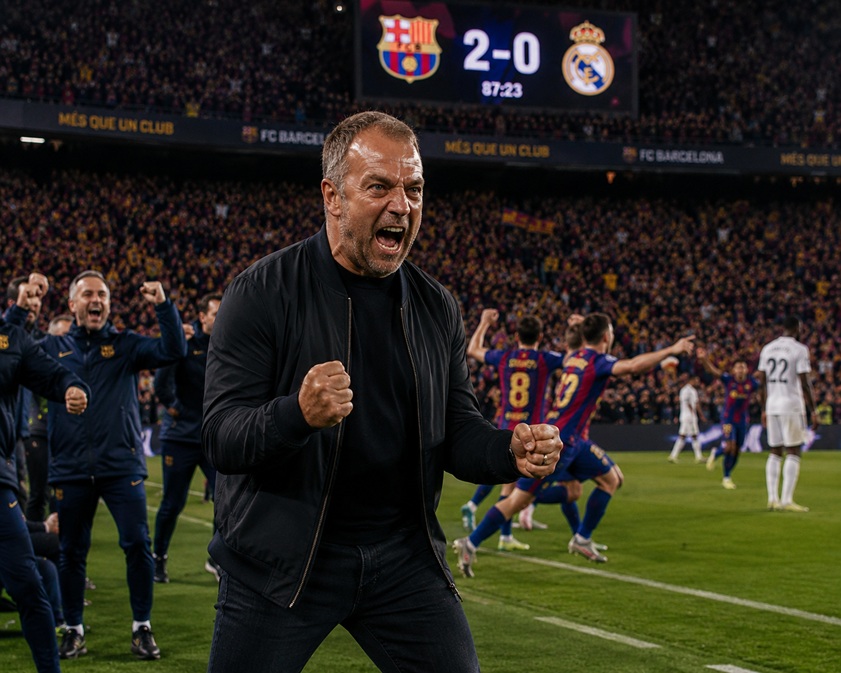
One touching narrative about Flick emerged during the title-winning Clasico. Reports indicated that the coach was coping with personal sorrow following his father’s passing. In spite of these emotional challenges, he maintained his focus and led the team to triumph.
This emotional context made the accomplishment all the more significant.
Flick also demonstrated exceptional composure under pressure throughout the season.
When Barcelona faced difficulties in European competitions, many pundits doubted whether the team could mentally recover. Rather than falter, the squad responded robustly in league play.
The coach persistently encouraged the players to concentrate on domestic victories.
His composed demeanor also assisted younger athletes in managing the undue pressure from media scrutiny.
Ultimately, Barcelona’s LaLiga title was a testament to Flick’s leadership as much as it was to the players’ abilities.
Real Madrid Struggled to Keep Up
Barcelona’s supremacy also highlighted several deficiencies within the Real Madrid roster.
Major issues faced by Madrid included:
- Frequent injuries during the season
- Internal tensions within the squad
- Inconsistency against stronger opponents
- Difficulty maintaining midfield control
- Lack of attacking sharpness in crucial matches
Although Madrid still had elite players, they faced difficulties in sustaining consistency against tougher teams.
Conversely, Barcelona appeared more structured as a unit.
This disparity was particularly evident in their direct encounters.
The defeat in the Clasico not only denied Madrid the title but also ensured they would end the season without significant trophies.
For supporters in Catalonia, clinching the championship directly against their fiercest rivals made the victory even more gratifying.
Camp Nou Celebrations Created Iconic Images
Football titles are remembered for not just the statistics but also the feelings they evoke.
The scenes at Camp Nou following the final whistle vividly illustrated the significance of the championship to the fans.
Celebration highlights included:
- Players celebrating with flags on the pitch
- Fans staying in the stadium long after full-time
- Chants echoing throughout Barcelona
- A massive open-bus victory parade
- Supporters waving Barcelona scarves across the city
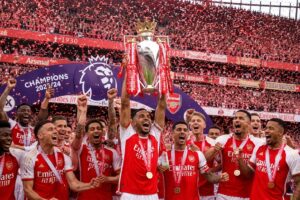
Ronald Araujo hoisting the trophy quickly became one of the season’s most memorable images.
For younger fans, it was another remarkable episode in the club’s contemporary history.
For older supporters, it signified a revival of Barcelona’s dominant legacy.
The victory in the Barcelona LaLiga title felt particularly significant as it fused joy with achievement.
Key Figures Who Shaped the Season
Pedri
Pedri displayed exceptional skill and poise while directing games. His knack for evading pressure and establishing passing opportunities was crucial.
Frenkie de Jong
Frenkie de Jong experienced one of his best seasons in Spain. He contributed to the team’s stability, leadership, and control in the midfield area.
Ferran Torres
Ferran Torres consistently scored during key matches. His positioning and movements in the penalty area significantly enhanced.
Ronald Araujo
Ronald Araujo offered strong defensive leadership and intensity. He also emerged as an emotional figure during challenging times.
Marc-Andre ter Stegen
Marc-Andre ter Stegen made vital saves throughout the entire season, instilling confidence in the defenders.
The depth of the squad also impressed many analysts.
Barcelona managed effective rotations without sacrificing performance levels, which was critical during busy periods of fixtures.
Why This Title Holds Historical Significance
Each league title holds significance, yet some victories symbolize broader transformations.
This achievement might be remembered as the season Barcelona fully ushered in a new era.
The club merged elite young talents with seasoned international players while implementing a contemporary tactical style under Hansi Flick.
This consistency is important as it showcases the club is re-establishing long-term stability.
The title had several long-term impacts:
- Boosted confidence within the organization
- Strengthened Barcelona’s long-term project
- Improved the club’s appeal for future signings
- Restored belief among supporters
- Reinforced Barcelona’s modern football identity
Perhaps most crucially, the team entertained its fans.
Barcelona supporters generally expect more than just victories; they desire captivating football.
This team provided both elements.
The Impact of Fans Throughout the Season
The supporters played a pivotal role throughout the season.
Camp Nou consistently produced electrifying environments during crucial matches, and away fans remained enthusiastic across Spain.
Even in tough times, the fans continued to support the team.
That bond between players and fans became more evident as the season advanced.
After the title win, several players took the time to express gratitude to fans for generating energy in the stadium during high-pressure games.
Football clubs frequently discuss unity, yet Barcelona genuinely appeared to be connected with its supporters this season.
The emotional celebrations following the Clasico highlighted that bond.
Looking Towards the Future
The primary challenge following a league title victory is to sustain motivation.
Barcelona now embarks on the next chapter with high expectations.
Future expectations for Barcelona include:
- Champions League success
- Continued domestic dominance
- Growth of academy talents
- Smart transfer market decisions
- Long-term tactical development under Flick
The encouraging news for Barcelona is that a solid foundation is already in place.
The squad blends youth, experience, tactical awareness, and offensive prowess.
If the club continues to enhance intelligently within the transfer market, this team could lead Spanish football for years to come.
There is also enthusiasm surrounding players who are still evolving in the academy.
Barcelona’s identity has always depended on fusing outstanding young talent with top-tier signings.
That balance seems to be more robust once again.
Thus, the Barcelona LaLiga championship victory may very well signify just the start of a more extensive success narrative under Flick.
Conclusion
The 2025-26 season is marked as the time when Barcelona took complete dominance over Spanish football once again.
With tactical genius and memorable moments during the Clasico, the experience included all that fans could desire.
The squad displayed self-assurance, maintained a disciplined defense, and executed attacking play true to Barcelona’s heritage.
Securing the title against Real Madrid added an extra layer of excitement to the accomplishment.
Marcus Rashford’s remarkable free kick, Ferran Torres’ precise finishing, Pedri’s control in the midfield, and Hansi Flick’s guidance all came together to form a remarkable season.
Crucially, the club reinstated faith in supporters for a promising future.
The festivities at Camp Nou and throughout Barcelona highlighted the deep connection football has with the city’s essence.
Years into the future, fans will recall their locations when Barcelona celebrated another league title after overcoming their fiercest opponents on a night that will never be forgotten.
This is precisely why this LaLiga title triumph for Barcelona already holds a significant place in the club’s history.