
The India vs Australia timeline is not merely a compilation of matches, series results, and trophies. It tells a lengthy saga filled with pride, pressure, exceptional individual displays, disputed moments, and teams that refuse to concede defeat.
For fans of Indian cricket, Australia has frequently symbolized the ultimate challenge. Conversely, for Australian followers, India has evolved from a tough foreign adversary into a formidable cricket powerhouse capable of clinching victories anywhere. This evolution is precisely why this rivalry feels exceptionally significant today.
Their encounters have led to crowded stadiums, unforgettable comebacks, emotional contests for captaincy, intense confrontations, and instances that have altered the confidence of an entire generation of players. Whether it is Test matches at Eden Gardens, a World Cup evening, or a fiercely contested series in Australia, these two teams seldom engage in a match that is easily forgotten.
This rivalry traces its roots back to the period right after India gained independence. India’s inaugural official Test journey to Australia took place in 1947–48, where they participated in a five-match series that Australia won 4–0, with one match ending in a draw. Although it was a challenging start for the visiting team, it marked the inception of one of the most captivating international rivalries in cricket.
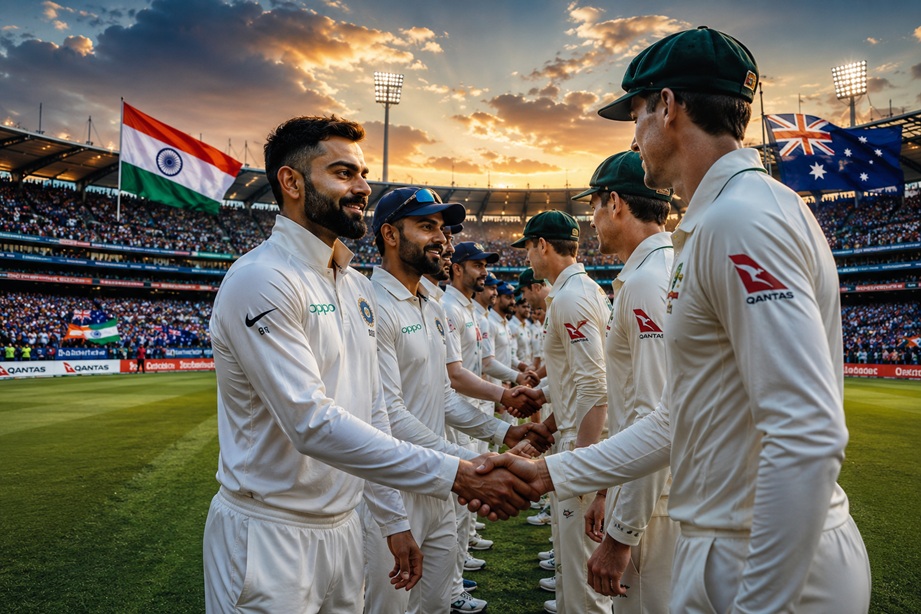
Why India vs Australia Feels Bigger Than a Normal Series
While a standard bilateral series can be enjoyable, the India vs Australia timeline possesses a heightened level of intensity, as both teams have frequently been at the pinnacle of international cricket.
Australia has garnered a reputation for playing relentless winning cricket across various eras. In contrast, India has gradually evolved into a team capable of equaling Australia in talent, skill, mentality, and depth. This development has led to a rivalry that has grown increasingly competitive over the decades.
Several factors contribute to the massive interest these matches generate:
- Both countries have produced iconic batters, bowlers, captains, and game-changers.
- Test series between the two often impact global rankings and championship goals.
- Their matches have delivered thrilling shifts rather than predictable outcomes.
- Supporters in both nations infuse each significant contest with deep emotion.
The current India vs Australia timeline holds particular strength due to the diversity of cricketing drama it encompasses. It features spin battles on Indian grounds, fast-bowling duels in Australia, World Cup showdowns under the lights, and Test series in which one remarkable session alters the entire situation.
The First Chapter: India’s 1947–48 Tour of Australia
The initial significant entry in the India vs Australia timeline took place during India’s 1947–48 expedition to Australia. As a newly independent nation, India was still in the process of solidifying its cricketing identity. Touring Australia represented a monumental athletic challenge.
Australia asserted its dominance in the five-Test series, winning four matches, with one resulting in a draw. While the outcomes were imbalanced, the tour’s significance extended well beyond the final scores. It exposed Indian cricket to Australia’s pace, conditions, competitiveness, and high standards.
Learning the Hard Way in Australian Conditions
The pitches in Australia were quick, bouncy, and unfamiliar to many Indian players from that time. The home side fielded a more robust and established team, while India was still maturing as an international Test contender.
The significant aspect was that India had stepped into the competitive field. The competition had formally commenced.
In the following decades, India would make its way back to Australia with improved squads, more capable athletes, and eventually a conviction that success there was achievable. That conviction did not materialize quickly. It was established through challenging defeats, courageous displays, and significant triumphs.
Early Years: Admiration Before Competition
Throughout the 1950s, 1960s, and a substantial portion of the 1970s, Australia typically maintained the upper hand in the overall matchup. India could strongly compete at home, particularly on spin-friendly pitches, yet achieving consistent victories against Australia was still a daunting challenge.
However, the foundations of a more intense rivalry were being laid. India cultivated players who gained respect globally, while Australia recognized that tours to India were often complex.
The narrative of the India vs Australia timeline during this period was less about one side overpowering the other in every encounter and more about the gradual development of mutual admiration. India was gaining insights into how to confront top-tier opponents. Australia was realizing that Indian cricket possessed talent, determination, and a passionate following.
By the late 1970s and through the 1980s, India began crafting moments that demonstrated the potential to bridge the gap. The competitions were evolving to be more strategic, intensely emotional, and significantly more crucial for both teams.
A Rivalry on the Brink of Bursting
The true surge was yet to occur. Soon, India would generate legendary captains, bold match-winners, and squads that no longer traveled abroad with only hopes of holding their ground. In contrast, Australia was about to enter one of the most commanding periods in cricket history.
This clash produced the version of the rivalry that supporters recall with the strongest memories.
The subsequent segments of the India vs Australia timeline would introduce the Border-Gavaskar Trophy, legendary Test confrontations, unforgettable batting partnerships, and matches that continue to resonate in cricket discussions today. The Border-Gavaskar Trophy itself was established in the 1996–97 season and honored two distinguished former captains, Allan Border and Sunil Gavaskar.
The Border-Gavaskar Trophy Transformed Everything
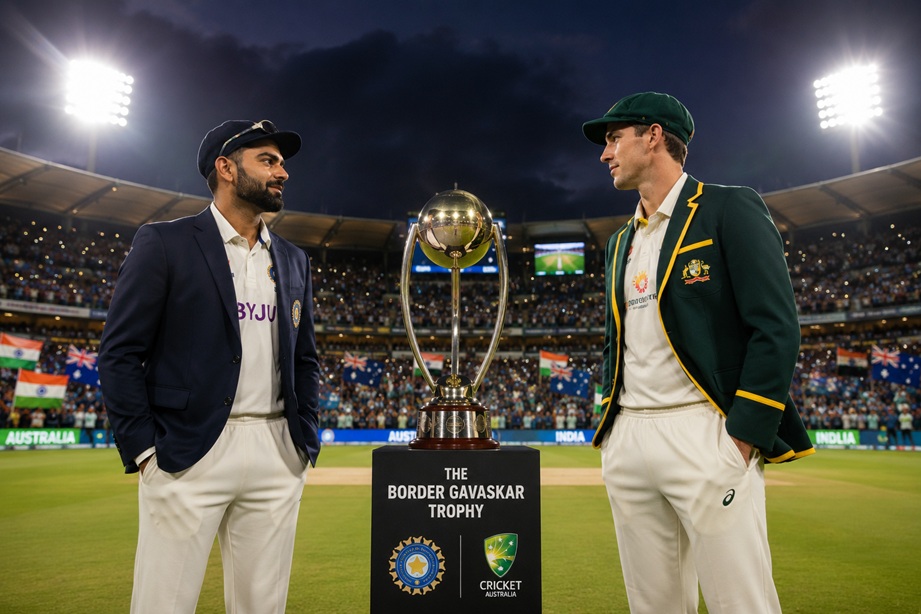
The introduction of the Border-Gavaskar Trophy in 1996 elevated this contest into one of the most eagerly awaited Test rivalries in cricket. Honoring Australian icon Allan Border and Indian legend Sunil Gavaskar, the trophy swiftly became a representation of excellence, endurance, and national pride.
Every Border-Gavaskar Trophy series held monumental importance, unlike many other bilateral competitions. The matches were intensely fought, frequently extending into the final moments of the last Test. As both nations cultivated elite players, each series contributed another remarkable chapter to the history of India vs Australia.
Sachin Tendulkar vs Australia’s Top Bowling Lineup
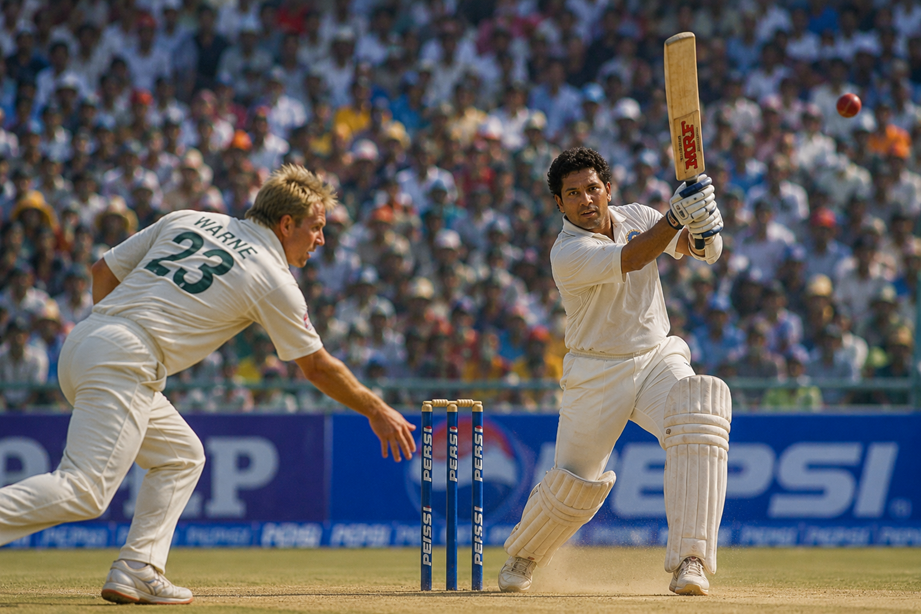
No account of this rivalry can exclude Sachin Tendulkar. Throughout the late 1990s and early 2000s, he routinely delivered outstanding innings against an exceptionally strong bowling lineup.
Facing bowlers like Glenn McGrath, Shane Warne, Jason Gillespie, and Brett Lee demanded remarkable focus and skill. Tendulkar’s iconic performances in Chennai, Melbourne, Sydney, and Sharjah raised the stakes of the rivalry significantly.
His legendary “Desert Storm” innings in Sharjah during 1998 is remembered as one of the finest performances in limited-overs cricket ever witnessed. Although it occurred in a tri-series instead of a bilateral match, it bolstered India’s emerging status as Australia’s primary cricketing rival.
2001: Eden Gardens Witnessed One of Cricket’s Greatest Events
If there was a series that permanently shifted the timeline of India vs Australia, it was the unforgettable Test series in India in 2001.
Australia came after winning 16 Test matches in a row and seemed nearly invincible. They easily claimed victory in the first Test in Mumbai and compelled India to follow on in the second Test at Eden Gardens.
What transpired next became a significant moment in cricket history.
VVS Laxman played an unforgettable innings of 281, while Rahul Dravid contributed an impressive 180. Together, they batted for almost an entire day, entirely changing the match’s dynamics.
On the last day, Harbhajan Singh bowled Australia out, securing a remarkable Indian win after following on—an achievement accomplished only a handful of times in Test history.
That comeback altered more than just a single game. It transformed belief.
Indian players understood they could defeat even the most formidable Australian team in challenging situations.
The Mid-2000s: A Rivalry Rich in Drama
As the teams progressed into the mid-2000s, their contests became markedly more charged.
Several unforgettable incidents characterized this period:
- Andrew Symonds’ contentious Test in Sydney in 2008
- Anil Kumble’s composed leadership amid challenges
- Brett Lee’s intense pace duels
- Ricky Ponting’s assertive captaincy
- MS Dhoni ushering in a new leadership phase for India
The 2008 Sydney Test remains one of the most controversial matches in modern cricket, marked by umpiring issues and the “Monkeygate” scandal involving Harbhajan Singh and Andrew Symonds.
Even with heightened emotions, the rivalry continued to intensify, drawing millions of fans worldwide.
The Emergence of an Indomitable Indian Squad
By the early 2010s, Indian cricket had undergone a significant transformation.
A new generation, including Virat Kohli, Ravichandran Ashwin, Cheteshwar Pujara, Ravindra Jadeja, Rohit Sharma, and Mohammed Shami, emerged as a team equipped to face challenges in any environment.
Australia also welcomed remarkable players such as Steve Smith, David Warner, Mitchell Starc, Pat Cummins, Josh Hazlewood, and Nathan Lyon.
Each series consistently showcased elite talent from both teams.
Virat Kohli’s Competitive Spirit
Few athletes personified the fervor of this rivalry as effectively as Virat Kohli.
Whether facing tough situations while batting, celebrating wicket dismissals, or interacting with Australian fans, Kohli infused an unmatched vitality into every match.
His centuries in Australia illustrated that Indian batsmen could thrive even on fast and bouncy pitches, which were historically regarded as Australia’s stronghold.
His bold style also motivated younger Indian cricketers to engage in competition without fear.
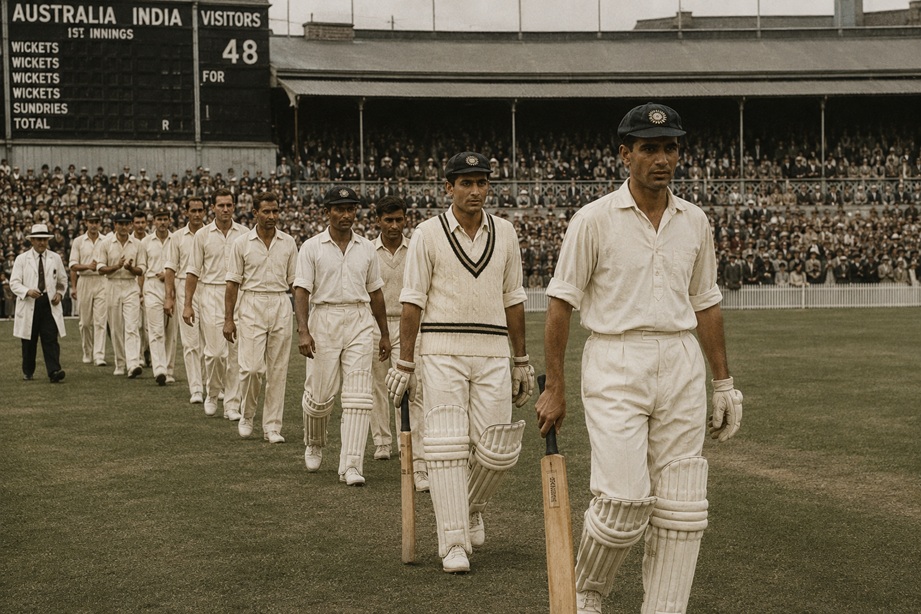
Historic Series Wins in Australia
A significant turning moment in the India vs Australia saga unfolded between 2018 and 2021.
India accomplished what many had aspired to for generations—achieving back-to-back Test series victories on Australian grounds.
2018–19: Breaking the Barrier
Under the captaincy of Virat Kohli, India clinched its inaugural Test series win in Australia.
Cheteshwar Pujara emerged as the batting star with his exceptional composure, while Jasprit Bumrah established himself as one of the premier fast bowlers globally.
This triumph affirmed India’s ability to achieve consistent success abroad, rather than solely depending on favorable home conditions.
2020–21: The Gabba Triumph
Numerous analysts thought that India’s prospects had vanished after they were bowled out for a mere 36 runs in Adelaide.
Injuries subsequently sidelined several key players from the lineup.
However, the team executed one of the most remarkable comebacks in the annals of Test cricket.
Interim captain Ajinkya Rahane motivated victories in both Melbourne and Brisbane, while emerging talents like Shubman Gill, Mohammed Siraj, Washington Sundar, and Rishabh Pant showcased unforgettable performances.
India’s win at Brisbane concluded Australia’s lengthy unbeaten Test streak at the Gabba.
For many cricket enthusiasts, it stands as the pinnacle of overseas Test series victories in India’s cricket history.
World Cup Battles Added Another Dimension
While Test cricket is central to this rivalry, ICC tournaments have introduced even more memorable instances.
India and Australia have faced each other in multiple high-stakes World Cup games, where a single outcome transformed the entire tournament.
Some particularly unforgettable moments include:
- Australia’s triumph in the 2003 Cricket World Cup Final.
- Australia’s victory in the 2015 World Cup semi-final.
- India’s notable wins during the league stages of various ICC competitions.
- The 2023 ICC Cricket World Cup Final, where Australia secured another world title despite India’s flawless performance throughout the tournament.
These encounters guaranteed that the India vs Australia narrative stretches far beyond just bilateral contests, becoming a prominent aspect of all major ICC events.
Records That Define the Rivalry
Over nearly eighty years, both countries have forged impressive legacies against one another.
Some key highlights include:
- Hundreds of Test matches contested across different eras.
- Iconic innings from Sachin Tendulkar, Ricky Ponting, Steve Smith, Virat Kohli, and others.
- Remarkable bowling performances from Harbhajan Singh, Anil Kumble, Glenn McGrath, Shane Warne, Jasprit Bumrah, and Nathan Lyon.
- Numerous matches concluded in the last session or on the final day.
Instead of one team having perpetual dominance, the rivalry has transformed through various periods, allowing each generation to feel distinctive.
By the middle of the 2020s, each fresh competition between India and Australia was regarded as one of the top occurrences in global cricket, with spectators enthusiastically anticipating the upcoming installment in this extraordinary athletic narrative.
The Modern Era: 2024–2026
The most recent segment of the India vs Australia Timeline showcases how well-matched these cricketing titans have become. Each bilateral series now garners worldwide interest, regardless of whether it features a Test match, One-Day International, or T20 International.
India maintains a strong team that balances seasoned veterans with promising young players, while Australia continues to be one of the most formidable teams in global cricket, boasting a well-structured pace attack, reliable batting order, and a robust culture of leadership.
Contemporary matches are influenced by meticulous strategy, sophisticated analytics, and adaptability in tactics. Coaches and analysts thoroughly examine opposing players, transforming each training session into a contest of skill and strategy rather than merely raw ability.
The rivalry has also grown beyond the pitch. Millions of supporters engage with every series via online platforms, social media debates, and live broadcasts, elevating every competition into a worldwide sporting extravaganza.
A Timeline of Landmark Moments
Presented below are significant milestones that have influenced this historic rivalry.
| Year | Major Event |
|---|---|
| 1947–48 | India embarks on its inaugural official Test series in Australia. |
| 1969–70 | Australia travels to India for yet another challenging Test series. |
| 1985 | India prevails over Australia in the World Championship of Cricket held in Melbourne. |
| 1996–97 | The Border-Gavaskar Trophy makes its debut. |
| 1998 | Sachin Tendulkar showcases his skill against Australia’s bowlers in the renowned Sharjah tournament. |
| 2001 | India achieves a remarkable comeback at Eden Gardens. |
| 2003 | Australia triumphs in the ICC Cricket World Cup Final over India. |
| 2008 | The Sydney Test leads to one of the largest controversies in cricket history. |
| 2018–19 | India achieves its inaugural Test series win in Australia. |
| 2020–21 | India claims victory in the historic Gabba Test, securing another series. |
| 2023 | Australia emerges victorious against India in the ICC Cricket World Cup Final. |
| 2024–2026 | The rivalry continues, featuring closely contested international series and the rise of new talents. |
Legends Who Defined the Rivalry
Every noteworthy rivalry is marked by exceptional players. India and Australia have produced some of cricket’s most renowned figures, many of whom established their legacies through unforgettable performances in matches against one another.
Indian Legends
- Sunil Gavaskar
- Kapil Dev
- Sachin Tendulkar
- Rahul Dravid
- VVS Laxman
- Anil Kumble
- MS Dhoni
- Virat Kohli
- Rohit Sharma
- Ravichandran Ashwin
- Jasprit Bumrah
Australian Legends
- Allan Border
- Steve Waugh
- Ricky Ponting
- Adam Gilchrist
- Glenn McGrath
- Shane Warne
- Brett Lee
- Michael Clarke
- Steve Smith
- David Warner
- Pat Cummins
These athletes have produced innumerable memorable performances, crucial bowling displays, and pivotal moments of leadership which continue to motivate cricket enthusiasts across generations.
Why This Rivalry Remains Special
Very few sporting rivalries sustain their fervor for nearly eighty years. The uniqueness of the India vs Australia Timeline lies in its continuous evolution.
Australia ruled over many of the initial decades. India gradually became more competitive at home before evolving into a team capable of consistently achieving victories abroad. Rather than one side maintaining dominance indefinitely, the equilibrium of power has alternated frequently, ensuring that every subsequent series remains unpredictable.
Numerous elements distinguish this rivalry:
- Top-tier players consistently compete from both teams.
- Test, ODI, and T20 matches maintain high competitiveness.
- Iconic venues across both nations create memorable atmospheres.
- Each series significantly impacts ICC rankings and the overall narrative in global cricket.
- Young athletes frequently make their mark on the grandest platforms.
This blend of legacy, caliber, and competitive equity makes every matchup feel important.
Looking Forward
As cricket advances with innovative formats and fresh talent, the competition appears poised to continue its intensity. India has cultivated a vast reservoir of talent in the cricketing world, while Australia persistently delivers top-tier fast bowlers and highly skilled batsmen.
Upcoming Border-Gavaskar Trophy matches are anticipated to remain among the most viewed spectacles in global cricket. Young talents from both countries will have the chance to craft their own memorable experiences and contribute new tales to this extraordinary narrative.
Regardless of whether the games are held in Mumbai, Melbourne, Chennai, Sydney, Bengaluru, Adelaide, Delhi, or Brisbane, spectators can look forward to fierce matchups characterized by mutual admiration and an unwavering ambition to succeed.
Conclusion
The timeline of India versus Australia encompasses much more than just records of wins and losses. It narrates the tale of two proud cricketing countries challenging one another toward elevated achievements through the ages.
From India’s challenging first tour in 1947-48 to the extraordinary events at Eden Gardens, from Sachin Tendulkar’s legendary performances to Virat Kohli’s audacious leadership, and from Australia’s era of supremacy to India’s landmark successes abroad, each decade has added something unforgettable.
Currently, this rivalry exemplifies the pinnacle of international cricket. Each contest is steeped in history, every session generates new reminiscences, and every series holds the promise of another classic destined to be cherished for years.
As new talent surfaces and fresh confrontations arise, the India versus Australia timeline will keep expanding—reminding cricket enthusiasts why this matchup is one of the most remarkable rivalries ever seen in the sport.