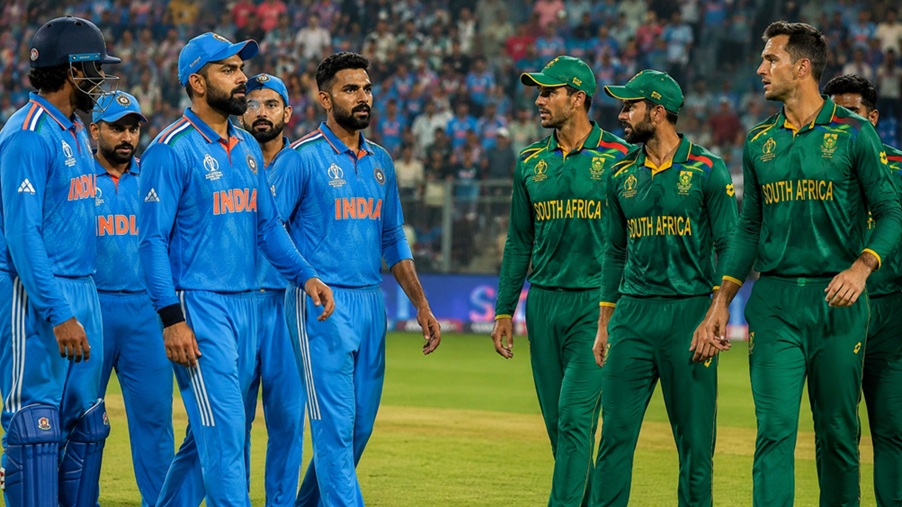

The competition between India and South Africa transcends a mere battle of bat against ball. It has evolved through various periods, formats, leaders, and eras, resulting in everything from nail-biting Test finishes to exhilarating high-scoring matches in limited overs. As we look ahead to another significant chapter in 2026, the cricket timeline between India and South Africa offers fans a valuable perspective on the evolution of this rivalry.
The reintroduction of South Africa to the international cricket scene in the early 1990s marked the beginning of a new competitive dynamic with India. Their inaugural Test series took place during 1992–93 in South Africa, where the host nation achieved a 1–0 victory alongside three drawn matches. India’s first tour was challenging but laid the groundwork for a rivalry that would substantially develop in the years to come.
The chapter of 2026 approaches with both teams having engaged in a busy contemporary schedule. In late 2025, India hosted South Africa for Tests, ODIs, and T20Is, revealing how fiercely the teams can contest against each other. Upcoming encounters in white-ball formats for men are anticipated in India from November 30 to December 19, 2026.
How the rivalry began
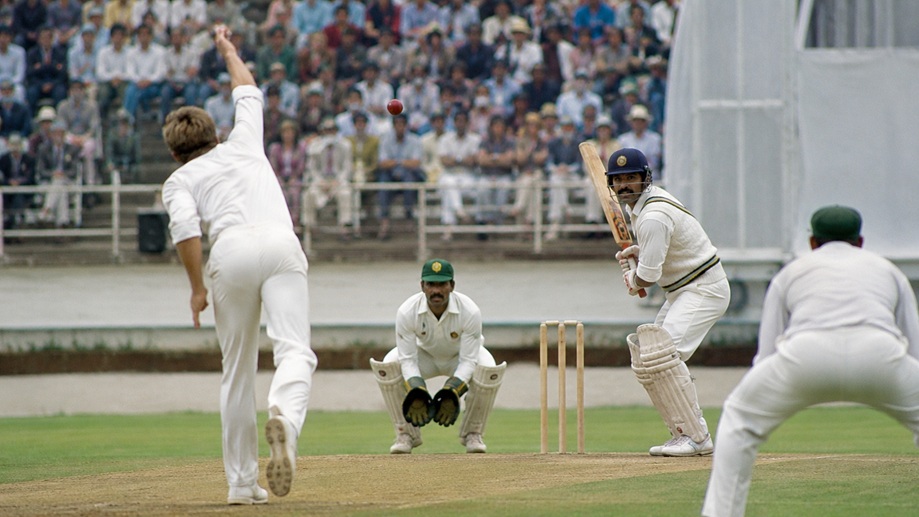
The origins of the present-day rivalry trace back to South Africa’s reintegration into international cricket. India emerged as one of the earliest significant challengers during this revival phase, with the 1992–93 tour immediately leading to a competitive Test and ODI series.
The first Test series
The inaugural Test match unfolded in Durban in November 1992 and concluded in a stalemate. The second Test in Johannesburg also resulted in a draw, while South Africa claimed victory in the third Test in Port Elizabeth by nine wickets. The fourth Test in Cape Town was yet another drawn match. Consequently, South Africa secured the four-match series with a score of 1–0.
Conversely, the one-day international series was more decisive. South Africa dominated the seven-match series, winning it 5–2, showcasing their home advantage and the prowess of players like Kepler Wessels and Allan Donald. For India, notable contributions came from players such as Kapil Dev and Anil Kumble.
This inaugural tour established the groundwork for what has grown into one of the most captivating cross-continental rivalries in international cricket. Thus, the timeline of India and South Africa cricket commences with a clear indication: this contest has consistently challenged India’s ability to succeed in South African conditions.
The rivalry grows in the 1990s
A pivotal phase emerged when South Africa visited India during the 1996–97 season. The conditions were markedly different, and India responded assertively.
India triumphed in the Ahmedabad Test by 64 runs, while South Africa retaliated with a remarkable 329-run win in Kolkata, followed by India clinching the series decider in Kanpur by 280 runs. India clinched the three-match series 2–1.
However, upon returning home, South Africa regained dominance. The 1996–97 tour featured two significant victories for South Africa in Durban and Cape Town, along with a drawn match in Johannesburg.
The modern rivalry takes shape
In the 2000s and 2010s, India and South Africa frequently faced each other in bilateral contests as well as major ICC tournaments. This rivalry showcased a host of elite players, including Sachin Tendulkar, Jacques Kallis, Graeme Smith, Dale Steyn, Virat Kohli, and Hashim Amla.
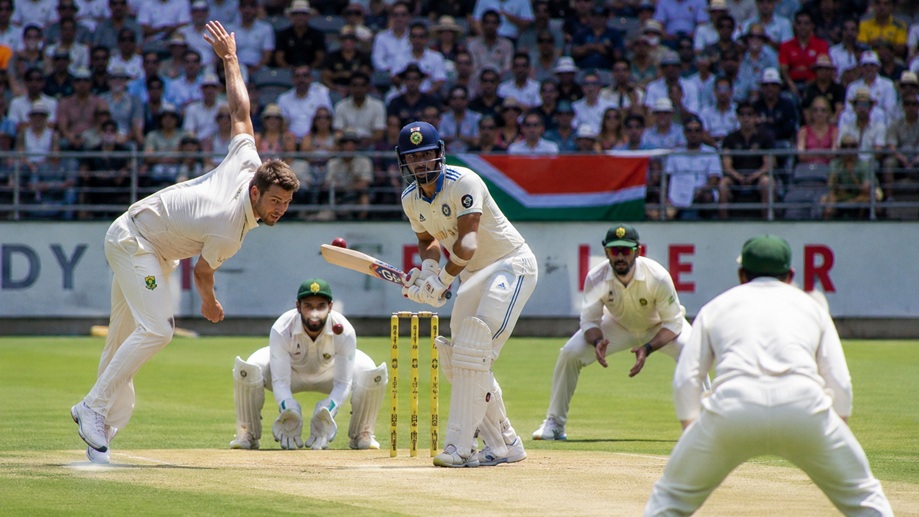
Test cricket gained considerable significance. South Africa frequently posed a challenge to India with their pace and bounce on familiar grounds, while India progressively built their fast-bowling capabilities and batting strength necessary to hold their own in foreign conditions.
Why Test cricket is significant
The narrative of their Test rivalry revolves around adaptability. South Africa is known for their expertise in seam bowling, tough pitches, and assertive pace attacks. Conversely, India has increasingly relied on top-notch spin bowling, extensive batting line-ups, and a fast-bowling squad proficient in securing wickets abroad.
This combination can swiftly alter the direction of a Test match:
- a single spell with the new ball
- a partnership in the middle order
- an impactful spell from a spinner
can shift the balance of the game.
The history of cricket between India and South Africa is notably captivating in the realm of Test matches due to the evolution of the rivalry alongside the global trend towards more formidable touring teams. India now enters South Africa not just aiming for survival but with a growing belief in their ability to contend for series victories.
Unforgettable limited-overs contests
The rivalry in limited-overs cricket has its distinctive character. One Day Internationals often showcase a strategic face-off between India’s batting depth and the explosive power of South Africa’s top and middle order. T20 Internationals escalate the match pace even further, where match-ups, early wickets during powerplays, and execution in the death overs become crucial factors.
The tour in 2025 serves as a recent case in point. After a two-Test series, India and South Africa faced each other in three ODIs.
- India secured a 17-run victory in the opening match in Ranchi
- South Africa triumphed in a thrilling run chase in Raipur by four wickets
- India concluded the ODI series with a dominant nine-wicket win in Visakhapatnam
The cricket timeline between India and South Africa illustrates how swiftly momentum shifted throughout that tour.
What alterations occurred in the meetings of 2025?
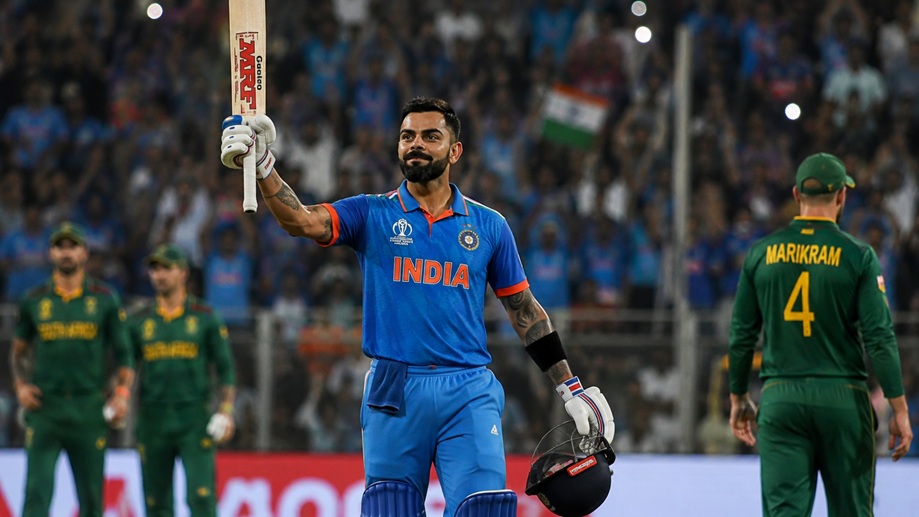
In the initial ODI match held in Ranchi, India scored 349 runs for the loss of 8 wickets and emerged victorious by a margin of 17 runs. The highlight was Virat Kohli’s impressive 135 runs, while the chase by South Africa saw commendable performances from Matthew Breetzke and Marco Jansen.
The second ODI, played in Raipur, turned into a high-scoring game. India tallied 358 runs for 5 wickets, but South Africa successfully reached the target, scoring 362 runs for 6 wickets in 49.2 overs. A century from Aiden Markram and solid backing from his teammates allowed the visitors to equalize the series.
In the final contest at Visakhapatnam, India convincingly chased down a target of 271 runs, losing just one wicket in the process. This 2–1 ODI series victory provided India with a slight advantage as they prepared for the T20I matches.
For those monitoring the India-South Africa cricket timeline, these outcomes hold significance as they create the competitive landscape leading into their next encounter.
South Africa vs India in 2026
The 2026 men’s series is set to be a white-ball tour in India. Cricket South Africa has announced a lineup of three ODIs followed by five T20Is.
ODI series
The schedule for the three ODIs is as detailed below:
- November 30: Ranchi
- December 3: Raipur
- December 6: Visakhapatnam
This schedule mirrors the venues from the 2025 ODI series, giving the 2026 matches a unique sense of continuity. Players and analysts will benefit from recent experiences at these locations, although conditions may vary from year to year.
T20I series
The five T20Is are arranged for December 9, 11, 14, 17, and 19.
The matches will take place at Cuttack, New Chandigarh, Dharamsala, Lucknow, and Ahmedabad. This lineup is noteworthy as four of these sites were also part of the 2025 T20I series, providing teams with another chance to experiment with combinations under known conditions.
The series will be advantageous for team planning as T20 cricket does not allow for gradual starts. Batting in the powerplay, deft bowling during the death overs, and exceptional fielding can determine the outcome within a handful of overs.
Key players and strategic elements to observe
The 2026 encounters will be influenced by player selection, workload management, and current form rather than merely past reputation. South Africa has displayed readiness to utilize white-ball formats to progress towards future global competitions, while India boasts a vast pool of domestic talent for selection.
India’s challenge
India’s greatest strength lies in their depth. They can alter their combinations without drastically changing their playing style. Their main task will be managing player workloads and striking a balance between seasoned veterans and rising talents.
Given the familiarity of Indian pitches, the importance of spin and batting depth may continue. However, South Africa’s pace bowlers could pose significant challenges if India suffers early setbacks.
South Africa’s challenge
For South Africa, maintaining consistent performance across five T20Is and three ODIs is essential. Their batting capabilities have the potential to be overwhelmingly powerful, but India’s diverse bowling line-up can create challenging matchups.
The Proteas will also seek greater stability in tightly contested chases. The ODI victory in Raipur in 2025 highlighted their abilities when the top order remains aggressive yet composed.
Significance of the 2026 series
The upcoming series represents more than just another bilateral match. The aspects of squad strength, tactical adaptability, and future foresight have become nearly as crucial as individual game outcomes.
Consequently, the cricket narrative between India and South Africa is progressing into an era where emerging talents could hold as much significance as seasoned players. A standout performance, an effective opening bowl, or a high-pressure chase can swiftly alter the dynamics of this rivalry.
The overall context
From 1992 to 2026, the interaction between these teams has significantly evolved. Initially, South Africa dominated the early Test and ODI matches, but it has now transformed into a much more evenly matched contest.
What makes the India-South Africa cricket saga particularly interesting is how each generation has contributed something unique. The rivalry was established in the 1990s, solidified in the 2000s, marked by intense Test and limited-overs contests in the 2010s, and has entered the 2020s with deeper player pools and varied tactics.
The next significant chapter in the India-South Africa cricket timeline will occur when the matches in 2026 are contested, with the scorecards evolving the regular rivalry into a new historical moment.
Ultimately, the cricket narrative between India and South Africa is leading toward an intriguing contest in 2026. The three ODIs will take place first, followed by five T20 matches, with several familiar venues returning from the previous year. The trajectory of the India-South Africa cricket timeline will be influenced by whether the 2026 outcomes reinforce India’s recent home advantage, if South Africa can translate competitive showings into a series victory, and which players rise to become the next prominent figures in this enduring rivalry.
Conclusion
The timeline for the South Africa National Cricket Team against the India National Cricket Team in 2026 illustrates a competitive rivalry that has evolved from its difficult beginnings in the 1990s into one of the most intense matchups in international cricket. Both teams have consistently challenged one another, transitioning from Test matches characterized by speed, height, and spin to exhilarating ODI and T20I matchups, driving each other to enhance their skills.
The encounters in 2025 highlighted the rapid swings in momentum, with India clinching the ODI series 2–1 following South Africa’s remarkable chase in Raipur. As we look to 2026, the upcoming white-ball series is anticipated to add another significant chapter, consisting of three ODIs and five T20Is hosted by India.
In the end, the outcome of this rivalry will depend on recent performance, strategic flexibility, team strength, and the ability to handle high-pressure situations. With seasoned players and rising stars likely to take on crucial roles, each match has the potential to create unforgettable moments in this enduring cricket narrative. The upcoming events in 2026 thus signify more than a mere series; they offer both countries a chance to enhance their legacy in the ongoing saga of cricket between India and South Africa.