


The 2026 contest between Afghanistan and Nepal yielded one of the most compelling outcomes in the initial phase of the Asian Games men’s cricket tournament in Japan.
Nepal secured a five-wicket victory over Afghanistan at Korogi Sports Park in Nisshin, after limiting Afghanistan to 102 for 7 and successfully completing the pursuit with 103 for 5 in 17.2 overs.
This outcome was particularly significant because Afghanistan had previously initiated their participation with a decisive 48-run triumph against Japan. Afghanistan had posted 129 for 6 before dismissing Japan for 81, granting them an early advantage in Group A. Consequently, Nepal entered the match aware that a strong performance against Afghanistan could substantially alter the group’s standing.
Afghanistan vs Nepal 2026
4th Match, Group A • Korogi Sports Park, Nisshin, Japan
Afghanistan Innings
| Batter | R | B | 4s | 6s | SR |
|---|---|---|---|---|---|
| Hassan Eisakhil b Lalit Rajbanshi | 0 | 2 | 0 | 0 | 0.00 |
| Mohammad Akram b Lalit Rajbanshi | 2 | 8 | 0 | 0 | 25.00 |
| Karim Janat b Lalit Rajbanshi | 9 | 9 | 1 | 0 | 100.00 |
| Faisal Shinozada b Kushal Bhurtel | 30 | 33 | 2 | 1 | 90.91 |
| Najibullah Zadran b Kushal Bhurtel | 30 | 40 | 2 | 0 | 75.00 |
| Mohammad Ishaq b Kushal Bhurtel | 7 | 9 | 1 | 0 | 77.78 |
| Darwish Rasooli b Kushal Bhurtel | 2 | 5 | 0 | 0 | 40.00 |
| Nangeyalia Kharote not out | 17* | 15 | 3 | 0 | 113.33 |
| Abdollah Ahmadzai not out | 1* | 1 | 0 | 0 | 100.00 |
Nepal Bowling
| Bowler | O | R | W | Eco |
|---|---|---|---|---|
| Lalit Rajbanshi | 4 | 13 | 3 | 3.25 |
| Kushal Bhurtel | 4 | 21 | 4 | 5.25 |
| Dipendra Singh Airee | 4 | 21 | 0 | 5.25 |
| Sandeep Lamichhane | 4 | 18 | 0 | 4.50 |
| Other Bowlers | 4 | 29 | 0 | 7.25 |
Nepal Innings
| Batter | R | B | 4s | 6s | SR |
|---|---|---|---|---|---|
| Kushal Bhurtel dismissed | 0 | 1 | 0 | 0 | 0.00 |
| Aasif Sheikh dismissed | 2 | 4 | 0 | 0 | 50.00 |
| Sundeep Jora dismissed | 34 | 35 | 4 | 0 | 97.14 |
| Rohit Paudel not out | 33* | 32 | 3 | 0 | 103.13 |
| Dipendra Singh Airee dismissed | 15 | 18 | 1 | 0 | 83.33 |
| Gulshan Jha not out | 1* | 1 | 0 | 0 | 100.00 |
Afghanistan Bowling
| Bowler | O | R | W | Eco |
|---|---|---|---|---|
| Faridoon Dawoodzai | 4 | 10 | 1 | 2.50 |
| Afghanistan Bowler 2 | 4 | 18 | 1 | 4.50 |
| Afghanistan Bowler 3 | 3.2 | 20 | 1 | 6.00 |
| Afghanistan Bowler 4 | 3 | 17 | 1 | 5.67 |
| Afghanistan Bowler 5 | 3 | 19 | 1 | 6.33 |
Kushal Bhurtel
4 wickets for 21 runs in 4 overs
Rather than witnessing another Afghanistan win, the encounter showcased a disciplined display from Nepal. Their bowling unit consistently disrupted Afghanistan’s momentum, while the run chase was effectively steered by Sundeep Jora and Rohit Paudel.
Afghanistan VS Nepal 2026: Match Synopsis
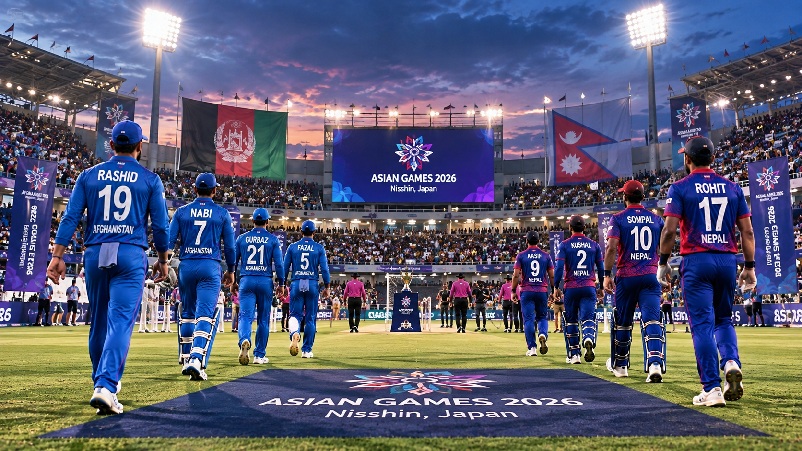
The 2026 Afghanistan versus Nepal match took place on Friday, September 25, at Korogi Sports Park in Nisshin, Japan. This was the fourth fixture of the men’s cricket event in the 2026 Asian Games and was part of Group A.
Afghanistan elected to bat first after winning the toss. That choice initially seemed prudent, following their strong opening performance against Japan; however, Nepal’s bowling attack swiftly presented challenges for the Afghan batting lineup.
Afghanistan concluded their innings at 102 for 7 in 20 overs, setting Nepal a target of 103. The innings never evolved into a high-scoring T20 affair, as Afghanistan lost wickets at regular intervals during the initial overs.
Nepal’s response was measured rather than aggressive. The team lost early wickets, but Sundeep Jora’s 34 runs and Rohit Paudel’s undefeated 33 runs laid the groundwork for the successful chase. Nepal reached 103 for 5 in 17.2 overs, winning by five wickets.
Encounter Overview
- Location: Korogi Sports Park, Nisshin, Japan
- Tournament: 2026 Asian Games Men’s Cricket Competition
- Fixture: Fourth Match, Group A
- Afghanistan: 102/7 from 20 overs
- Nepal: 103/5 from 17.2 overs
- Result: Nepal won by 5 wickets
- Leading Afghanistan Run-Scorers: Faisal Shinozada 30, Najibullah Zadran 30
- Leading Nepal Run-Scorers: Sundeep Jora 34, Rohit Paudel 33
- Most Effective Nepal Bowlers: Kushal Bhurtel 4/21, Lalit Rajbanshi 3/13
Afghanistan’s Batting Difficulties
The most prominent aspect of Afghanistan’s batting innings was the absence of significant partnerships.
The initial innings of the 2026 Afghanistan versus Nepal match commenced poorly for Afghanistan. Hassan Eisakhil was out for a duck after facing two deliveries, while Mohammad Akram managed only two runs from eight balls. Karim Janat contributed nine runs from nine deliveries.
These early dismissals placed Afghanistan under pressure before the innings could stabilize. According to the official scorecard, Afghanistan was reduced to 16 for 3, granting Nepal’s bowlers substantial command over the game’s pace.
Faisal Shinozada and Najibullah Zadran Stabilize the Innings
Faisal Shinozada and Najibullah Zadran subsequently provided the most crucial batting support for Afghanistan.
Both batsmen accumulated 30 runs, however, neither could convert their strong start into a substantial score. Shinozada compiled his 30 runs from 33 balls, which included two boundaries and a six. Zadran also amassed 30 runs, consuming 40 balls and striking two fours.
Their collaboration aided Afghanistan in moving past a precarious situation, but Nepal consistently managed to dismiss batsmen at regular intervals. Without a late scoring flurry, Afghanistan struggled to achieve a target that would have placed considerable strain on Nepal.
Nangeyalia Kharote contributed an undefeated 17 runs off 15 deliveries, featuring three fours, while Abdollah Ahmadzai concluded his innings with one run. Afghanistan ultimately posted 102 runs for the loss of 7 wickets by the conclusion of their allotted 20 overs.
A total of 102 runs was unlikely to be easily defended, especially against a Nepal batting lineup capable of forming partnerships once the initial bowling pressure subsided.
Nepal’s Bowling Attack Proves Decisive
The performance of Nepal’s bowlers was the key factor in the Afghanistan versus Nepal 2026 match.
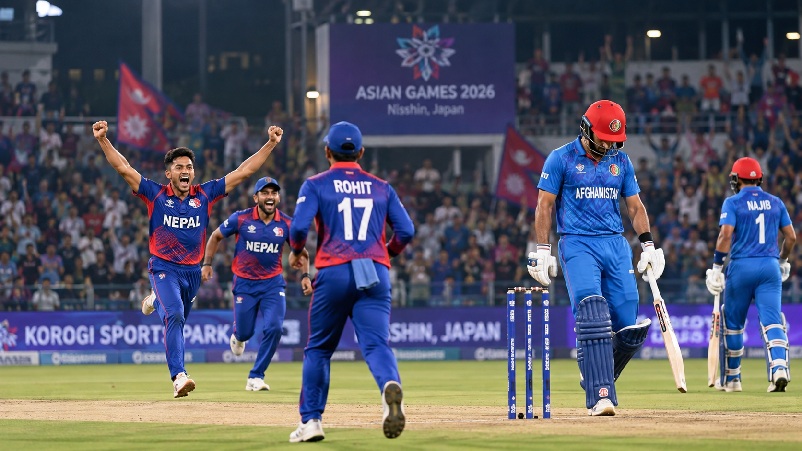
Lalit Rajbanshi made an immediate impact by sending back Hassan Eisakhil, Mohammad Akram, and Karim Janat. His four-over spell resulted in three dismissals for a mere 13 runs, significantly limiting Afghanistan’s ability to score freely during the initial overs.
Kushal Bhurtel then delivered an exceptional individual bowling display.
Bhurtel secured four wickets for 21 runs in his four overs. His spell included the dismissals of Faisal Shinozada, Najibullah Zadran, Mohammad Ishaq, and Darwish Rasooli.
The combined efforts of Rajbanshi and Bhurtel were responsible for all seven of Afghanistan’s wickets. This statistic highlights the effectiveness with which Nepal’s primary wicket-takers controlled the flow of the innings.
Nepal also benefited from impactful spells by Dipendra Singh Airee and Sandeep Lamichhane. Airee conceded 21 runs in his four overs, while Lamichhane gave away 18 runs in his four overs.
Reasons for the Difficulty in Defending 102
Afghanistan’s final score reflected three primary issues:
- early loss of wickets
- an inability to accelerate scoring
- the absence of a significant partnership towards the end of the innings
The team had two players reach the 30-run mark, but neither managed to prolong their stay at the crease long enough to elevate the score to a more competitive level. Kharote’s late unbeaten contribution was helpful, but Nepal’s bowlers had already placed Afghanistan in a challenging position.
Nepal’s strategy was straightforward: apply early pressure, utilize spin effectively, and prevent Afghanistan from mounting a late surge.
This strategy proved successful.
Nepal’s Batting Innings Commences Under Pressure
The second innings of the Afghanistan versus Nepal 2026 match did not begin ideally for Nepal either.
Kushal Bhurtel, who had just showcased an outstanding bowling performance, was dismissed without scoring. Aasif Sheikh followed soon after, having managed only two runs from four deliveries.
With two batsmen dismissed early, Afghanistan had an opportunity to increase the pressure on the required scoring rate.
However, Nepal remained composed.
Sundeep Jora played a crucial role in stabilizing the innings. He scored 34 runs from 35 balls, providing the necessary partnership for Nepal after the loss of their initial batsmen.
Rohit Paudel then fulfilled an equally vital role. His undefeated 33 runs off 32 balls ensured Nepal stayed on track throughout their chase.
Sundeep Jora Shifts the Match’s Momentum
Jora’s innings was arguably the pivotal moment in Nepal’s pursuit of the target.
With a modest objective of just 103, Nepal did not require an accelerated scoring pace. The primary concern was to prevent another series of dismissals.
Jora furnished precisely that steadiness.
His 34 runs were accumulated over 35 deliveries and featured four boundaries. Instead of trying to hit every ball hard, he assisted Nepal in recovering from the initial wickets lost, enabling the required run rate to stay achievable.
That strategy proved increasingly useful as the pursuit advanced.
Once Nepal had secured a collaboration, Afghanistan required outs rather than just stingy bowling. Without consistent success in taking wickets, reaching the objective became progressively simpler.
Jora was eventually out, but the groundwork had already been established.
Rohit Paudel Secures the Victory
Rohit Paudel finished with 33 not out and was instrumental in the successful pursuit.
His performance was not characterized by aggressive striking. Rather, Paudel kept the score accumulating and ensured Nepal stayed ahead of the necessary pace.
Dipendra Singh Airee also added 15 runs off 18 balls. His collaboration with Paudel assisted Nepal in nearing the goal before his departure when only one run was needed for the win.
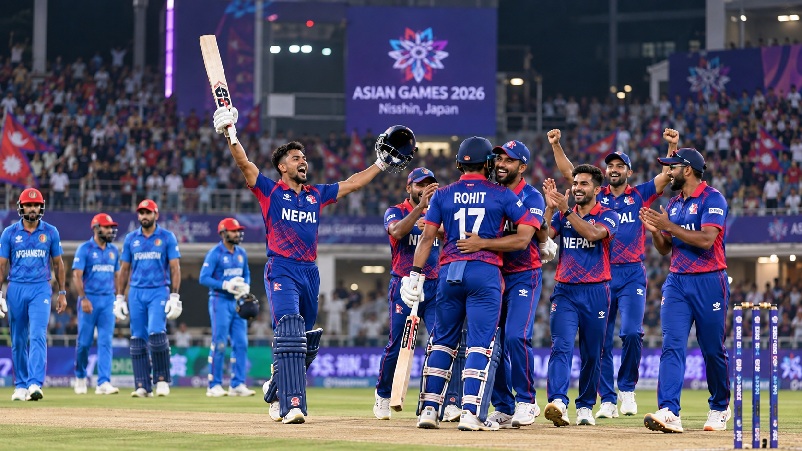
Gulshan Kumar Jha then made the decisive run as Nepal concluded the chase with 16 balls left.
The concluding tally was 103 for 5 in 17.2 overs, granting Nepal a triumph by five wickets.
Notable Contributors From Both Sides
The Afghanistan versus Nepal 2026 match summary includes several contributions that shed light on the game’s progression.
Afghanistan
Faisal Shinozada – 30 runs
Shinozada was among Afghanistan’s joint top scorers. His 30 runs took 33 balls to score, including two fours and a six. His innings aided Afghanistan in recovering from a weak beginning, though he couldn’t deliver the late surge required.
Najibullah Zadran – 30 runs
Zadran also made 30 runs and occupied the crease for 40 deliveries. His contribution was significant as Afghanistan needed someone to remain at the wicket after losing early players.
Nangeyalia Kharote – 17 runs
Kharote provided late scoring and remained not out. His 17 runs from 15 balls contained three fours, injecting some impetus into Afghanistan’s effort towards the end of their batting.
Nepal
Kushal Bhurtel – 4/21
Bhurtel recorded the finest bowling figures for the duration of the match. His four dismissals across four overs hindered Afghanistan’s ability to compile a competitive score.
Lalit Rajbanshi – 3/13
Rajbanshi’s initial bowling stint was of similar consequence. His three captured wickets eliminated Afghanistan’s initial three batsmen, immediately placing the innings under duress.
Sundeep Jora – 34
Jora’s score of 34 served as the foundation for Nepal’s pursuit after two early dismissals.
Rohit Paudel – 33
Paudel remained until the conclusion, ensuring Nepal reached the target without enabling Afghanistan to mount a late resurgence.
The Significance of the Outcome for Group A
The outcome of the Afghanistan versus Nepal 2026 match held consequences extending beyond a solitary encounter, as Group A comprises Afghanistan, Nepal, and Japan.
Afghanistan had participated in the match following a 48-run victory against Japan. Their total of 129/6 was succeeded by Japan’s dismissal for 81, indicating Afghanistan commenced their subsequent group fixture with a prior triumph secured.
Consequently, Nepal’s success altered the competitive landscape.
Nepal is scheduled to compete against Japan next on September 26 at Korogi Sports Park. This particular contest is designated as the fifth event within the men’s cricket tournament schedule.
Given the limited size of Group A, every result possesses considerable importance. A team cannot depend on an extensive tournament schedule to recover from a setback.
Nepal’s triumph provides the team with positive momentum heading into their engagement with Japan, while Afghanistan will need to analyze the shortcomings in their batting innings.
What Constituted Afghanistan’s Difficulties?
Several distinct deficiencies were apparent in Afghanistan’s batting performance.
The foremost issue was the premature loss of batsmen. The loss of three wickets for a mere 16 runs necessitated the middle order’s involvement considerably sooner than anticipated.
The secondary concern revolved around the pace of scoring. Afghanistan ultimately achieved 102 runs, but the innings never experienced a sustained phase of increased scoring.
The tertiary problem was the absence of a substantial partnership. While Shinozada and Zadran both amassed 30 runs, neither managed to transform their contribution into a match-deciding effort.
Afghanistan also had restricted opportunities to target Nepal’s bowlers in the concluding overs due to the continued fall of wickets.
The bowling unit had performed adequately to present Afghanistan with a chance, but a score of 102 proved insufficient.
What Contributed to Nepal’s Success?
Nepal’s achievement was primarily founded on methodical execution.
The Afghanistan versus Nepal 2026 contest demonstrated the advantage of capturing wickets as opposed to solely focusing on restricting runs.
Rajbanshi’s three early dismissals and Bhurtel’s four-wicket performance prevented Afghanistan from establishing a robust foundation.
The subsequent run chase was managed with careful consideration.
Even after the early loss of Bhurtel and Aasif Sheikh, Nepal refrained from unnecessarily accelerating the scoring rate. Jora and Paudel absorbed the pressure and progressively reduced the required runs.
This blend of bowling control and batting composure was fundamental to Nepal’s victory by five wickets.
An Examination of the Match Circumstances
The contest took place at Korogi Sports Park in Nisshin, Japan, one of the sites designated for the 2026 Asian Games cricket event. The men’s competition is scheduled from September 24 to October 3, and it will feature teams from various Asian countries.
The environmental factors also contributed to a unique strategic scenario.
Having previously played Japan on the inaugural day, Afghanistan was familiar with the venue. In that encounter, they amassed 129/6 before dismissing Japan for 81 runs.
However, the Afghan batting lineup was unable to replicate that success against Nepal.
Nepal’s bowlers demonstrated effective adaptation, hindering Afghanistan’s ability to generate the same momentum that had aided them against Japan.
Nepal’s Recent Advancement Provides Context
The 2026 Afghanistan versus Nepal victory also occurs at a significant juncture in Nepal’s progression in international cricket.
Earlier in September, Nepal secured a 44-run victory over the United Arab Emirates in the final of the ACC Men’s Premier Cup. This triumph earned Nepal a spot in the 2027 Men’s Asia Cup.
In that final, Nepal posted a total of 313/9, with Aasif Sheikh scoring a century, before confining the UAE to 269.
That outcome underscored Nepal’s capability to perform well in a crucial tournament setting. Their triumph over Afghanistan in the Asian Games further adds a significant achievement to the team’s recent series of successes.
While the Asian Games format differs from the 50-over Premier Cup, the confidence derived from recent competitive matches can still prove beneficial.
Afghanistan’s Broader Tournament Perspective
Afghanistan continues to be a significant cricketing nation in Asian international competitions and entered the Asian Games campaign following an extensive international playing schedule.
Their recent T20I series against India consisted of three matches played in September. India emerged victorious in all three contests, with wins by seven wickets in the initial two matches and by 127 runs in the third.
This demanding schedule meant that Afghanistan arrived at the Asian Games having recently participated in high-level T20 cricket.
Their initial victory against Japan suggested a rapid adjustment, but the loss to Nepal underscored the critical role of batting depth and versatility in short tournament formats.
This defeat does not negate Afghanistan’s earlier win, but it necessitates careful attention to their remaining group-stage matches.
Nepal versus Japan: What Lies Ahead?
Following the 2026 Afghanistan versus Nepal result, Nepal’s subsequent match is against Japan.
The game is slated for Saturday, September 26, at Korogi Sports Park. Based on the published timetable, the match is scheduled to commence at 5:30 AM IST, with the local start time in Japan being 9:00 AM.
This encounter will be crucial for Nepal, as another strong performance could solidify their standing in Group A.
Japan, on the other hand, will be seeking to rebound after experiencing a 48-run loss in their opening game against Afghanistan.
This makes the concluding Group A fixture particularly important for all three participating teams.
Insights from the Scorecard
The 2026 Afghanistan versus Nepal scorecard reveals that the outcome was not solely determined by the final score.
Afghanistan’s total of 102/7 was a result of repeated disruptions to their batting momentum. Although three early wickets fell, followed by two scores in the thirties, the innings lacked the forceful conclusion typically associated with T20 cricket.
Nepal’s 103/5 presents a different account. The squad also lost early wickets, yet Jora and Paudel managed to gain command.
This difference holds significance.
In a low-scoring Twenty20 fixture, one significant alliance can prove more valuable than several brief, aggressive innings. Nepal achieved that alliance at a crucial juncture.
Five Key Discussion Points
The 2026 Afghanistan versus Nepal game generated several topics that will likely persist in conversations about Group A.
- Nepal’s bowling contingent dominated the initial part of the matchRajbanshi and Bhurtel together secured seven dismissals. Their respective statistics of 3/13 and 4/21 formed the basis of Nepal’s triumph.
- Afghanistan failed to achieve consistent batting momentumEven with two batters reaching the 30-run mark, Afghanistan concluded with a total of 102/7.
- Nepal managed the initial pressure of the pursuitThe loss of Bhurtel and Aasif Sheikh at the outset could have caused difficulties, but Jora and Paudel restored the innings.
- Paudel delivered the concluding stabilityHis undefeated 33 ensured Nepal maintained control until the winning score was made.
- The outcome altered Group A’s landscapeNepal’s win signifies that the remaining group contest between Nepal and Japan gains heightened importance as the nations vie for advancement.
Final Scorecard
Below is the essential record of the Afghanistan versus Nepal 2026 contest:
Afghanistan – 102/7 in 20 overs
- Faisal Shinozada – 30
- Najibullah Zadran – 30
- Nangeyalia Kharote – 17
- Karim Janat – 9
- Mohammad Ishaq – 7
Nepal’s Bowling Performance
- Kushal Bhurtel – 4/21
- Lalit Rajbanshi – 3/13
Nepal – 103/5 in 17.2 overs
- Sundeep Jora – 34
- Rohit Paudel – 33
- Dipendra Singh Airee – 15
Afghanistan’s Bowling Performance
- Faridoon Dawoodzai – 1/10
The other Afghanistan bowlers shared responsibility for the remaining dismissals.
Nepal emerged victorious by five wickets, reaching the objective with 16 balls to spare.
Conclusion
The 2026 Afghanistan versus Nepal encounter evolved into a memorable Asian Games competition due to Nepal’s combination of precise bowling and a composed pursuit, leading to a five-wicket victory over Afghanistan.
Afghanistan’s score of 102/7 was bolstered by contributions of 30 runs from Faisal Shinozada and Najibullah Zadran, but the team struggled to recover after losing three wickets early on. Nepal’s bowling attack, spearheaded by Kushal Bhurtel and Lalit Rajbanshi, effectively contained the scoring throughout the innings.
Nepal’s pursuit also encountered challenges. The premature dismissals of Bhurtel and Aasif Sheikh presented Afghanistan with an opportunity, but Sundeep Jora and Rohit Paudel shifted the game’s momentum. Jora’s score of 34 provided a steadying influence, while Paudel’s unbeaten 33 guided Nepal to the victory target.
This result is particularly significant given the tightly structured group stage of the men’s Asian Games cricket tournament. Nepal now focuses on its match against Japan, while Afghanistan must regroup following its initial loss in the competition.
For Nepal, this five-wicket triumph represents another significant achievement during a period where the team has already secured its place in the 2027 Men’s Asia Cup. For Afghanistan, the match serves as a stark reminder that a strong initial performance does not guarantee a straightforward progression through a brief tournament.
The game’s outcome hinged on performing well in crucial junctures, with Nepal’s bowlers contributing seven dismissals through Bhurtel and Rajbanshi, and their subsequent batters comfortably finishing the pursuit. This performance solidified the match’s status as a pivotal outcome within Group A up to this point in the Asian Games.