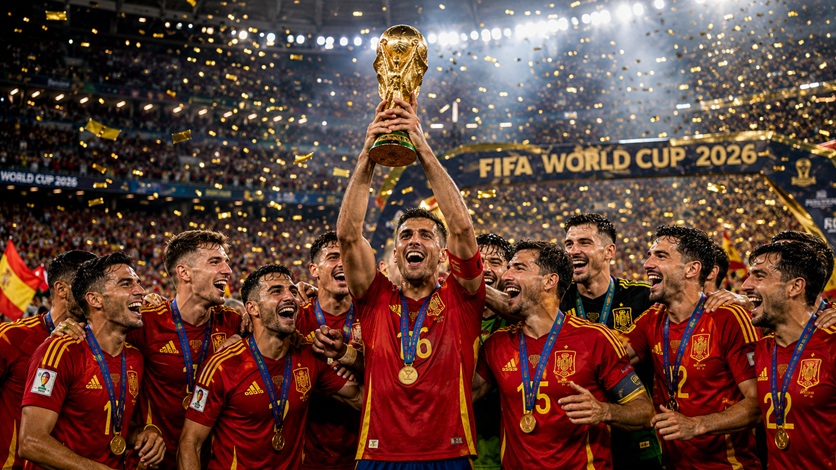

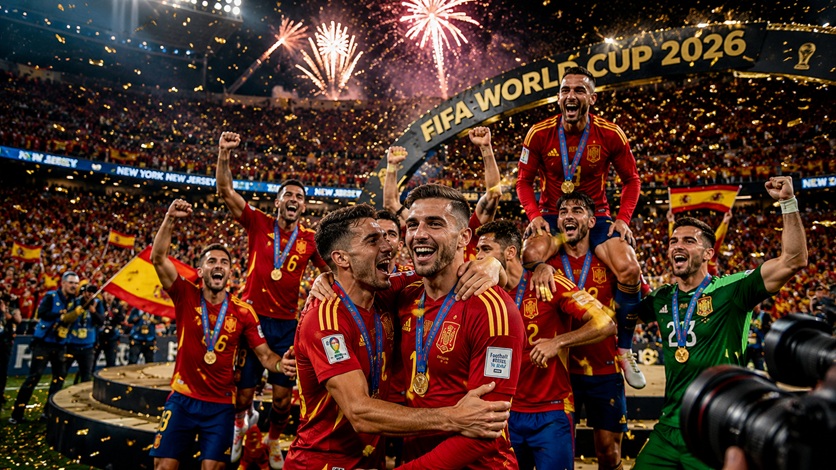
Fans of football experienced an exceptionally strategic and thrilling FIFA World Cup finale when Spain triumphed over Argentina 1-0 after extra time, earning them the 2026 FIFA World Cup trophy. Held at New York New Jersey Stadium, the encounter showcased top-notch defending, exceptional goalkeeping, and a climactic finish that granted Spain their second men’s World Cup victory. Ferran Torres emerged as the standout player with a crucial goal in the 106th minute, concluding a fierce duel between two of the sport’s most prominent nations. Spain dominated possession for the majority of the match and finally found a breakthrough after applying constant pressure.
A Historic Final Between Football Giants
The decisive match featured the current European champions facing off against the reigning world champions, generating immense excitement worldwide. Spain approached the final without any losses, displaying a well-rounded team founded on technical skill, disciplined defense, and rapid attacking plays.
Argentina, captained by Lionel Messi in yet another World Cup final, depended on their experience and tenacity. The clash promised a captivating contrast in tactics, with Spain focusing on ball possession while Argentina aimed for moments of brilliance on counterattacks. The atmosphere in the stadium mirrored the significance of the event, as supporters from both sides contributed to an unforgettable celebration.
Spain’s Tactical Blueprint
Coach Luis de la Fuente adhered to the tactical principles that had supported Spain throughout the tournament.
His strategy emphasized:
- Controlling possession.
- Immediate pressing after losing the ball.
- Exploiting width in attack against Argentina.
- Maintaining defensive organization.
- Creating numerical advantages in midfield.
This collective mindset enabled Spain to control the game’s pace for extended periods while restricting Argentina’s offensive chances.
First Half: Spain Controls the Tempo
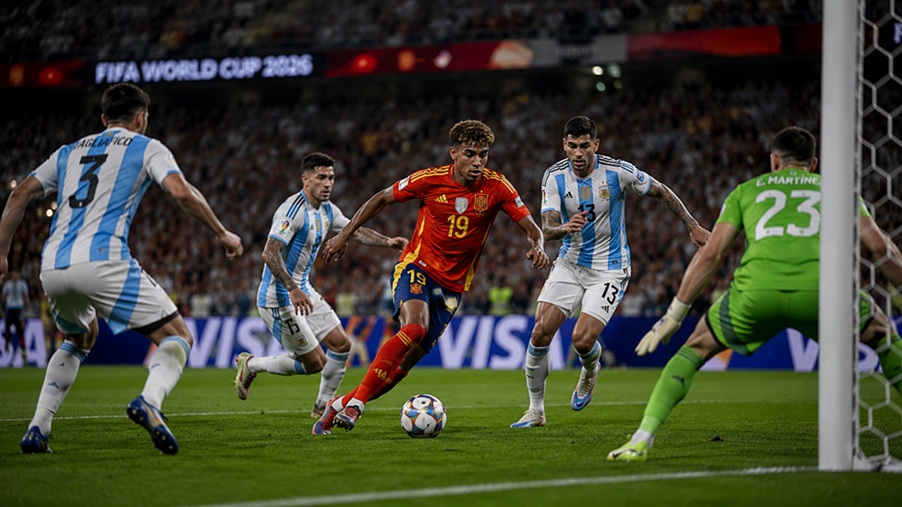
The initial whistle swiftly indicated Spain’s objectives. Lamine Yamal tested Emiliano Martínez early on, while Dani Olmo and Mikel Oyarzabal were persistent in seeking space behind Argentina’s defensive structure.
Despite Spain enjoying the bulk of possession, Argentina maintained a solid defensive shape, redirecting many attacks into wider areas. Martínez made crucial saves that kept Spain from acquiring an early advantage.
On the other hand, Argentina faced difficulties in maintaining consistent possession as Spain’s midfield effectively closed off passing options.
By the time of halftime, Spain had undoubtedly been the more aggressive team, even though the score remained tied.
Defensive Excellence Defines the Match
A significant narrative of the final was Spain’s exceptional defensive organization.
Every player participated actively off the ball. Midfielders tracked opponents, defenders maintained superior positioning, and goalkeeper Unai Simón remained calm whenever necessary.
Spain’s pressing game limited Argentina’s capacity to create significant opportunities, underscoring their status as one of the tournament’s most formidable defensive units.
The defense, led by the young Pau Cubarsí alongside experienced colleagues, exhibited maturity that belied their youth while effectively containing one of international football’s top attacking forces.
Emiliano Martínez Keeps Argentina Alive
While Spain controlled the game, Emiliano Martínez made sure Argentina stayed competitive.
The Argentine goalkeeper delivered a collection of stunning saves during regulation time, denying:
Key Saves Against
- Lamine Yamal
- Ferran Torres
- Nico Williams
- Pedri
- Pau Cubarsí
Every pause heightened the anxiety within the stadium as Spain persisted in their quest for the opening goal.
Had it not been for Martínez’s exceptional display, the match might have been settled well ahead of the additional time.
The Match Progresses into Extra Time
Following 90 minutes of solid defense and unconverted chances, the match moved into extra time, with anxiety mounting within the crowd. Spain maintained its offensive strategy, persistently circulating the ball while stretching Argentina across the whole field.
Argentina encountered an escalated obstacle when Enzo Fernández received a red card late in regular play, compelling the reigning champions to compete with ten players. Spain quickly recognized this advantage and heightened their offensive pressure, continually forcing Emiliano Martínez to make challenging saves.
Ferran Torres Creates the Crucial Moment
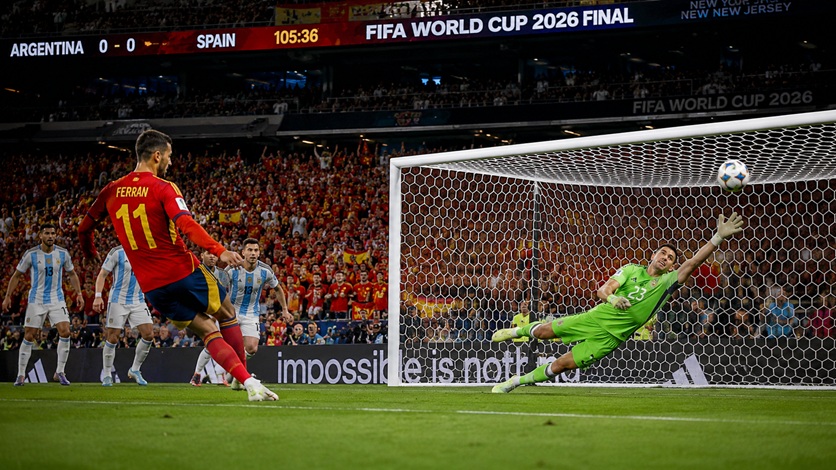
The decisive moment finally came in the 106th minute.
Pedro Porro delivered a precise cross into the box, where Nico Williams intelligently directed the ball into the perilous area. Ferran Torres swiftly reacted, making a first-touch shot that found the top corner of the net before Martínez could regain his footing.
The stadium erupted in cheers as Spanish players flocked to celebrate a goal that would become a significant highlight in the history of the nation’s football.
Torres, having entered the match as a substitute, made his impact even more noteworthy. His calmness under extreme pressure perfectly encapsulated Spain’s confidence throughout the tournament. This winning goal also marked him as only the second substitute ever to net the critical goal in a FIFA World Cup final.
Essential Contributors to Spain’s Win
Securing a World Cup demands efforts from all squad members, and Spain showcased this collaborative strength throughout the final.
Ferran Torres
Starting on the sidelines, Torres emerged as the standout hero of the evening. His movement within the box, precise finishing, and eagerness to challenge every cross rewarded Spain after over 100 minutes of unyielding pressure.
Lamine Yamal
The youthful prodigy consistently threatened Argentina with his speed, inventiveness, and fearless dribbles. He compelled Martínez to execute numerous remarkable saves and significantly contributed to stretching Argentina’s defense.
Rodri
Acting as the midfield general for Spain, Rodri dictated possession, intercepted threatening plays, and managed the rhythm of the game from beginning to end. His composed judgment allowed Spain to maintain their superiority even in the most heated moments.
Pau Cubarsí and the Defensive Line
Spain’s defense delivered one of the most exceptional performances witnessed in a World Cup final. Pau Cubarsí showcased maturity paired with excellent positioning, while Marc Cucurella, Aymeric Laporte, and Pedro Porro made certain that Argentina struggled to generate clear-cut chances.
Match Data That Illustrates the Narrative
The final score of 1-0 only hinted at Spain’s dominance.
Some standout statistics included:
- Spain dominated the possession.
- Spain significantly outshot Argentina.
- Argentina did not manage a single shot until extra time.
- Emiliano Martínez made numerous top-notch saves to keep Argentina in the game.
- Ferran Torres netted the lone goal in the 106th minute.
These figures captured Spain’s strategic control and unrelenting offensive style throughout the match.
Luis de la Fuente’s Successful Strategy
Spain’s victory was founded on much more than just technical skill.
Luis de la Fuente effectively combined seasoned veterans with promising young talents, forming one of the tournament’s most well-rounded teams.
Several elements played a role in achieving the championship:
- Smart rotation of players during the tournament.
- Strong organization in defense.
- Possession-oriented football with a patient approach.
- Strategic utilization of substitutes.
- Solid team unity and discipline.
The coach continually placed his faith in every individual of his team, and this trust was rewarded when Ferran Torres came off the bench to net the winning goal. Following the game, de la Fuente remarked that Spain believed the outcome should have been decided sooner, but commended his athletes for remaining dedicated to their approach until the critical moment arrived.
Spain’s Path to Football Greatness
Securing the World Cup demanded significantly more than a single impressive display.
During the 2026 tournament, Spain demonstrated outstanding consistency. Their organized defense, dynamic midfield, and precise attacking interplay enabled them to tackle every obstacle that emerged on their way to the final.
Emerging stars like Lamine Yamal rose to worldwide prominence while veteran players offered guidance during tough times. This blend of youthful energy and seasoned experience positioned Spain as one of the most well-rounded teams in the tournament.
This triumph also represented Spain’s second FIFA World Cup victory, adding another proud moment to the nation’s football legacy following their initial success in 2010.
Worldwide Reaction to the Final
Football enthusiasts globally commended the skill level and tactical discipline showcased in the championship clash.
Numerous analysts labeled Spain as worthy champions for their control of possession, creating a majority of opportunities, and maintaining focus under pressure. The goal by Ferran Torres quickly became one of the standout images of the tournament, while Lamine Yamal’s performances solidified his reputation as one of football’s most promising young talents.
Although Argentina departed the tournament with disappointment, their perseverance and tenacity throughout the event garnered significant respect. Coach Lionel Scaloni admitted that Spain outperformed them on that occasion, while Lionel Messi was praised for his sportsmanship despite the tough loss.
The Legacy of the 2026 World Cup Final
The final of the 2026 FIFA World Cup will be remembered for its tactical brilliance, thrilling conclusion, and the rise of a new wave of Spanish football talents.
Instead of depending solely on individual talent, Spain illustrated the importance of teamwork, strategic coaching, and steadfast confidence. Each participant played a role in a victory that underscored the nation’s long-standing commitment to youth development and technical football.
For fans, the unforgettable festivities, the thrilling winner scored during extra time, and the image of captain Rodri hoisting the iconic trophy created memories that will endure for many years.
The highlights of Spain’s World Cup encompass much more than a solitary goal—they embody determination, patience, and football executed at the highest quality. By controlling possession and delivering a championship-winning finish in extra time, Spain asserted themselves as the premier team of the tournament. Ferran Torres’ remarkable goal ensured his place in football history, while the collective display of Luis de la Fuente’s team guaranteed that the 2026 FIFA World Cup final would be remembered as one of the sport’s greatest championship encounters.
Conclusion
Spain’s victory of 1-0 against Argentina in the 2026 FIFA World Cup Final will go down as a brilliant example of patience, strategic discipline, and collaboration. During the entire match, Spain maintained control of the ball, defended steadily, and kept generating chances until Ferran Torres struck the pivotal goal in the 106th minute. Despite Emiliano Martínez’s exceptional performance in goal that kept Argentina in the game, Spain’s unyielding pressure ultimately led to a well-deserved victory.
Spain’s Historic Achievement
This win marked Spain’s second title in the FIFA World Cup, showcasing the effectiveness of Luis de la Fuente’s strategic approach and the ideal mix of seasoned captains and rising talents such as Lamine Yamal, Rodri, and Pau Cubarsí. Although Argentina showed grit and persistence, they were unable to break through Spain’s well-structured defense and constant offensive strategy.
Why the 2026 Final Will Be Remembered
Key Takeaways
- Spain secured a 1-0 victory over Argentina.
- Ferran Torres scored the winning goal in the 106th minute.
- Emiliano Martínez delivered an outstanding goalkeeping performance.
- Spain claimed their second FIFA World Cup title.
- Luis de la Fuente’s tactical approach proved decisive.
- Lamine Yamal, Rodri, and Pau Cubarsí played vital roles throughout the tournament.
Lasting Legacy
The highlights of the Spain World Cup Final embody much more than just the winning goal—they represent a championship forged from unity, smart football, and steadfast confidence. From solid defending to the unforgettable finish in extra time, the final of 2026 will be remembered as one of the most significant matches in FIFA World Cup history and a pivotal chapter in Spain’s football heritage.