
Cricket has seen a multitude of remarkable rivalries, but few hold as much historical importance and impact as the matchups between India and England. The India-England Timeline embodies over ninety years of unforgettable games, legendary players, thrilling victories, and significant events that have defined the landscape of international cricket.
This rivalry commenced in 1932 when India inaugurated its Test match journey at Lord’s. From that moment, the two countries engaged in Test matches, One-Day Internationals, T20 Internationals, and ICC events. Each era has relished significant moments, from India’s inaugural Test win to contemporary encounters showcasing some of the top cricketers globally.
In this comprehensive history, we delve into how the rivalry transitioned from England’s initial supremacy to one of the sport’s most competitive and thrilling rivalries.
The Birth of a Historic Rivalry (1932)
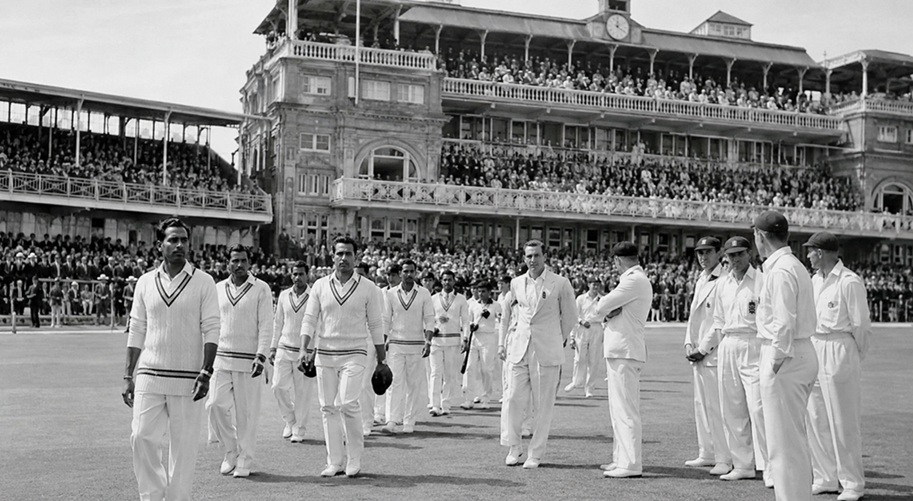
The official journey commenced on June 25, 1932, at the renowned Lord’s Cricket Ground in London. This was not merely another Test match; it signified India’s first foray into international cricket.
At that time, England was among the leading cricketing powers, while India was making its initial foray onto the world stage. Although England triumphed by 158 runs, India garnered considerable admiration for its disciplined bowling and tenacious batting displays.
This inaugural contest marked the beginning of a rivalry that would develop over many years.
Highlights of India’s Debut
- First Test match in the annals of Indian cricket
- Conducted at the esteemed Lord’s Cricket Ground
- England secured victory by 158 runs
- India demonstrated promise despite limited global exposure
This event laid the groundwork for the India-England Timeline, unveiling one of cricket’s oldest rivalries.
England’s Early Dominance (1933–1946)
Subsequent to India’s debut, England visited India for the inaugural Test series played on Indian territory during the 1933-34 season.
Throughout this series, England showcased their superior experience and strategic strength. Their disciplined seam attack and competent batting lineup posed considerable challenges to the developing Indian squad.
The visitors completed the three-match series with a 2-0 victory, with one Test concluding in a draw. Despite failing to secure a win, India acquired invaluable experience against one of cricket’s most formidable sides.
A few years later, in 1936, India traveled back to England.
The 1936 Tour
This excursion assessed India’s burgeoning self-confidence.
England secured two Test victories while one match resulted in a draw. Though victories remained out of reach, Indian batsmen displayed enhanced resilience against the tough English playing conditions.
The rivalry persisted after World War II, with India touring England once again in 1946. England clinched the series 1-0, but India’s performances indicated that the disparity between the two teams was progressively diminishing.
India’s First Historic Test Victory (1952)
A significant milestone in Indian cricket occurred during England’s visit to India in 1951-52.
After years of enduring challenging defeats, India finally conquered England in the fifth Test match held in Madras (now Chennai).
This win was particularly significant as India triumphed by an innings and eight runs, marking its inaugural Test victory in the realm of international cricket.
This achievement drastically transformed the self-assurance surrounding Indian cricket.
Why the Win Was Historic
Winning against England signified much more than just a single Test match.
It showcased India’s ability to stand toe-to-toe with well-established cricketing powers and set a precedent for future players. This outcome motivated aspiring cricketers nationwide and reshaped the aspirations of Indian cricket.
For numerous historians, this triumph is viewed as a pivotal event within the India England Timeline.
Building Confidence During the 1950s
While England continued to perform well during their tours abroad, India’s performance at home progressively enhanced.
Indian spin bowlers began to emerge as a significant force, and batsmen improved their adaptation to the international level. Additionally, audience numbers surged across the nation, indicating cricket’s rapidly growing appeal.
This decade saw the rise of gifted cricket players who were able to consistently hold their own against England’s seasoned team.
Rather than lopsided matchups, the games increasingly became closer and more unpredictable.
India’s First Test Series Victory Against England
The beginning of the 1960s ushered in yet another landmark achievement.
During the 1961–62 Test series, England visited India, anticipating yet another successful tour.
However, India exhibited remarkable discipline throughout the matches to secure its inaugural Test series victory over England, achieving a 2–0 result.
This victory proved that India’s previous triumph was no longer a fluke.
Factors Behind India’s Success
Several enhancements played a role in this achievement:
- Solid batting partnerships
- Exceptional spin bowling
- Improved grasp of local playing conditions
- Heightened team morale
- Increasing international exposure
This achievement fundamentally altered the dynamics of their rivalry.
England could no longer assume straightforward wins whenever they matched up with India.
The Rise of India’s Spin Era
Throughout the 1960s, India gained a reputation for nurturing remarkable spin bowlers who consistently challenged touring teams.
The slow Indian pitches paired well with clever spin bowling, creating challenges even for proficient English batsmen.
Matches turned into strategic encounters rather than simple competitions.
Captains meticulously designed field setups, while batsmen were required to exhibit patience and defensive skills to endure the lengthy spells from Indian bowlers.
The rivalry entered a distinctly new chapter where both teams acknowledged each other’s capabilities.
Memorable Players of the Early Years
Numerous iconic cricketers played vital roles in developing the rivalry in its early decades.
England Legends
England depended on skilled batsmen and disciplined pacers who dominated the early stages of their history.
Athletes such as Len Hutton, Denis Compton, and Fred Trueman became well-known figures due to their remarkable performances against India.
Their reliability allowed England to retain dominance throughout the 1930s, 1940s, and much of the 1950s.
India’s Early Heroes
India slowly cultivated its own cricket stars.
Vinoo Mankad emerged as one of the nation’s premier all-rounders, while Polly Umrigar established himself as a reliable batsman capable of taking on England’s top bowlers.
These trailblazers motivated future generations who would ultimately elevate India into a significant global cricket contender.
How the Rivalry Changed Cricket
The significance of India versus England reaches beyond the results of matches.
This rivalry embodies the progression of cricket through various eras.
From classic Test matches lasting three days to today’s diverse formats including Tests, ODIs, and T20Is, every decade has contributed additional narratives to this incredible sports relationship.
Both countries have shaped batting methods, bowling tactics, leadership approaches, and the worldwide appeal of cricket as a whole.
By the 1960s’ midpoint, matches between India and England had turned into highly awaited occasions on the global schedule, paving the way for even greater rivalries in the years to come.
Rise of a New Era (1970s–1980s)
The 1970s marked a turning point in the competition, leading to a more equitable matchup. India cultivated a robust lineup of seasoned cricketers, and England retained its reputation as one of the most formidable teams globally. Each series played between the two countries gained more significance, making outcomes increasingly uncertain.
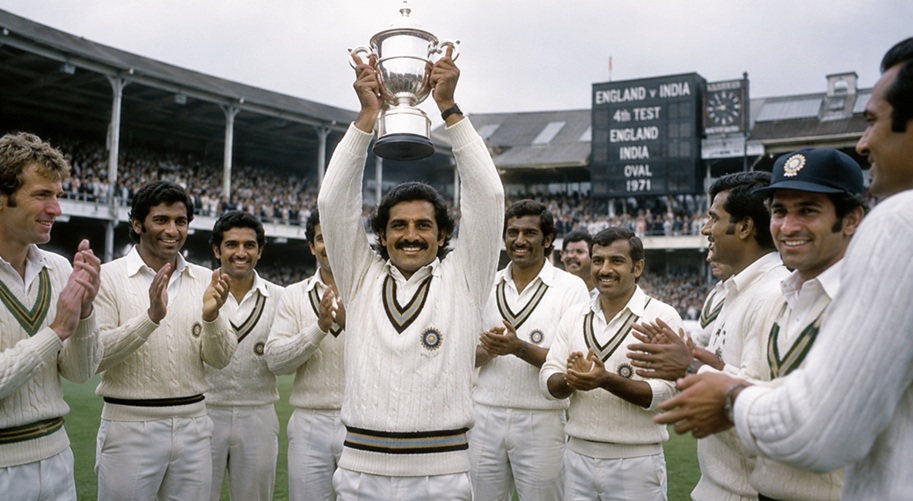
A pivotal achievement occurred during India’s 1971 expedition to England. Guided by Ajit Wadekar, India made history by securing its first Test series victory in England. The 1-0 win marked the end of England’s long-held supremacy at home and confirmed India’s capability to thrive in new environments. This accomplishment is still celebrated by cricket historians as one of India’s most remarkable overseas feats. (ECB)
Why the 1971 Series Changed Everything
This triumph was founded on patience, strategic bowling, and exceptional batting. Bhagwat Chandrasekhar’s outstanding performance at The Oval remains one of the most distinguished bowling displays in the annals of Indian cricket.
Crucially, this success instilled in Indian cricket the confidence that achieving victories abroad against top teams was within reach.
The 1980s: Competitive Cricket on Both Continents
During the 1980s, both nations exchanged memorable victories.
England maintained impressive form at home, benefiting from conditions that favored their seam bowlers. On the other hand, India became increasingly formidable on pitches that spun.
Numerous tightly contested Test series illustrated just how evenly paired the teams had become.
The decade also saw the explosive rise of One-Day International cricket. Limited-overs matches introduced a distinctly different style of play, emphasizing aggressive batting and creativity in captaincy.
The rivalry expanded to encompass more than just traditional Test matches and attracted a broader audience worldwide.
India’s World Cup Revolution
India’s triumph in the 1983 Cricket World Cup dramatically transformed its cricketing landscape.
Despite England’s consistent status among the elite cricketing nations, India’s World Cup victory motivated an entirely new generation of cricketers.
Audience sizes swelled, television viewership surged, and India gradually emerged as one of cricket’s leading forces.
Every subsequent encounter with England garnered significant international interest.
The ODI Rivalry Begins
The emergence of One-Day Internationals injected new thrill into the rivalry.
Contrary to the five-day Test matches, ODIs required rapid scoring, precise fielding, and assertive bowling techniques.
India and England swiftly delivered numerous unforgettable limited-overs matches characterized by intense run chases and exciting finishes.
Key Characteristics of Their ODI Battles
- Quick scoring
- Strategic captaincy
- Exceptional all-round performances
- Nail-biting finishes
- High-stakes knockout games
The increasing appeal of ODI cricket ensured that every bilateral series commanded global attention.
The Sachin Tendulkar Generation
The 1990s saw the arrival of one of cricket’s finest players—Sachin Tendulkar.
His performances against England marked a significant chapter in the history of modern cricket.
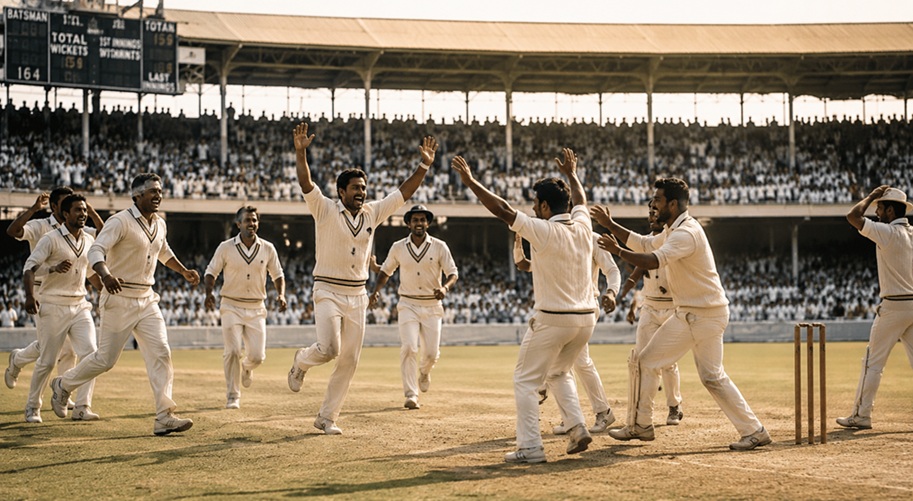
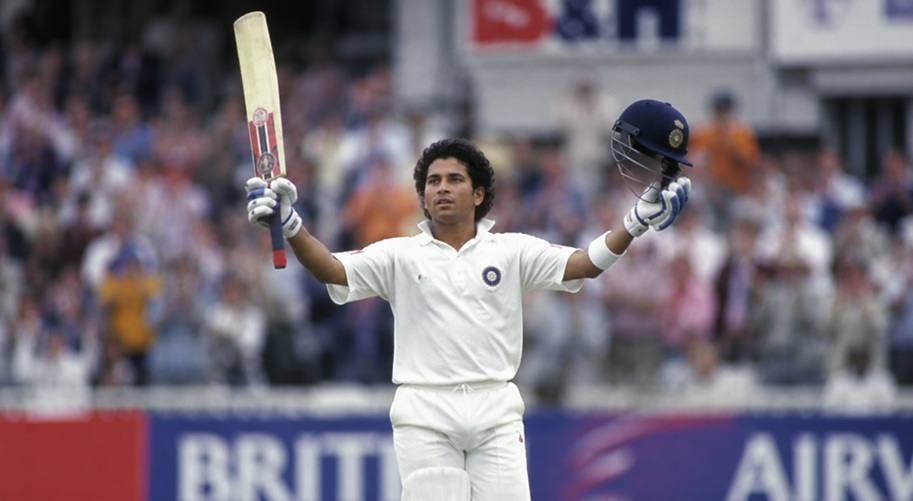
Sachin recorded his first Test century at Old Trafford in 1990, where, as a young player, he saved India with a resilient hundred despite immense pressure. This innings heralded the emergence of a future icon. (ICC)
In the two decades that followed, Tendulkar consistently delivered remarkable performances against England in both Test and ODI formats.
His graceful batting style captivated not just Indian fans but also won the admiration of English supporters.
England’s Modern Stars
England also cultivated numerous elite cricketers during this era.
Noteworthy players such as Graham Gooch, Michael Atherton, Alec Stewart, Andrew Flintoff, Kevin Pietersen, and James Anderson emerged as key players in this competitive dynamic.
Their skill in high-pressure situations guaranteed that each series remained intensely contested.
The matchups between India’s renowned batting order and England’s seasoned bowling lineup became some of the most remarkable displays in cricket history.
The 2002 NatWest Final
One of the most memorable One-Day International games between these two countries took place at Lord’s in July 2002.
England set a daunting score of 325 runs, putting India in a challenging position.
The pursuit seemed nearly unattainable after India encountered several early losses.
Nonetheless, astonishing performances from Yuvraj Singh and Mohammad Kaif turned the game around entirely.
India accomplished one of the most remarkable run chases in ODI history, leading captain Sourav Ganguly to famously wave his shirt from the Lord’s balcony in celebration.
This triumph became an iconic moment in Indian cricket history and is remembered as a highlight in the rivalry. (ECB)
Test Cricket Reaches New Heights
In the 2000s, the Test match series between these nations grew more competitive.
India developed a top-tier batting lineup that included Rahul Dravid, VVS Laxman, Virender Sehwag, and Sachin Tendulkar.
England matched this with skilled bowlers adept at taking advantage of swing-friendly pitches.
Series wins often relied on quick adaptability to shifting pitch conditions instead of merely individual standout performances.
This equilibrium rendered every Test captivating for cricket enthusiasts.
The Anderson vs Tendulkar Battle
Few individual rivalries garnered as much focus as that of James Anderson facing Sachin Tendulkar.
Anderson excelled in achieving late swing on English soil, whereas Tendulkar showcased one of the most refined techniques in cricket.
Their numerous clashes evolved into strategic exhibitions.
Each delivery was met with great anticipation as two legends vied to outthink each other.
These duels underscored the caliber and intensity of the contemporary rivalry.
The Rise of T20 Cricket
The emergence of Twenty20 cricket brought a thrilling new element to the game.
These shorter contests required bold batting, creative bowling techniques, and agile fielding.
India and England swiftly adjusted to this format.
Both teams had explosive hitters who could alter the outcome within mere overs.
The rise of franchise leagues further enhanced connections among players while simultaneously escalating competition in international matchups.
Memorable ICC Tournament Clashes
ICC tournaments have witnessed numerous unforgettable matches between India and England.
Whether in the Cricket World Cup, Champions Trophy, or T20 World Cup, knockout stages have consistently delivered high-quality performances amid significant pressure.
Some matches saw remarkable batting efforts, while others were shaped by disciplined bowling units.
These global competitions added an essential aspect to the rivalry and heightened its significance on an international scale.
Virat Kohli and Joe Root Era
The 2010s marked an intriguing new chapter.
Virat Kohli became the leading batsman for India, while Joe Root established himself as England’s most reliable scorer.
Both athletes frequently executed match-winning performances throughout bilateral matchups.
Kohli’s significant progress in English conditions following the challenging 2014 tour reflected his resolve and technical development.
Conversely, Root continually amassed runs against India’s formidable bowling lineup.
Their contributions elevated the rivalry to even greater levels.
England’s Bold New Strategy
In recent times, England’s offensive mindset has transformed the essence of Test cricket.
The squad embraced daring batting techniques aimed at accumulating runs rapidly and putting rivals under relentless stress.
India countered with effective bowling, stable batting, and a solid reserve of players.
These differing approaches have led to captivating matches characterized by shifts in momentum and thrilling periods of play.
As the 2020s commenced, contests between the two teams emerged as some of the most eagerly awaited fixtures in the realm of international cricket.
These encounters now drew millions of spectators globally, highlighting the immense appeal of this time-honored sports rivalry.
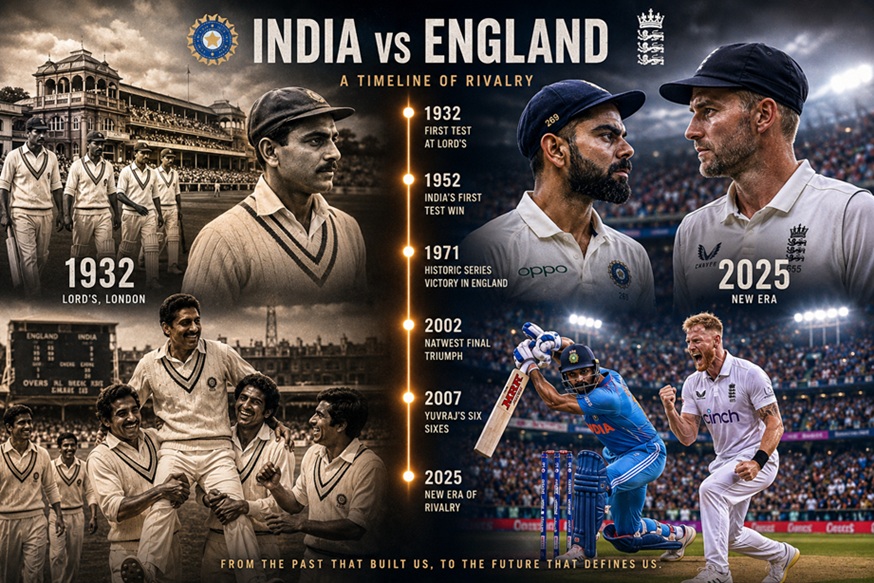
Complete India vs England Timeline (1932–2026)
The competition has progressed consistently for over ninety years. Below is an outline that showcases key events that have marked the interactions between these two cricket powerhouses.
Historic Timeline
| Year | Major Event |
|---|---|
| 1932 | India participated in its inaugural Test match against England at Lord’s. |
| 1933–34 | England visited India for their first Test series on Indian territory. |
| 1946 | India toured England post World War II. |
| 1952 | India achieved its first Test win over England in Madras. |
| 1961–62 | India clinched its first Test series triumph against England. |
| 1971 | India accomplished its first Test series win in England. |
| 1983 | India’s World Cup victory elevated the rivalry’s international appeal. |
| 1990 | Sachin Tendulkar achieved his first Test century at Old Trafford. |
| 2002 | India completed a famous chase in the NatWest Trophy Final at Lord’s. |
| 2007 | India recorded a historic Test series win in England after a gap of 21 years. |
| 2011 | England attained the top ranking in Test cricket following their win over India. |
| 2014 | England secured an unforgettable home Test series despite a strong beginning from India. |
| 2018 | Virat Kohli excelled with the bat during the Test series in England. |
| 2021–22 | India achieved noteworthy victories in overseas Tests, and the rescheduled fifth Test delivered another thrilling match. |
| 2024–2026 | The rivalry persisted through bilateral series and ICC events, showcasing a new wave of talents upholding one of cricket’s long-standing traditions. |
Head-to-Head Rivalry Across Formats
The competition has broadened from Tests to ODIs and T20 Internationals, establishing it as one of the most comprehensive rivalries in global cricket.
Test Cricket
Since 1932, India and England have faced each other in more than 130 Test matches. England was the dominant force in the initial years, but India gradually narrowed the disparity through impressive performances on home ground and better results abroad.
At present, Test series between these teams are regarded as some of the most challenging tasks in international cricket, as both teams feature well-rounded batting orders and top-notch bowling line-ups.
One-Day Internationals
The ODI rivalry has generated a multitude of memorable matches, encompassing ICC tournament games as well as bilateral series.
In the current era, India has experienced considerable success due to its deep batting lineup and seasoned spin bowlers, while England’s bold approach in white-ball cricket has led to many high-scoring thrillers.
Twenty20 Internationals
T20 cricket has injected new excitement into the rivalry.
With explosive batsmen, creative bowlers, and daring tactics, matches are frequently determined by narrow margins.
The rise of franchise cricket has also fostered increased interaction among players, intensifying the competitiveness of international encounters.
Legendary Players Who Defined the Rivalry
Throughout the years, numerous cricketing legends have delivered unforgettable performances.
Indian Legends
Several of India’s top players have made a significant mark against England, including:
- Sunil Gavaskar
- Kapil Dev
- Sachin Tendulkar
- Rahul Dravid
- Sourav Ganguly
- Virender Sehwag
- MS Dhoni
- Virat Kohli
- Ravichandran Ashwin
- Jasprit Bumrah
- Rohit Sharma
Every generation has unveiled players capable of altering the direction of a series through extraordinary displays of skill.
England Legends
England has also seen the emergence of several iconic cricketers, such as:
- Len Hutton
- Denis Compton
- Ian Botham
- David Gower
- Graham Gooch
- Michael Atherton
- Andrew Flintoff
- Kevin Pietersen
- Alastair Cook
- Joe Root
- James Anderson
- Ben Stokes
Their influence has kept the competition fierce throughout all eras.
What Makes This Rivalry So Remarkable?
Few rivalries blend history, tradition, skill, and enthusiasm as effectively as India facing off against England.
A number of elements contribute to the uniqueness of these matchups:
- Over ninety years of uninterrupted cricket history.
- Renowned venues such as Lord’s, The Oval, Old Trafford, Headingley, Eden Gardens, Wankhede Stadium, Chepauk, and Narendra Modi Stadium.
- Iconic athletes spanning various generations.
- Intense rivalry across all three formats of international play.
- Enormous television viewership and global fan involvement.
- Frequent ICC tournament encounters that heighten the stakes.
In contrast to several rivalries that see one team dominate for extended periods, India and England have alternated dominance, making each new series unpredictable.
The Current Rivalry in 2026
The competition persists in changing as both sides bring in skilled young players alongside seasoned veterans.
India boasts one of the most robust player-development systems in global cricket, consistently generating outstanding batsmen, fast bowlers, and all-rounders.
On the other hand, England continues to innovate across formats using bold strategies and fearless play.
Contemporary matches showcase cutting-edge analytics, fitness benchmarks, strategic planning, and high-pressure situations that are markedly different from the rivalry’s early days.
Despite such changes, the core remains unchanged—two proud cricketing nations competing at the highest standard.
Notable Achievements
Amid their encounters, several milestones continue to be commemorated by cricket enthusiasts:
- India’s inaugural Test in 1932.
- First Test win for India in 1952.
- The first Test series triumph over England in 1961–62.
- A groundbreaking series victory in England in 1971.
- Sachin Tendulkar’s first century at Old Trafford.
- Victorious NatWest Trophy Final in 2002.
- India’s remarkable overseas Test victories in the modern era.
- Outstanding displays by James Anderson, Joe Root, Virat Kohli, Ben Stokes, Jasprit Bumrah, and other contemporary legends.
These instances symbolize milestones not just for the two sides but for international cricket as a whole.
Looking Forward
As the sport continues to flourish, impending India–England encounters are set to bring even more thrill.
Emerging young talents are already preparing to step up after today’s stars, ensuring that the rivalry stays fierce for years ahead.
With ICC tournaments, World Test Championship cycles, bilateral visits, and a rapidly growing global fan base, every clash contributes another chapter to a narrative that commenced at Lord’s in 1932.
Fans can anticipate more exhilarating finishes, remarkable individual displays, and historic accomplishments as this extraordinary sporting relationship continues to transform.
Conclusion
The India-England Timeline represents one of cricket’s most vibrant and lasting rivalries. Starting from India’s first Test in 1932 to the hotly contested games of 2026, both countries have created unforgettable moments that have influenced the sport.
While England ruled the early years, India’s extraordinary ascent reshaped the rivalry into one of international cricket’s most evenly matched competitions. Significant series victories, legendary players, unforgettable World Cup encounters, and thrilling matches across Tests, ODIs, and T20Is have ensured every generation of fans has experienced defining moments.
As new celestial bodies rise and new stories unfold, the competition between India and England will keep motivating cricket enthusiasts globally. The combination of heritage, talent, customs, and the desire to win ensures that it will stay as one of the most significant rivalries ever witnessed in the sport.