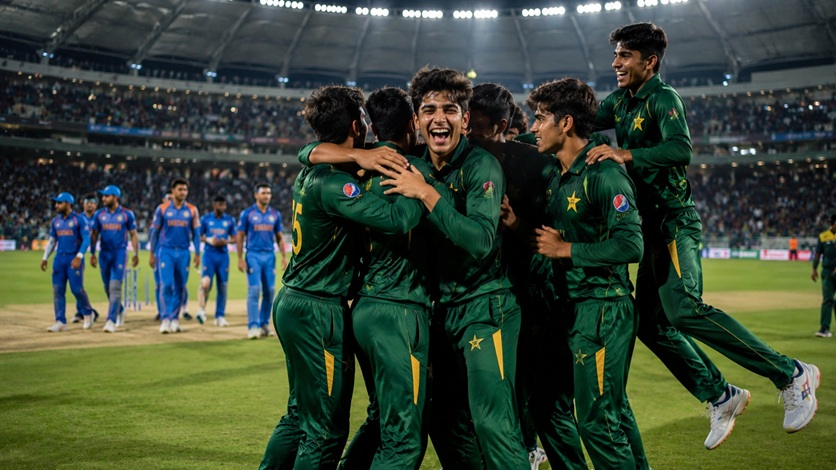

Few youth cricket contests come with the same level of intensity as the clash between India and Pakistan. Although the athletes might still be in their teens, and some may be participating in their first significant international tournament, the level of interest surrounding this matchup is often akin to that seen in senior global competitions.
The history of India versus Pakistan in U19 cricket is especially intriguing because neither nation has maintained a consistent advantage. India has claimed dominant victories in World Cups and fostered future cricketing stars, whereas Pakistan has also provided memorable performances in tournaments, including one of the most celebrated victories in U19 World Cup history.
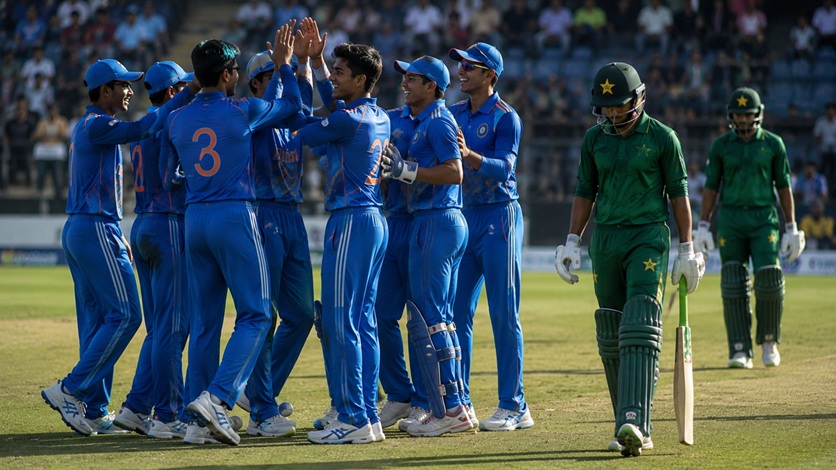
The rivalry was further enhanced during the ICC Under-19 Men’s Cricket World Cup in 2026. On February 1, 2026, India triumphed over Pakistan by 58 runs during their Super Six clash held in Bulawayo, adding a significant chapter to a rivalry that spans several decades.
Additionally, these contests offer cricket enthusiasts an early glimpse of athletes who may transition to the senior international arena in just a few years.
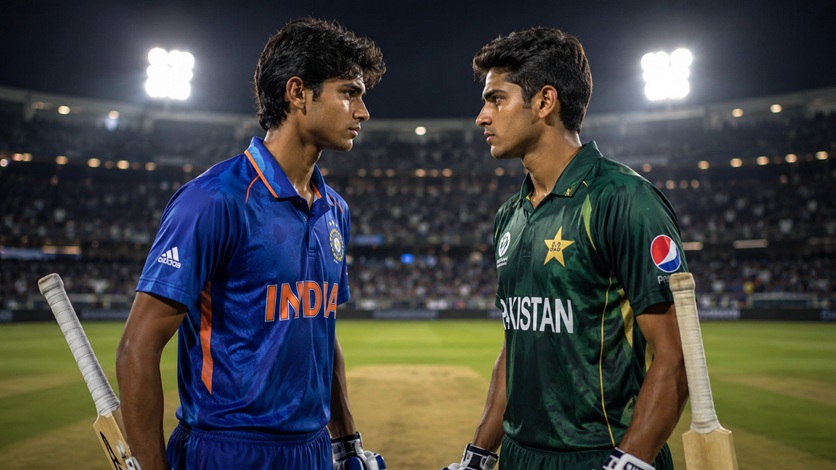
Evolution of the India-Pakistan U19 Rivalry
Long before the advanced training frameworks of today were set up, the junior teams from India and Pakistan faced each other on the international stage. Historical documentation reveals that Pakistan Youth Cricket claimed a win against India Youth Cricket in 1988, with additional contests occurring in the early 1990s.
This rivalry is distinct due to its shifting dynamics.
In senior competitions, fans typically have thorough knowledge of nearly all participants in an India-Pakistan match. U19 cricket, however, presents a different scenario. A young player who starts a tournament relatively unnoticed can rapidly become a central figure in discussions within the cricket community following a remarkable display.
This unpredictability has continually influenced the narrative of India versus Pakistan U19 matches.
Both teams have competed in:
- World Cups
- U19 Asia Cups
- bilateral youth tournaments
leading to outcomes that range from thrilling one-wicket victories to decisive losses.
Formative Battles That Established the Rivalry
The late 1980s and 1990s laid the competitive groundwork for this rivalry.
In March 1988, Pakistan Youth Cricket secured a win over India Youth Cricket by 68 runs at Wentworth. India countered with victories in December 1989 in Dhaka and January 1990 at Eden Gardens, only for Pakistan to respond with a 94-run win in Nagpur later that same month.
An essential match took place during the 1998 U19 World Cup in Durban, where India recorded a five-wicket victory.
While those early encounters didn’t generate the immediate social media buzz characteristic of contemporary youth cricket, they established a recognizable pattern: momentum can swiftly shift between these two sides.
The 2002 and 2004 World Cup Encounters
In January 2002, Pakistan secured a U19 World Cup victory over India in Lincoln by two wickets.
Two years later, the two teams faced each other again in the 2004 tournament held in Dhaka, resulting in another narrow win for Pakistan by two wickets.
These closely contested outcomes infused the rivalry with an essential element. An India-Pakistan youth match had evolved into a spectacle not only due to the prestigious names involved but also because the gameplay frequently produced authentic tournament excitement.
2006: Pakistan’s Remarkable World Cup Final
No examination of the historical encounters between India and Pakistan at the Under-19 level can be deemed complete without mentioning February 19, 2006.
The two teams faced off in the ICC Under-19 World Cup final held at the R. Premadasa Stadium in Colombo, where Pakistan was bowled out for a mere 109 runs.
With a formidable Indian batting lineup, a score of 109 appeared insufficient.
The scenario then transformed entirely.
Pakistan’s bowlers launched an aggressive assault on India’s top-order batsmen, turning what was expected to be an easy chase into a challenging ordeal. India fell to their opponents, scoring only 71 runs, resulting in an unexpected triumph by 38 runs for Pakistan, thereby securing the U19 world championship.
Anwar Ali earned the Player of the Match title. Pakistan’s bowling successfully defended one of the lowest scores ever recorded in a World Cup final.
Looking back, the scorecard is intriguing since many players from that match eventually became well-known figures in international cricket. India’s squad featured future senior icons like Rohit Sharma, Ravindra Jadeja, and Piyush Chawla.
For Pakistan, this victory was a pivotal moment in the history of their youth cricket program.
From Narrow Finishes to India’s Dominance
Subsequent years saw another series of tightly contested matches.
Pakistan achieved a two-wicket victory in the 2010 U19 World Cup match in Lincoln. In 2012, they narrowly triumphed over India by just one run in Kuala Lumpur, while another match at the same venue ended in a draw.
Later, India narrowly defeated Pakistan by a wicket during the 2012 U19 World Cup held in Townsville.
These encounters highlight how basic win-loss records fail to capture the full essence of this rivalry.
- A single wicket.
- A single run.
- A drawn match.
In youth competitions, where players are developing their skills in high-pressure scenarios, these small margins can significantly impact their careers.
India’s Impressive Statement at the 2018 World Cup
One of India’s most commanding displays took place during the 2018 U19 World Cup semi-final in Christchurch.
India triumphed over Pakistan by an astounding 203 runs.
Shubman Gill’s century was the highlight of this victory, after which India went on to defeat Australia in the final to claim the trophy.
In hindsight, this semi-final was even more noteworthy as Gill transitioned from youth cricket into the senior national team.
This aspect contributes to the intrigue surrounding the India vs Pakistan U19 rivalry, as onlookers witness the earliest international phases of future stars who may ultimately compete in Test matches, major ICC tournaments, and franchise leagues.
2020 Semi-Final: Jaiswal’s Exceptional Display
Two years later, Pakistan had another chance to challenge India in a U19 World Cup semi-final.
Rather than a close match, India executed a flawless chase.
Pakistan was bowled out for 172 in Potchefstroom. India successfully chased down the target of 173 without losing a wicket, winning by 10 wickets.
Yashasvi Jaiswal scored an impressive 105 not out from 113 balls, and Divyaansh Saxena added an unbeaten 59. India reached 176 runs without losing any wickets in just 35.2 overs.
Jaiswal’s outstanding performance highlighted how these India-Pakistan youth matches can showcase talent poised for rapid progression to elite levels.
The Asia Cup Offered Additional Insights
While World Cups present many memorable moments in this rivalry, the U19 Asia Cup has also become significant for understanding its recent developments.
The squads frequently compete in Asian youth tournaments, where the circumstances, shared experiences, and local expectations present a unique set of difficulties.
The 2025 Tournament
The 2025 tournament served as an ideal illustration.
India triumphed over Pakistan by 90 runs in the initial phase, bowling out Pakistan for 150 after scoring 240 in a rain-altered 49-over match.
Yet, just nine days later, the narrative changed entirely.
Pakistan’s Remarkable Triumph in the 2025 Asia Cup Final
On December 21, 2025, Dubai witnessed another clash between India and Pakistan, with the championship trophy on the line.
Pakistan exhibited an impressive comeback following their previous loss.
Sameer Minhas delivered an outstanding performance, scoring 172 runs off 113 balls, including 17 boundaries and nine over-the-fence hits. Pakistan ended their innings at 347/8 after 50 overs.
India’s reply faltered at 156, resulting in a staggering 191-run win for Pakistan.
Ali Raza took four wickets, and Minhas earned the title of Player of the Match. The Pakistan Cricket Board announced this victory as their first exclusive U19 Asia Cup title after sharing the championship in 2012.
This turnaround plays a significant role in the U19 narrative between India and Pakistan: a defeat in one match does not always determine the outcome of the subsequent encounter.
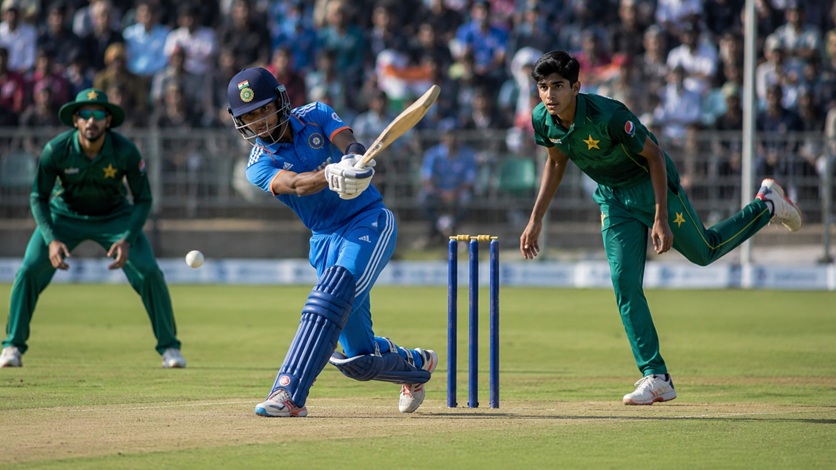
India vs Pakistan at the 2026 U19 World Cup
The rivalry swiftly transitioned back to the international arena.
India approached the 2026 ICC Under-19 Men’s Cricket World Cup as defending champions for the fifth time, led by captain Ayush Mhatre. Their lineup featured promising talents like Vaibhav Sooryavanshi, Vihaan Malhotra, Aaron George, and Abhigyan Kundu.
Farhan Yousaf captained Pakistan, whose World Cup team mainly consisted of players from the squad that had participated in the U19 Asia Cup.
Both countries solidified their chances for the semi-finals prior to their clash in Super Six Group 2. India convincingly defeated hosts Zimbabwe by 204 runs, while Pakistan achieved victory against New Zealand by eight wickets.
This set the stage for yet another crucial match between India and Pakistan.
India Secures Victory in the 2026 Encounter by 58 Runs
On February 1 in Bulawayo, India scored 252 runs in 49.5 overs.
Vedant Trivedi made a significant contribution with 68 runs from 98 deliveries, and Kanishk Chouhan added 35 from 29. Abdul Subhan was effective for Pakistan, taking three wickets.
Pakistan’s batting performance showcased some promise with Usman Khan scoring 66 and Hamza Zahoor contributing 42, yet India consistently broke through their batting lineup.
Captain Ayush Mhatre made a substantial impact with the ball, securing three wickets for just 21 runs, while Khilan Patel matched that effort with three wickets as well. Pakistan ultimately collapsed for 194 runs in 46.2 overs.
India emerged victorious by a margin of 58 runs.
This outcome added a new chapter to the 2026 saga of India vs Pakistan U19 history, shortly after Pakistan’s impressive victory in the Asia Cup final.
The Importance of These U19 Matches Beyond the Scoreboard
Youth cricket should not be seen merely as reduced versions of senior cricket. The main focus is on development.
A U19 match assesses if a talented athlete can manage international travel, adjust to different playing conditions, cope with the scrutiny of televised events, and face tough opponents while also continuing their technical growth.
The matches between India and Pakistan amplify nearly every aspect of these challenges.
Players instantly confront:
- increased scrutiny from the media and fans;
- challenges stemming from the fierce rivalry;
- the significance of tournament advancement;
- high-caliber competition;
- the expectations set by earlier generations.
These factors make such encounters particularly valuable in evaluating a player’s composure.
A Rivalry That Continuously Cultivates Future Talents
One of the most fascinating aspects of the U19 rivalry between India and Pakistan is the ability to recognize individuals years later.
Rohit Sharma and Ravindra Jadeja participated in the thrilling final of 2006. Shubman Gill played a crucial role in India’s victory during the semi-final of 2018. Yashasvi Jaiswal was a standout performer in the 2020 semi-final.
Not every player who excels at the U19 level becomes a global sensation, naturally. The performances seen during youth competitions represent just one part of the athletes’ overall growth.
However, this matchup consistently provides fans with an early insight into athletes showcasing remarkable calmness and talent.
The group of 2025-26 has sparked similar intrigue. Vaibhav Sooryavanshi, Ayush Mhatre, Sameer Minhas, Farhan Yousaf, and other rising figures have already felt the fierce rivalry prior to making their mark in senior international cricket.
How the Rivalry Appears in 2026
As of 2026, there is no logical way to characterize this rivalry using a single dominant story.
Pakistan can highlight:
- their incredible defense of 109 runs in the 2006 World Cup final
- their impressive 191-run victory in the Asia Cup final in 2025.
India can reference:
- their overwhelming 203-run semi-final win in the 2018 World Cup
- the clean 10-wicket triumph in 2020
- their 58-run win in the 2026 World Cup.
This disparity is precisely what makes the U19 encounters between India and Pakistan engaging.
Each cohort begins more or less from scratch. The previous reputation holds less weight when a fresh group of young players takes to the pitch.
Conclusion
The narrative surrounding India and Pakistan at the Under-19 level ultimately transcends mere rivalry. It is centered around the new generation of cricketers discovering how to perform under circumstances that feel significantly larger than a typical youth match.
From Pakistan’s defense of 109 in the unforgettable 2006 World Cup final to India’s strong knockout performances in 2018 and 2020, this fixture has consistently delivered thrilling cricket.
Then came another unexpected twist: Pakistan dominated India by 191 runs in the 2025 U19 Asia Cup final, only for India to reply with a 58-run victory at the 2026 U19 World Cup.
This unpredictability remains the strongest aspect of the U19 historical encounters between India and Pakistan.
Each new tournament introduces fresh faces, different challenges, and the potential emergence of another future international star. While the players may change, the anticipation that something significant is about to unfold when India U19 faces Pakistan U19 seldom fades.