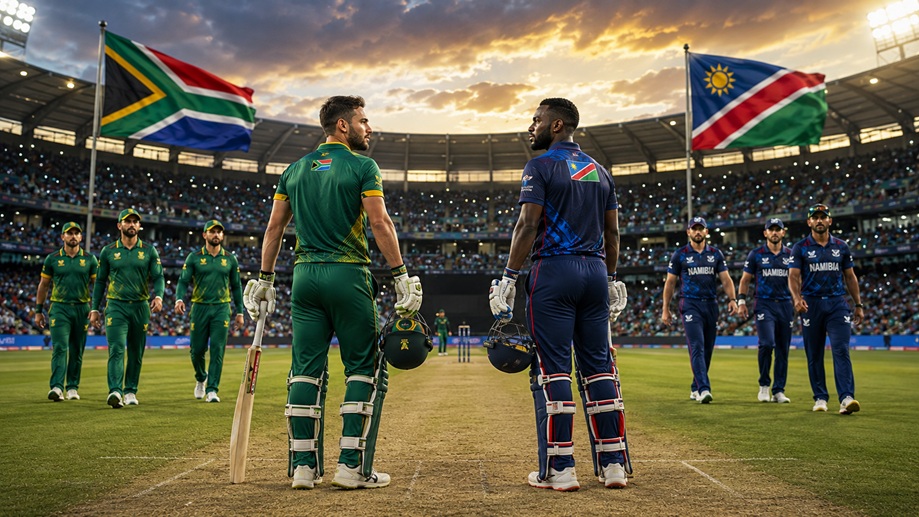

The Timeline for South Africa versus Namibia has now progressed into a new era. These neighboring countries are competing against each other in men’s senior internationals, with a real competitive spirit involved.
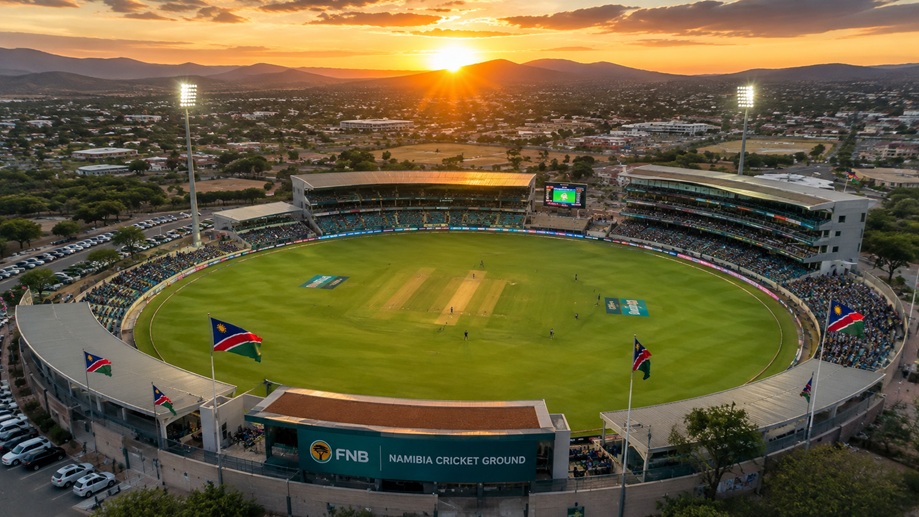
A significant moment occurred in October 2025, when Namibia played host to South Africa for a groundbreaking single T20 International match in Windhoek. This match marked the first international encounter between the senior men’s teams, and Namibia achieved a memorable victory by four wickets. Furthermore, the event marked the inauguration of the FNB Namibia Cricket Ground, adding importance to the occasion beyond just the outcome on the field.
Looking ahead to 2026, the relationship is advancing further. Namibia is set to welcome South Africa and Zimbabwe for a T20I tri-series, and there are also plans for a three-match ODI series between Namibia and South Africa. As reported by Reuters on August 11, the limited-overs tour is slated to take place from August 28 to September 6, with Bjorn Fortuin designated as South Africa’s T20 captain.
This development highlights the South Africa vs Namibia Timeline as a valuable resource for understanding more than just a single fixture. It illustrates how a significant first meeting has quickly transformed into a crucial aspect of both teams’ preparations for the upcoming World Cup cycle.
Why This Matchup Matters in 2026
Both teams are at varying points in their cricketing paths. South Africa is a Full Member nation, equipped with a robust professional structure and frequent participation in top-level international cricket. On the other hand, Namibia has earned recognition as one of the strongest Associate nations, consistently proving their ability to challenge established teams in limited-over formats of the game.
The encounters in 2026 come at an especially critical time. The 2027 ODI World Cup will be jointly hosted by South Africa, Zimbabwe, and Namibia. Recent alterations to the qualification process stipulate that Namibia cannot solely depend on its co-hosting role for automatic entry; the process for qualification is important. South Africa and Zimbabwe, as hosts, are assured spots, whereas Namibia must navigate the new qualifications.
This context adds greater significance to the ODI matches. They are not simply local clashes. These games offer Namibia the opportunity to gauge their level against a leading Full Member, while also providing South Africa with essential preparation based on local conditions ahead of a home World Cup.
The First Chapter: October 2025
A Historic First International Meeting
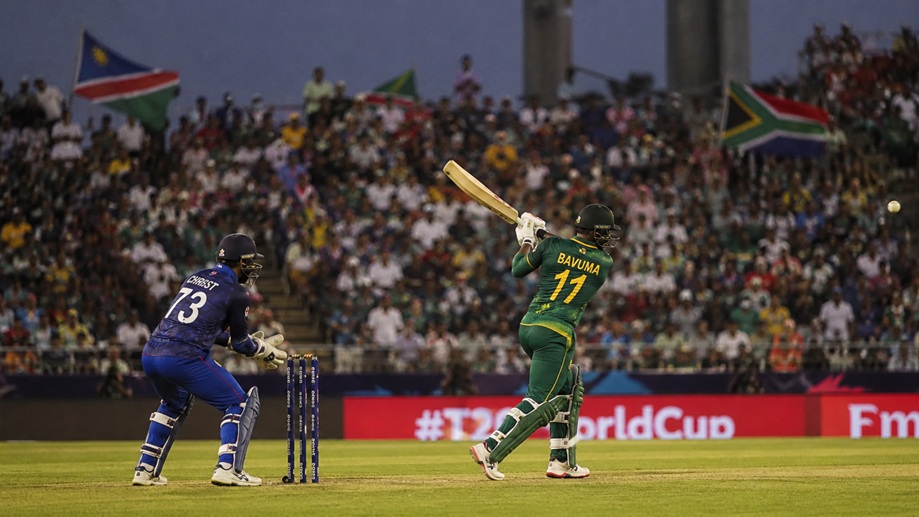
The Timeline for South Africa against Namibia began to evolve with the T20I held in Windhoek in October 2025. Cricket South Africa and the ICC referred to it as the inaugural international match between these senior men’s teams. The game took place at the new FNB Namibia Cricket Ground, marking the official opening of the venue.
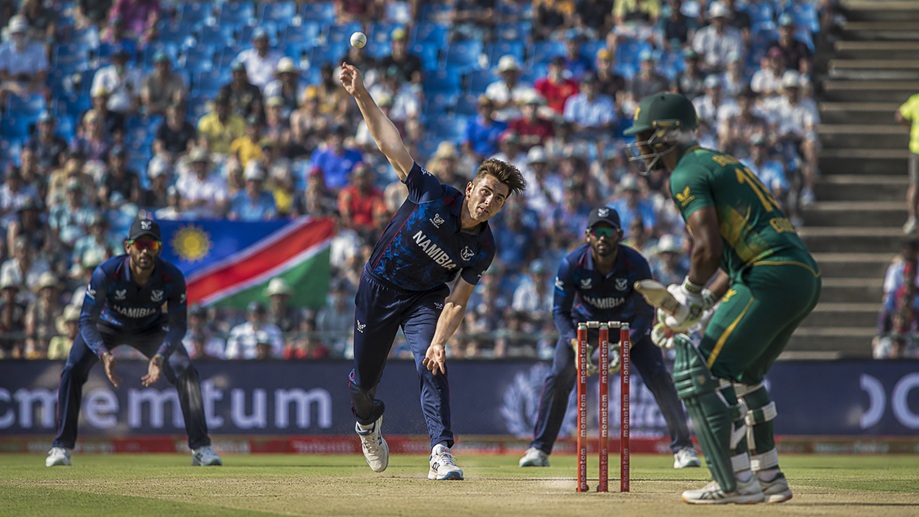
Namibia approached the match with serious intent rather than merely making a ceremonial appearance. The Eagles successfully chased down South Africa’s score to clinch victory by four wickets. Current records indicate that Zane Green was Namibia’s top run-scorer with 30 runs, and Ruben Trumpelmann claimed three wickets. For South Africa, Jason Smith scored 31 runs, while Nandre Burger took two wickets.
The outcome shifted the perspective regarding the match. Rather than being perceived as an unbalanced contest between a Full Member and an Associate, it demonstrated that Namibia could stand up to South Africa when the circumstances and momentum favored them.
More Than a Cricket Match
The venue aspect made the initial match particularly significant. The FNB Namibia Cricket Ground is also tied to Namibia’s future responsibilities in hosting ICC events, such as the Under-19 World Cup in 2026 and the Men’s World Cup in 2027.
Thus, the initial matchup connected Namibia’s progress in infrastructure, its advancement in the international cricket scene, and the increasing significance of cricket in southern Africa.
The 2026 Chapter Takes Shape
The next phase of the timeline involving South Africa and Namibia arrives in a more active international cricket atmosphere. Namibia is gearing up to host a T20I tri-series that includes South Africa and Zimbabwe. The chief executive of Cricket Namibia mentioned that the concept emerged from conversations about the stadium-opening match in 2025, with all three nations agreeing to a yearly T20 series that will rotate between them.
South Africa’s 2026 trip also fits into a broader strategy for managing player workloads. According to Reuters, the Proteas are utilizing this tour to provide younger talent with international experience while allowing some veteran players to rest before an intense schedule that includes matches against Australia, Bangladesh, and England later that year.
This provides a different perspective on the South Africa vs Namibia timeline: it becomes a narrative about South Africa evaluating its emerging talent.
What to Expect From the T20I Contest
T20 cricket tends to narrow the gap between competing sides. A single high-scoring innings, a brief spell of bowling, or a few mistakes in the field can completely alter the outcome.
Namibia’s advantages include:
- A proactive approach to limited-overs cricket
- Strong fast-bowling options
- Players who thrive under pressure
- Participation in various global T20 tournaments
- Confidence against more formidable foes
In contrast, South Africa boasts a considerably larger pool of professional players. Even when they rest key players, their domestic structure provides the Proteas access to seasoned batsmen, bowlers, spinners, and all-rounders.
Why the ODI Series Could Matter More
While the T20I matches will create enthusiasm, the ODI series may hold greater significance in the long run. A 50-over format reveals flaws that might remain concealed in shorter formats. Aspects like batting depth, bowling consistency, running efficiency between wickets, and the capacity to establish partnerships become crucial.
The upcoming three-match ODI series also meshes well with preparations for the World Cup in 2027. A recent overview of South Africa’s schedule indicates three ODIs in Namibia set for August-September 2026, following the T20I tri-series.
For Namibia, these encounters provide ongoing exposure to a prominent Full Member. For South Africa, they present a chance to acclimatize to Namibian conditions and evaluate players who might contend for World Cup spots.
This is why the South Africa vs Namibia timeline could evolve to be more important than its preliminary history indicates. While outcomes are significant, so are the insights gained from each innings and bowling spell.
Players and Tactical Areas to Watch
Namibia’s Competitive Edge
Namibia’s primary strength could be its familiarity with the environment. The support from local fans, combined with the experience gained at the FNB Namibia Cricket Ground, may provide the Eagles with a significant advantage.
Gerhard Erasmus, Ruben Trumpelmann, and other seasoned members of Namibia’s white-ball squad have demonstrated their ability to handle intense situations. The real challenge lies in maintaining that performance across multiple matches instead of depending on a single remarkable game.
South Africa’s Depth
The key weapon for South Africa is its depth of talent. Their professional domestic leagues consistently generate players who are ready to make their mark in international cricket.
According to reports from Reuters, new players Duan Jansen, Eathan Bosch, Connor Esterhuizen, Jordan Hermann, and Nqobani Mokoena have been called up for the matches against Namibia. For these athletes, facing Namibia is not merely a low-pressure situation; it serves as a chance to demonstrate their value to South Africa’s broader strategy.
Consequently, the timeline of South Africa versus Namibia also serves as a platform to observe emerging talent for the Proteas.
A Regional Rivalry With Room to Grow
It is essential not to label this as a long-standing rivalry in the conventional sense. The history of senior men’s international encounters is quite brief. The first official clash took place in 2025, which is precisely what adds intrigue to this narrative.
The rivalry is developing in real time. Namibia’s victory in their inaugural match established an engaging storyline, while the program for 2026 offers South Africa an opportunity to respond and allows both teams to foster a recurring cricket connection.
A consistent regional tournament could also provide players with significant international cricket experiences without the need for teams to traverse vast distances.
The 2027 World Cup Connection
The timeline of South Africa and Namibia is particularly significant at this moment. The ODI World Cup of 2027 will be hosted in South Africa, Zimbabwe, and Namibia, making this regional schedule a crucial part of the lead-up to this major global affair.
The situation regarding qualification has also evolved. Recent adjustments to ICC formats mean that the top eight nations in the ODI rankings at the cutoff in September 2026, in addition to automatic berths for South Africa and Zimbabwe, will determine the direct qualification landscape. Namibia will have to utilize the qualifying route to secure its position.
This situation renders every competitive ODI opportunity vital for the Eagles. Regular matches against South Africa allow Namibia to gauge its performance against one of the premier cricketing nations. For South Africa, this visit also helps them become familiar with a venue and setting that will hold significance during the 2027 World Cup.
What the Next Matches Could Tell Us
The most compelling question isn’t solely about which team triumphs. It revolves around what insights each team can gain.
Namibia’s Goal
For Namibia, the goal will be to validate that their victory in 2025 was not merely a fluke. Delivering consistent strong performances during a tri-series and bilateral ODI series would bolster the argument that the Eagles are deserving of more frequent participation in high-stakes international games.
South Africa’s Focus
For South Africa, the focus will be on discovering reliable white-ball players. With a packed schedule approaching, the Proteas need both depth and versatility.
The meetings set for 2026 have the potential to serve as both a testing ground for selections and a regional tournament. In this context, the timeline of South Africa versus Namibia is less focused on past events and more centered on future developments.
Conclusion
The timeline concerning South Africa and Namibia is still in its formative phase, yet it has already given rise to an inaugural match, an unexpected outcome, and a novel concept for an annual tournament.
The program for 2026 has the capability to enhance that initial experience into something more significant. The T20I tri-series presents action-packed contests, whereas the forthcoming ODI series will serve as a more prolonged evaluation of consistency and strength. Each format is of importance for its own reasons, and both can aid in the preparations for 2027.
Crucially, this relationship illustrates the advancement of cricket in southern Africa. Namibia is no longer just an emerging team waiting for sporadic chances. They are constructing facilities, taking part in international competitions, and challenging more formidable rivals. South Africa, on the other hand, has acknowledged the importance of providing the cricketing framework of the region with more impactful matches.
Should the upcoming encounters yield another tightly contested battle, the narrative will become even more engaging. What started as a significant one-time event in Windhoek is evolving into a recurring theme in international cricket, and 2026 could be the pivotal year that establishes a true identity for this rivalry.
Also Read: