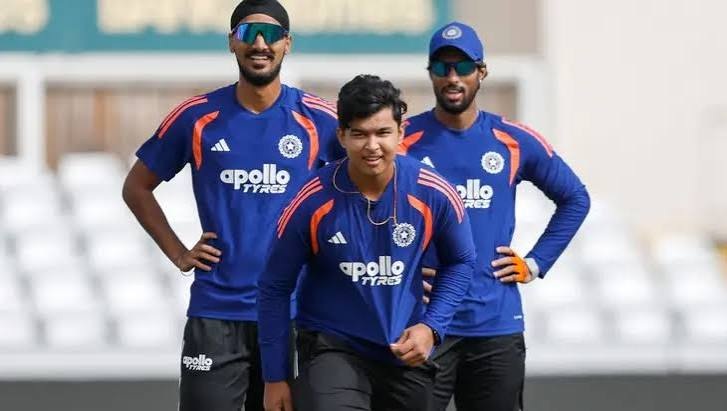


Japan vs India T20 2026: The T20 match between Japan and India in 2026 was anticipated to be a memorable event, yet it took many by surprise with its nail-biting five-over finish. What was meant to be a notable international game at Sano International Cricket Ground in Japan ended with a nail-biting result of only two runs separating the two teams.
In the end, India managed to maintain their composure, winning against Japan by 2 runs, but the scoreboard alone does not convey the intensity of the match. Rain interrupted the proceedings and reduced the game to five overs per team. India scored 32 runs for the loss of 4 wickets, whereas Japan came really close to reaching the modest target, finishing their innings at 30 runs for the loss of 3 wickets.
For Japan, the outcome was disheartening, yet their performance was noteworthy. The bowlers successfully limited India’s batting strength, while their batsmen fought valiantly until the very last ball. For India, the match served as an uncommon yet valuable warm-up ahead of the 2026 Asian Games.
More significantly, this did not merely constitute another T20 match. It marked the inaugural international cricket clash between the male teams of India and Japan and was held in honor of the 75th anniversary of diplomatic ties between the two nations.
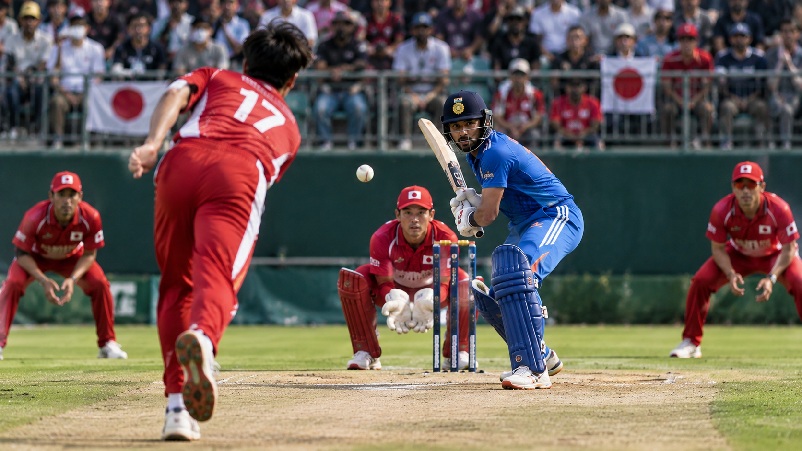
Japan vs India T20 2026 Match Summary
The match occurred on September 22, 2026, at the Sano International Cricket Ground located in Tochigi Prefecture, Japan. It was conducted under the Suzuki Cup umbrella and was part of the celebrations commemorating the 75th year of diplomatic relations between India and Japan.
The event also served a competitive purpose. Both teams were gearing up for the men’s cricket competition scheduled for the 2026 Asian Games in Aichi-Nagoya. India came into the match as the reigning ICC Men’s T20 World Cup victors, while Japan aimed to challenge themselves against one of the strongest teams in the global cricket arena.
Initially, the match was planned as a standard T20I, but ongoing rain and soggy ground conditions forced a change in schedule. Ultimately, the match was limited to five overs per side. This significantly altered the dynamics of play. Each delivery held great importance, and there was little opportunity for the batting team to recover from losing early wickets.
Final Scorecard
- India: 32 runs for 4 wickets in 5 overs
- Japan: 30 runs for 3 wickets in 5 overs
- Outcome: India claimed victory by 2 runs
- Location: Sano International Cricket Ground, Sano
- Match Type: One-off T20 International
- Date: September 22, 2026
- Format: Five overs per team due to rain
India won the coin toss and decided to bat first. Initially, this choice seemed precarious as Japan’s bowlers quickly posed challenges for India’s top batsmen.
Why This Match Held Historical Significance
The importance of this match extended far beyond the final result. Prior to this event, India and Japan had never clashed in men’s senior international cricket. Therefore, the match established a new record in the realm of international cricket.
For Japan, the visit from India marked a significant milestone for a cricket initiative that has been growing outside the sport’s established key markets. In 2005, Japan became an ICC Associate Member and has progressively developed a local framework while striving to boost participation and visibility.
The timing proved particularly noteworthy as Japan was gearing up for the Asian Games on their own turf. The squad chosen for the match against India was also part of the nation’s Asian Games strategy, presenting the athletes with a chance to face a greater level of pressure right before the continental event.
For India, this match presented a unique set of challenges. Rather than competing against another well-known cricketing nation, the Indian team ventured to Japan and encountered conditions that were new for many of the players.
This event also exemplified cricket’s expanding global presence. The ICC characterized the matchup as part of the sport’s worldwide growth, with Japan’s development symbolizing a newer avenue for cricket in East Asia.
Weather Alters the Entire Match
The elements emerged as a crucial influence on the game.
The initial agreement was for the teams to participate in a standard T20I, but the rain interfered, delaying the game and eventually leading to a five-over match. Consequently, both teams had merely 30 balls to make their mark.
A five-over format significantly differs from a full 20-over game. In a traditional T20I, a team can recuperate from losing two or three wickets early by consolidating during the middle overs. In this case, there was no safety net in the middle overs.
This abbreviated format heightened the necessity for accurate bowling. Just one boundary could dramatically shift the required run rate, and a single wicket could deplete a team’s batting reserves.
India confronted this issue right from the start.
After winning the toss and opting to bat, the visitors found themselves at 7/1, then 9/2, and eventually 14/3. Although Shreyas Iyer provided some stabilization, India could only manage 32 runs.
Japan’s bowlers warrant significant acknowledgment for capitalizing on the scenario. Charlie Hara-Hinze took two wickets, while both Ibrahim Takahashi and Benjamin Ito-Davis each claimed one wicket. The Japanese bowling unit maintained pressure on India’s scoring and consistently compelled the Indian batters into challenging shots.
India’s Batting Difficulties
India’s innings reminded everyone that even a formidable batting order can falter when faced with drastically altered conditions and formats.
Abhishek Sharma Dismissed Early
Abhishek Sharma was out without scoring. His swift exit immediately intensified the pressure on the remaining Indian batters, as the five-over format allowed hardly any time for settling into the innings.
Japan’s bowlers were able to be aggressive in their attack knowing that India had to score rapidly. There was little motivation for the fielding team to adopt a more defensive spread during this early stage.
Sanju Samson Contributes Nine Runs
Sanju Samson managed to score 9 runs off 7 balls, which included the first boundary for India in the innings. His dismissal further increased the pressure on India’s batting lineup.
The wicket held significant importance since Samson was known for his capacity to score runs rapidly in a limited game. Japan’s efficient dismissal of him meant that India had to depend mostly on Shreyas Iyer and the lower order of the batting lineup.
Ishan Kishan Fails to Capitalize on His Start
Ishan Kishan scored a mere 3 runs off 6 deliveries before being dismissed by Benjamin Ito-Davis.
At a score of 14/3, India found themselves in a precarious position, facing the risk of reaching a total that would allow Japan a genuine chance. Japan’s bowlers and their variations were making it challenging to score runs, and the brief innings left India unable to withstand another silent over.
Shreyas Iyer Makes Significant Contribution
Captain Shreyas Iyer emerged as India’s highest scorer, making 16 runs from 12 balls, which included one boundary. His innings proved crucial as India urgently needed a player to persist until the end and set a foundation for the final overs.
Iyer was ultimately out with India at 32/4 at the conclusion of the fifth over. Tilak Varma was still at the crease on one run, while Shiv Dube was not out without scoring.
India’s final score of 32 seemed modest, but in a match of five overs, every run holds substantially more value than it would in a full 20-over game.
Japan’s Bowling Efforts warrant Recognition
One of the key narratives from the match was the bowling performance from Japan.
Charlie Hara-Hinze concluded with figures of 2 wickets for 17 runs over two overs, including the dismissals of Abhishek Sharma and Shreyas Iyer. Ibrahim Takahashi took one wicket for 13 runs across his two overs, while Benjamin Ito-Davis recorded 1 wicket for just 2 runs in one over.
Ito-Davis’ bowling spell was notably economical. Allowing only two runs in a shortened format was a significant asset, particularly since each dot ball heightened the pressure on India’s batsmen.
Japan’s bowling attack also gained advantage from the playing conditions. The pitch made it hard for batters to connect effectively, and India’s players struggled to consistently locate the boundaries.
The showing illustrated why Japan’s players had enthusiasm for the match prior to its commencement. Japan captain Kendel Kadowaki-Fleming had expressed a desire for his team to view the event as a chance to showcase their skills rather than just a celebratory game.
That mindset was evident in the initial innings.
Japan’s Pursuit Falls Short by Two Runs
Japan required 33 runs from 30 balls to secure victory.
The goal appeared quite achievable. However, the bowlers from India realized that each delivery was crucial, while Japan had a chance to achieve one of the most remarkable outcomes in their cricket history.
The chase was engaging throughout.
Kendel Kadowaki-Fleming, who is Japan’s captain and top run-scorer in men’s T20I, made 12 runs off of 12 balls. Benjamin Ito-Davis contributed 9 runs from 8 balls, while the other batsmen strived to keep the chase alive.
In the end, Japan finished at 30/3, just two runs shy of victory.
This narrow margin speaks volumes and conveys the essence of the contest better than any explanation. The home team did not merely participate in a friendly match; they challenged India up to the final moments and generated real pressure in a match shortened to five overs.
Washington Sundar Steers India’s Bowling Strategy
Following India’s modest batting performance, the focus shifted to the bowlers.
Washington Sundar had a significant impact, ending with figures of 2/13. His wickets allowed India to maintain authority throughout Japan’s chase and ensured the hosts couldn’t gather enough momentum to reach the target.
Axar Patel bowled effectively as well, and India’s bowlers succeeded in defending a target that would typically seem quite challenging to safeguard.
The bowling display highlighted how shorter games can lead to unexpected strategic opportunities. India did not need to dominate every delivery; they just had to stop Japan from hitting the few boundaries needed to take the lead.
With just 33 runs necessary, Japan’s pursuit was always within their grasp. Nonetheless, the Indian bowlers managed to apply sufficient pressure at critical moments.
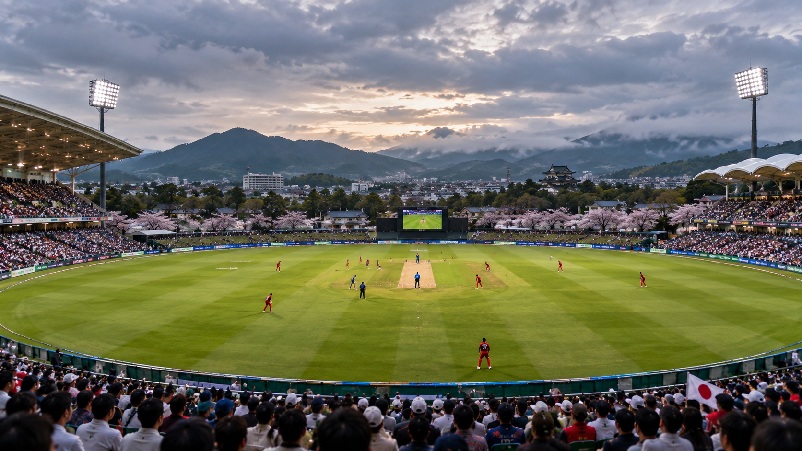
Outstanding Players from Japan
Even though the outcome favored India, several Japanese players delivered performances that will be significant for the team’s growth.
Kendel Kadowaki-Fleming
Kadowaki-Fleming came into the match as both the captain of Japan and the leading scorer in men’s T20I history for the team. His experience proved to be invaluable when facing a world-class opponent.
He also symbolized the overall advancement of Japanese cricket. Prior to the match, he expressed Japan’s intention to compete actively rather than merely savor the experience.
His contributions of 12 runs during the chase didn’t lead to winning, but in a five-over innings, it was a vital part of Japan’s overall score.
Charlie Hara-Hinze
Hara-Hinze was arguably Japan’s standout bowler.
His performance of 2/17 included the dismissals of Abhishek Sharma and Shreyas Iyer, both key batsmen for India. By taking wickets instead of just focusing on limiting runs, he aided Japan in restricting India to a chaseable total.
His performance also illustrated how associate nations can gain valuable experience when their players compete against top-tier teams. The insights gained from bowling to India’s batting lineup can offer important lessons that are often hard to replicate in local matches.
Ibrahim Takahashi and Benjamin Ito-Davis
Takahashi took one wicket, while Ito-Davis also took one wicket and added nine runs during the chase. Takahashi is regarded as one of Japan’s most seasoned T20I players, while Ito-Davis made a helpful all-around contribution in a high-pressure situation.
These matches are significant because the advancement of cricket in Japan relies not on a single exceptional athlete, but on cultivating a broader talent pool that can handle the challenges of international competitions.
What the Game Represents for Japanese Cricket
The significance of this match for Japanese cricket may ultimately reach beyond the narrow victory margin of two runs.
Japan has been striving to enhance its cricket framework in a nation where baseball, soccer, and various other sports have historically drawn much greater public interest. The national squad has consistently engaged in international developmental events and aims to boost its competitiveness within the East Asia-Pacific region.
The encounter with India offered Japan a rare chance: a major platform against one of the world’s most esteemed cricketing nations.
The Japan Cricket Association had previously indicated a high level of interest surrounding the match, with the historic game selling out well in advance.
This level of spectator engagement could emerge as one of the most beneficial consequences.
A young player in Japan witnessing the national team face off against India might not recall every moment, yet the experience can play a part in establishing cricket as a prominent sport within the nation.
Advancing cricket in Japan will clearly require time. Elements like infrastructure, coach development, player participation, domestic leagues, and international visibility are all crucial. However, games like this can set a clear goal for rising talents.
What the Game Represents for India
For India, this match was unconventional but still pertinent to their current schedule.
India was gearing up for the upcoming 2026 Asian Games, where they would compete as the reigning gold medalists in men’s cricket after securing victory in the last edition held in Hangzhou. The men’s cricket tournament at the Asian Games was slated to take place between September 24 and October 3 in Aichi-Nagoya.
As a result, the match against Japan acted as preparation for an event where conditions, stress, and match dynamics might vary from India’s typical bilateral games.
While the five-over format wasn’t part of their original strategy, it nonetheless offered a distinctive scenario under pressure. Indian batters needed to adjust swiftly, while bowlers were tasked with protecting an exceptionally low score.
This match also provided India’s coaching team with another chance to evaluate players in unfamiliar settings.
Rather than a standard 20-over match allowing a batter to establish an innings, the players were required to make prompt decisions. For bowlers, every error had the potential to significantly impact the opposing team’s target.
The Larger Narrative Behind the Suzuki Cup
This match was officially linked to the 75th anniversary of diplomatic relations between India and Japan. Both the BCCI and the Japan Cricket Association characterized the event as part of a wider sports initiative aimed at fostering exchanges and collaboration between the two nations.
This context adds a unique dimension to the game beyond a typical bilateral series.
No lengthy T20I series accompanied the match. Instead, it was a standalone event tailored to unite the two cricket teams while simultaneously enhancing the profile of cricket in Japan.
The BCCI referred to the event as a significant milestone for advancing the Indian team into uncharted areas and promoting the sport to a broader audience across Japan and East Asia.
For Japan, the arrival of India represented a chance to display its cricket infrastructure and athletes to a global audience.
This fusion of athletics and cultural interchange rendered the match unique even prior to the initial delivery being bowled.
Head-to-Head Record
The historical matchup is straightforward since there had not been a prior men’s senior international encounter between the two nations.
This game marked the initial T20I clash between India and Japan and served as their first men’s international cricket face-off.
Consequently, the outcome instantly became the inaugural entry in the bilateral T20I statistics.
India’s triumph by two runs thus establishes a 1-0 record in the newly formed head-to-head timeline.
Nonetheless, the scoreline guarantees that Japan can reflect on this match as a noteworthy competitive effort instead of just a ceremonial participation.
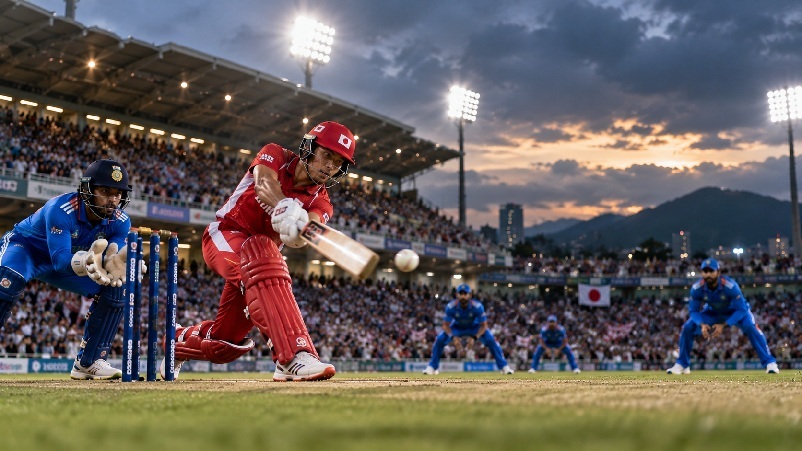
Japan vs India T20 2026 Scorecard at a Glance
The scorecard was quite succinct due to the rain-affected five-over game format.
India Innings
India concluded their innings with a total of 32/4 after 5 overs.
Shreyas Iyer topped the scoring with 16 runs off 12 balls. Sanju Samson contributed nine runs from seven balls, while Ishan Kishan added three. Abhishek Sharma was dismissed without scoring. Tilak Varma ended not out on one, and Shiv Dube remained at zero.
Japan’s bowling statistics included:
- Charlie Hara-Hinze: 2/17
- Ibrahim Takahashi: 1/13
- Benjamin Ito-Davis: 1/2
Japan Innings
Japan replied with 30/3 in 5 overs, just short of the target.
Kendel Kadowaki-Fleming notched 12 runs, while Benjamin Ito-Davis aided with nine runs. Washington Sundar emerged as India’s top wicket-taker with two dismissals.
The final margin was a mere two runs.
This rendered the match significantly more competitive than the pre-game rankings might have indicated.
Why the Two-Run Margin Matters
A two-run win in cricket can occasionally be misleading. A team might command much of the game only to concede a few runs at the end. This match was unique as it was condensed into just ten overs.
India made 32 runs.
Japan totaled 30 runs.
Thus, there wasn’t an extended timeframe for either side to establish a notable lead. Every wicket, dot ball, single, and boundary had a direct impact on the outcome.
Japan’s failure to secure the final three runs ultimately determined the match’s result.
For India, the game highlighted the crucial nature of bowling discipline when protecting a low score. For Japan, it proved that their players can hold their own against India’s representatives when given such an opportunity.
What Comes Next for Both Teams?
This fixture was strategically scheduled right before the 2026 Asian Games.
India was set to join the men’s tournament at the quarter-final stage, while Japan prepared for the group phase.
This experience is particularly beneficial for Japan. Their players had to manage the pressure of facing India right before their home Asian Games journey.
For India, the match allowed for a quick adjustment before a tournament where they would be expected to contend for a medal once more.
The Asian Games will also provide Japan with the opportunity to expand on the insights gained from this match rather than viewing the India game as an isolated incident.
Seven Key Takeaways From the Match
The crucial aspects of the contest can be summarized succinctly:
- India triumphed by two runs, concluding at 32/4 while restricting Japan to 30/3.
- Rain curtailed the match to five overs per side, significantly altering the strategy.
- Shreyas Iyer made 16 runs, which positioned him as India’s top scorer.
- Charlie Hara-Hinze claimed two wickets for Japan, significantly contributing to constraining India’s total.
- During Japan’s innings, Washington Sundar claimed two wickets.
- Kendel Kadowaki-Fleming contributed 12 runs, guiding Japan’s pursuit.
- This match marked the inaugural men’s international cricket clash between India and Japan, assigning it historical significance that transcends the outcome.
Japan vs India T20 2026: A Match for Japan to Build Upon
The official outcome will indicate an India win, yet the narrative is more intricate than mere statistics portray.
India came in as the current T20 World Cup champions and held the number one position in T20I rankings, while Japan was positioned significantly lower in the global standings. The ICC drew attention to the substantial ranking difference prior to the game, but Japan’s squad consistently emphasized their desire to compete instead of just taking part.
That spirit of competition was clear in the final tally.
Japan limited India to a score of 32/4 and themselves managed to reach 30/3. They were only a boundary or a few strategically placed runs from achieving an incredible outcome.
This match presented an unusual preparatory challenge for Indian cricket, allowing them to experience a new cricketing setting. For Japan, it offered valuable exposure, experience, and an impressive display in front of a large crowd.
Perhaps the most critical aspect of the event is what unfolds post-match.
Japan now possesses a benchmark for the level of performance needed to contend against a leading cricketing nation. Their players can draw confidence from their ability to remain competitive until the final moments.
On the other side, India can extract lessons from a challenging batting performance and a high-pressure defense as they move towards the Asian Games.
Consequently, the Japan vs India T20 2026 match provided something that a typical one-sided international game might lack: a historic first encounter, an unexpectedly low-scoring competition, and a nail-biting finish within two runs that kept the outcome uncertain until the final whistle.
For Japanese cricket, this could hold greater significance than the actual result. For India, it served as a reminder that matches in short formats can significantly alter when circumstances, timing, and pressure eliminate the usual chances for recovery.
And for supporters, the first men’s international cricket encounter between India and Japan crafted a unique sporting narrative that will be cherished long after the final outcome is noted.