
India Women Asian Games Gold: The Indian women’s cricket squad has achieved yet another remarkable position in the annals of the Asian Games. In the 2026 championship match held at Korogi Sports Park in Nisshin, Japan, India displayed a dominant all-around performance, defeating Sri Lanka by a significant margin of 147 runs to retain their women’s cricket gold medal.
For the Indian women, winning the Asian Games gold was not only about holding onto their title. They became the first Indian squad to secure a gold medal during the Aichi-Nagoya Games, and this victory marked their second consecutive championship in women’s cricket at the Asian Games. The final match was notably lopsided, with India scoring 216 runs for the loss of three wickets over 20 overs, while Sri Lanka was bowled out for a mere 69 runs within 15.4 overs.
IND-W 216/3
India produced a dominant batting and bowling performance at Korogi Sports Park, scoring 216/3 before bowling Sri Lanka out for 69 in 15.4 overs to win the Asian Games 2026 women’s cricket gold medal.
This triumph also extended a remarkable streak for Harmanpreet Kaur’s team. Just a few days prior, India had conquered Sri Lanka in the Women’s Asia Cup final held in Dubai. Consequently, the Asian Games final rematched the two teams, but this contest ended with an even greater point difference.
Below is a recap of how India achieved the gold medal, highlighting the seven pivotal moments that shaped their campaign.
India’s Gold Medal Journey at Asian Games 2026
The women’s cricket event at the Asian Games utilized a brief knockout structure, involving eight teams. India entered the tournament as the defending titleholders after clinching the women’s cricket gold medal in the last Games.
Their journey to the final commenced against host nation Japan on September 18. India opted to bowl first, immediately applying pressure on the Japanese batting squad. Japan managed to score only 57 runs, with Sree Charani taking four wickets in the process.
India quickly chased down the target in just five overs, losing two wickets along the way. Shafali Verma played an outstanding innings, scoring an unbeaten 40 runs off 15 balls, providing India with a swift start in the tournament. This eight-wicket victory propelled the team into the semifinals against Bangladesh.
The semifinal showcased another highly effective display from India. They accumulated 195 runs for the loss of four wickets in 20 overs before Bangladesh was all out for a mere 81 runs. Shafali Verma shined with a remarkable batting performance, achieving her first T20I century in just 49 balls. Nandini Sharma and Deepti Sharma also contributed by taking three wickets each, leading India to a victory by 114 runs.
Sri Lanka advanced to the final after defeating Pakistan in the other semifinal, setting the stage for a rematch of the previous Asian Games final.
This meant that the India Women Asian Games Gold would once again be contested against Sri Lanka, just as it had been in the last edition.
1. Smriti Mandhana Sets the Tone
The final commenced with Harmanpreet Kaur winning the toss and opting to bat.
This choice quickly proved to be significant.
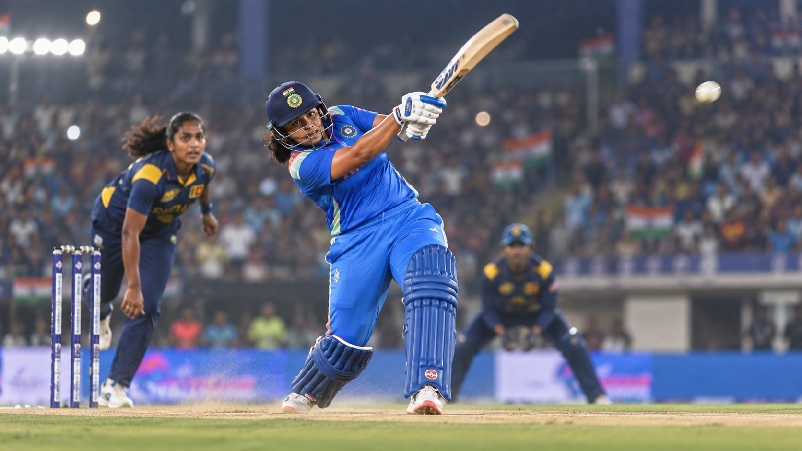
Smriti Mandhana and Shafali Verma entered the field and aggressively targeted the Sri Lankan bowlers right from the start. Rather than allowing Sri Lanka to settle into their rhythm, India immediately accelerated the scoring pace.
The initial partnership became a crucial segment of the finale. Mandhana exhibited a blend of precise timing and controlled aggression, whereas Shafali dominated the bowling with her signature strength.
The duo accumulated 99 runs for the first wicket, missing a century partnership by a mere single run. Shafali eventually scored 48 off 29 deliveries and by that point, India had fully claimed the momentum of the innings.
Following Shafali’s exit, Mandhana advanced the promising start into a substantial total.
She netted 79 runs from 45 balls, including five fours and seven sixes. Her performance was vital as it maintained a high scoring rate without putting India at unnecessary risk.
This innings also marked a notable personal achievement. Mandhana surpassed 11,000 international runs, making her the first female cricketer to achieve this milestone.
For the Indian Women’s Asian Games Gold, Mandhana’s performance will stand out as a key contribution, as it provided the necessary foundation for the lower middle order to be aggressive.
Mandhana’s Performance
Mandhana concluded the match with:
- 79 runs
- 45 deliveries
- 5 fours
- 7 sixes
- 11,000 international-run achievement
Her innings also established her as the highest run-scorer for India in the competition, according to a report by India Today.
2. Shafali Verma’s Dynamic Start
Shafali Verma was another crucial element in India’s pursuit of the gold medal.
Her contribution went beyond just fast runs. She also played a significant role with the ball throughout the tournament, making her a valuable all-round asset for Harmanpreet Kaur.
In the game against Japan, Shafali ended with an unbeaten 40 off just 15 balls. In the match against Bangladesh, she scored a century in 49 balls. Then in the final, she hammered 48 runs off 29 balls during the opening partnership with Mandhana.
This consistency throughout three matches established her as one of India’s key players.
The final performance illustrated how India managed to amass such a hefty score. Shafali did not require much time to get comfortable. She instantly sought scoring chances, compelling Sri Lanka’s bowlers to adjust their lengths and fields.
Her exit did not hinder India’s momentum as Mandhana continued to press forward.
The BCCI later announced that Shafali emerged as the tournament’s leading run-scorer with 188 runs across three innings, while Sree Charani claimed the top position for wickets with eight.
3. Richa Ghosh Delivers Late Explosiveness
India’s innings might have slowed down after Mandhana’s departure.
However, Richa Ghosh made sure the closing overs were even more devastating.
Ghosh ended with an unbeaten 49 from merely 22 balls, delivering the type of finishing prowess that can elevate a solid T20 total into an extraordinary one.
Her performance brought India to a total of 216/3, which became a record for women’s cricket at the Asian Games. The official report from the Olympic Council of Asia highlighted that India scored 18 fours and 13 sixes during their innings.
The final over proved especially fruitful, as India significantly increased an already daunting total.
By the conclusion of 20 overs, Sri Lanka needed to score 217 runs for a victory. This was an immense goal, especially considering that they were facing an Indian bowling lineup featuring numerous top-tier spinners and all-rounders.
Consequently, the batting display established a robust base for India Women’s triumph at the Asian Games well ahead of Sri Lanka embarking on their pursuit.
4. India’s Bowling Attack Concludes the Match Prematurely
With a score of 216/3 already set, the task was formidable, but India’s bowlers made certain that Sri Lanka never approached the chase in a competitive manner.
Sri Lanka’s innings came to an end in just 15.4 overs.
The team was bowled out for 69, resulting in a victory margin of 147 runs for India. It wasn’t just a straightforward defense of a substantial total; it was a complete unraveling of their attempt to chase.
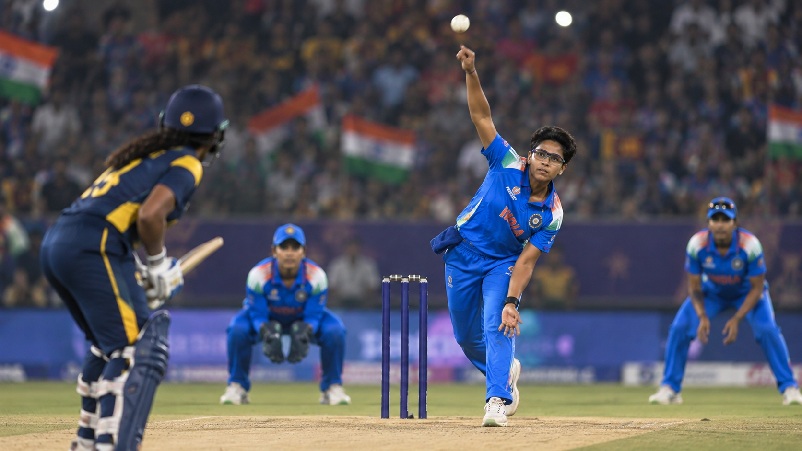
Deepti Sharma spearheaded the bowling effort, achieving 3 wickets for just 6 runs, while Shafali Verma, Sree Charani, and Shreyanka Patil each captured two wickets.
Chamari Athapaththu was Sri Lanka’s top scorer with 29 runs off 21 balls, yet wickets continued to tumble around her.
India’s spinners excelled particularly because Sri Lanka struggled to form partnerships. The chase became even more challenging once Athapaththu was dismissed.
The final statistics conveyed the situation clearly:
- India 216/3 — Sri Lanka 69 all out
The victory margin of 147 runs marked India’s most significant win by runs in women’s T20I cricket, according to various reports regarding the final.
5. Deepti Sharma’s Pivotal Bowling Performance
Among the Indian bowlers, Deepti Sharma provided one of the most significant spells in the final.
Her impressive figures of 3/6 illustrated how well India managed the middle phase of Sri Lanka’s innings.
Deepti’s contribution to the team extends beyond simply taking wickets. She has the capability to manage the scoring rate, deliver lengthy spells, and generate pressure, enabling other bowlers to attack from the opposite end.
This precisely unfolded in the final.
Sri Lanka was in need of partnerships following their early losses, but India’s bowlers consistently denied them sufficient scoring chances.
Therefore, Deepti’s spell played a crucial role in the strategic framework behind India Women’s gold medal triumph at the Asian Games.
The bowling lineup did not depend on a sole player. Instead, wickets were distributed among various bowlers, allowing Harmanpreet Kaur to maintain relentless pressure on Sri Lanka throughout their innings.
6. India Successfully Retains the Asian Games Title
The 2026 victory held historical importance, as India had secured the women’s cricket gold medal in the previous Asian Games.
India’s first gold in women’s cricket at the Asian Games was obtained in Hangzhou, where the team triumphed over Sri Lanka in the 2023 final. This marked India’s inaugural participation in the women’s cricket segment at the Games.
Thus, the 2026 final was a repeated confrontation.
However, the achievement extended beyond merely winning another final. India not only defended their title but became a two-time gold medalist in women’s cricket at the Asian Games.
The medal legacy of women’s cricket at the Games originated with Pakistan winning gold in 2010 and 2014. India then emerged onto the scene at Hangzhou, clinching gold in 2023. Sri Lanka ended as runners-up in both instances when India captured the title.
This background provides even greater significance to the latest victory.
The consecutive success also ranks India’s present squad among the top-performing women’s teams in cricket at the Asian Games.
Regarding the victory in the Asian Games for India Women, the narrative extends beyond just an impressive final tally. It encompasses the act of retaining a title and ensuring consistency over two tournaments.
7. The Ideal Follow-Up to the Women’s Asia Cup
India approached the final of the Asian Games filled with self-assurance.
Just days prior, the team had triumphed over Sri Lanka in the Women’s Asia Cup final held in Dubai.
India set a score of 183/5 during that matchup before bowling Sri Lanka out, achieving a record-extending eighth title in the Women’s Asia Cup. Shafali Verma made 68 runs while Smriti Mandhana added 59 runs.
That tournament had already illustrated the effectiveness of India’s batting and spin-bowling partnership.
The final of the Asian Games followed a similar trajectory but on a grander scale.
Mandhana and Shafali once again kicked off the game with a rapid start. The middle order of India then accelerated further, while the bowlers systematically dismantled Sri Lanka’s batting order.
The chain of results added an intriguing dimension to the rivalry. India and Sri Lanka had previously faced each other in a significant final in Dubai, and then they clashed again in the Asian Games for the gold medal.
India triumphed on both occasions.
This made the campaign for the 2026 Asian Games a continuation of the team’s impressive performance throughout the continental season.
The Path to the Final Was Equally Important
It can be tempting to focus solely on the final score and overlook how adeptly India progressed through the tournament.
The team engaged in only three matches during the knockout phase.
Against Japan, India secured victory by a margin of eight wickets after limiting the hosts to just 57 runs.
In the match against Bangladesh, India won by 114 runs following a score of 195/4.
Then, against Sri Lanka, India emerged victorious by 147 runs after putting up a total of 216/3.
Thus, India’s three wins occurred with progressively larger victories: eight wickets, 114 runs, and 147 runs.
The performances also displayed various strengths of the squad.
In the game against Japan, bowlers primarily handled the workload before Shafali quickly finished the chase.
In the match against Bangladesh, Shafali’s century became the main highlight of the batting.
When facing Sri Lanka, both Mandhana and Richa Ghosh excelled with the bat while the entire bowling unit played a vital role in the defense.
The BCCI emphasized Sree Charani’s eight wickets over three matches and Shafali’s 188 runs as notable figures for India throughout the tournament.
This balance is among the most discernible themes from the campaign.
Harmanpreet Kaur’s Leadership
Harmanpreet Kaur‘s role in leading the team was another crucial element of their championship win.
The Indian captain has been central to the women’s team’s major international efforts for several years, and she again took charge in the Asian Games final.
Her choice to bat first after winning the toss proved to be pivotal as India’s batting order quickly placed Sri Lanka under pressure.
Kaur herself contributed 19 runs off 17 balls in the final. While her batting performance was less significant than those of Mandhana, Shafali, and Ghosh, India’s overall batting strength ensured that the team was not reliant on a single player.
Leadership in a condensed tournament often revolves around effectively utilizing available resources. India showcased that adaptability throughout the competition.
The team was able to attack with pace at the beginning, apply spin during the middle overs, and depend on various bowling options when defending a score.
That mixture played a crucial role in securing the Asian Games gold medal for India’s women with great style.
Why the 216/3 Score Matters
The final score of 216/3 was more than just a large figure.
According to the Olympic Council of Asia, it marked the highest run total in women’s cricket at the Asian Games. India achieved this total with 18 boundaries and 13 maximums.
This figure also highlights the swift progress cricket has made at the Asian Games.
In T20 cricket, teams that can score rapidly while minimizing wicket losses are rewarded. India successfully met this challenge.
The initial partnership set a solid foundation for the innings. Mandhana maintained the push after Shafali was dismissed, and Ghosh finished strongly.
The end result was a score that left Sri Lanka with very little margin for error.
When Sri Lanka began losing wickets in their chase, the goal became nearly unattainable.
The Significance for Indian Women’s Cricket
The gold medal arrives at a critical moment for Indian women’s cricket.
The squad has increasingly mixed seasoned international players with younger talents who can turn matches around.
Mandhana continues to be a key player in the batting lineup. Shafali brings explosive batting alongside useful bowling options. Richa Ghosh provides strong finishes, and Deepti Sharma contributes experience and control with the ball.
Sree Charani‘s performance also highlighted the ongoing growth in India’s bowling strength.
The 2026 journey was especially remarkable as various players stepped up at different moments.
This is evident in the match outcomes:
- Shafali excelled against Japan.
- Shafali scored a century against Bangladesh.
- Mandhana led the batting effort versus Sri Lanka.
- Ghosh executed a dynamic finish.
- Deepti Sharma managed the Sri Lankan middleorder effectively.
- Sree Charani emerged as the leading wicket-taker of the tournament.
Such a diverse range of contributions enhances the significance of the title beyond just one standout player.
India’s First Gold Medal of the 2026 Asian Games
There was another significant historical aspect associated with the final match.
The women’s cricket team claimed India’s inaugural gold medal at the 2026 Asian Games.
Although India had already earned medals early in the tournament, the cricket triumph marked the nation’s first gold at the Aichi-Nagoya Games. This accomplishment was officially acknowledged by India’s national broadcaster and the Board of Control for Cricket in India.
This added to the final’s importance beyond just cricket.
The win served as an early milestone for India’s broader Asian Games efforts.
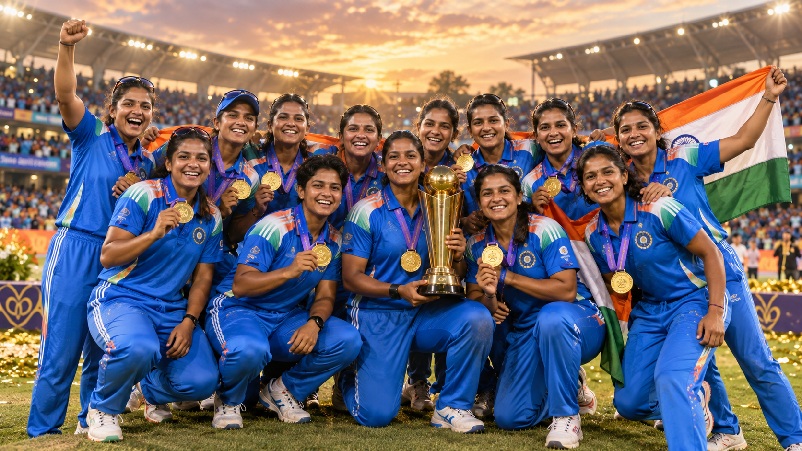
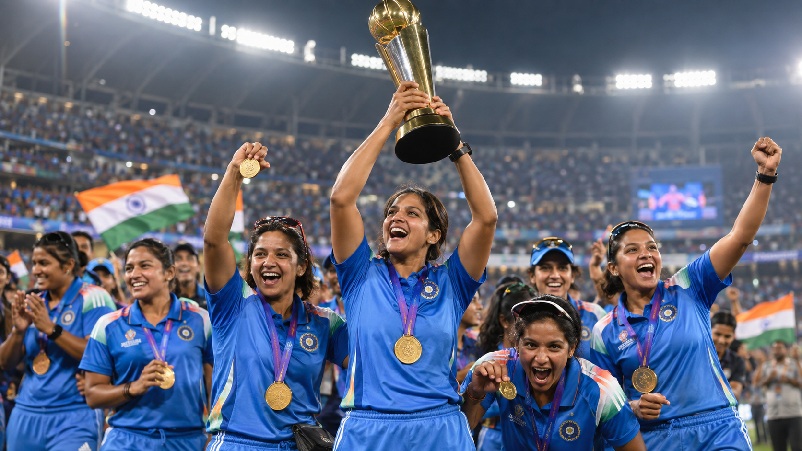
The image of the Indian players celebrating with their gold medal thus represented both a victorious title defense and the country’s first gold of the Games.
A Final Worth Remembering
The women’s cricket final of 2026 will be memorable because nearly every significant aspect of India’s performance was effective.
The batting lineup scored at an unyielding tempo.
The initial partnership established an advantageous position early on.
Mandhana delivered a pivotal score of 79.
Shafali added 48 and continued her outstanding tournament performance.
Richa Ghosh nearly achieved a fifty while batting with an incredible strike rate.
The bowlers then did not allow Sri Lanka to form any substantial partnerships.
Deepti Sharma ended with three wickets, while several other bowlers made crucial breakthroughs.
The outcome was a victory by 147 runs, marking India’s second consecutive gold in women’s cricket at the Asian Games and the nation’s first gold medal in the 2026 Games.
The statistics related to India Women’s Asian Games Gold represent only a fraction of the overall narrative. The greater accomplishment lies in the team’s ability to maintain consistent performance throughout the knockout phases and significant continental events.
India came to Japan as the reigning champions.
They depart as champions once more.
What Lies Ahead for the Team?
The victory at the Asian Games signifies yet another major milestone for Harmanpreet Kaur’s squad, but the international schedule will keep demanding focus.
The immediate benefit of this success is the boost in confidence it provides the team. India has proven its capability to perform well under varying conditions, manage the pressure of knockout games, and secure wins against formidable Asian rivals.
The rise of younger athletes also holds considerable importance.
Shafali‘s strong performance throughout the tournament, Sree Charani’s wicket-haul, and the ongoing contributions from players like Richa Ghosh and Deepti Sharma offer the team multiple pathways to success.
At the same time, Mandhana‘s achievement of 11,000 runs adds another personal milestone to the team’s collective triumph.
The blend of seasoned leadership and emerging match-winners could play a crucial role in India’s future initiatives.
Conclusion
The women’s cricket final at the 2026 Asian Games delivered a performance that was assertive from start to finish.
India posted a score of 216/3, setting a record for the highest total by women in the Asian Games. Contributions from Smriti Mandhana with 79 runs, Shafali Verma with 48, and Richa Ghosh, who remained not out at 49, bolstered the batting display. Subsequently, Sri Lanka crumbled to 69, with Deepti Sharma achieving figures of 3/6 while the rest of India’s bowlers applied consistent pressure.
The resulting victory by 147 runs secured India its second consecutive gold medal in women’s cricket at the Asian Games.
Additionally, it awarded the country its first gold at the 2026 Aichi-Nagoya Games.
Crucially, this campaign illustrated that the Indian women’s team relied on a collective effort rather than a single event or individual. From Shafali’s dynamic opening against Japan to her semifinal century, Mandhana’s record-setting innings in the final, and the combined prowess of the bowlers, the championship was a product of the entire team.
Thus, the India Women Asian Games Gold is not merely a headline from a single match. It signifies a successful title defense, an additional chapter in the evolving narrative of women’s cricket in India, and a memorable beginning to India’s medal mission in Nagoya.
For followers of Indian cricket, the concluding score could not be more convincing: India 216/3, Sri Lanka 69 — India achieved victory by 147 runs and upheld the Asian Games women’s cricket gold.