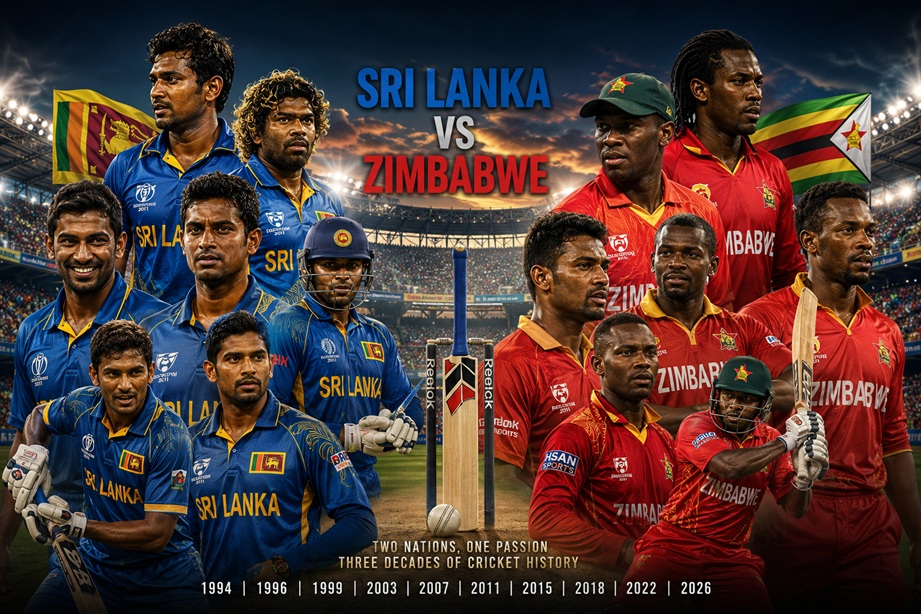

Cricket has fostered many rivalries, yet certain matchups are notable for their consistency rather than fierce animosity. The Timeline of Sri Lanka vs Zimbabwe perfectly exemplifies this type of sporting interaction. Since their initial Test series in 1994, the two nations have frequently clashed in Tests, One-Day Internationals, and Twenty20 Internationals, resulting in unforgettable displays, record-setting innings, and significant achievements for budding stars.
While Sri Lanka has generally held an edge in their overall match history, Zimbabwe has repeatedly demonstrated determination by securing surprising wins and delivering competitive displays that make this rivalry far more engaging than the statistics alone indicate. Throughout the past thirty years, fans have seen cricketing legends such as Arjuna Ranatunga, Sanath Jayasuriya, Kumar Sangakkara, Mahela Jayawardene, Muttiah Muralitharan, Heath Streak, Andy Flower, Brendan Taylor, Sikandar Raza, and many others leave a lasting impression on this contest. The rivalry has adjusted through evolving eras yet remains a significant component of international cricket.
The Beginning of the Rivalry (1994)
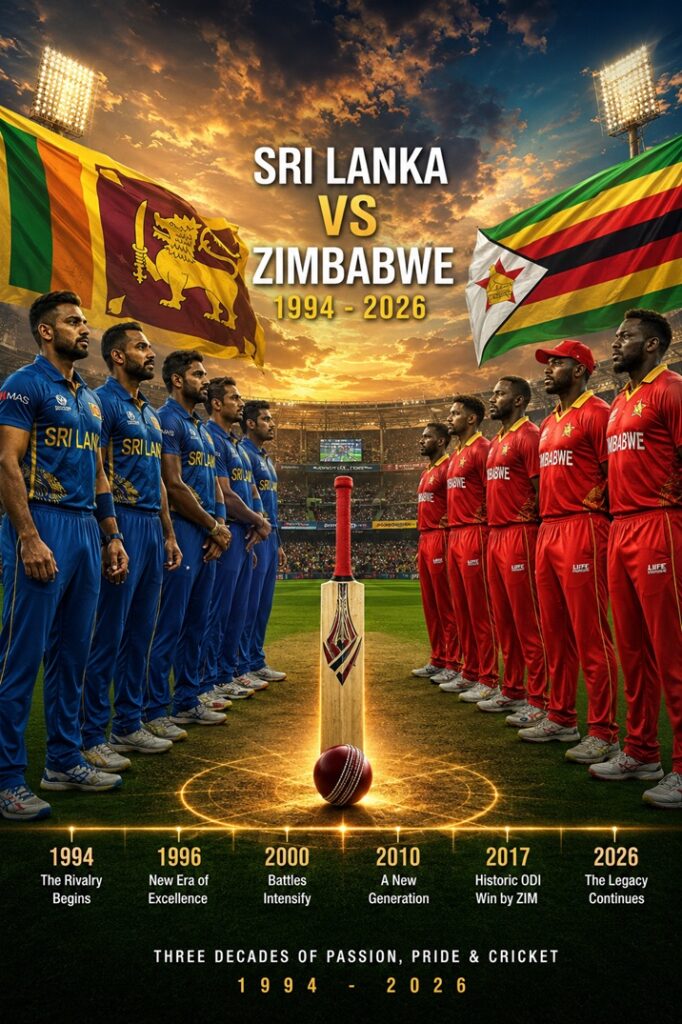
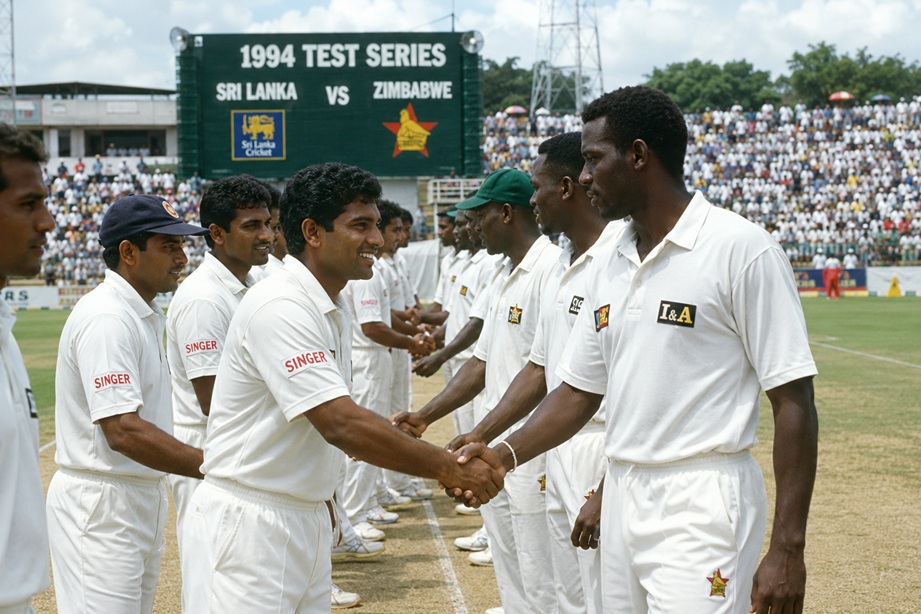
The narrative officially commenced in October 1994 when Sri Lanka visited Zimbabwe for their inaugural bilateral Test series. This was a significant milestone since Zimbabwe had only recently gained Test status and was keen to make its mark among the elite cricketing nations worldwide.
The three-match Test series concluded without a victor, with each game ending in a stalemate. Although neither team secured a win, the series was highly competitive and showcased Zimbabwe’s potential to challenge seasoned opponents on home turf.
Conversely, the accompanying ODI series painted a contrasting picture. Sri Lanka adapted more readily to limited-overs gameplay and won the series 2-1, establishing a basis for what would evolve into a sustained advantage in their bilateral contests.
Key Highlights
- First bilateral Test series between Sri Lanka and Zimbabwe.
- October 1994 marked the official beginning of the rivalry.
- Three-match Test series ended in draws.
- Sri Lanka won the accompanying ODI series 2-1.
A New Era During the Mid-1990s
The mid-1990s marked a pivotal transformation for Sri Lankan cricket. Their bold batting approach alongside an improving bowling lineup propelled them to become one of the top teams in global cricket.
In contrast, Zimbabwe continued to nurture skilled cricketers capable of standing up against tougher competition. Stars like Andy Flower and Heath Streak emerged as top-tier players, ensuring Zimbabwe stayed competitive despite having fewer resources.
Sri Lanka’s Growing Confidence
After their groundbreaking World Cup victory in 1996, Sri Lanka approached each bilateral series with a renewed sense of assurance. Their audacious batting often overpowered Zimbabwe’s bowling, especially in One-Day Internationals.
The Sri Lanka vs Zimbabwe Timeline during this era illustrates Sri Lanka’s evolution from a developing squad into a powerhouse in the cricketing world.
Reasons Behind Sri Lanka’s Rise
- 1996 World Cup triumph
- Aggressive batting strategy
- Improved bowling attack
- Growing confidence in bilateral series
Zimbabwe’s Fighting Spirit
Despite the widening disparity in overall team capabilities, Zimbabwe consistently showcased resilience. Numerous matches remained fiercely contested due to disciplined bowling and reliable batting from veteran players.
Rather than becoming lopsided encounters, many games resulted in thrilling finishes that pleased devoted fans of the sport.
Zimbabwe’s Strengths
- Disciplined bowling
- Reliable batting
- Strong fighting spirit
- Competitive performances despite limited resources
Test Cricket Between the Two Nations
Test matches have always provided a clear insight into the strengths and weaknesses of each team.
Zimbabwe made a mark during the first 1994 series by avoiding defeat in all three matches. However, in the subsequent years, the trend gradually shifted towards Sri Lanka as their batting depth and spin bowling became increasingly challenging for opponents to manage.
During the tours conducted in 1996, 1997-98, and the early 2000s, Sri Lanka achieved significant victories through their effective batting techniques and relentless bowling efforts. Their knack for consistently setting up large totals in the first innings placed substantial pressure on Zimbabwe, paving the way for their bowlers to secure convincing triumphs.
Key Test Series Trends
- 1994 Test series ended in draws.
- Sri Lanka’s batting depth became a major advantage.
- Spin bowling played a decisive role.
- 1996, 1997-98, and early 2000s saw dominant Sri Lankan performances.
Memorable Individual Performances
Numerous individual efforts have marked key highlights in the competition.
Kumar Sangakkara and Mahela Jayawardene consistently provided valuable runs for Sri Lanka, with their partnerships often frustrating the Zimbabwean bowling lineup for entire sessions.
On the other hand, Zimbabwe heavily depended on the stylish batting of Andy Flower and the relentless bowling of Heath Streak. Even in matches where the outcomes were unfavorable for Zimbabwe, these players regularly delivered performances that deserved international acclaim.
Standout Players
Sri Lanka
- Kumar Sangakkara
- Mahela Jayawardene
Zimbabwe
- Andy Flower
- Heath Streak
ODI Battles That Defined the Rivalry
While Test matches showcased Sri Lanka’s technical prowess, One-Day Internationals highlighted the adaptations of both sides to varying conditions.
Through various bilateral series and ICC events, Sri Lanka typically held the advantage with well-rounded teams that included explosive openers, reliable middle-order hitters, and skilled spin bowlers.
However, Zimbabwe produced several notable upsets, serving as reminders to the cricket community about their capacity for surprises. Strong partnerships, disciplined bowling efforts, and steady chases occasionally defied expectations.
Thus, the timeline of Sri Lanka versus Zimbabwe in ODI cricket narrates a tale of enduring dominance interspersed with moments of Zimbabwean brilliance. Overall, Sri Lanka has triumphed in the majority of ODI encounters, while Zimbabwe has enjoyed a few remarkable victories that are cherished by their fans.
ODI Highlights
- Sri Lanka dominated most bilateral ODI series.
- Zimbabwe registered memorable upsets.
- ICC tournaments added intensity to the rivalry.
- Balanced Sri Lankan squads proved consistently successful.
Evolution Through the 2000s
The early 2000s signified another crucial period for both sides.
Sri Lanka rose to become one of the major cricketing forces in Asia, bolstered by seasoned leaders, outstanding spin bowlers, and technically skilled batsmen capable of thriving in all formats of the game.
In contrast, Zimbabwe faced a significantly more challenging path, grappling with administrative issues and frequent player exits. These complications inevitably impacted international performance, making it increasingly tough to achieve wins over more established teams.
Nevertheless, bilateral contests persisted as both cricket boards acknowledged the necessity of upholding competitive international schedules.
Key Developments During the 2000s
- Sri Lanka became an Asian cricket powerhouse.
- Experienced leadership strengthened the team.
- Zimbabwe struggled with administrative challenges.
- International fixtures between the teams continued.
Changing Playing Styles
An intriguing element of the rivalry has been the transformation of the sport itself.
In the 1990s, matches were notably slower, placing a greater focus on patience and defensive strategies.
By the late 2000s and into the future, aggressive batting, dynamic fielding, and creative shot-making emerged as hallmarks of international cricket. Sri Lanka swiftly adapted to this shift, while Zimbabwe gradually reconstructed their team with younger talents capable of keeping pace with modern play.
This transformation ensured that each new chapter of the rivalry appeared distinctly different from those of the previous decade.
Evolution of Playing Styles
- 1990s: Slower cricket with emphasis on patience and defense.
- Late 2000s onwards: Aggressive batting and dynamic fielding.
- Sri Lanka adapted quickly to modern cricket.
- Zimbabwe rebuilt with younger players.
- The rivalry continued evolving with every generation.
The Modern Era: 2010–2026
The period following 2010 marked a new phase in the competition. Sri Lanka approached this time with a mix of seasoned players and promising newcomers, whereas Zimbabwe worked on revitalizing its team with emerging local talent. While Sri Lanka maintained a higher level of success, Zimbabwe occasionally showcased commendable efforts that garnered appreciation from both fans and cricket analysts.
A focal point during these years was the gradual enhancement of Zimbabwe’s performance in white-ball formats. Key players like Brendan Taylor, Craig Ervine, Sean Williams, and Sikandar Raza delivered several pivotal performances, transforming bilateral series into contests that were more competitive than anticipated.
The Sri Lanka versus Zimbabwe timeline also highlights the evolving landscape of international cricket, where each series became crucial for ICC rankings, qualifications for the World Cup, and team advancements.
Memorable Bilateral Series
Numerous tours throughout the 2010s stand out for their intense cricketing action.
Sri Lanka often depended on seasoned batsmen to set substantial scores before their bowlers took charge of the match. Conversely, Zimbabwe regularly exhibited strong partnerships and disciplined bowling efforts that put their opponents in challenging positions.
One of Zimbabwe’s standout moments occurred during the ODI series in Sri Lanka in 2017, when they surprised the home team by claiming victory in the first match. Although Sri Lanka managed to bounce back and win the series, Zimbabwe’s win showed their potential to compete against more dominant teams on familiar turf.
Series Highlights
- Sri Lanka relied on experienced batsmen and strong bowling attacks.
- Zimbabwe produced disciplined bowling performances and valuable partnerships.
- 2017 ODI series featured Zimbabwe’s memorable opening-match victory in Sri Lanka.
- Sri Lanka recovered to win the series.
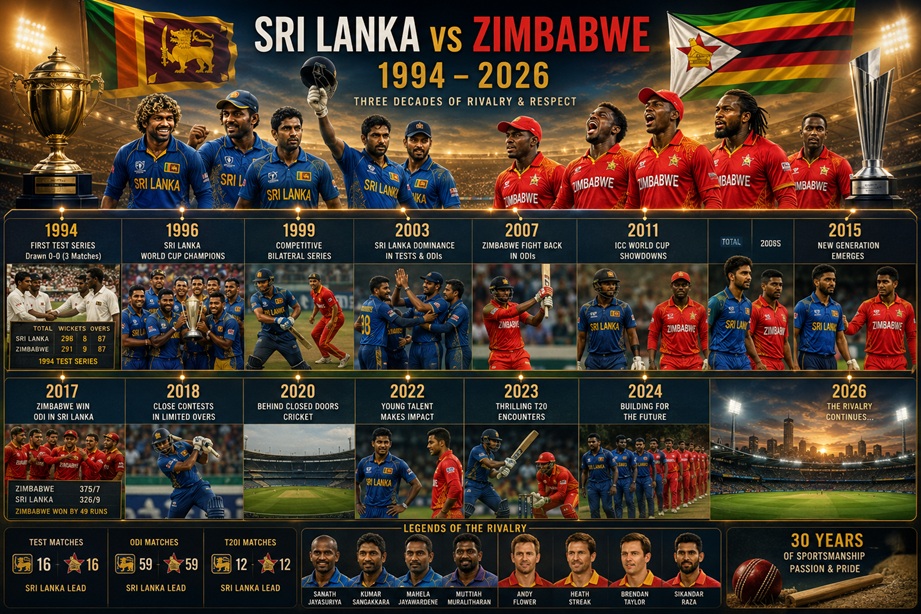
Timeline of Major Events (1994–2026)
1994–1995
- The first bilateral Test series between both countries took place.
- The outcome of all three Test matches was a draw.
- Sri Lanka triumphed in the ODI series with a score of 2–1.
1996–1999
- Sri Lanka’s generation, which clinched the World Cup, positioned itself among the top cricketing nations.
- Zimbabwe remained in the competition with seasoned players like Andy Flower and Heath Streak.
2000–2009
- Sri Lanka solidified its supremacy in both Test and ODI formats.
- Zimbabwe faced challenges related to administration and player availability but kept churning out skilled cricketers.
2010–2016
- New talent came to the fore for both sides.
- Frequent bilateral matches allowed young players to gain critical international experience.
2017
- Zimbabwe achieved a memorable ODI win in Sri Lanka before the hosts regrouped to take the series.
2018–2023
- The competition persisted through ICC events and bilateral contests.
- While Sri Lanka remained generally superior, Zimbabwe’s level of performance steadily grew.
2024–2026
- Both nations continued the development of their squads in preparation for forthcoming ICC tournaments.
- New young players from both sides infused new vigor into this enduring cricket rivalry.
The Sri Lanka against Zimbabwe timeline demonstrates how both teams have adapted to changing formats while sustaining a competitive sporting relationship for over thirty years.
Greatest Players in the Rivalry
Several cricketing icons have influenced the matches between Sri Lanka and Zimbabwe through their remarkable contributions.
Sri Lanka
- Arjuna Ranatunga
- Sanath Jayasuriya
- Aravinda de Silva
- Mahela Jayawardene
- Kumar Sangakkara
- Muttiah Muralitharan
- Lasith Malinga
- Angelo Mathews
- Kusal Mendis
Each of these cricketers played pivotal roles through match-winning performances, essential wickets, or motivating leadership during various stages of this rivalry.
Zimbabwe
- Andy Flower
- Heath Streak
- Grant Flower
- Brendan Taylor
- Tatenda Taibu
- Sean Williams
- Craig Ervine
- Sikandar Raza
These cricketers frequently bore the weight of Zimbabwe’s aspirations and delivered performances that remain etched in memory, regardless of the team’s overall statistical outcomes.
Head-to-Head Overview
In matches across Tests, One-Day Internationals, and Twenty20 Internationals, Sri Lanka has established a notable statistical lead. Their reliable batting lineup, skillful spin bowlers, and adeptness at thriving in home environments have played significant roles in their achievements.
Zimbabwe’s wins may be limited, yet many have occurred under challenging conditions and are celebrated as important milestones. Their capacity to compete against stronger rivals showcases the resolve that has characterized Zimbabwean cricket for an extended period.
Therefore, the timeline of Sri Lanka versus Zimbabwe illustrates more than just victories and defeats. It narrates the saga of one well-established cricketing nation and another that has persistently sought to enhance its stature in the global arena.
Why This Rivalry Still Matters
Even though this matchup might not garner as much international spotlight as some of the more prominent rivalries in cricket, the contests between Sri Lanka and Zimbabwe remain a crucial aspect of international cricket.
For Sri Lanka
- These series serve as platforms to nurture young players.
- Refine team dynamics.
- Uphold a steady performance level ahead of significant ICC tournaments.
For Zimbabwe
- Each game against Sri Lanka presents crucial opportunities for facing top-tier opponents.
- Strong performances enhance confidence.
- Aid in the sustained development of Zimbabwean cricket.
Another vital element is the camaraderie in which these games are conducted. This rivalry is predominantly noted for its sportsmanship, mutual respect among players, and competitive spirit devoid of scandal.
The timeline of Sri Lanka versus Zimbabwe underscores this distinctive equilibrium of rivalry and respect.
Conclusion
Throughout more than three decades, Sri Lanka and Zimbabwe have created countless unforgettable cricketing moments. From the tied Test series in 1994 to contemporary white-ball contests featuring thrilling young talent, each era has offered something distinctive to this rivalry.
This competition has included iconic batting displays, extraordinary bowling feats, surprising upsets, and the emergence of young stars making their mark globally. Although Sri Lanka has achieved most of the victories, Zimbabwe has consistently shown tenacity and an ability to catch stronger teams off guard.
Looking forward, upcoming series promise to add another thrilling chapter as both countries work on developing the next wave of international cricket talent. Fans can look ahead to new rivalries, record-breaking achievements, and remarkable displays that will further enhance this storied competition.
The timeline of Sri Lanka versus Zimbabwe serves as a reminder that the most compelling tales in cricket extend beyond mere trophies, highlighting the enduring competition, shared respect, and the collective pursuit of excellence. As the rivalry progresses beyond 2026, it continues to hold significance in the annals of international cricket history and presents an interesting journey for fans worldwide to observe.