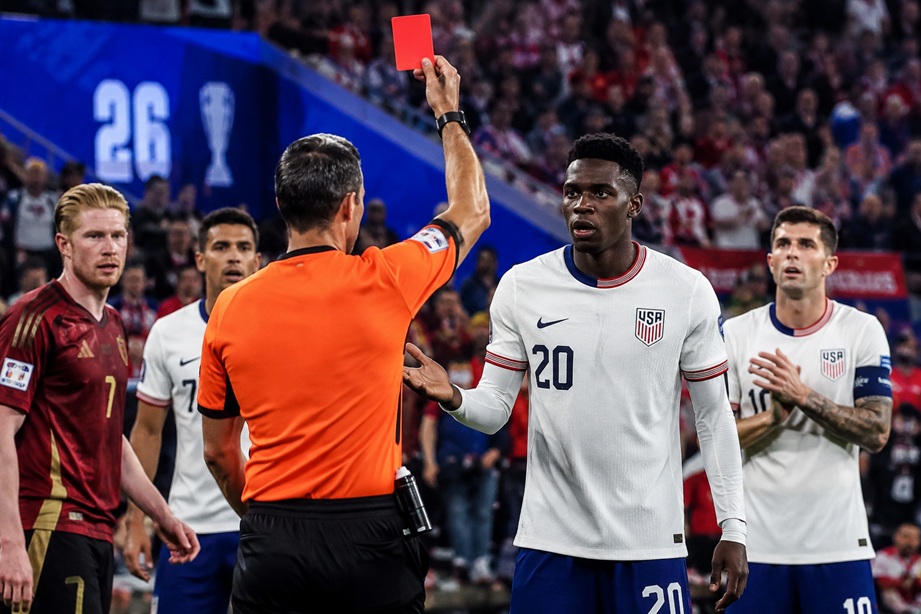

The 2026 FIFA World Cup has already delivered memorable games, surprising upsets, and heartfelt celebrations. However, one of the top stories has emerged off the field. The debate over Balogun’s Red Card Ruling has ignited intense discussions among soccer enthusiasts, analysts, past players, and sports authorities globally.
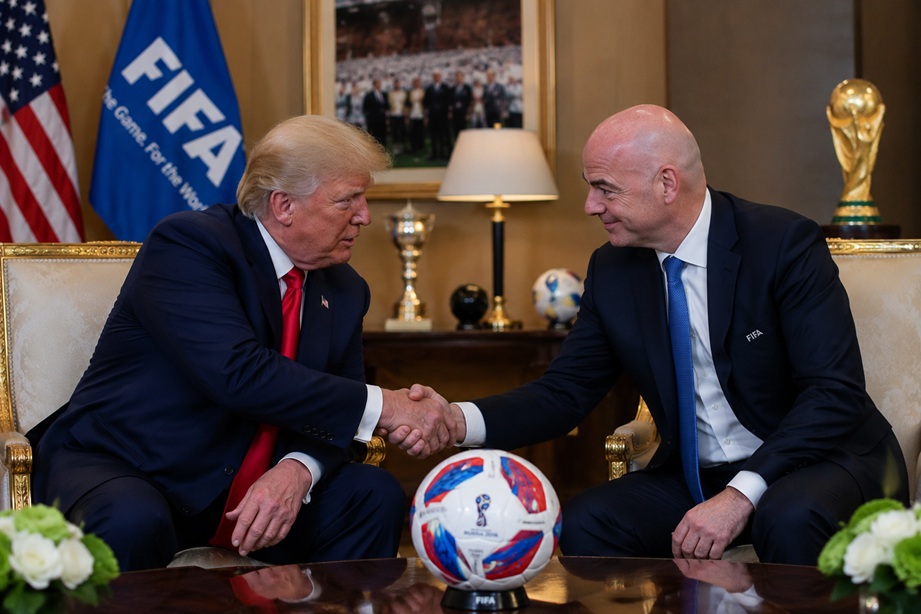
This matter transcends merely a lone red card. It has brought forward significant concerns regarding the connection between politics and athletics after it was reported that U.S. President Donald Trump directly encouraged FIFA President Gianni Infantino to reassess Folarin Balogun’s suspension prior to the U.S. facing Belgium in the Round of 16. FIFA subsequently lifted the one-match suspension by invoking Article 27 of its Disciplinary Code, permitting Balogun to play despite his earlier expulsion from the game.
The remarkable choice has created a rift in opinions. American fans embraced the verdict, while individuals from Belgium and numerous football professionals contended that it jeopardized the tournament’s integrity. This situation has rapidly evolved into one of the pivotal narratives of the 2026 World Cup.
How the Dispute Arose
Folarin Balogun had emerged as one of the United States’ key players throughout the tournament. His scoring and clever movement bolstered the Americans’ confidence as they progressed to the knockout stages.
However, everything shifted during their win against Bosnia and Herzegovina. In the second half, Balogun contested defender Tarik Muharemovic. After an extensive VAR review, the referee upgraded the foul to a straight red card.
Typically, according to FIFA tournament rules, a direct red card results in an automatic one-match suspension. Few anticipated that the decision would be revisited prior to the vital game against Belgium.
Trump’s Reported Involvement
The situation gained international attention after various reports indicated that Donald Trump reached out personally to FIFA President Gianni Infantino, requesting a review of Balogun’s suspension.
Shortly thereafter, FIFA’s Disciplinary Committee revealed that it would delay the execution of the ban rather than entirely rescind it. Consequently, Balogun became eligible for selection against Belgium while still potentially facing disciplinary actions in the future.
Trump later commended FIFA publicly, referring to the result as a rectification of what he deemed an unjust ruling. The White House also applauded the decision on social media, further elevating the political stakes of an already contentious sports narrative.
Why FIFA Invoked Article 27
What Does Article 27 Permit?
The legal reasoning behind the Balogun Red Card Ruling took many observers by surprise.
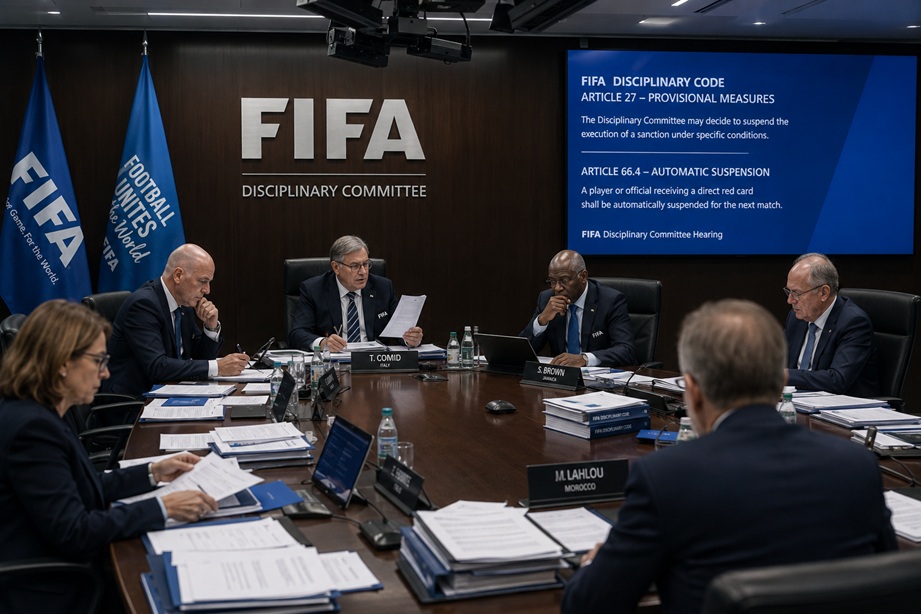
Instead of overturning the referee’s ruling, FIFA opted to use Article 27 of its Disciplinary Code. This clause permits the Disciplinary Committee to suspend the application of a disciplinary penalty under certain conditions.
In Balogun’s scenario, FIFA effectively deferred the punishment rather than nullifying it entirely. This allowed him to participate against Belgium while remaining under scrutiny for any potential future disciplinary matters.
Why Experts Criticized the Action
While Article 27 is in place, critics were quick to highlight another aspect of FIFA’s regulations.
Belgium contended that Article 66.4 of the FIFA Disciplinary Code, alongside the regulations for the World Cup, clearly indicates that players who receive direct red cards must miss their following match without exception.
Due to this evident discrepancy among various rules, legal professionals and former officials raised concerns regarding FIFA’s consistent application of its regulations.
Belgium’s Indignant Reaction
Possibly no other country expressed discontent as vehemently as Belgium.
The Royal Belgian Football Association issued a statement indicating disbelief regarding FIFA’s decision. Officials asserted that the ruling contradicted the tournament’s rules and announced they were exploring all available legal avenues.
The coaching team from Belgium also shared their dissatisfaction.
Head coach Rudi Garcia likened the ruling to a prank typical of April Fool’s Day, while goalkeeper Thibaut Courtois acknowledged that the decision’s timing caused anxiety right before one of the tournament’s key matches.
The Belgian association maintained that every other player who had been shown a red card throughout the World Cup faced an automatic suspension. They queried why this scenario seemed to be treated differently.
Responses from the Football Community
The Balogun Red Card Situation swiftly became a pivotal topic of conversation within the football community.
Viewpoints differed significantly:
- American fans felt that justice had finally prevailed.
- Belgium asserted that the essence of sportsmanship had been compromised.
- Various coaches questioned FIFA’s reliability.
- Former referees discussed the understanding of Article 27.
- Football commentators cautioned that interference from politics might set a troubling precedent.
England’s manager Thomas Tuchel openly asked who has the power to overturn disciplinary judgments after referees and VAR have already rendered their decisions. Norwegian coach Stale Solbakken also criticized the decision, indicating that it could lead to confusion in upcoming tournaments.
Mauricio Pochettino Supports the Decision
The coach of the United States, Mauricio Pochettino, expressed satisfaction with Balogun’s reinstatement but argued that the challenge should not have resulted in a straight red card.
Pochettino noted that a number of football experts felt the penalty was excessive right from the start. He pointed out that in past disciplinary matters, FIFA has, at times, lifted sanctions under special circumstances.
However, the coach carefully sidestepped any mention of political interference, instead concentrating on football and his squad’s preparations against Belgium.
Could This Decision Alter FIFA’s Future?
The discussion over the Red Card Decision involving Balogun goes far beyond a single World Cup match. Experts in football governance suggest that this incident could prompt FIFA to reconsider its approach to disciplinary appeals and exceptional measures during upcoming tournaments.
A primary issue is the need for transparency. Supporters anticipate well-defined and uniform rules, particularly during the largest football event globally. When an unforeseen decision affects the eligibility of a crucial player, it raises genuine concerns about the potential for similar incidents to be treated equivalently.
Legal professionals have also expressed the need for FIFA to clarify how Article 27 interacts with the automatic suspension policies within its disciplinary system. Doing so could help clear up confusion and prevent comparable disputes in future international events.
How Social Media Propelled the Narrative
Within minutes of the news breaking, social media networks erupted with a surge of reactions.
Fans supporting the United States rejoiced at Balogun’s reinstatement, claiming the initial red card was overly severe. Conversely, some criticized FIFA for applying inconsistent standards—one set for prominent teams and another for the rest.
Trending football hashtags rapidly gained traction globally as fans circulated videos of the tackle, contested the referee’s call, and explored the rumored political involvement.
This occurrence highlighted how modern football disputes unfold in real-time. Every official communication, expert commentary, and player response quickly became part of a worldwide dialogue with millions of fans participating.
Implications for the United States
For the U.S. national team, this ruling carried tremendous athletic importance.
Balogun has proven to be one of the squad’s most potent offensive threats throughout the tournament. His ability to move past defenses, score goals, and connect with teammates has made him integral to Mauricio Pochettino’s strategy.
His presence in the match against Belgium provided the Americans with a boost in confidence as they faced one of their most challenging knockout games.
From a sporting viewpoint, the decision enhanced the United States’ attacking capabilities at a crucial juncture. However, from a public relations angle, it ensured that all aspects of the team’s performance would be scrutinized through the context of the controversy.
The Broader Inquiry into Politics and Football
A significant reason this issue has garnered global interest is its connection to a delicate topic: should political figures be involved in football’s disciplinary actions in any visible manner?
Traditionally, FIFA has upheld the idea that football should remain free from political bias. This policy aims to shield competitions from external interference and uphold public trust in sporting judgments.
Regardless of whether Trump’s alleged communications played a direct role in FIFA’s final decisions, the perception of political engagement has become nearly as crucial as the decision itself.
Many commentators contend that fostering public confidence necessitates a thorough explanation of disciplinary choices and maintaining consistency, regardless of the teams, players, or political entities involved.
Key Takeaways for FIFA Going Forward
Several vital insights can be drawn from this incident:
- Increased transparency can alleviate speculation surrounding disciplinary actions.
- Uniform enforcement of rules safeguards competitive equity.
- Effective communication is crucial when exceptional legal measures are implemented.
- Public trust hinges on clarifying the reasons behind unexpected decisions.
Should FIFA evaluate its disciplinary actions following the tournament, the Balogun situation may serve as a key example for future changes.
Final Thoughts
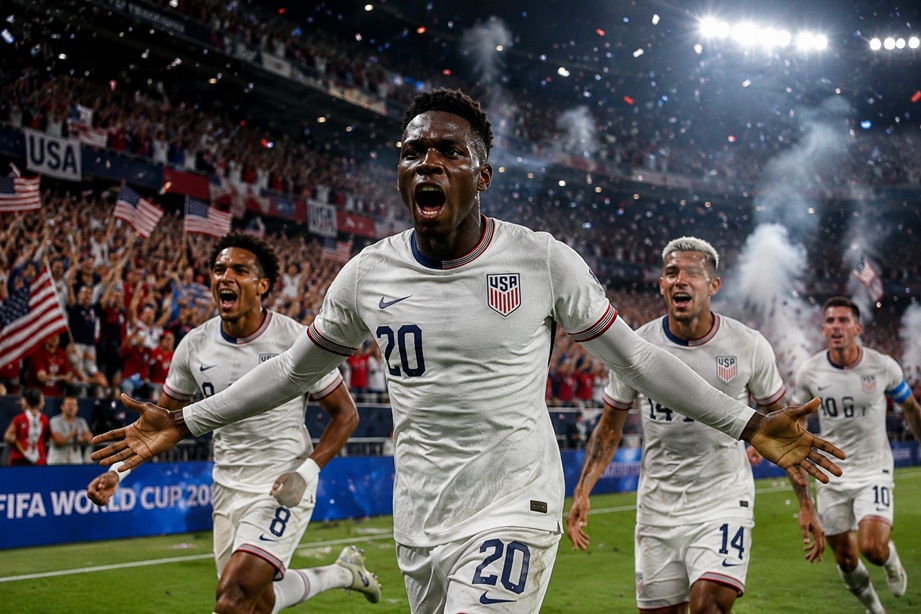
The Balogun Red Card incident has emerged as one of the key narratives outside the game during the 2026 FIFA World Cup. What started as a debated red card has grown into an international conversation involving football rules, legal perspectives, political focus, and the integrity of global athletics.
For fans in the United States, Balogun’s eligibility symbolized a renewed opportunity after what many viewed as an excessively harsh penalty. Conversely, for Belgium, the decision raised issues regarding balanced treatment under FIFA’s rules. For impartial observers, it showcased the difficulties faced by football’s governing entities when exceptional situations intersect with established tournament guidelines.
No matter where supporters align, one undeniable truth persists: the Balogun Red Card incident has ignited discussions that will endure well beyond the tournament’s final whistle. It has led to heightened examination of FIFA’s disciplinary policies, stimulated conversation regarding the extent of executive authority, and reminded the football community that choices made off the field sometimes overshadow on-field events.
As the World Cup advances, FIFA is expected to be under constant scrutiny. Every forthcoming disciplinary decision may now be assessed in light of this case, making the need for consistency and openness more crucial than ever. Whether the uproar will eventually result in modifications to FIFA’s regulations is yet to be determined, but its influence on public discourse has already been profoundly impactful.
In the coming years, football enthusiasts might recall this tournament not just for unforgettable goals and thrilling games, but also for the remarkable focus surrounding the Balogun Red Card incident and the broader issues it raised concerning governance, equity, and the relationship between sport and global dynamics.