

The timeline of cricket encounters between Bangladesh and Australia isn’t characterized by regular clashes. In fact, the rarity of these matches is what renders many of them significant. Initially, Australia participated in most early face-offs as one of the most powerful teams in world cricket, while Bangladesh dedicated years to asserting themselves against the top international teams. Nonetheless, this rivalry has yielded surprising outcomes that shifted perceptions of cricket in Bangladesh.
From Mohammad Ashraful’s iconic century in Cardiff in 2005 to Bangladesh’s maiden Test win against Australia in 2017 and the extraordinary T20I series in 2021, the Tigers consistently proved that a team’s reputation does not solely dictate the outcome of this rivalry.
An additional chapter was added in 2026. Australia returned to Bangladesh for a series of six white-ball matches before Bangladesh aimed to head to northern Australia for two Test matches in August. This busy schedule transformed what had once been a sporadic matchup into one of the more compelling international rivalries of 2026.
How the Bangladesh-Australia Story Developed
In the initial phases of the Bangladesh versus Australia cricket timeline, Australia clearly dominated. Bangladesh was still getting accustomed to the rigors of international cricket, while Australia boasted top-tier players with vast experience across different formats.
The disparity was especially evident in the early Test and ODI confrontations. Australia anticipated victory; Bangladesh frequently gauged their improvement through minor accomplishments in the matches.
Over time, that dynamic began to shift.
Bangladesh became significantly more competitive at home, where slower pitches enabled their spinners and slower bowlers to affect the outcomes of games. Their batting lineup also evolved to include additional depth, allowing them to manage pressure rather than merely endure it.
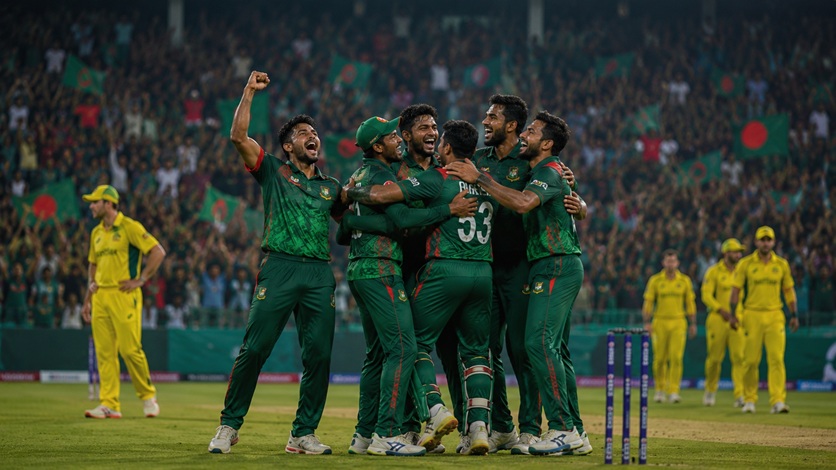
This evolution has led to a unique rivalry: although Australia maintains a superior historical record overall, several of Bangladesh’s wins are among the most significant in the nation’s cricketing journey.
2005 Cardiff: The Result Nobody Expected
No account of these teams can commence anywhere else.
On June 18, 2005, Bangladesh played against Australia at Sophia Gardens in Cardiff as part of the NatWest Series. Australia was a world champion and one of the most formidable ODI teams of their time.
They posted a score of 249 runs for 5 wickets.
To Bangladesh, that appeared to be a challenging target. Then, Mohammad Ashraful delivered a performance that changed the course of the match.
Ashraful scored a century, inspiring Bangladesh with confidence rather than simply aiming for respectability. Habibul Bashar assisted him during a pivotal stage, and the lower order ultimately achieved a remarkable chase. Bangladesh reached a total of 250 runs for 5 wickets, winning by five wickets with four balls to spare.
Why Cardiff Still Matters
Cardiff is still viewed as a pivotal moment in the Bangladesh vs Australia cricket history because the outcome held greater significance than just earning two points in a competition.
- Bangladesh had triumphed over potentially the most formidable team in international cricket.
It illustrated that their finest performances could challenge elite rivals and provided fans with a memorable landmark victory. For Australia, it became one of the most surprising losses during their dominant phase.
For Bangladesh, it stood as evidence of what was achievable.
Australia’s Dominance on Bangladesh Tours
One notable upset did not quickly alter the equilibrium between the teams.
Australia visited Bangladesh in 2006 and showcased their dominance throughout the series. When they returned for an ODI series in 2011, Australia achieved a clean sweep of 3-0 in Dhaka.
The 2011 tour became notably significant once again in 2026, as Australia had not participated in another men’s ODI series against Bangladesh for a span of 15 years.
In those early years, Australia had the capability to maintain control over extended match durations. While Bangladesh could deliver exceptional individual performances, maintaining consistent pressure against Australia for an entire series proved to be significantly tougher.
By the middle of the following decade, though, Bangladesh had turned into a vastly different challenge when competing at home.
2017: Bangladesh Secures Their First Test Victory Over Australia
The Test series of 2017 marked a pivotal moment in the cricket history between Bangladesh and Australia.
The initial Test held in Dhaka was intense from start to finish. Bangladesh recorded 260 runs in their first innings and limited Australia to 217 runs. They followed up with 221 in their second innings, setting Australia a target of 265 runs.
Australia put forth a valiant effort, yet Bangladesh maintained relentless pressure.
In the end, Australia was bowled out for 244 runs, granting Bangladesh a remarkable victory by 20 runs. This triumph marked Bangladesh’s inaugural Test win against Australia.
Australia made a strong comeback in Chattogram. Although Bangladesh scored 305 runs, Australia responded with 377 runs and ultimately secured the match by seven wickets, resulting in the two-Test series finishing with a 1-1 score.
A Series That Altered Expectations
The implications of this series were deeper than just the final tally.
Bangladesh demonstrated their capability to compete with Australia across five days, not relying solely on an exceptional performance in limited-overs cricket. Home advantage had transformed into a real asset, and Bangladesh cultivated the patience necessary to build and take advantage of pressure.
Thus, a 1-1 outcome was perceived as a significant message.
2021 T20Is: Bangladesh Takes Charge
Four years later, another shift occurred.
Australia toured Dhaka for a set of five T20Is in August 2021. Rather than Australia asserting themselves, Bangladesh took control of the series, winning by a score of 4-1. This result stands out as one of Bangladesh’s notable achievements in bilateral T20I competitions.
The final match concluded emphatically. Bangladesh defended a total of 122/8 by bowling Australia out for just 62 runs, resulting in a 60-run victory.
This outcome illustrated how formidable Bangladesh could be when the conditions favored their bowling lineup.
For those following the cricket history between Bangladesh and Australia, the 2021 series marked a transition where winning against Australia at home no longer appeared to be a rare occurrence.
Australia Responds at the 2021 T20 World Cup
There was a brief pause for Bangladesh to revel in their success before Australia reacted on the international stage.
During the 2021 ICC Men’s T20 World Cup, Bangladesh was bowled out for a mere 73 runs. Australia swiftly chased down the target, finishing at 78/2 to win by eight wickets.
The difference was striking.
Bangladesh had shown dominance in their home series just months prior, yet Australia appeared to be entirely transformed in tournament conditions. This highlighted a significant aspect of their rivalry: the venue and conditions can greatly shift the competitive landscape.
Australia ultimately won that T20 World Cup, making their comeback even more impactful.
2024 T20 World Cup Encounter
The two teams met once more during the Super Eight phase of the 2024 T20 World Cup.
Bangladesh accumulated a score of 140/8 prior to rain impacting Australia’s pursuit. When the match concluded, Australia stood at 100/2, resulting in a 28-run win based on the DLS formula.
This outcome emphasized Australia’s superior performance against Bangladesh in significant ICC competitions.
In bilateral matches on familiar grounds, Bangladesh has frequently presented more challenges to Australia than in international tournaments, where Australia’s experience has typically provided a notable edge.
2026 ODI Series Yields Another Milestone for Bangladesh
The cricketing history between Bangladesh and Australia took a fascinating turn in June 2026, as Australia came back for a series of three ODIs in Dhaka and three T20Is in Chattogram.
The first ODI produced an instant shock.
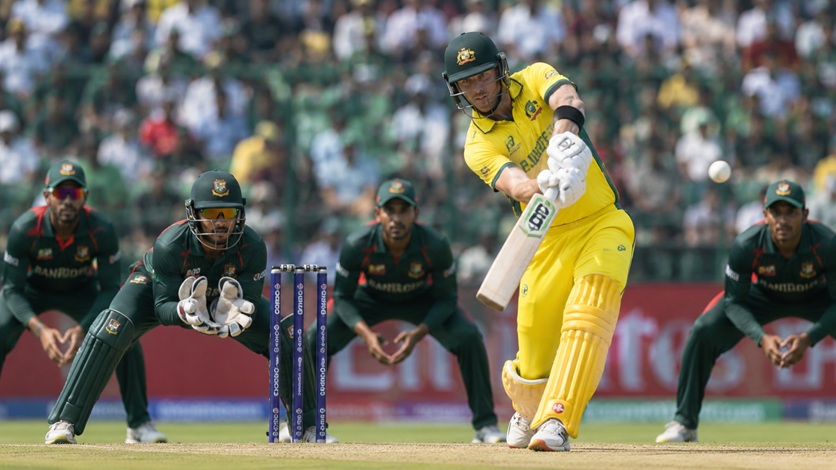
Bangladesh scored 284/8, led by Mosaddek Hossain’s not out 86 and Najmul Hossain Shanto’s 67. Australia’s adjusted chase faltered, leading to an 86-run DLS victory for Bangladesh.
Following this, Bangladesh triumphed in the second ODI by five wickets using the DLS method, thus clinching the series prior to the last game. Australia managed to prevent a complete sweep with a nail-biting one-wicket victory in the third ODI, successfully chasing down 275 with just three balls left.
Cooper Connolly’s 149 was crucial for that Australian rescue, while Shoriful Islam took six wickets for Bangladesh.
Consequently, Bangladesh concluded the ODI series with a 2-1 win, marking another significant achievement against a team that has historically been dominant in the sport.
Australia Answer with a T20I Sweep
Australia responded swiftly.
The T20I series shifted to Chattogram, where the visiting team secured victory in all three encounters.
In the initial T20I, Australia triumphed by four wickets, followed by a second win by seven runs, concluding the sweep with a seven-wicket win on June 21. After this series, the T20I record between the teams stood at 11 matches, with Australia claiming seven wins and Bangladesh four.
This reversal added an intriguing episode to the ongoing cricket history between Bangladesh and Australia. Bangladesh had taken the ODI series 2-1, only for Australia to respond with a clean sweep in the T20Is at 3-0.
This illustrated that success in one format does not guarantee similar results in another.
August 2026 Tests Bring the Rivalry to Australia
The most significant remaining segment of 2026 is slated for August.
Bangladesh is set to engage in two Test matches in Australia, commencing with the first on August 13 at Marrara Stadium in Darwin, followed by the second on August 22 at Great Barrier Reef Arena in Mackay. Cricket Australia strategically scheduled the series in northern Australia, establishing an unconventional winter Test timeframe.
These matches also hold significance in the World Test Championship.
Australia has named a squad that includes the returning Pat Cummins, Josh Hazlewood, and Nathan Lyon, greatly enhancing their bowling resources.
Why the Conditions Matter
The impending Tests introduce a new facet to the cricket narrative between Bangladesh and Australia, as Bangladesh’s most notable Test victory over Australia occurred on their home turf.
Competing in Darwin and Mackay presents a different challenge altogether.
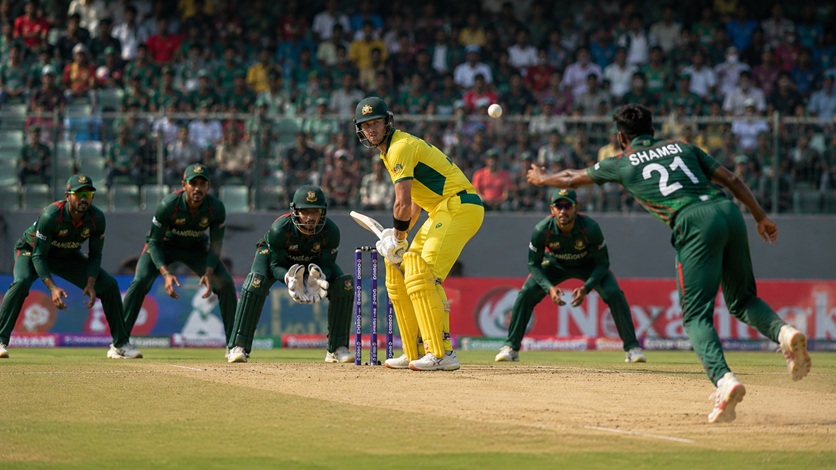
The Bangladeshi batsmen will need to contend with Australian pace and bounce, while their bowlers will have to devise strategies to secure 20 wickets in conditions typically favorable to spin bowling, as seen in home Tests.
For Australia, failing to deliver a strong showing would generate pressure due to their familiarity with home environments.
Players Who Shaped This Matchup
Numerous players are integral to the narrative shared between these teams.
Mohammad Ashraful owns one of the most memorable individual performances for Bangladesh due to his century in Cardiff. Shakib Al Hasan has been pivotal to Bangladesh’s emergence as a competitive side in both Tests and limited-overs formats, while the nation’s contemporary bowling line-ups have introduced increased diversity.
The 2026 cohort is forging its own legacy. Mosaddek Hossain’s unbeaten 86 played a significant role in clinching the first ODI, and Nahid Rana captured four wickets in that encounter. Meanwhile, Cooper Connolly’s exceptional 149 salvaged Australia’s position in the third ODI.
These instances illustrate why the cricket history between Bangladesh and Australia transcends mere win-loss records. Certain matches have seen individual performances that altered the course of series and sometimes reshaped the overall view of an entire team.
What Makes Bangladesh vs Australia Different?
This rivalry does not follow the traditional template based on yearly series or geographical closeness.
Its allure stems from contrast.
Australia embodies one of the most accomplished international cricket frameworks. The journey of Bangladesh reflects a path of steady progression, tough lessons, and significant victories against established opponents.
Key milestones include:
- Bangladesh’s five-wicket upset in Cardiff in 2005
- The landmark 20-run victory in a Test match in Dhaka in 2017
- Bangladesh’s 4-1 triumph in the T20I series in 2021
- Australia’s strong recoveries in ICC tournaments
- Bangladesh’s victory in the ODI series, concluding at 2-1 in June 2026
- Australia’s clean sweep of 3-0 in T20I during the same 2026 tour
- The forthcoming two-Test series in the northern part of Australia, set for August 2026
Each segment narrates a somewhat distinct account.
From Outsiders to True Contenders
The most fascinating aspect of the cricket history between Bangladesh and Australia is the evolution of Bangladesh.
Initial encounters primarily focused on whether Bangladesh could hold their own. Recent matchups, however, now question whether Australia can adjust swiftly when Bangladesh has favorable conditions and momentum.
Australia continues to hold significant expertise, depth, and a victorious tradition. Their capability to bounce back from tough situations was evident again in June 2026 when they recovered from an ODI series loss to achieve a clean sweep in T20Is.
On the other hand, Bangladesh no longer needs a memorable day in Cardiff to showcase their ability to defeat Australia. They now boast prominent victories in ODI, Test, and T20I formats.
This development makes the upcoming phase especially intriguing.
The cricket history between Bangladesh and Australia has shifted from initial predictable matchups to a contest that can yield genuine surprises. The Cardiff match in 2005 instilled confidence, Dhaka in 2017 established Test credibility, the 2021 T20I series indicated home superiority, and the 2026 one-day matches highlighted how rapidly momentum can change.
As Bangladesh prepares to visit Australia for two Tests in August 2026, the narrative is ongoing. If history provides any insight, it is that while Australia may be seen as the favorites, Bangladesh has consistently demonstrated that this matchup should never be regarded as a mere formality.
Conclusion
The cricket rivalry between Bangladesh and Australia illustrates its transformation from primarily unbalanced matches to a significantly more competitive international confrontation. Although Australia has historically been the stronger cricketing nation, Bangladesh has produced numerous memorable instances that demonstrate that rankings and reputation do not necessarily dictate the outcome.
Starting with the remarkable ODI triumph in Cardiff in 2005, followed by Bangladesh’s groundbreaking Test victory in Dhaka in 2017 and their notable T20I series win in 2021, the Tigers have consistently tested Australia’s supremacy. These encounters have also underscored Bangladesh’s rising self-assurance, particularly in their own home environment.
The upcoming competitions in 2026 will contribute yet another vital chapter to this intriguing cricket narrative. With both sides featuring skilled batsmen, diverse bowling lineups, and players capable of swiftly altering the course of a match, future contests are likely to remain thrilling.
In essence, the narrative of Bangladesh and Australia transcends mere victories and defeats. It signifies Bangladesh’s emergence as a formidable international team and Australia’s ongoing struggle to uphold their high standards against a progressively formidable adversary.