
Few international cricket rivalries can change character as swiftly as that of Pakistan and Australia. On a quick pitch in Australia, batsmen from Pakistan face a harsh challenge from pace and bounce. Shift the venue to Pakistan or the UAE, and spin, reverse swing, and patience become pivotal elements of the contest.
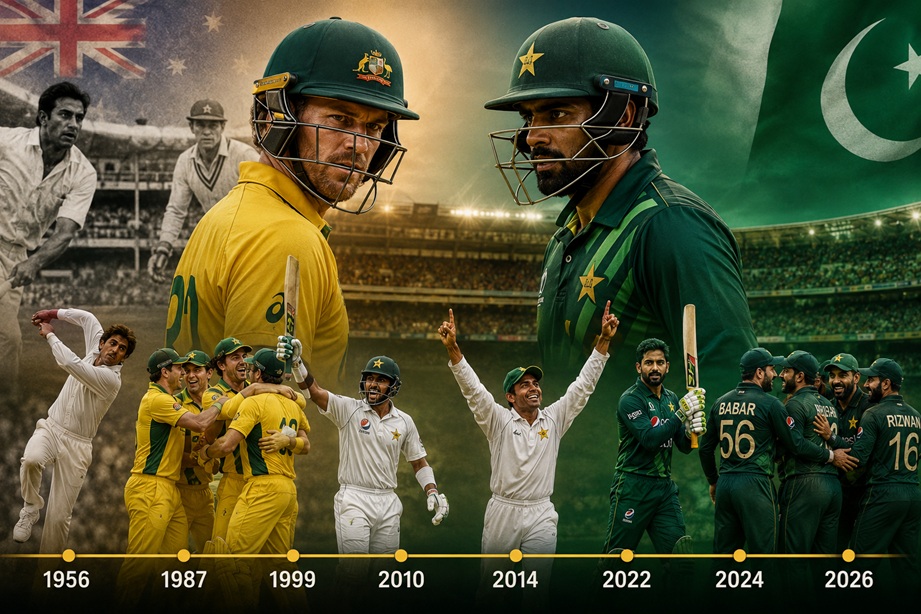
This disparity has transformed the Pakistan versus Australia cricket timeline into an intriguing saga that spans around seven decades. It encompasses Fazal Mahmood’s remarkable performance against Australia in Karachi, heartbreaking World Cup moments for Pakistan, dominant phases for Australia, Pakistan’s resurgence in the UAE, and a significant change in white-ball dynamics in the 2020s.
The rivalry commenced in Test cricket in 1956, well before the advent of colored attire, T20 formats, or franchise leagues that have altered the game. By 2026, both teams were still discovering new avenues to maintain the relevance of their clashes, including two bilateral series hosted in Pakistan that year.
This is more than just a compilation of results. It narrates the evolution of the balance between two distinctly different cricketing cultures over time.
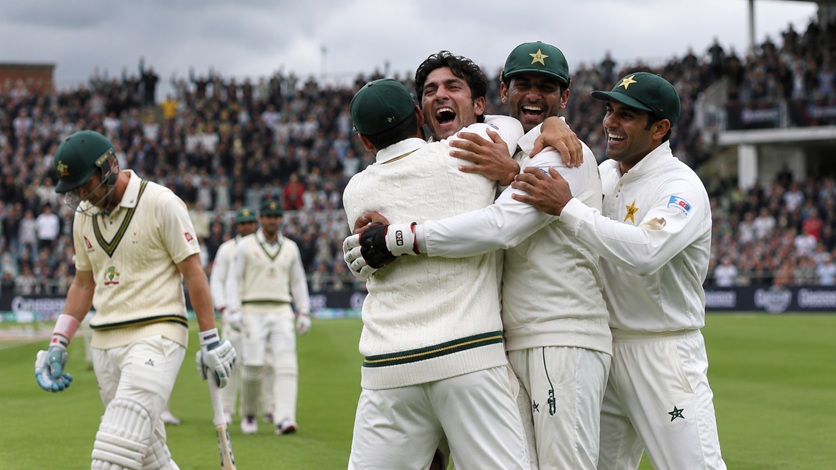
1956: Pakistan Makes an Impressive Opening Statement
The timeline of the Pakistan versus Australia cricket rivalry begins with an event that instantly defined the matchup.
Australia engaged in their inaugural Test in Pakistan at the National Stadium in Karachi during October 1956. Although the visiting team boasted a strong squad, Pakistan’s bowlers created conditions that were completely alien to them.
Fazal Mahmood was the standout performer.
- Australia was bowled out for a mere 80 runs in their first innings, with Fazal claiming 6 wickets for 34 runs.
- In the second innings, he took 7 wickets for 80 runs, bringing his total to 13 wickets in the match.
- As a result, Pakistan secured victory by nine wickets.
For a relatively new Test-playing nation, triumphing over Australia in the inaugural Test encounter was a significant declaration.
Distinct Conditions, Distinct Cricket
These initial matches set a precedent that would endure for decades. Australia typically thrived on pace, bounce, and familiarity on home grounds, while Pakistan could transform Asian conditions into a challenging technical test.
Consequently, the rivalry became as much about adjustments as it was about skill.
1960s to 1980s: A Rivalry Begins to Take Form
As time progressed, clashes between Pakistan and Australia became increasingly competitive as Pakistan churned out generations of exceptional cricketers.
Figures like Hanif Mohammad, Javed Miandad, Imran Khan, and later, Wasim Akram equipped Pakistan with unique strategies to take on Australia. On the other side, Australia consistently produced strong batting lineups and fierce fast-bowling units.
The emergence of One Day International cricket introduced a new layer. Pakistan’s unpredictability was well-suited for the shortened format, while Australia’s methodical style made them a challenging opponent under tournament pressure.
This contrast led to one of the early, distressing World Cup memories for Pakistan.
1987 World Cup Semi-Final Marks a Turning Point
Any comprehensive Pakistan versus Australia cricket timeline must acknowledge the events in Lahore on November 4, 1987.
Co-hosting the World Cup, Pakistan had a realistic chance of reaching the final, with Australia blocking their path at Gaddafi Stadium.
- Australia managed to score 267 runs for eight wickets after their full 50 overs.
- David Boon contributed 65 runs, and Steve Waugh’s not-out score of 32 provided essential runs towards the end of the innings.
- Pakistan battled fiercely in reply but was all out for 249 runs.
- Australia emerged victorious by an 18-run margin, moving on to the final match.
- Craig McDermott received the Player of the Match award.
For Australian cricket, this victory represented yet another move towards achieving a significant World Cup win. Conversely, for fans of Pakistan, this event became one of the enduring “what if?” scenarios in the history of the rivalry.
The 1990s: Exceptional Talents and Australian Dominance
The 1990s witnessed remarkable players from both nations.
Pakistan had remarkable athletes such as Wasim Akram, Waqar Younis, Inzamam-ul-Haq, Saeed Anwar, and Mushtaq Ahmed in their lineup. Australia was cultivating a new generation of cricket talent with Mark Taylor, Steve Waugh, Glenn McGrath, and Shane Warne.
The tour by Australia in 1998 was particularly important. Their 1-0 victory in the Test series marked the end of a 39-year wait for a series win on Pakistani soil. Mark Taylor’s unbeaten score of 334 in Peshawar turned out to be one of the most noteworthy individual achievements of the tour.
However, an even more significant clash was on the horizon the following year.
1999 World Cup Final: Pakistan’s Heartbreak at Lord’s
The cricket rivalry between Pakistan and Australia escalated to the pinnacle of One Day Internationals on 20 June 1999.
Pakistan entered the World Cup final at Lord’s with immense talent and had previously defeated Australia during the group matches. The final, however, unfolded in a starkly different manner.
- Australia’s bowlers dismantled Pakistan for a mere 132 runs.
- Shane Warne delivered a pivotal bowling performance, enabling Australia to chase down the modest total without difficulty, securing their second World Cup title.
For Pakistan, this day stands out as an extremely disappointing chapter in their World Cup saga. For Australia, it signaled the onset of a remarkable era of global cricket supremacy.
The outcome significantly altered the mental aspect of their rivalry, leading to Australia becoming the team that Pakistan needed to conquer in major tournaments instead of merely another opponent in bilateral series.
The 2000s: Australia Set the Standard
Throughout much of the 2000s, Australia established themselves as the gold standard in international cricket.
While Pakistan occasionally displayed moments of brilliance and exceptional individual performances, achieving consistency against Australia’s unyielding teams proved to be quite challenging.
The Test series of 2002-03 highlighted this disparity.
- Australia swept Pakistan with a 3-0 victory in a series that took place under neutral conditions.
- Specifically, during the Sharjah Test, Pakistan was bundled out for scores of 59 and 53 — among the lowest in their Test history.
Australia’s mix of solid batting, aggressive fast bowling, and top-tier fielding exploited Pakistan whenever their performance wavered.
Nonetheless, Pakistan’s potential to deliver surprises remained intact.
2010 Headingley: Pakistan Finally Achieves Victory
A particularly gratifying moment in the cricket history between Pakistan and Australia occurred away from both nations’ home grounds.
The Test series between Pakistan and Australia in 2010 took place in England. After an initial loss in the first Test at Lord’s, Pakistan rebounded at Headingley.
- Their bowlers restricted Australia to a low score, and Pakistan ultimately clinched a thrilling three-wicket victory.
- This win marked Pakistan’s first Test victory against Australia in almost 15 years, with young talent Mohammad Amir playing a crucial role throughout the match.
The win was significant as it demonstrated that, even amidst a challenging time for cricket in Pakistan, the tradition of fast bowling within the team still held the power to disrupt Australia.
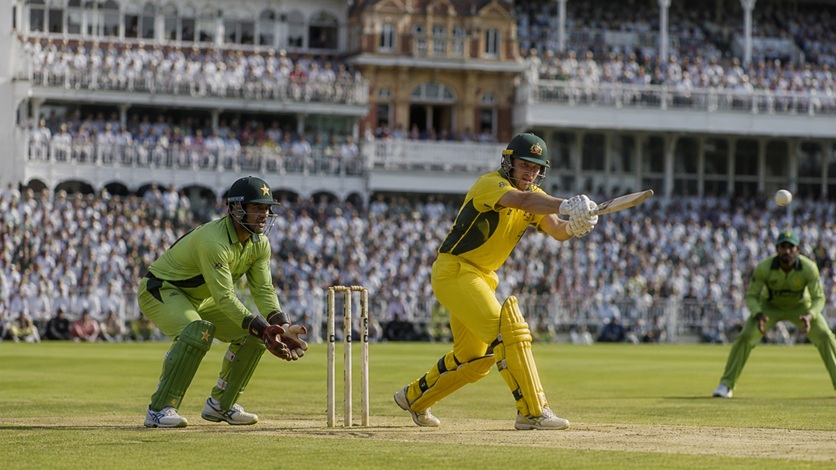
2014 UAE Series: Pakistan Turns the Tables
While the 2000s were predominantly Australian territory, the 2014 Test series in the UAE was decidedly dominated by Pakistan.
Pakistan achieved a clean sweep of Australia, winning 2-0 in Dubai and Abu Dhabi, marking their first Test series win against the Australians in two decades.
Younis Khan’s performance was exceptional, and significant contributions came from Azhar Ali, Ahmed Shehzad, and Sarfaraz Ahmed. Yasir Shah and Zulfiqar Babar took full advantage of the spin-friendly conditions.
Then, Misbah-ul-Haq delivered a remarkable display in Abu Dhabi. The Pakistan captain scored a century off just 56 balls, setting the record for the fastest Test hundred at that time.
Pakistan not only withstood Australia’s challenge; they effectively controlled the match.
Another UAE Success in 2018
Pakistan again managed to frustrate Australia in 2018.
- The initial Test in Dubai concluded in a thrilling draw, but the second Test was less competitive.
- Mohammad Abbas excelled with remarkable fast bowling, leading to a victory by 373 runs in Abu Dhabi as Pakistan clinched the two-match series 1-0.
This outcome highlighted a crucial aspect of their rivalry: defeating Pakistan in Asian conditions necessitated a vastly different skill set compared to prevailing against them in Australia.
2022: Australia Returns to Pakistan
The cricket encounters between Pakistan and Australia created another memorable chapter in 2022 with Australia visiting Pakistan for the first time in 24 years.
This visit was significant beyond just the outcomes. Australia’s return signified a critical moment for the revival of international cricket in Pakistan.
- The first two Tests resulted in draws before Australia triumphed in the Lahore Test, securing the series 1-0.
- The visiting team exhibited resilience throughout a challenging tour and managed to claim 20 wickets when it was most crucial.
Pakistan responded in the ODI series by winning 2-1, while Australia took the lone T20I at Gaddafi Stadium by three wickets. Consequently, the tour proved to be beneficial for both teams and reignited a rivalry on Pakistani soil that had been dormant for far too long.
2024: Pakistan Surprises Australia on Their Home Turf
A notable achievement for Pakistan occurred in November 2024.
Following a loss in the first ODI, Pakistan rebounded with two consecutive wins to clinch the three-match series 2-1. This marked Pakistan’s first ODI series triumph in Australia in 22 years.
The outcome was significant as it showcased Pakistan’s reliance on a traditional strength: exceptional fast bowling.
Under the guidance of Mohammad Rizwan, the visiting team consistently pressured Australia’s batting lineup and refused to let the opening setback overshadow the series.
This victory demonstrated a considerable shift in the competitive landscape of ODI cricket.
2026 T20I Series: Pakistan Completes a 3-0 Sweep over Australia
The contemporary cricket rivalry between Pakistan and Australia experienced a thrilling shift in early 2026.
Australia arrived in Lahore to compete in three T20Is on 29 January, 31 January, and 1 February, as both teams geared up for the ICC Men’s T20 World Cup 2026.
- Pakistan secured victory in the opening match by 22 runs, successfully defending a total of 168.
- Their spin bowling was crucial in limiting Australia’s ability to chase down the target.
The home team continued to dominate.
Pakistan achieved a clean sweep with a 3-0 victory over Australia by defeating them by 111 runs in the final T20I match. They set a target of 207 runs and managed to bowl out Australia for just 96 runs. Mohammad Nawaz delivered his best performance in his career with figures of 5 wickets for 18 runs, while Babar Azam and Saim Ayub both scored half-centuries.
This series was dominant and highlighted the potential threat posed by Pakistan’s spin-heavy lineup in their home environment.
2026 ODI Series Marks Another Triumph for Pakistan
Later in the year, Australia came back to Pakistan for a series of three ODIs, adding a new chapter to the cricket rivalry between Pakistan and Australia.
The matches took place in Rawalpindi and Lahore from the 30th of May to the 4th of June. The first ODI had special significance as it marked Pakistan’s 1,000th ODI match.
Ultimately, Pakistan triumphed in the series with a score of 2-1.
Per the PCB’s season review, this victory marked Pakistan’s third consecutive ODI series win against Australia, reflecting a significant shift in the balance of white-ball cricket between the two teams.
Combined with the earlier T20I clean sweep of 3-0, the success in ODIs made 2026 an exceptionally fruitful year for Pakistan against Australia at home.
Players Who Shaped Different Eras
A rivalry that has lasted for seventy years cannot be encapsulated by just a few individuals, yet certain players have continually influenced its most significant moments.
For Pakistan
For Pakistan, Fazal Mahmood set the benchmark in 1956. Subsequent generations brought forth Imran Khan’s captaincy, the fast bowling prowess of Wasim Akram and Waqar Younis, Younis Khan’s determination, Misbah-ul-Haq’s composed leadership, and the contemporary impact of Babar Azam, Shaheen Shah Afridi, and Mohammad Rizwan.
For Australia
On Australia’s side, well-known figures include Richie Benaud, Allan Border, Steve Waugh, Shane Warne, Glenn McGrath, Ricky Ponting, and the subsequent generations that followed.
What adds to the intrigue of this rivalry is that one team’s advantage does not always translate seamlessly across different countries or formats.
Why This Rivalry Remains Significant in 2026
The cricketing saga of Pakistan and Australia fundamentally revolves around adaptation.
- Australia has often appeared most formidable when their fast bowlers exploit bounce and their batsmen can play aggressively on pitches they know well.
- Pakistan has typically excelled when they can disrupt Australia’s rhythm with unpredictable pace bowling, reverse swing, or high-quality spin.
World Cups have introduced another dimension to the rivalry. The semi-final in 1987 and the final in 1999 are painful memories for Pakistan, while bilateral matches have featured several notable Pakistani victories.
Recently, outcomes have further intensified the rivalry. Pakistan’s ODI achievement in Australia in 2024 was succeeded by strong performances at home in 2026, demonstrating that past trends do not guarantee future results.
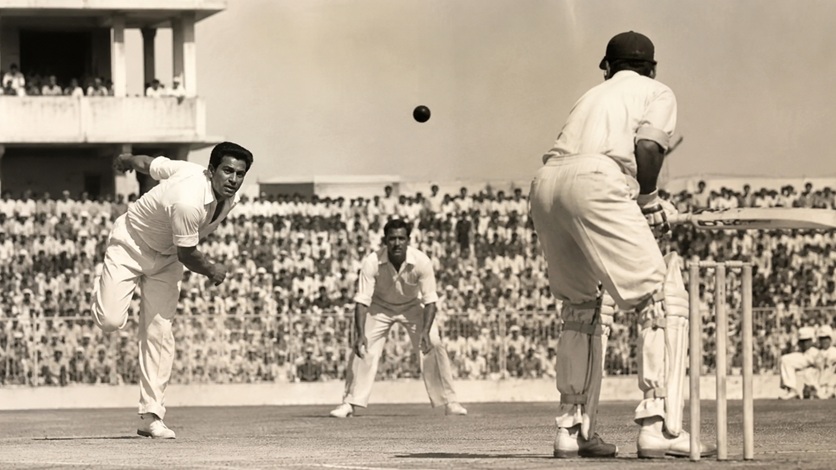
From Fazal Mahmood to the 2026 Cohort
Examining the entire cricket rivalry between Pakistan and Australia, the most remarkable aspect is the frequent reinvention of this rivalry.
It started with Fazal Mahmood claiming 13 wickets as Pakistan surprised Australia in Karachi back in 1956. It progressed through World Cup tensions in 1987 and 1999, Australia’s supremacy during the 2000s, Pakistan’s Test revival in the UAE, Australia’s landmark 2022 tour, and Pakistan’s increasingly impressive results in white-ball cricket in 2024 and 2026.
Australia’s reliability and winning mindset have led them to some of the rivalry’s most significant triumphs. Pakistan’s style, speed pedigree, and capability to adapt to advantageous situations have consistently ensured the competition stays unpredictable.
Seventy years after their initial Test encounter, that unpredictability continues to be the draw. Various formats present distinct strategic conflicts, fresh generations take the place of former legends, and yet another unforgettable chapter appears likely whenever Pakistan and Australia come together on the cricket pitch.
Conclusion
The history of cricket between Pakistan and Australia is not merely a series of scores and outcomes; it narrates a tale of shifting power dynamics, remarkable performances, and diverse styles of play. Beginning with Pakistan’s groundbreaking first Test win in Karachi in 1956, through Australia’s World Cup victories and Pakistan’s unforgettable resilience in the UAE, this rivalry has provided extraordinary moments through the years.
Pakistan and Australia’s Competitive Legacy
- Australia has typically maintained an upper hand through their reliability, assertive fast bowling, and triumphs in key ICC events.
- Conversely, Pakistan has consistently posed a threat with elite speed bowlers, spin options, and unpredictable game-changing performances.
- Their recent encounters in white-ball formats have injected new enthusiasm into this time-honored rivalry.
Pakistan vs Australia Rivalry as of 2026
As of 2026, both Pakistan and Australia continue to showcase their ability to deliver thrilling cricket across Tests, ODIs, and T20Is. With emerging talents on both teams, this rivalry is in a constant state of transformation while preserving the competitive spirit that has developed over many years.
Final Summary
In summary, the cricket timeline between Pakistan and Australia illustrates why this face-off remains one of the most intriguing events in the realm of international cricket—and its upcoming chapter holds the potential to be equally unforgettable.