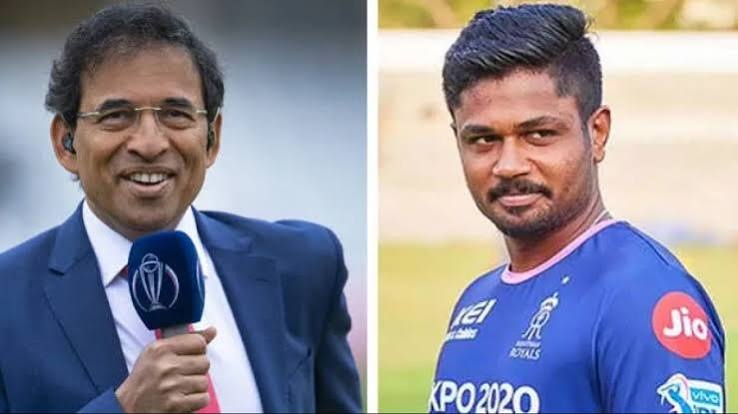

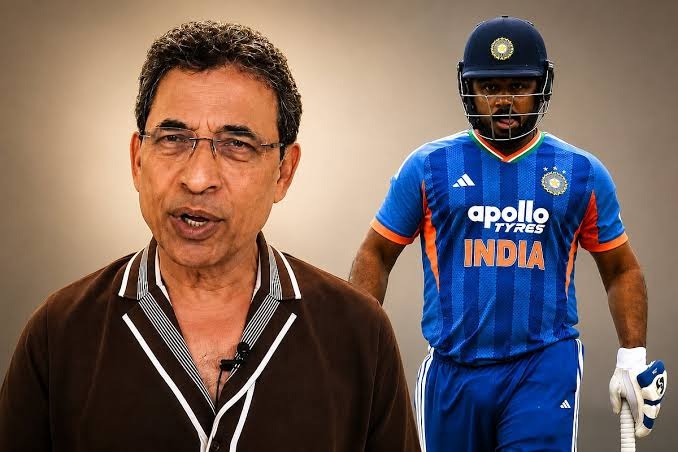
The exclusion of Sanju Samson from India’s T20I roster for the Zimbabwe tour has rapidly emerged as a major discussion point in Indian cricket. While reports from the selection process indicated that the wicketkeeper-batter had been “rested,” seasoned commentator Harsha Bhogle clearly disputed that rationale, insisting that the term should reflect the reality — a player being dropped.
His comments have ignited renewed conversations among fans, former players, and analysts regarding the clarity in team selection, the significance of supporting established players, and whether India is altering its strategy after their T20 World Cup triumph.
This discussion has transcended the situation of a single player. It has transformed into a wider dialogue concerning communication, consistency, and the level of assurance players feel while competing for a spot in one of the most competitive cricket teams globally.
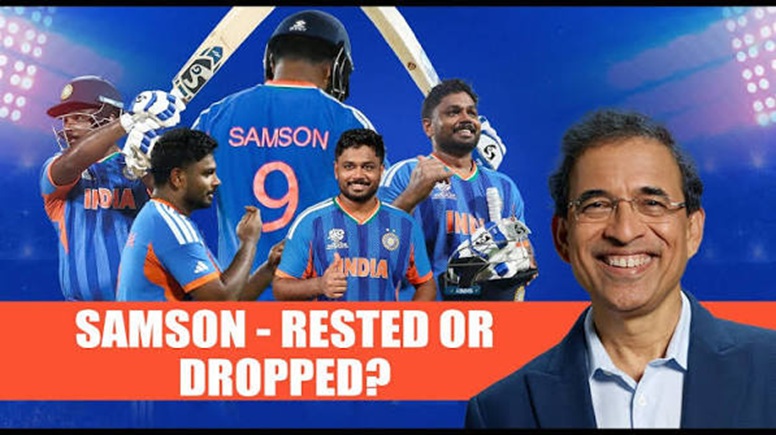
Reasons for Harsha Bhogle’s Disagreement with the “Rested” Terms
The term “rested” has become prevalent in contemporary cricket, frequently referring to players receiving a break due to excessive workloads, managing injuries, or enduring lengthy international schedules.
However, Harsha Bhogle contends that this characterization does not apply to Sanju Samson’s case.
In a discussion on his YouTube channel, Bhogle expressed his discontent with the circulated explanation, emphasizing that Samson had not been under an unusually heavy load. Rather, the wicketkeeper had already found himself excluded from India’s playing XI prior to being completely omitted from the Zimbabwe series.
Bhogle argued that labeling such choices as “resting” instead of recognizing a player has been cut can lead to unnecessary misunderstanding. He maintained that clear communication would serve both players and fans well.
This perspective quickly resonated on social media, where numerous supporters questioned whether the explanations for the selections should have been clearer rather than using softer language.
A Difficult Phase for Sanju Samson
Just a few months prior, Samson seemed to have solidified his position within India’s T20 strategy.
His performances during India’s successful T20 World Cup journey received ample acclaim, with the Kerala batter delivering several crucial innings under intense pressure. His ability to handle both spin and pace, adapting to varying match scenarios, made him a key middle-order player for India during the tournament.
Yet, the cricket landscape can shift swiftly.
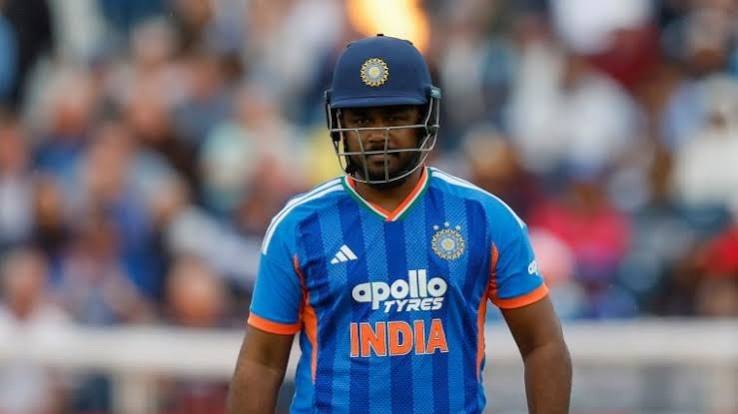
A brief period of unremarkable scores during the England series placed his status in doubt. Subsequently, he lost his spot in the playing XI and was ultimately excluded from the Zimbabwe squad.
While selectors reportedly aimed to give chances to younger talents, the rapidity of Samson’s decline surprised many observers.
The Larger Issue is More Than Just Selection
The conversation has evolved beyond whether Sanju Samson warranted selection.
Instead, analysts are questioning if India’s management is conveying mixed signals to the players.
Harsha Bhogle pointed out that if a player who recently had match-winning performances can be dropped from the squad following just a few poor games, every athlete might start to wonder about the stability of their own position.
That sense of unpredictability, as he stated, can impact morale within the team environment.
Top-tier athletes tend to excel more when they are assured of support during temporary periods of poor performance. Contemporary team management typically emphasizes sustained trust over immediate reactions to short-term performance dips.
Bhogle opines that this approach has played a crucial role in India’s recent achievements and should persist.
The Selectors’ Viewpoint
While Harsha Bhogle’s observations have sparked a lot of debates, it is also essential to grasp the rationale behind the selectors’ choices.
Reports have indicated that the Indian selection committee did not interpret Sanju Samson’s exclusion as a lasting removal. Instead, they aimed to rotate the team and create chances for rising talents in preparation for upcoming ICC tournaments. Insiders related to the selection process indicated that Samson had been “rested,” along with a few veteran players, to facilitate the younger cricketers’ international exposure.
This clarification, however, has sparked differing opinions.
Arguments Supporting the Decision
- India boasts significant depth in T20 cricket.
- Numerous stars from the IPL consistently shine.
- Selectors often encounter challenging decisions when forming a new team.
- Young players require international opportunities ahead of future ICC tournaments.
Arguments Against the Decision
- Samson had already lost his spot in the playing XI before being omitted from the squad.
- The explanation of being “rested” does not entirely align with his situation.
- Recent performances in the T20 World Cup suggested he deserved a longer run.
Why This Decision Is Significant Beyond a Single Series
The Indian team has embarked on a new phase of transition following their T20 World Cup triumph.
Management is focused on identifying players who can aid the team in the coming years while also acknowledging strong performances from domestic and IPL competitions. This inevitably heightens the competition for each role.
Nevertheless, Harsha Bhogle asserts that a stable selection policy is crucial as well.
If players are acknowledged after major tournaments yet swiftly lose their positions after a few poor displays, it might hinder their ability to play freely. The mental strain of international cricket can be tough, and uncertainty surrounding team selection can sometimes be as daunting as facing the opponents on the field.
Thus, the conversation goes beyond just Sanju Samson. It involves the broader environment that India aspires to cultivate within its team.
Competition for the Wicketkeeper’s Position
India currently boasts a remarkable selection of wicketkeeper-batters.
The players vying for limited T20 positions include:
- Sanju Samson
- Ishan Kishan
- Prabhsimran Singh
- Dhruv Jurel
- Jitesh Sharma
Each individual brings unique talents to the table.
Some are naturally assertive power hitters, while others offer adaptability in the batting lineup or superior wicketkeeping skills. Since only one or two keepers can be included in the playing XI, every selection discussion becomes progressively more intricate.
This situation illustrates why even seasoned players occasionally find themselves omitted from the squad.
Former Players Contribute to the Discussion
Harsha Bhogle is not the only notable figure questioning this decision.
Former Indian spinner Ravichandran Ashwin also raised concerns regarding Samson’s exclusion, stating that the wicketkeeper had not been afforded fair treatment given his recent accomplishments. Ashwin highlighted that abrupt changes following a successful World Cup raise valid doubts about the consistency of India’s selection approach.
In the meantime, the head coach of India, Gautam Gambhir, sought to ease the escalating doubts by asserting that Samson is still a crucial part of the team’s future strategies. Gambhir emphasized that not being included in one selection should not be viewed as a termination of the player’s international prospects and expressed confidence in his ability to bounce back effectively.
These contrasting perspectives highlight the intricacies involved in modern selection processes.
Social Media Responses are Intense
The discussion quickly gained momentum across various social media sites just hours after Bhogle’s comments.
Numerous fans contended that a player who had recently contributed significantly to India’s World Cup victory warranted a longer opportunity before being omitted from the team.
Others believed that the selectors should have simply admitted that Samson’s exclusion was due to his performance rather than framing it in another way.
There were also supporters who backed the management, noting that every thriving cricketing nation routinely rejuvenates its lineup by providing chances to emerging players.
The diverse views showcase the deep passion Indian cricket fans possess whenever there are selection disputes.
Bhogle’s Reference to Yashasvi Jaiswal
In his commentary, Harsha Bhogle also cited a recent instance within Indian cricket.
He brought up Yashasvi Jaiswal’s experience, noting that opportunities can vanish unexpectedly once another athlete excels.
Bhogle pointed out that this situation highlights the importance of transparent communication. Players must clearly comprehend their position, whether they are momentarily out of the lineup, being rotated, or truly omitted due to their performance.
In the absence of such transparency, confusion is bound to increase within the team.
Key Takeaways
- Harsha Bhogle believes Sanju Samson was dropped, not rested.
- The debate has expanded into a discussion about selection transparency and player confidence.
- Samson’s omission came shortly after notable contributions during India’s T20 World Cup campaign.
- The selectors reportedly viewed the move as part of a broader rotation strategy.
- Former players, including Ravichandran Ashwin, have questioned the consistency of the decision.
- The controversy reflects the intense competition for places in India’s T20 setup.
- Clear communication remains at the center of the ongoing debate.
What Lies Ahead for Sanju Samson
Even with the frustration surrounding his exclusion, Sanju Samson’s path in international cricket is not finished.
The Indian cricket scene has consistently demonstrated that impressive performances in domestic leagues, standout IPL seasons, and reliable international play can swiftly transform a player’s situation. As multiple bilateral series and ICC events approach, selectors are set to keep a watchful eye on athletes who may enhance India’s batting options and offer adaptability in the middle order.
For Samson, the immediate task is clear—get back on the pitch, consistently accumulate runs, and make his selection undeniable.
Key Strengths That Continue to Work in Samson’s Favor
- Ability to score quickly against fast bowlers
- Ability to score quickly against spinners
- Adaptability as a wicketkeeper-batsman
- Middle-order flexibility
- Proven experience at international level
His skills, the knack for quick scoring against both fast bowlers and spinners, as well as his adaptability as a wicketkeeper-batsman, continue to be significant advantages. Should he respond positively, this setback could become just one more episode in a career already marked by notable comebacks.
Why the Debate Matters for Indian Cricket
Discussions over selections are unavoidable in a nation rich in exceptional cricket talent.
However, Harsha Bhogle’s insights have redirected the focus from the exclusion of an individual player to a wider conversation regarding openness and communication within the national framework. His main point is that both fans and players are entitled to clear information. If a player is excluded due to poor form, being open about that choice is generally preferable to creating confusion with ambiguous language.
Simultaneously, selectors bear the duty of constructing teams with an eye to the future. Providing opportunities for rising talents is crucial for sustaining India’s strength across various formats. Striking a balance between immediate results and future planning is one of the most challenging tasks faced by any selection body.
Key Issues Highlighted by the Debate
- Selection transparency
- Player communication
- Consistency in decision-making
- Balancing current performance and future planning
- Providing opportunities to emerging players
- Maintaining player confidence
In the end, this situation underscores just how competitive the Indian cricket landscape has grown. Every position is hotly contested, and even those who have made substantial contributions might find themselves striving to regain their spot.
Final Thoughts
The debate surrounding Harsha Bhogle and Sanju Samson has emerged as a key focal point in India’s latest team announcement. Regardless of whether one aligns with Bhogle’s stance or backs the selectors’ decision-making, the controversy has revitalized significant inquiries about consistency, player support, and transparent communication.
For Sanju Samson, the narrative is still developing. One squad announcement is unlikely to determine the future of a player of his caliber, and historical trends suggest that dedicated players often receive additional chances through consistent excellence.
As India continues its preparations for forthcoming international matches, all attention will be directed at Samson’s performances and whether he is reinstated in the team. In the meantime, Bhogle’s remark—that the situation should be labeled as a player being dropped instead of rested—will keep discussions alive among cricket enthusiasts.
What to Watch Going Forward
- Sanju Samson’s upcoming performances
- Future Indian team announcements
- India’s evolving selection strategy
- Competition among wicketkeeper-batters
- The role of transparency in team communication
In the months ahead, it will become clear whether this debate is merely a fleeting topic or a crucial moment in shaping India’s selection strategy. One thing is definite: each future team announcement regarding Samson will attract even closer examination from supporters, analysts, and past players.