
The Madrid derby ranks among the most significant city rivalries in football, yet its narrative is far broader than simply a series of games. The encounters between Atlético Madrid and Real Madrid have evolved through various phases, ranging from the formative days of Spanish football and Copa del Rey finals to memorable nights in the Champions League. The competitive balance has oscillated frequently, but the fervor of emotions has seldom faded.
This timeline highlights key moments, renowned finals, European confrontations, and contemporary developments that have influenced the rivalry.
The Origin of the Rivalry
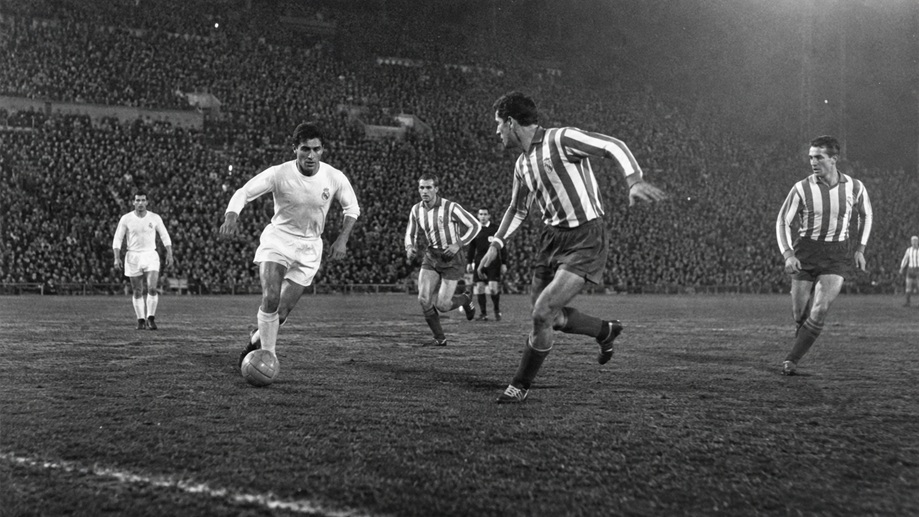
The origins of the Madrid derby trace back to the initial years of Spanish football. Both teams were founded in Madrid, leading to a natural rivalry for local support. As Spanish football grew, their encounters evolved beyond mere league games.
Real Madrid slowly gained a reputation for achieving sustained success both domestically and in Europe. On the other hand, Atlético cultivated its own rich heritage and became known for resilience in challenging situations. These differing stories contributed to the derby acquiring a unique identity.
1950s: The Birth of a European Rivalry
One of the first significant international chapters unfolded during the 1958-59 European Cup, where the teams faced off in the semi-finals. Atlético took the lead in the first leg, winning 1-0. Real Madrid countered effectively in the second leg, claiming a 2-1 victory, which resulted in a replay that Real eventually won.
UEFA’s records indicate that the meetings in 1959 were among the earliest European contests between these teams. This matchup set a precedent that would become common: Atlético could challenge Real fiercely, but Real often managed to find a way to succeed in Europe.
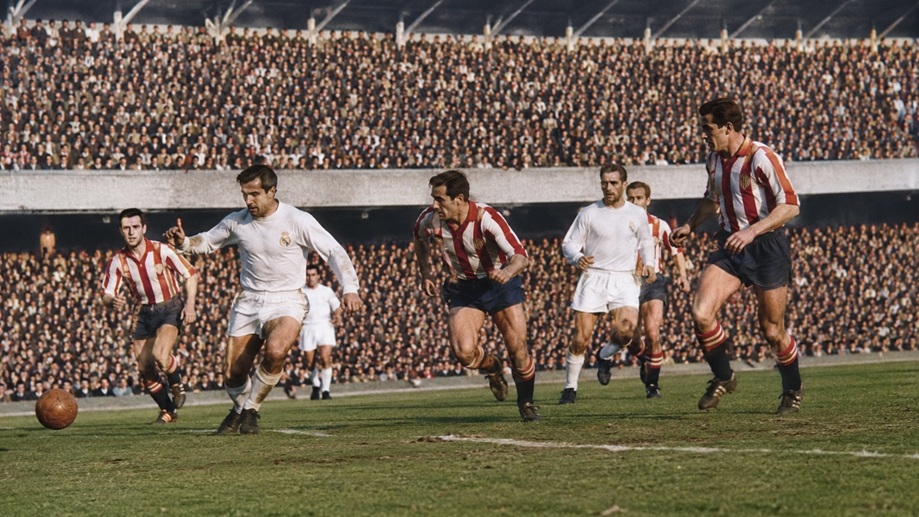
The Copa del Rey Finals of 1960 and 1961
A significant turning point in the rivalry occurred with consecutive Copa del Rey finals.
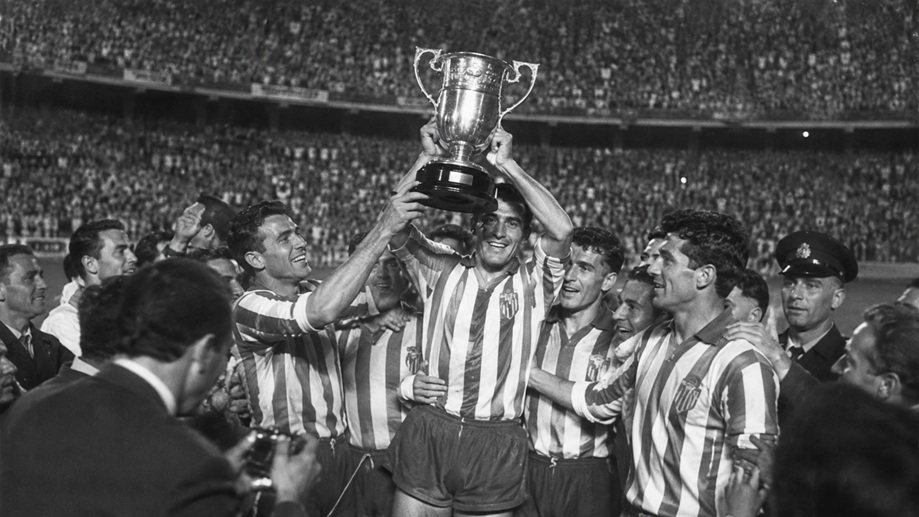
In 1960, Atlético triumphed over Real Madrid with a score of 3-1 in the final. This was an important victory as it prevented their city rivals from claiming another major trophy, demonstrating that the derby could have implications for titles at the highest domestic level.
The following year, Atlético replicated this success, managing to win the 1961 final by 3-2. These two back-to-back cup triumphs added an essential psychological element to the rivalry, showing that Atlético could overcome Real when a trophy was on the line.
1970s: Another Challenge on the European Stage
The teams clashed once more in the European Cup during the 1973-74 season, with a spot in the final on the line. Although Real Madrid had already built a significant European reputation, Atlético put forth a formidable challenge.
The semi-final period differed from the current Champions League format, but the stakes were similar: two teams from the same city vying for dominance on a continental level. UEFA’s historical documents note Atlético’s successful journey to the 1973-74 European Cup final.
Ultimately, Atlético was defeated in the final by Bayern Munich after a replay, but their continental success solidified their status as a formidable contender rather than just a local rival to Real.
The Extended Pause Before the Modern Resurgence
For an extended period, the derby maintained its intensity domestically but lacked the same level of continental intrigue. Real Madrid continued to accumulate major trophies, while Atlético faced phases of restructuring, promotion, and renewed aspirations.
The competition transformed significantly when Diego Simeone took charge as the head coach of Atlético in 2011. Under his guidance, the team adopted a disciplined and aggressive approach, making the derby less predictable.
The final of the 2013 Copa del Rey marked a crucial turning point. Atlético triumphed over Real Madrid with a score of 2-1 following extra time at the Santiago Bernabéu Stadium. This win marked the end of Atlético’s lengthy wait for a derby victory and secured a trophy within Real’s own venue. It also symbolized the beginning of a new era of competition. Current historical accounts recognize the 2013 final as Atlético’s latest victory in the Copa del Rey against Real.
2014 Champions League Final: The Most Famous Derby
The saga of Atlético Madrid and Real Madrid escalated further during the 2013-14 Champions League final held in Lisbon.
Atlético seemed on the verge of clinching the European title after Diego Godín scored the opening goal. However, Real Madrid managed to level the score with a goal from Sergio Ramos deep into stoppage time, which drastically altered the course of the match.
Real Madrid dominated during the extra period and ultimately secured a 4-1 victory. Goals from Gareth Bale, Marcelo, and Cristiano Ronaldo followed Ramos’ equalizer, granting Real their legendary La Décima and leaving Atlético with one of their most heartbreaking losses.
This match transcended being just a Champions League final. It ushered in a new chapter in the European rivalry between the two clubs and set the stage for another encounter two years later. UEFA rates this final as one of the significant Champions League clashes between the teams.
2014-15: Quarter-Final Pressure
The subsequent season of the Champions League led to another European clash. Atlético and Real faced off in the quarter-finals.
The initial leg at Atlético’s home ground concluded in a 0-0 draw, keeping the stakes high. In the return leg, Javier Hernández scored the crucial goal, allowing Real to win 1-0 and progress.
The outcome demonstrated the tactical nature the derby had come to embody. Atlético’s solid defensive structure complicated scoring, while Real’s individual skill ultimately made the difference.
2016 Champions League Final: Penalties Decide It
The rivalry between Atlético Madrid and Real Madrid culminated in another Champions League final in 2016, now in Milan.
Sergio Ramos put Real ahead, but Atlético responded with an equalizer from Yannick Carrasco. With neither team able to score during extra time, the match was decided by a penalty shootout.
Real Madrid emerged victorious in the shootout with a score of 5-3. The pivotal moment was Juanfran’s missed penalty, while Cristiano Ronaldo converted the final kick.
According to UEFA’s records, the final result is noted as a 1-1 tie followed by Real’s 5-3 win in the shootout.
For Atlético, this represented yet another heartbreaking defeat in Europe. For Real Madrid, it added another remarkable chapter to their illustrious record in the Champions League.
2017: Real Madrid Secures Another European Derby Victory
The competition did not end there. During the 2016-17 season, the teams faced off in the Champions League semi-finals.
Real Madrid triumphed in the first match with a score of 3-0 at the Bernabéu, where Cristiano Ronaldo achieved a hat-trick. In the subsequent game, Atlético responded with a 2-1 win, but Real advanced with an aggregate score of 4-2.
Historical data from UEFA verifies the semi-final matchup and the progression of Real Madrid.
This outcome further solidified Real’s impressive European record against Atlético and marked the completion of four straight seasons in which the teams confronted each other in the Champions League.
2018 UEFA Super Cup: Atlético Makes a Comeback
One of the most gratifying recent moments for Atlético occurred in the 2018 UEFA Super Cup.
The encounter in Tallinn concluded with a 4-2 score in favor of Atlético after extra time. Diego Costa netted two goals, while Saúl Ñíguez and Koke also added to the tally. Real had claimed the Champions League title just months prior, heightening the significance of Atlético’s win.
UEFA recognizes the 4-2 result as a pivotal turnaround in the European rivalry.
Unlike previous Champions League finals, this occasion did not subject Atlético to additional heartbreak or a penalty shootout. They secured the trophy by directly defeating their city rivals.
The Simeone Era Transforms the Derby
The rivalry between Atlético Madrid and Real Madrid during Simeone’s tenure became significantly more competitive than in the past.
Atlético achieved vital victories in league and cup competitions, while Real maintained its ability to excel in European tournaments. Matches evolved into tactical duels characterized by Atlético’s solid defensive organization contrasting Real’s offensive prowess.
This blend of tactical diligence, top-tier attackers, and emotional intensity helped establish the fixture as one of the most recognizable derbies in Europe.
2020s: The Rivalry Continues to Develop
The contemporary saga of Atlético Madrid facing Real Madrid remains filled with tightly contested matches. Atlético has stayed competitive in La Liga, while Real continues its pursuit of both domestic and European championships.
The knockout stage of the Champions League in 2024-25 added another thrilling chapter to the rivalry. Real claimed the first leg with a 2-1 scoreline, but Atlético countered with a 1-0 victory in the return leg, thanks to an early goal from Conor Gallagher.
The aggregate concluded at 2-2, leading the match to go to penalties. Real ultimately prevailed 4-2 after Julián Alvarez’s penalty was disallowed due to a double touch, and Antonio Rüdiger successfully converted the final penalty.
The current head-to-head statistics from UEFA regarding their Champions League encounters show Real Madrid with six wins, Atlético with three, and two matches resulting in draws, with Real scoring 16 times compared to Atlético’s nine in these contests.
Why the Derby Remains Significant
The importance of the Atlético Madrid versus Real Madrid rivalry comes from its continual evolution while preserving its core essence. Real embodies European supremacy and international prominence; Atlético embodies resilience, tactical acumen, and deep-rooted emotional ties. Even a league fixture often resembles a knockout competition.
The rivalry has also transcended generations. Icons like Alfredo Di Stéfano, Francisco Gento, Fernando Torres, Cristiano Ronaldo, Sergio Ramos, Diego Godín, and Antoine Griezmann have all played vital roles in different phases of this narrative.
A Rivalry Characterized by Major Moments
Reflecting on the timeline of Atlético Madrid versus Real Madrid, numerous events stand out significantly:
- The European Cup semi-final in 1959 marked the beginning of their rivalry on a broader, continental level.
- Atlético Madrid’s wins in the Copa del Rey during 1960 and 1961 demonstrated their ability to triumph over Real in championship matches.
- The Copa del Rey final in 2013 signified the resurgence of Atlético in recent years.
- Real Madrid’s comeback in the 2014 Champions League final created one of the most memorable nights in this derby’s history.
- Real claimed victory in the Champions League final of 2016 via penalty kicks.
- In the 2017 semi-finals, Real once again eliminated Atlético.
- Atlético retaliated by securing the UEFA Super Cup in 2018.
- The shootout in the Champions League of 2025 introduced yet another thrilling chapter to their European encounters.
This past reflects why the Madrid derby seldom feels routine. Its significance arises not just from physical proximity but from continuous confrontations over honors, pride, and status in Europe.
Conclusion
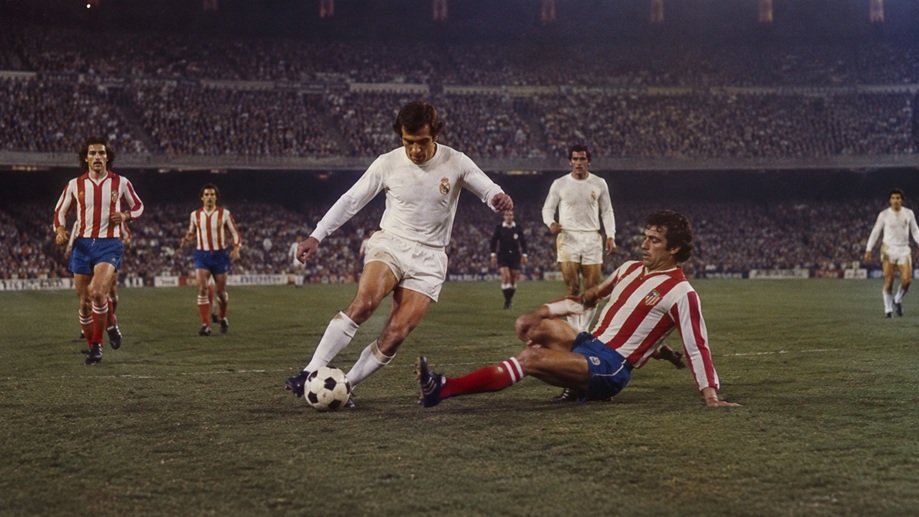
The Madrid derby is best appreciated as a narrative of evolving dominance instead of merely a compilation of outcomes. Typically, Real Madrid has been the more dominant force in European tournaments, but Atlético has consistently discovered ways to contest them, particularly in national competitions and intense derby matches.
From the 1959 European Cup to the shootout in the 2025 Champions League, this rivalry has showcased finals, dramatic comebacks, penalty shootouts, tactical encounters, and memorable figures. Its forthcoming chapter will, without a doubt, contribute another dimension to a contention that has already spanned more than a century of football history.