

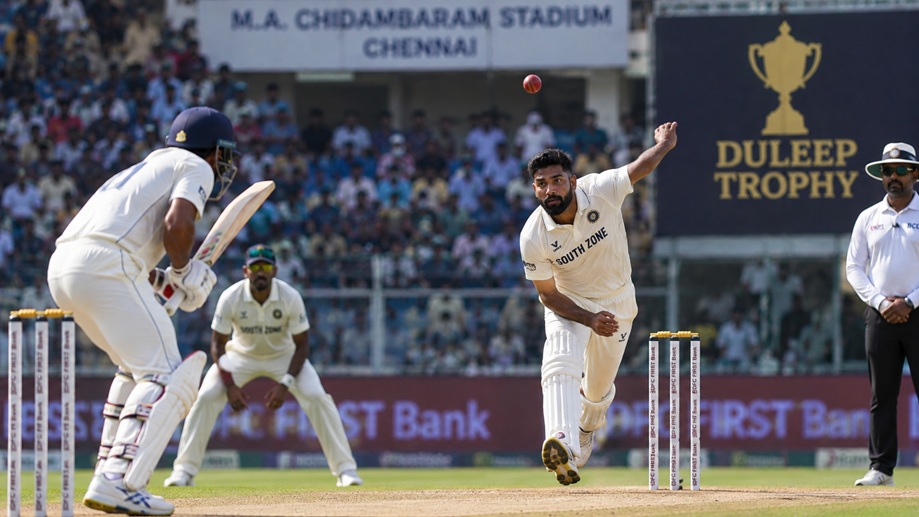
A significant development has taken place in the Duleep Trophy final for 2026 as Indian national team players Devdutt Padikkal and Mohammed Siraj have been added to the South Zone lineup for their championship match against East Zone. This five-day finale is set to start on September 6 at the M.A. Chidambaram Stadium located in Chennai.
The inclusion of these two Test players enhances South Zone’s quality at both ends of the game. Padikkal contributes strong recent performance in red-ball cricket and the confidence stemming from an outstanding series in Sri Lanka, while Siraj brings international experience and a known ability to exert pressure with both the new and old ball.
This choice also underscores the necessity of involving Test players in competitive matches while there are no international commitments. Reports indicate that Padikkal and Siraj have no immediate competitive games lined up before the final, presenting the domestic match as a chance to keep their momentum.
For South Zone, adding two recognizable names is not the sole focus. These selections could potentially alter the dynamics of a team that has already battled its way to the championship.
Why Padikkal and Siraj are Crucial for South Zone
The addition of Padikkal and Siraj significantly enhances the international depth within the South Zone framework. Both players have recently represented India in Tests, and their experience could prove particularly beneficial in a five-day final where extended sessions, heightened concentration, and patience play crucial roles in determining the outcome.
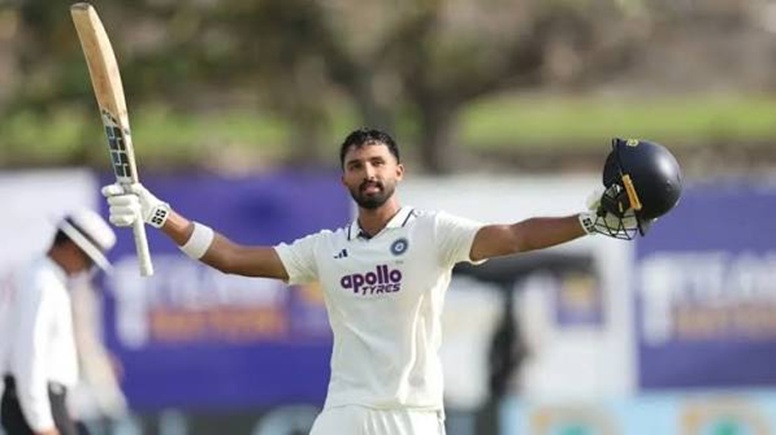
Padikkal arguably brings the more prominent batting credentials. He was honored as India’s Player of the Series in the recent two-Test series against Sri Lanka, amassing 328 runs in three innings and scoring two centuries. He showcased his skills while batting at No. 3, a role that requires technical precision and the capability to construct an innings after a loss of an early wicket.
On the other hand, Siraj brings a different dimension. Although he took four wickets during the recent series in Sri Lanka, his significance extends beyond mere statistics. A fast bowler with Test-level experience can significantly influence a domestic match through attacking field placements, relentless pressure, and the proficiency to exploit movement when the conditions are suitable.
Padikkal Enters with Assurance
The timing of Padikkal’s selection is particularly noteworthy. His performances during the Sri Lankan tour have given him momentum right when South Zone requires another reliable top-order batsman.
A player coming off two centuries is likely to head into the final with a firm grasp of what’s working well in his gameplay. Rather than spending the initial phase looking for timing, Padikkal can instead concentrate on maximizing his starts and applying pressure on East Zone’s bowlers.
His role may grow even more vital if South Zone suffers an early wicket. The team will require players able to weather pressure rather than hastening the scoring rate.
Siraj Contributes Speed and Vitality
Siraj’s inclusion alters the dynamics of the bowling lineup. Domestic batsmen may often find comfort against familiar medium pace or spin, but the presence of an international fast bowler adds a different level of challenge.
He is capable of targeting the stumps, strategically utilizing short deliveries, and compelling batsmen to operate under duress. Throughout a five-day match, this blend can grow increasingly significant.
Recent updates have brought to light a fitness issue concerning Vidhwath Kaverappa, who made a notable impression during South Zone’s semifinal. The inclusion of Siraj thus enhances the team’s depth in pace bowling.
South Zone’s Path to the Final
South Zone secured their position in the final by overcoming North Zone by seven wickets during the semifinal at the BCCI Centre of Excellence Ground 2 located in Bengaluru.
This triumph was supported by strong performances from both their batters and bowlers.
- MD Nidheesh achieved a five-wicket haul as North Zone was bowled out for 297 in their second innings.
- This left South Zone with a chaseable target of 181 runs.
- Captain Tilak Varma then finished the match with an unbeaten score of 51, following his century in the first innings.
- R Smaran also contributed significantly as South Zone successfully reached the target with seven wickets to spare.
This outcome demonstrated that South Zone already possessed an effective combination before the arrival of international players.
The current challenge lies in incorporating seasoned players without disrupting the flow that propelled the team through the semifinal.
East Zone Pose a Significant Challenge
East Zone will not participate in the final simply as opponents. Their journey to the title match has highlighted one of the tournament’s major narratives: the emergence of 15-year-old Vaibhav Sooryavanshi.
The young batter delivered a remarkable semifinal display against Central Zone, scoring 92 runs off 81 deliveries, including seven fours and seven sixes. This performance also made him the youngest player to achieve a fifty in the history of the Duleep Trophy.
His bold style offers East Zone an aggressive option that has the potential to turn the game around swiftly.
Furthermore, East Zone is bolstered by the presence of Ishan Kishan, while Mohammed Shami is another experienced player linked to the team. This blend of youth and experience could render the final even more captivating.

Sooryavanshi introduces an element of surprise
The major risk associated with a bold, youthful batter is the unpredictability of how well he will handle a significant final. However, this unpredictability can work in different ways.
Bowlers from South Zone will recognize that permitting Sooryavanshi to find scoring chances may prove detrimental. Conversely, being overly aggressive against him might lead to missed wicket opportunities.
His involvement particularly highlights the significance of the initial sessions. If the top order of East Zone manages to survive the new-ball phase, South Zone could find themselves in a vastly different type of match.
The Tilak Varma Dilemma
Another selection dilemma looms over the final.
Tilak Varma, captain of South Zone, along with East Zone players Ishan Kishan and Vaibhav Sooryavanshi, are all included in India’s squad for the upcoming three-match T20I series against Afghanistan, starting on September 13.
This has sparked conversations regarding their role in the Duleep Trophy final. According to reports, a final determination regarding the T20I players is anticipated from the Indian team management.
Tilak has already shown his desire to participate after leading South Zone into the final. His presence would be a tremendous advantage due to his key role in the team’s semifinal victory.
For South Zone, having their captain play alongside seasoned Test players could lead to a powerful lineup.
KL Rahul Also Bolsters the Team
The adjustments do not stop with Padikkal and Siraj.
KL Rahul has also been included in the South Zone roster, providing the team with another veteran batter as they gear up for the final in Chennai. Reports suggest this action is part of a broader strategy to keep available Test players primed for action.
This creates a fascinating selection challenge. South Zone must figure out how to fit newly added international players in without overlooking the efforts of the domestic cricketers who contributed to the team’s journey to the final.
Experience against tournament momentum
This aspect complicates the final beyond a mere clash of prominent names.
The seasoned international players bring valuable experience, yet those who have participated in the tournament possess a deeper understanding of the playing conditions, their teammates, and the competition. A successful team will require a mix of both.
Thus, the South Zone management will need to make choices based on the right balance rather than simply relying on reputation.
Given that the final occurs in Chennai, factors such as spin, batting conditions, and pitch wear could affect the team selection. Crafting a bowling strategy that can adapt over five days will be essential.
What Padikkal Might Offer with the Bat
Padikkal’s primary challenge will be to translate his recent form on the international stage into a strong domestic performance.
His position at No. 3 could prove advantageous. He has the capability to play a steady game initially before accelerating as the ball loses its sheen. This makes him a good fit for a final where laying down a solid foundation is crucial.
South Zone already possesses numerous players adept at scoring swiftly. What Padikkal can bring to the table is reliability.
If he remains at the crease for an extended time, the middle order can play more freely. Should he turn another start into a century, South Zone might apply considerable pressure on East Zone’s scoreboard.
The essential factor will be patience. A final can lure batsmen into focusing on the situation instead of the ball, and Padikkal’s finest displays in Sri Lanka illustrated the importance of maintaining composure over lengthy stretches.
What Siraj Could Contribute with the Ball
Siraj’s influence could be felt right away if he succeeds in generating movement with the new ball.
His bold approach allows him to aggressively challenge batsmen instead of just limiting them. In a final match, this strategy can be crucial since taking wickets often outweighs merely focusing on economy rates.
South Zone could also utilize him for shorter, aggressive bowling spells when conditions call for it. With a match extending over five days, managing his workload will be critical, especially considering his recent international commitments.
Siraj’s presence may also aid the bowlers alongside him. Batsmen from the opposing team might concentrate heavily on surviving his deliveries, which can create chances for the bowlers at the other end to make aggressive moves.
This illustrates the subtle advantage provided by a seasoned fast bowler: his impact isn’t always reflected clearly in the match statistics.
Chennai Final Could Transform into a Test of Depth
The Duleep Trophy final is set to take place from September 6 to 10 at M.A. Chidambaram Stadium in Chennai. Since both teams may include players with international experience alongside promising domestic talent, depth could prove to be the pivotal factor.
South Zone currently benefits from extra Test experience thanks to Padikkal, Siraj, and Rahul.
On the other hand, East Zone also has a combination of reliable veterans and dynamic younger players.
Thus, the final could evolve into a match where the performance in the first innings holds significant weight. A team that accumulates a formidable total can instill pressure on the batting side of the opposition, simultaneously allowing its bowlers greater freedom to attack.
Three Matchups to Observe
- Padikkal versus East Zone’s new-ball bowlers: His capacity to withstand the initial spell may influence South Zone’s first innings.
- Siraj against East Zone’s top order: The fast bowler’s opening efforts may determine whether East Zone can lay a solid foundation.
- Experience against youth: Players such as Rahul and Padikkal offer established red-ball experience, while Sooryavanshi exemplifies the bold mentality of the upcoming generation.
Why This Final Holds Importance Beyond the Trophy
Domestic finals are frequently seen mainly as chances to secure silverware, but this particular match has broader implications for India’s Test framework.
For Padikkal and Siraj, engaging in competitive red-ball cricket allows them to stay sharp. For younger talents, going up against seasoned internationals serves as an invaluable evaluation of their technique and mental fortitude.
This makes the final beneficial from both perspectives.
The veterans require playing time, while newer players need chances to experience high-pressure situations against rivals who have previously competed at the top level.
The outcome may also impact future discussions regarding India’s Test roster. Strong domestic displays from younger athletes can heighten competition for spots, while seasoned players can solidify their positions by executing crucial innings and bowling spells.
Conclusion
South Zone reaches the Duleep Trophy finale with a significant boost in experience. The incorporation of Padikkal and Siraj enhances both batting and bowling aspects, while KL Rahul’s addition provides the team with another reliable performer in red-ball cricket.
For East Zone, the obstacle will be to manage that experience while maintaining the bold identity that has led them to the final.
The selection of Tilak Varma, Ishan Kishan, and Vaibhav Sooryavanshi will be a crucial aspect to watch as the match approaches. Nonetheless, irrespective of the ultimate line-up, the matchup already holds a great deal of interest.
Padikkal enters the scene after a successful series in Sri Lanka, Siraj contributes international speed and intensity, and East Zone boasts players who can deliver surprising game-changing plays.
This mixture renders the Chennai final one of the most captivating domestic red-ball events on the schedule. The key inquiry is no longer whether South Zone possesses sufficient skill to compete for the title. It is about whether their new international additions can swiftly convert their experience into a triumphant outing.