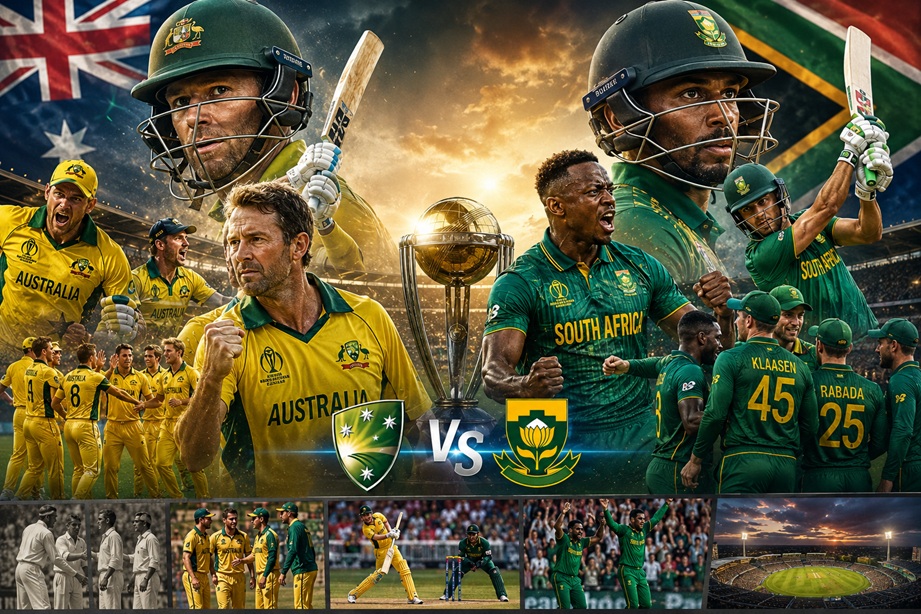

Cricket has seen countless iconic rivalries, yet few rivalries exhibit the level of intensity, excitement, and talent seen in the competitions between Australia and South Africa. The Australia vs South Africa Timeline highlights over a hundred years of intense rivalry, extraordinary comebacks, record-breaking feats, and iconic individual displays.
While the first official Test encounter occurred in the early 1900s, political issues hampered the rivalry for more than twenty years. Following South Africa’s re-entry into international cricket during the 1990s, the competition escalated. Each series became a contest for dominance, showcasing elite athletes, thrilling conclusions, and pivotal moments that impacted cricketing history.
Early Beginnings of the Rivalry (1902–1970)
The rivalry between Australia and South Africa took root in 1902 when the Australians visited South Africa for a series of three Test matches. Australia arrived as one of the premier cricketing nations, whereas South Africa was still establishing itself on the international stage. Despite their varied level of experience, these early matches fostered a competitive relationship that would strengthen over time.
Australia’s solid batting strength and effective bowling attack allowed them to prevail in many of the initial encounters. South Africa, on the other hand, slowly progressed by nurturing gifted bowlers who could take advantage of the local playing conditions.
Highlights from the Early Years
- Australia triumphed in the first Test series held in South Africa.
- Both teams engaged in competitive Test matches during the first half of the 20th century.
- Legendary cricketers emerged from both countries, contributing to heightened global interest in their rivalry.
- Home advantage commonly swayed match outcomes, rendering victories on foreign soil especially prized.
As the landscape of international cricket broadened, Australia consistently remained one of the top teams globally, while South Africa built a reputation for cultivating exceptional fast bowlers and skilled batsmen.
Australia’s Early Dominance
In the initial decades, Australia typically experienced greater success, attributed to its seasoned batting order and reliable bowling resources. The team consistently included players adept at adjusting to diverse pitch conditions and match scenarios.
Australian cricket during this time focused on discipline, patience, and strategic insight. These attributes often played a key role in tightly contested Test matches against South Africa.
South Africa’s Growing Strength
Though wins were infrequent, South Africa steadily evolved into a formidable Test contender. The rise of skilled bowlers and determined batsmen reduced the disparity between the two sides.
Fans in Johannesburg, Cape Town, Durban, and Port Elizabeth experienced thrilling matches that hinted at the rivalry’s promising future. Even in defeat, South Africa increasingly challenged Australia to the very end.
The Long Absence from International Cricket
A particularly unusual episode in cricket history occurred when South Africa found itself excluded from global sports due to apartheid policies. Starting in 1970, South Africa vanished from official international cricket for over twenty years.
As a consequence, a whole generation of cricket enthusiasts missed out on what could have been numerous unforgettable series between Australia and South Africa. Many skilled players from South Africa never had the chance to engage in frequent matches against Australia in the international arena.
While official competitions were halted, Australia proceeded to develop one of the most robust cricket infrastructures globally. South African players upheld high performance levels through domestic leagues and unofficial games, ensuring that the country’s cricket talent remained vibrant despite the lack of international play.
The rivalry was effectively suspended, building excitement for the moment when South Africa would return to the international cricket scene.
South Africa’s Return to Global Cricket (1991–1994)
The competition took on an exhilarating new aspect when South Africa rejoined international cricket in 1991. Fans across the globe looked forward to the renewed clashes between these two exceptionally skilled teams.
Australia soon realized that South Africa had come back as a strong contender instead of a team in the process of rebuilding. Players like Kepler Wessels, Allan Donald, Hansie Cronje, Brian McMillan, and Jonty Rhodes infused new vigor and competitiveness into the game.
Australia countered with its own impressive roster, featuring Mark Taylor, David Boon, Ian Healy, Craig McDermott, Shane Warne, and later Glenn McGrath.
This era signified the commencement of modern professional rivalry between the nations, with each encounter carrying significant weight for international standings and prestige.
The 1992 Cricket World Cup Match
One of the first notable encounters following South Africa’s return occurred during the 1992 ICC Cricket World Cup, hosted by Australia and New Zealand.
Despite South Africa’s strong performance throughout the tournament, Australia clinched a crucial victory during the group stages. This match illustrated how closely matched the two teams had grown and indicated that future confrontations would be fiercely competitive.
Several Key Aspects Made This Period Noteworthy
- South Africa rapidly established itself as one of the leading cricket teams globally.
- Australia acknowledged the Proteas as formidable opponents in every format of the game.
- Competitive cricket replaced the imbalanced matches seen in previous decades.
- Emerging young talents from both teams began to shape a new chapter in international cricket.
Building Towards a Legendary Rivalry
During the mid-1990s, Test and ODI series between the two nations grew increasingly competitive. Australia was solidifying its position as the premier cricket nation, while South Africa persistently challenged that supremacy.
Fast Bowlers Shaped the Rivalry
Fast bowlers were instrumental in these encounters. Allan Donald’s speed and aggression regularly put Australia’s batting order to the test, while Glenn McGrath’s precision often frustrated South African batsmen.
Shane Warne’s Spin Magic
Spin bowling also became crucial, propelled by Shane Warne, whose extraordinary knack for taking wickets at critical moments frequently tilted the momentum in Australia’s direction.
South Africa’s World-Class Fielding
Meanwhile, South Africa’s remarkable fielding standards stood out, with Jonty Rhodes revolutionizing athleticism in the sport. His sensational run-outs and catches became emblematic of South Africa’s determination and skill.
More Than Individual Brilliance
The rivalry encompassed more than individual talents. Every match featured strategic battles between captains, disciplined bowling efforts, steadfast batting partnerships, and exceptional fielding displays.
By the end of the 1990s, cricket fans worldwide viewed the competition between Australia and South Africa as one of the top rivalries in the sport. This reputation was soon solidified by a match filled with intense drama—the memorable semi-final of the 1999 ICC Cricket World Cup, a game that transformed the legacy of this rivalry and is still celebrated as one of the most remarkable events in cricket history.
1999 Cricket World Cup Semi-Final: The Match That Defined a Generation
No moment in the history of Australia versus South Africa is as compelling as the iconic semi-final of the 1999 ICC Cricket World Cup held at Edgbaston. Often considered one of the most exhilarating One Day Internationals ever played, the game was characterized by high stakes, exceptional performances, and emotional turmoil.
Australia scored 213 runs, with captain Steve Waugh setting an example after narrowly escaping an early dropped catch from Herschelle Gibbs. In their pursuit, South Africa relied on the steadfast efforts of Jacques Kallis, Jonty Rhodes, and Lance Klusener. As wickets fell under the mounting pressure, Klusener unleashed an extraordinary display that brought the Proteas dangerously close to success.
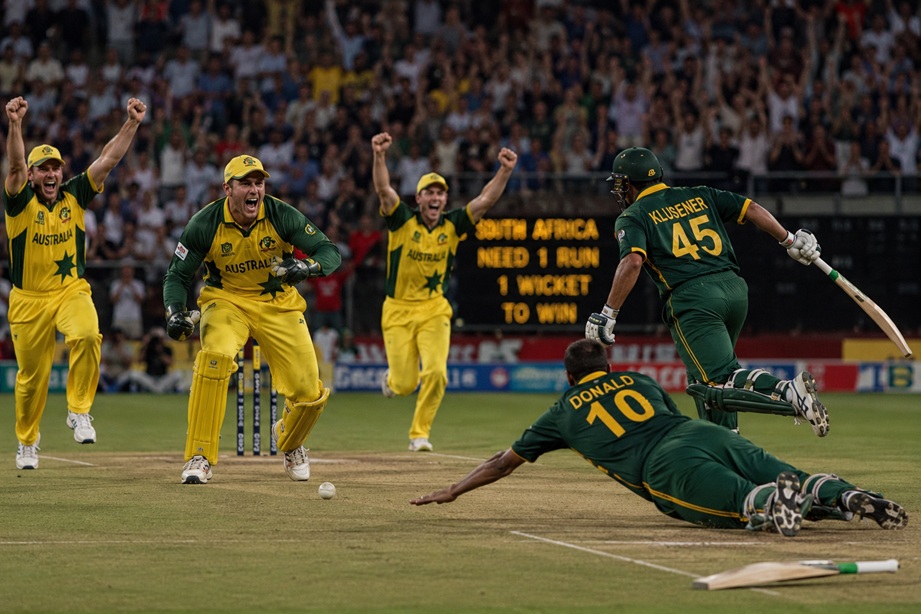
The final over has become legendary in cricket history. South Africa required just a single run with one wicket left. A miscommunication between Klusener and Allan Donald led to a dramatic run-out, resulting in the scores being tied. Due to Australia’s higher placement in the Super Six stage, they moved on to the World Cup final.
The Semi-Final’s Significance Stemmed From
- It highlighted cricket at its most intense level.
- Steve Waugh’s leadership was crucial during stressful moments.
- Lance Klusener’s valiant innings became a standout example of a remarkable losing effort in ODI history.
- The tied outcome remains one of the most memorable instances in the sport.
For countless supporters, this particular game elevated the rivalry between Australia and South Africa to one of the most intense in cricket.
Australia Begins an Era of Dominance
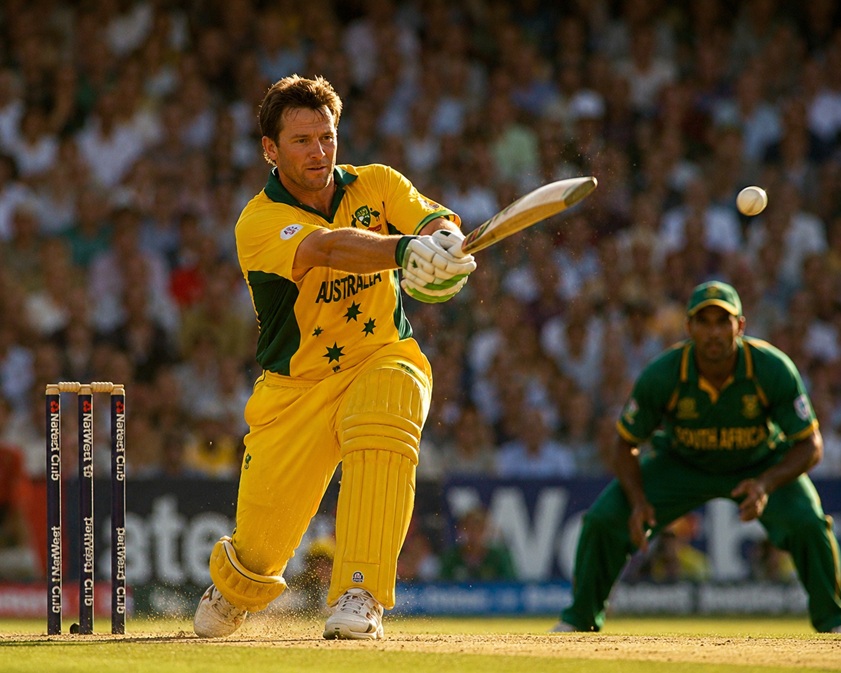
The early years of the 2000s marked Australia’s rise as the unequivocal leader of global cricket. Initially captained by Steve Waugh and subsequently by Ricky Ponting, the team formed one of the most formidable squads ever witnessed.
Stars like Matthew Hayden, Adam Gilchrist, Damien Martyn, Michael Clarke, Glenn McGrath, Shane Warne, Brett Lee, and Jason Gillespie regularly overpowered their challengers.
Nonetheless, South Africa refused to be sidelined. Jacques Kallis emerged as one of the top all-rounders in the world, while Shaun Pollock exhibited remarkable dependability both with the bat and the ball. The rivalry became a battle between two extraordinarily well-matched teams.
Test Cricket Reaches New Heights
During the early 2000s, Test series between the two teams were intensely fought. Australia’s batting strength often provided a strategic edge, yet South Africa’s fast bowling attack ensured each match remained engaging.
Home conditions played a crucial role. Australian pitches favored aggressive fast bowlers and bold batting, while South African surfaces offered speed and bounce that benefitted their elite seam bowlers.
Several Notable Test Matches Featured
- Glenn McGrath consistently dismantling South Africa’s batting line-up.
- Jacques Kallis achieving marathon centuries despite pressure.
- Shane Warne leading Australia to victory with his spin bowling.
- Graeme Smith establishing himself as one of the most resilient opening batsmen in the global arena.
The caliber of cricket during this era garnered admiration from audiences worldwide.
Graeme Smith Changes South Africa’s Mindset
Upon taking on the role of captain at a young age, Graeme Smith infused South Africa with newfound confidence and determination. His bold leadership transformed the Proteas into a team that could compete with Australia in any circumstance.
Smith’s resolve motivated teammates such as AB de Villiers, Mark Boucher, Makhaya Ntini, Dale Steyn, and Hashim Amla. South Africa no longer saw Australia as invincible—they anticipated engaging in competition on level ground.
The Historic 438 Chase (2006)
While the 1999 World Cup semi-final emotionally shaped the rivalry, the legendary ODI in Johannesburg in 2006 transformed expectations for limited-overs cricket.
Australia seemed to have clinched victory after achieving a remarkable 434/4, which set a record for the highest ODI score at that time. Ricky Ponting contributed a stunning 164, with powerful batting throughout the innings supporting the total.
Most analysts concluded that the target was unachievable.
Instead, South Africa delivered one of the finest batting displays in cricket history.
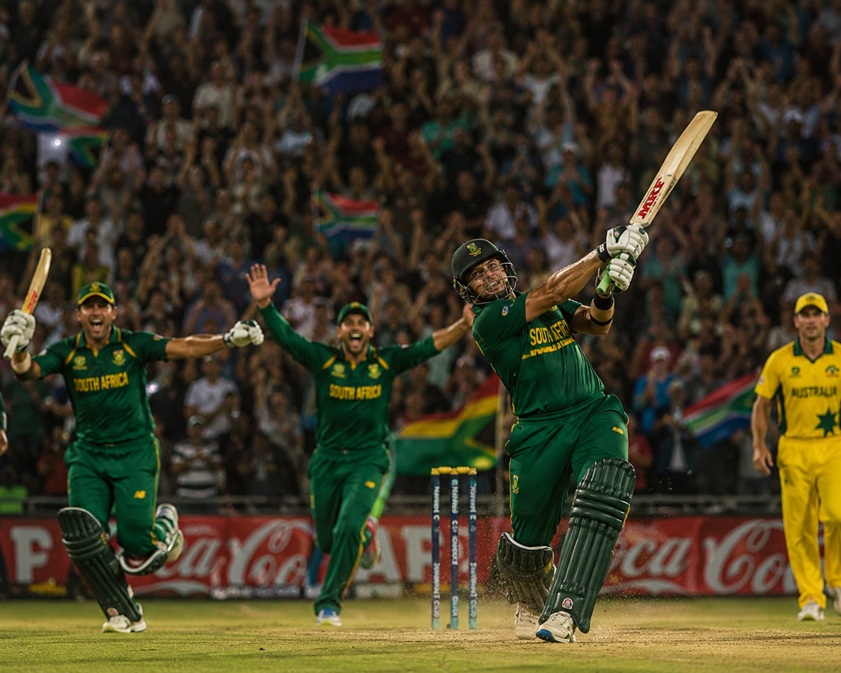
Herschelle Gibbs exhibited phenomenal stroke play, scoring 175 off only 111 deliveries. Captain Graeme Smith initiated an aggressive approach, while Mark Boucher calmly concluded the victory with a single wicket left.
South Africa accomplished 438/9, triumphantly chasing the highest ever total recorded in ODI matches.
The Game Shattered Numerous Records
- The highest successful ODI chase.
- The greatest total runs combined in an ODI at that point.
- Ricky Ponting and Herschelle Gibbs both produced legendary innings.
- Mark Boucher hit the final boundary to secure victory in the last over.
Even now, the Johannesburg match is regarded as one of the all-time great limited-overs games ever played.
A Rivalry Filled With Superstars
By the late 2000s, nearly every series showcased elite cricketers.
Australia’s Star Players Included
- Ricky Ponting
- Michael Hussey
- Michael Clarke
- Brett Lee
- Mitchell Johnson
South Africa Responded With
- Jacques Kallis
- AB de Villiers
- Dale Steyn
- Graeme Smith
- Hashim Amla
These athletes regularly delivered unforgettable performances, ensuring that each Australia–South Africa clash was a highlight event.
South Africa’s Historic Test Success (2008–2014)
A significant turning point in the rivalry occurred when South Africa began to win key Test series against Australia.
The 2008–09 series in Australia stood out as a groundbreaking feat, with South Africa achieving its inaugural Test series win on Australian territory. Their disciplined bowling attack and steady batting showcased that the Proteas had ascended to the pinnacle of international cricket.
Dale Steyn emerged as the top fast bowler globally during this time. His speed, swing, and unyielding intensity posed challenges to even Australia’s strongest batting orders.
Hashim Amla blossomed into one of the most graceful batters in cricket, and AB de Villiers gained fame for his extraordinary adaptability across all formats.
On the other hand, Australia entered a period of transition after the departures of legends like Shane Warne, Glenn McGrath, Adam Gilchrist, Matthew Hayden, and Justin Langer. New leaders gradually reconstructed the team around Michael Clarke.
Despite Australia undergoing a rebuilding phase, each series remained intensely competitive, indicating that the rivalry had begun a new thrilling chapter.
The environment was primed for emerging disputes, exhilarating matchups, and the ascent of a new generation of talents that would influence the rivalry from the late 2010s onward.
The 2018 Cape Town Ball-Tampering Controversy
A significant and contentious episode in contemporary cricket occurred during the 2018 Test series held in Cape Town. Rather than being commemorated for remarkable cricketing feats, the game became notorious when Australian player Cameron Bancroft was discovered trying to manipulate the ball’s condition.
This event had substantial ramifications for Australian cricket. Both captain Steve Smith and vice-captain David Warner received extended bans, and Bancroft also encountered disciplinary measures. In response, Cricket Australia implemented substantial reforms, and the incident sparked global conversations about sportsmanship and the essence of the game.
Even though the scandal overshadowed the series, South Africa remained committed to focusing on the sport itself. Under the leadership of Faf du Plessis and motivated by exceptional displays from Kagiso Rabada, Vernon Philander, Dean Elgar, and AB de Villiers, the Proteas achieved an impressive 3-1 series win in Tests.
The series highlighted the perseverance exhibited by both sides. Australia focused on rebuilding with a fresh emphasis on team culture and leadership, while South Africa solidified its reputation as a formidable opponent in Test matches.
A New Era Begins (2019–2026)
After the tumultuous events of 2018, both sides entered a phase of transformation. Australia assembled a well-rounded team that included seasoned players alongside rising stars, while South Africa directed its efforts toward reconstruction following the departure of numerous legends.
Australia’s batting lineup featured key players such as Steve Smith, Marnus Labuschagne, Travis Head, and Usman Khawaja, backed by a powerful bowling unit spearheaded by Pat Cummins, Mitchell Starc, and Josh Hazlewood. This consistency allowed Australia to maintain its position as one of the leading Test teams globally.
South Africa introduced a fresh cohort of players, including Temba Bavuma, Aiden Markram, Marco Jansen, Kagiso Rabada, and Tristan Stubbs. Their combination of youthfulness and experience ensured that the rivalry remained fierce despite changes in personnel.
Each bilateral series continued to garner immense attention, with fans eagerly anticipating high-caliber cricket whenever the two nations clashed.
The World Test Championship Final
A significant milestone was reached when Australia and South Africa met in the ICC World Test Championship Final. This event signified the pinnacle of Test cricket, with both teams securing their spots through outstanding performances throughout the championship cycle.
Australia depended on its seasoned batting lineup and structured bowling unit, while South Africa demonstrated its strong fast bowlers and resilient middle order. The final showcased the skill, professionalism, and competitive drive that have characterized this rivalry for decades.
No matter the result, the match underscored the significance of contests between these two cricketing giants on the international platform.
Head-to-Head Rivalry Overview
The timeline of the Australia-South Africa cricket rivalry illustrates over a century of unforgettable matches across all formats. While Australia has historically enjoyed superior overall success owing to its long-standing dominance, South Africa has consistently posed a challenge to that supremacy through extraordinary performances.
Some Notable Aspects of the Rivalry Encompass
- Intense Test series held in both countries.
- Memorable ODI matches that resulted in world records.
- World Cup games celebrated for their thrilling conclusions.
- Generations of outstanding fast bowlers on both sides.
- Mutual regard fostered through perpetually high-quality cricket.
This rivalry is not confined to a single period or format; instead, it has continually progressed, maintaining fan interest across various generations.
Exceptional Players Who Influenced the Rivalry
No significant rivalry can flourish without remarkable cricketers, and the contests between Australia and South Africa have showcased some of the finest talent in the sport’s history.
Australian Icons
- Sir Donald Bradman
- Steve Waugh
- Ricky Ponting
- Shane Warne
- Glenn McGrath
- Adam Gilchrist
- Michael Clarke
- Steve Smith
- Pat Cummins
- Mitchell Starc
South African Icons
- Graeme Pollock
- Allan Donald
- Shaun Pollock
- Jacques Kallis
- Graeme Smith
- AB de Villiers
- Hashim Amla
- Dale Steyn
- Faf du Plessis
- Kagiso Rabada
Each of these athletes left an indelible mark, whether through remarkable centuries, decisive bowling performances, outstanding leadership, or pivotal fielding plays.
Milestones That Characterize the Rivalry
There are numerous exceptional accomplishments that continue to set this match-up apart from various other global rivalries.
Key Milestones
- The unforgettable tied semi-final of the 1999 ICC Cricket World Cup.
- South Africa’s astounding 438-run chase in Johannesburg.
- Australia’s extended periods of superiority in the cricketing world.
- South Africa’s landmark test series wins in Australia.
- Numerous clashes involving the leading ranked Test teams globally.
- Innumerable displays from Hall of Fame-level cricketers.
These achievements have guaranteed that each new series is steeped in historical significance while allowing for the creation of new memories.
Reasons This Rivalry Remains Among Cricket’s Finest
A handful of international contests consistently deliver cricket of such remarkable quality. Australia and South Africa possess comparable strengths—intense fast bowling, technically proficient batting, agile fielding, and a strong competitive drive.
Unlike many rivalries that are predominantly shaped by one era, this contest has remained engaging across generations. As iconic players have retired, new talents have stepped up to uphold the legacy.
Furthermore, the rivalry mirrors the transformation of international cricket over the years. From ageless Test matches in the early 1900s to contemporary World Test Championship finals and high-scoring ODIs, each generation has experienced memorable events between these two countries.
Even amidst an age of franchise cricket and busy international schedules, contests between Australia and South Africa continuously attract global attention because fans recognize they are likely to see premier cricket under significant pressure.
Conclusion
The Timeline of Australia vs South Africa narrates a tale that extends beyond mere victories and defeats. It represents a legacy built on determination, athletic excellence, unforgettable excitement, and shared respect between two of cricket’s most accomplished nations.
From the inaugural Test matches in 1902 to the legendary 1999 World Cup semi-final, the remarkable 438-run chase, historical Test victories, and recent World Test Championship encounters, the rivalry has unfailingly created moments that resonate with generations of cricket enthusiasts.
As both teams persist in nurturing promising young talent, the upcoming chapter is expected to be just as thrilling. Whether held in Melbourne, Johannesburg, Sydney, Cape Town, Perth, or Durban, every match between Australia and South Africa carries the promise of elite-level cricket.
This lasting quality is why this rivalry is regarded as one of the most notable in the sport’s history and explains why fans worldwide eagerly anticipate each encounter between these two cricketing titans.